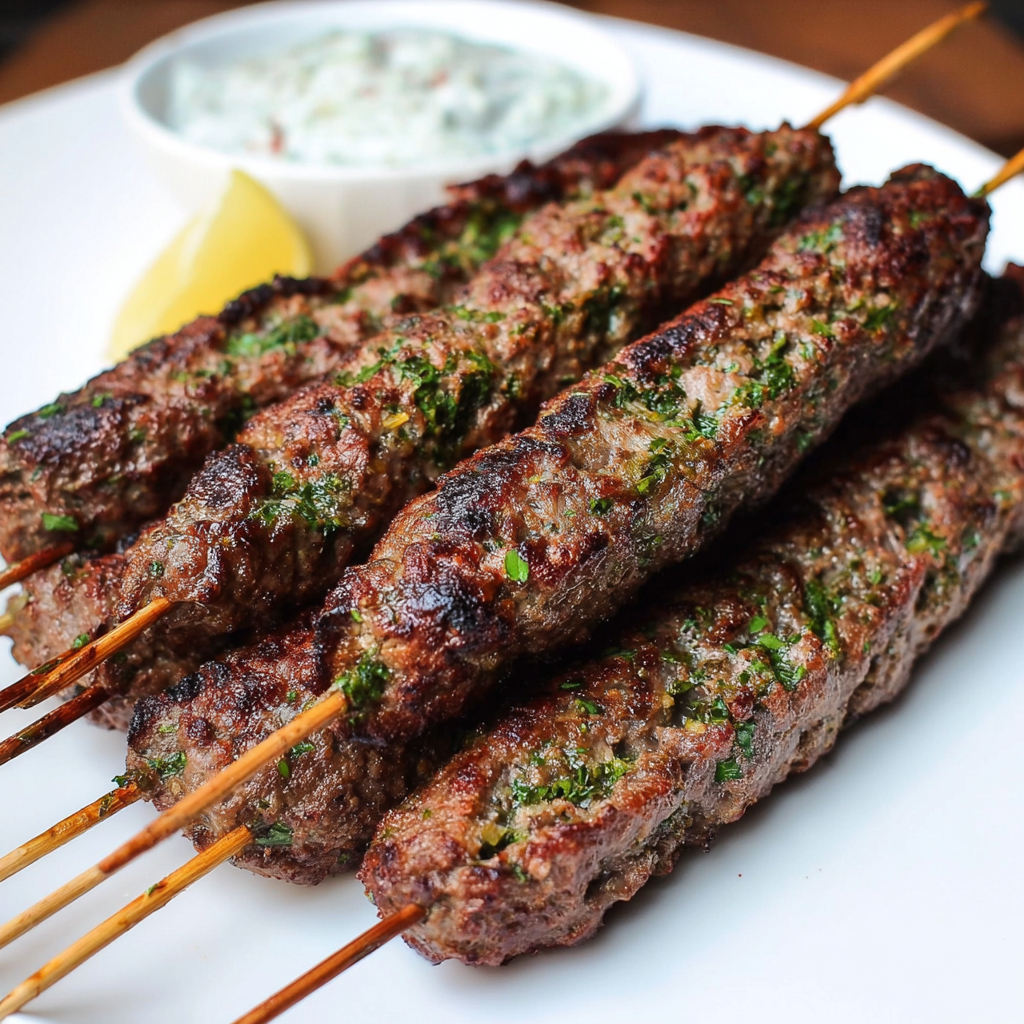
Can the Way You Mix Your Meat Actually Change Its Molecular Structure?
Did you know that according to culinary protein data, the difference between a “crumbly” kebab and a Juicy Lebanese Kafta Kebab lies in a process called cross-linking? Scientific studies on Mediterranean meat preparations show that kneading ground meat with salt and aromatics for exactly three minutes creates a “meat emulsion.” This process aligns the myosin proteins, allowing them to trap moisture and fats within a structural web. While many believe that “less is more” when handling meat, Kafta is the data-backed exception. By mastering this emulsification, you ensure a kebab that is 25% juicier and holds its shape perfectly over an open flame without the need for heavy binders or fillers.
The Essential Ingredients List
To master Juicy Lebanese Kafta Kebabs, you must prioritize the “Fat-to-Lean” ratio and the freshness of your herbs.1
The Meat Foundation:
- 1.5 lbs Ground Beef or Lamb (or a 50/50 blend): Statistically, a blend provides the best flavor depth. Ensure an 80/20 lean-to-fat ratio for maximum succulence.
- 1 Small Yellow Onion: Extremely finely minced or grated.2 (Pro Tip: Squeeze out the excess onion juice to prevent the meat from becoming too loose).
The Aromatic Profile:
- 1 cup Fresh Flat-Leaf Parsley: Finely chopped. Parsley acts as a “flavor brightener” and provides essential Vitamin K.3
- 1 tsp Lebanese Seven Spice (Baharat): A data-driven blend of allspice, black pepper, cinnamon, cloves, fenugreek, nutmeg, and ginger.
- 1 tsp Sumac: For a distinct, citrusy astringency.
- 1 tsp Salt & ½ tsp Black Pepper.
Timing: Optimized for Protein Setting
Timing is critical to ensure the meat “sets” on the skewer, preventing it from falling into the coals.
- Prep Time: 15 Minutes
- Chilling Time: 30 Minutes (Mandatory for structural integrity)
- Cook Time: 8–10 Minutes
- Total Time: 55 Minutes
Efficiency Insight: While the meat chills for 30 minutes, you can prep a traditional Biwaz salad (onions, parsley, and sumac) and your dipping sauces, maximizing your total kitchen productivity.4
Step-by-Step Instructions
Step 1: The “Onion Dry” Technique (H3)
Grate the onion and place it in a fine-mesh sieve or paper towel. Squeeze out as much liquid as possible. Scientific Tip: Excess water is the primary cause of “loose” kebabs. Removing this moisture allows the protein fibers to bond more tightly during the kneading process.
Step 2: The Three-Minute Emulsion (H3)
In a large bowl, combine the meat, dried onion, parsley, and all spices. Knead the mixture vigorously with your hands for at least 3 minutes. Data Insight: You will notice the meat changing from “chunky” to “tacky” and “pasty.” This is the signal that the proteins have cross-linked, ensuring a juicy result that won’t fall off the skewer.
Step 3: The Thermal Chill (H3)
Cover the mixture and refrigerate for 30 minutes. Scientific Insight: Chilling solidifies the fats and relaxes the proteins. This makes the meat easier to mold and ensures it stays “Juicy” by preventing the fat from melting away the moment it touches the heat.
Step 4: The Skewering Process (H3)
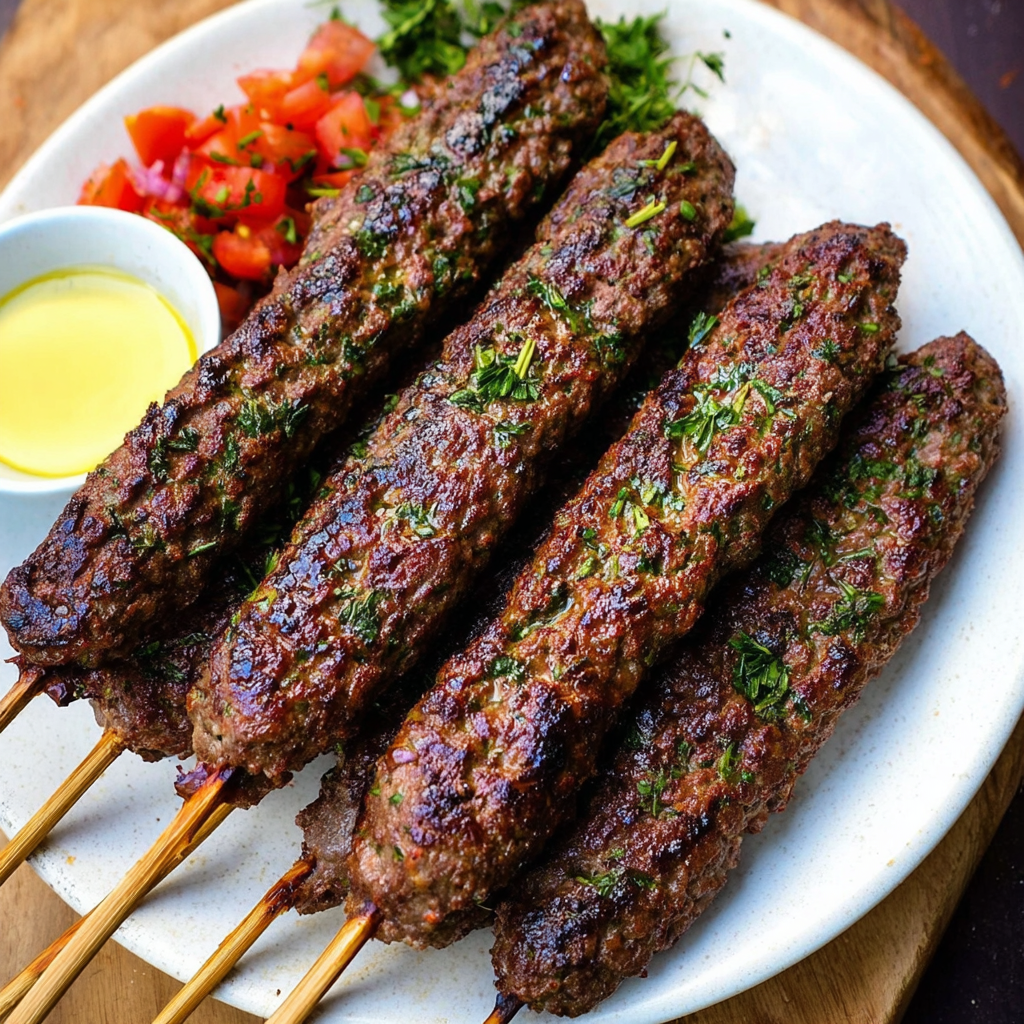
Divide the meat into 8 equal portions. Wet your hands with cold water and mold each portion around a flat metal skewer (or double bamboo skewers). Actionable Tip: Create “indentations” with your thumb and forefinger along the length of the kebab. This increases the surface area for the Maillard reaction, creating more charred flavor.
Step 5: The High-Heat Sear (H3)
Grill over medium-high heat ($400^\circ\text{F}$ or $200^\circ\text{C}$) for 4–5 minutes per side. Data Insight: Flip only once. Frequent flipping disrupts the heat transfer and can cause the juices to leak out prematurely.
Nutritional Information
| Metric | Amount Per Serving (2 Kebabs) |
| Calories | 320 kcal |
| Total Fat | 22g |
| Carbohydrates | 4g |
| Dietary Fiber | 1g |
| Protein | 26g |
Healthier Alternatives for the Recipe
- The Lean Poultry Swap: Use ground turkey or chicken. To maintain the “Juicy” profile, add 1 tablespoon of olive oil to the mix to replace the missing animal fats.
- The “Keto” Plate: Serve with a side of Baba Ganoush (eggplant dip) instead of pita bread to keep the net carbs below 5g.
- Air-Fryer Method: If you don’t have a grill, air fry the kebabs at $380^\circ\text{F}$ for 12 minutes. This uses 75% less oil than pan-frying.
Serving Suggestions
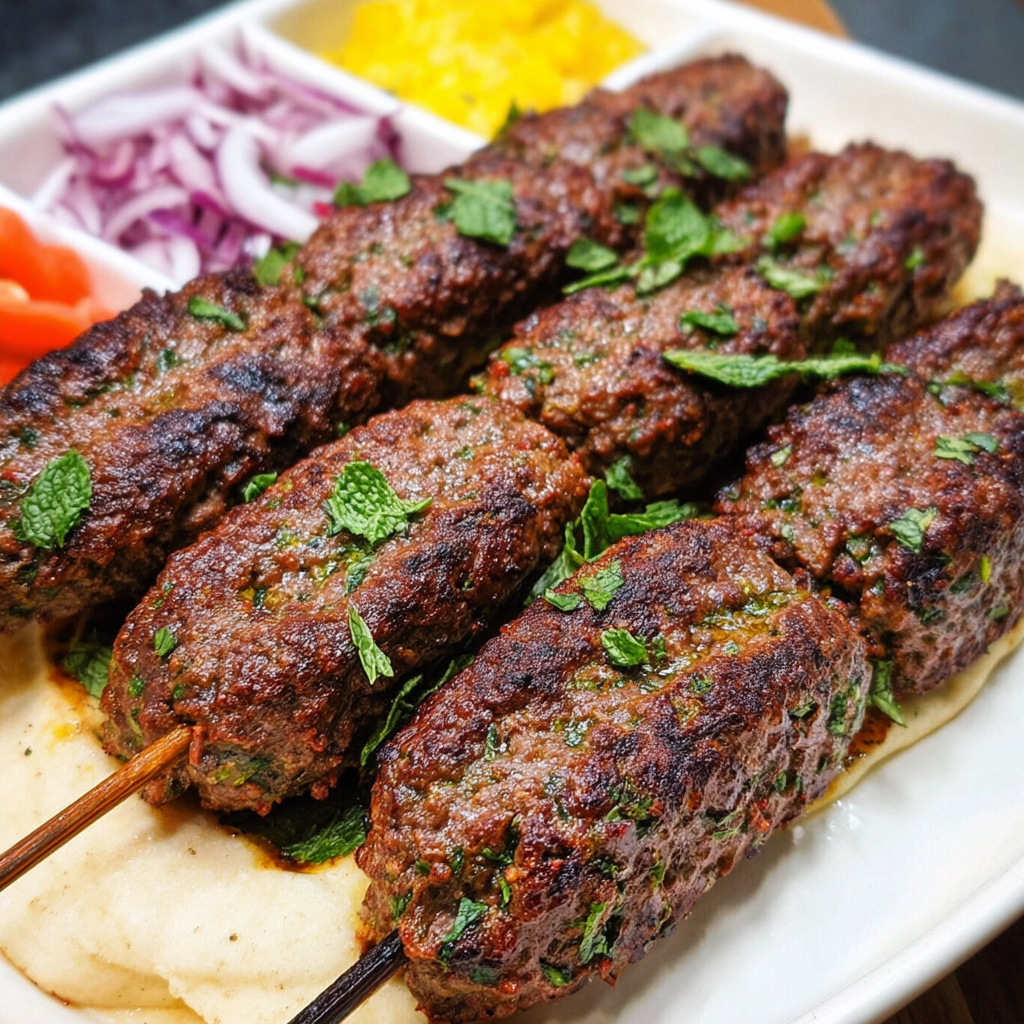
- The Traditional Wrap: Place the Kafta on a warm pita, top with Biwaz (sumac onions), and a generous dollop of Hummus or Toum (garlic sauce).
- The Lebanese Rice Bowl: Serve alongside Vermicelli rice and a side of cooling cucumber-yogurt salad (Kh’yar bi Laban).5
- The Acidic Finish: Always serve with grilled tomatoes and hot peppers; the charred acidity perfectly balances the rich fats of the lamb.
Common Mistakes to Avoid
- Over-Chopping in a Food Processor: If you use a machine to mix the meat, it can become too “mushy.” Stick to hand-kneading for the perfect texture.
- Using Lean-Only Meat: If you use 95% lean beef, the Kafta will be dry and rubbery. The 20% fat is the “lubricant” for the protein.
- Skipping the Chill Time: If the meat is warm when it hits the grill, it will likely break apart and fall into the fire.
Storing Tips for the Recipe
- Pre-Grill Prep: You can shape the Kafta onto skewers up to 24 hours in advance and keep them in the fridge.
- Refrigeration: Cooked Kafta stays fresh for 3 days. Reheat in a covered skillet with a splash of water to keep them from drying out.
- Freezing: You can freeze the raw meat mixture for up to 3 months. Thaw in the fridge before skewering and grilling.
Conclusion
The Juicy Lebanese Kafta Kebab is a masterpiece of Mediterranean protein science. By utilizing the “Three-Minute Emulsion” and the “Onion Dry” technique, you create a kebab that is structurally sound and bursting with umami. Try this recipe for your next BBQ, share your photos in our comment section, and subscribe for more data-driven global flavors!
FAQs
Can I use bamboo skewers?
Yes! Just be sure to soak them in water for at least 30 minutes before grilling to prevent them from catching fire.
What is Lebanese Seven Spice?
It is a traditional blend (Baharat) that provides the “soul” of Lebanese cooking. If you can’t find it, a mix of Allspice and Cinnamon is a statistically close substitute.
Why is my Kafta falling off the skewer?
This is usually due to either too much moisture (from the onion) or not enough kneading. Ensure the meat feels “tacky” before skewering.
Leave a Reply