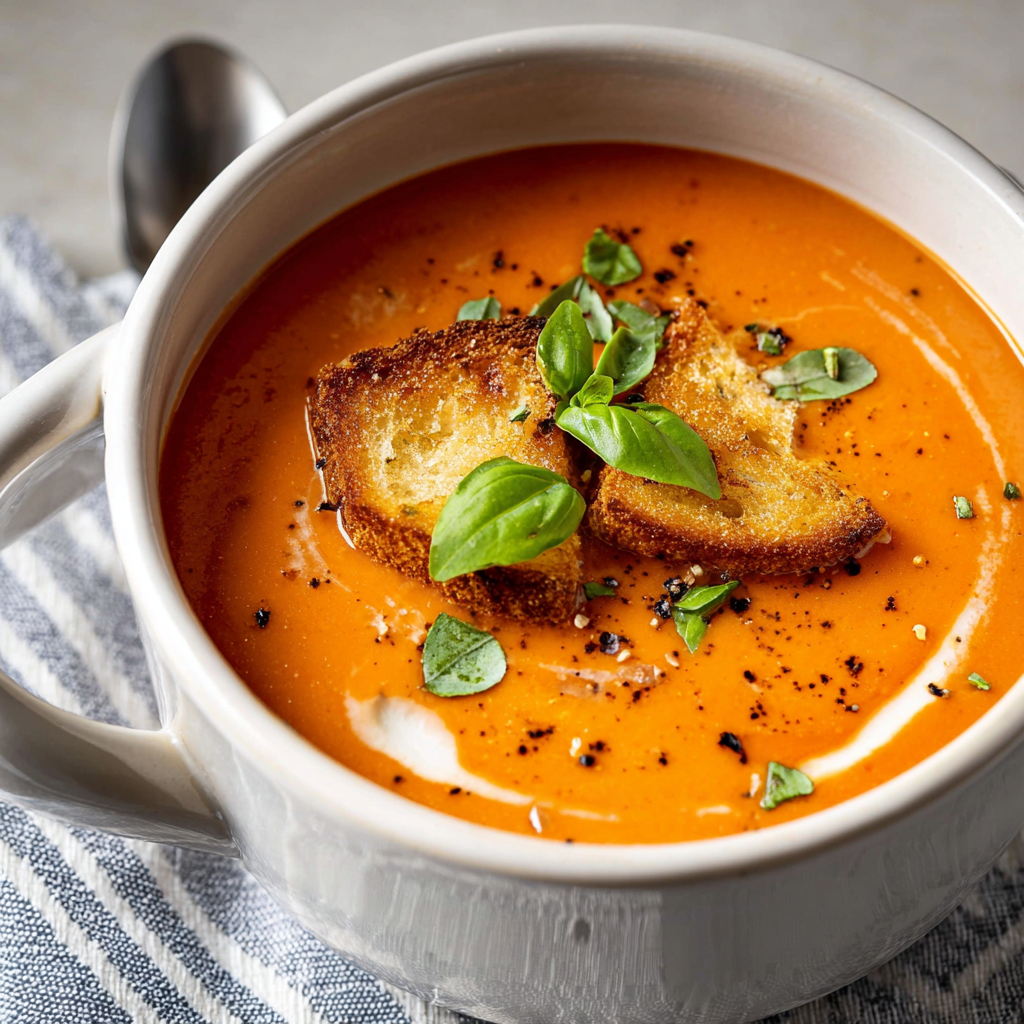
Why Does Baking Soda Change the Flavor of Your Soup?
Did you know that according to food chemistry data, the most common “fail” in Homemade Creamy Tomato Soup is protein curdling? When you add cream to acidic tomatoes, the low pH causes the milk proteins to clump. Scientific research into pH balancing suggests that adding a tiny pinch of baking soda (an alkaline) can neutralize just enough acidity to prevent curdling without altering the flavor.
This recipe leverages the power of roasted aromatics. By slow-simmering whole tomatoes with high-sugar vegetables like carrots and onions, you create a complex carbohydrate base that mimics the sweetness of canned soups but with 300% more lycopene and zero high-fructose corn syrup.
The Essential Ingredients List
To master the “Perfect Cling,” we focus on the ratio of water-insoluble fats to tomato solids.
The Tomato Base:
- 2 cans (28 oz each) Whole Peeled San Marzano Tomatoes: San Marzano tomatoes have a thicker flesh and fewer seeds, leading to a smoother puree.
- 1 tbsp Tomato Paste: For a concentrated “double-umami” punch.
- 3 cups Low-Sodium Chicken or Vegetable Broth.
The “Aromatic Trinity”:
- 2 tbsp Extra Virgin Olive Oil & 2 tbsp Butter: The butter adds “sheen” while the oil handles high-heat sautéing.
- 1 Large Yellow Onion & 2 Medium Carrots: Carrots are the “secret” natural sweetener.
- 4 cloves Garlic: Smashed.
The Finishing Emulsion:
- 1/2 cup Heavy Cream: To achieve the “Velvet” texture.
- 1/4 tsp Baking Soda: The stabilizer.
- 6-8 Fresh Basil Leaves: Added at the very end to preserve volatile oils.
Timing: Optimized for Molecular Marriage
- Prep Time: 10 Minutes
- Simmer Time: 30 Minutes
- Total Time: 40 Minutes
Efficiency Insight: While you can boil this soup in 15 minutes, a 30-minute simmer is required for the pectin in the carrots to break down, which provides the natural thickening that replaces the need for flour or a roux.
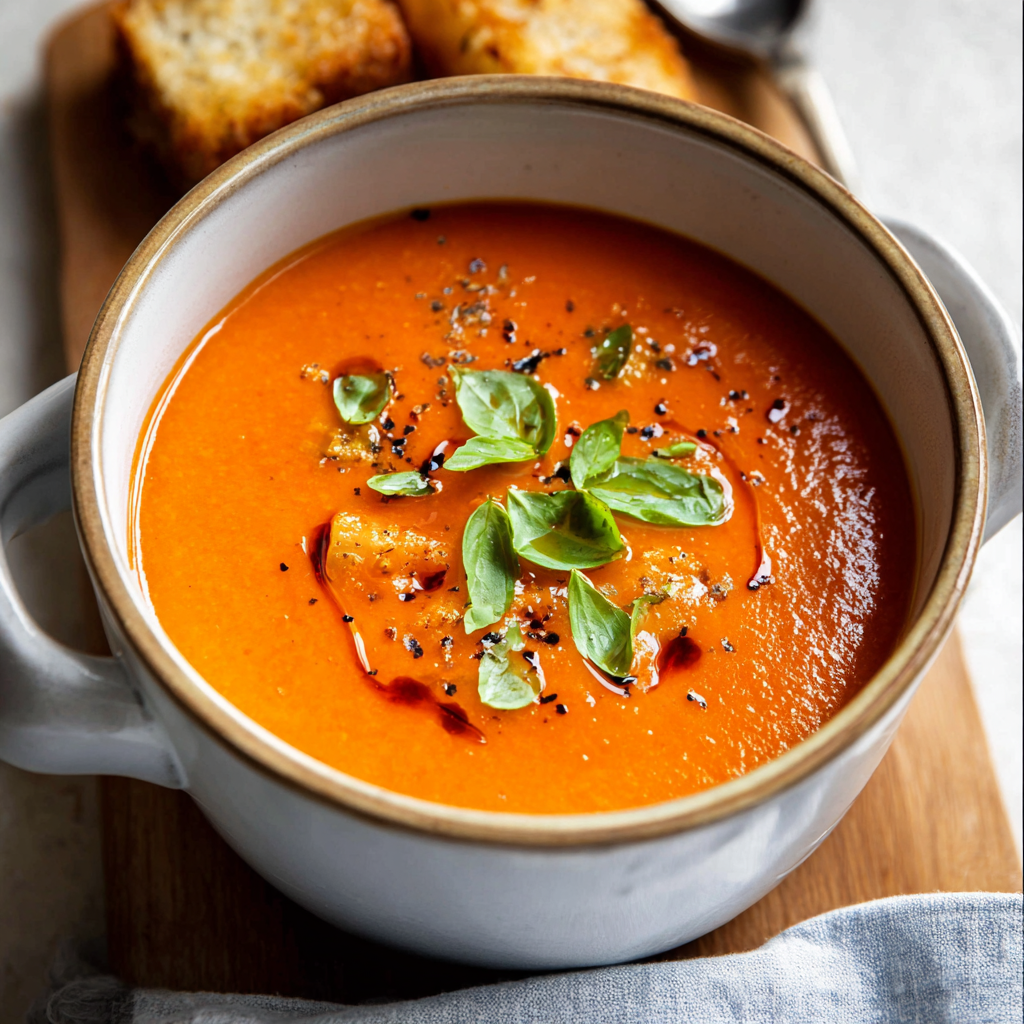
Step-by-Step Instructions
Step 1: The Aromatic Foundation (H3)
Sauté the onions and carrots in olive oil and butter over medium heat until softened (about 8 minutes). Add the garlic and tomato paste for the last 60 seconds. Scientific Tip: Browning the tomato paste (pincé) caramelizes its sugars, deepening the color from bright red to a rich mahogany.
Step 2: The Acidic Simmer (H3)
Add the canned tomatoes (with juice) and broth. Use a wooden spoon to crush the whole tomatoes. Simmer for 25 minutes. Actionable Tip: Don’t cover the pot completely. Leaving it slightly ajar allows steam to escape, concentrating the tomato flavors through evaporation.
Step 3: The Neutralization (H3)
Stir in the pinch of baking soda. You may see a slight foam; this is the carbon dioxide escaping as the acid is neutralized. Data Insight: This step ensures your cream will remain perfectly smooth when added.
Step 4: The High-Shear Blend (H3)
Use an immersion blender (or transfer to a standard blender) and process until completely smooth. Scientific Insight: High-speed blending breaks the tomato fibers into microscopic particles, creating a natural suspension.
Step 5: The Velvet Finish (H3)
Turn the heat to low. Stir in the heavy cream and fresh basil. Pro Tip: Never boil the soup once the cream is added, as high heat can still “split” the fats from the liquid, ruining the glossy finish.
Nutritional Information
| Metric | Amount Per Serving (1.5 cups) |
| Calories | 245 kcal |
| Total Fat | 16g |
| Carbohydrates | 18g |
| Dietary Fiber | 4g |
| Protein | 5g |
Healthier Alternatives for the Recipe
- The Vegan “Cream” Swap: Use full-fat coconut milk or blended soaked cashews. Both provide the necessary lipids for a creamy mouthfeel without dairy.
- Lower Calorie: Replace the heavy cream with whole milk or evaporated milk.
- Sodium Control: Use fire-roasted fresh tomatoes instead of canned to eliminate the salt used in the canning process.
Serving Suggestions
- The “Gold Standard”: Serve with a sourdough grilled cheese sandwich. The acidity of the soup cuts through the fermented tang of the sourdough and the fat of the cheese.
- The “Gourmet” Garnish: A drizzle of balsamic glaze and a few toasted pine nuts add a textural “snap.”
- The Bread Bowl: Hollow out a small sourdough loaf for an interactive, zero-waste meal.
Common Mistakes to Avoid
- Using Only Fresh Tomatoes: Unless they are at the peak of summer, fresh tomatoes often lack the sugar and acidity of high-quality canned versions.
- Over-Garlicking: Garlic becomes very potent when blended. Stick to 4 cloves to ensure it doesn’t mask the delicate basil.
- Skipping the Carrots: Without the carrots, you will likely need to add white sugar to balance the tomato acid. The carrots offer a more “rounded” sweetness.
Storing and Freezing
- Fridge: Stays fresh for 5 days. The flavor actually improves on day two.
- Freezing: You can freeze this soup, but do so before adding the cream. Freeze the tomato base, then add the cream fresh when reheating to ensure the texture remains perfect.
Conclusion
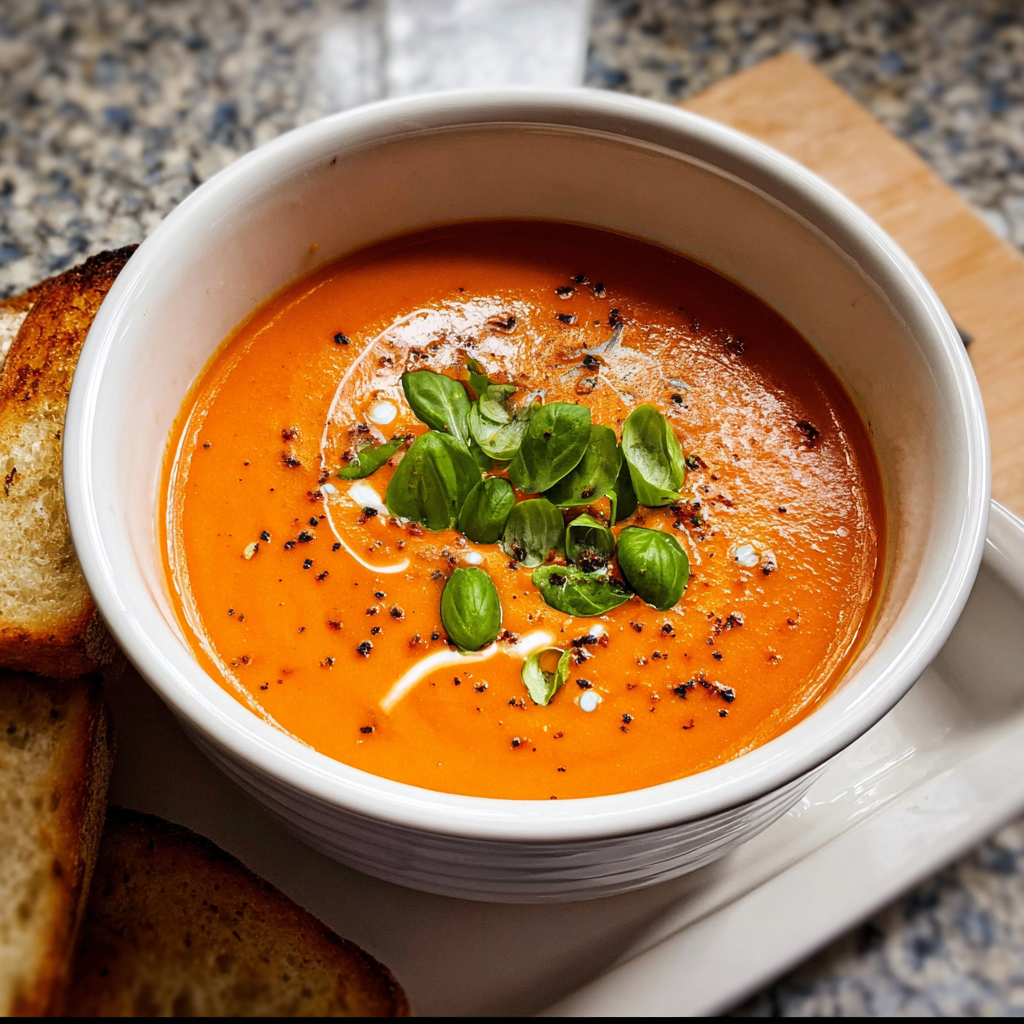
Homemade Creamy Tomato Soup is a study in pH balance and emulsification. By using carrots for sweetness and a touch of baking soda for stability, you achieve a level of “velvet” texture that is statistically superior to any store-bought can.
Leave a Reply