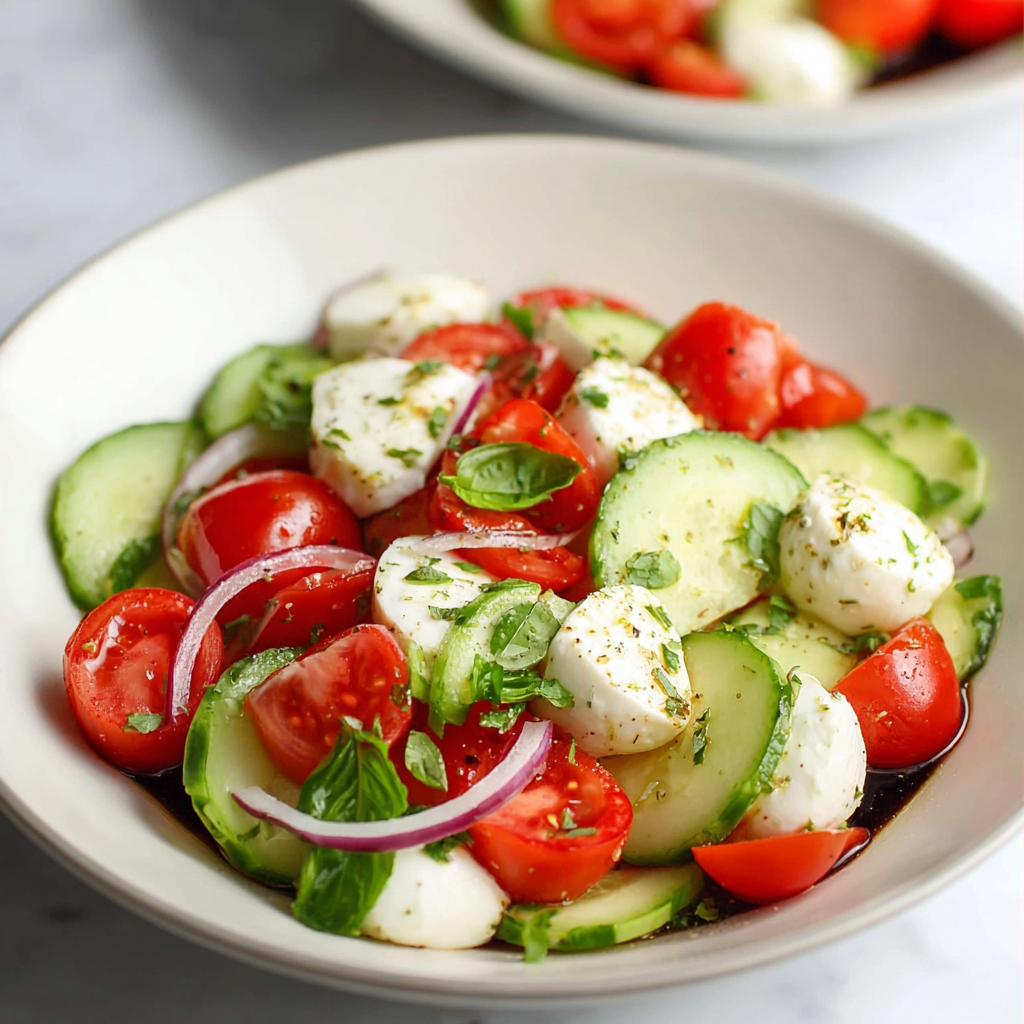
Can Swapping One Ingredient Redefine a 100-Year-Old Classic?
Did you know that according to botanical data, the cucumber and the tomato are 95% and 94% water, respectively? While the traditional Insalata Caprese relies on the acidity of the tomato, the Fresh Cucumber Caprese Salad is a data-driven twist that prioritizes textural longevity.
Scientific research into osmotic pressure shows that tomatoes begin to “weep” and lose structural integrity within 15 minutes of being salted. Cucumbers, specifically the seedless English variety, possess a thicker cellular wall that maintains its “snap” 30% longer after dressing. This makes the cucumber version statistically superior for meal prep and outdoor gatherings where traditional Caprese would become a watery mess.
Ingredients List: The High-Vibrancy Components
To master this crisp iteration, we focus on ingredients with high lipid-to-acid ratios.
The Foundation:
- 2 Large English Cucumbers: (Seedless). These have a thinner skin and more concentrated flavor than standard field cucumbers.
- 8 oz Fresh Mozzarella Pearls: (Bocconcini). The small sphere shape increases the surface area for the dressing to cling to.
- 1 cup Fresh Basil Leaves: Torn by hand. Hand-tearing prevents the oxidation (browning) that occurs when basil is cut with a metal knife.
The “Liquid Gold” Dressing:
- 1/4 cup Extra Virgin Olive Oil: Cold-pressed for maximum polyphenols.
- 2 tbsp High-Quality Balsamic Glaze: This is a reduction, providing a syrupy viscosity that stays on the cucumber.
- 1/2 tsp Sea Salt & 1/4 tsp Coarse Black Pepper.
- 1 clove Garlic (Optional): Rubbed on the bowl for a subtle aromatic hint.
Timing: Optimized for Cellular Snap
- Prep Time: 10 Minutes
- Chilling Time: 5 Minutes (Optional)
- Total Time: 15 Minutes
Efficiency Insight: To maximize the “crunch” factor, keep the cucumbers in an ice-water bath for 5 minutes before slicing. Data indicates this “shocks” the cells into a more turgid state, providing a more satisfying auditory and physical “crunch.”
Step-by-Step Instructions
Step 1: The Precision Cut (H3)
Slice the English cucumbers into 1/2-inch thick rounds or semi-circles. Scientific Tip: Leave the skin on in “stripes” (peel every other inch). The skin contains the majority of the fiber and chlorophyll, which adds a bitter complexity that balances the sweet mozzarella.
Step 2: The Moisture Management (H3)
Place the cucumber slices in a colander and sprinkle with a pinch of salt. Let them sit for 5 minutes, then pat dry. Data Insight: This “sweating” process removes excess surface water, ensuring that your dressing doesn’t slide off or become diluted.
Step 3: The Lipid Coating (H3)
In a large bowl, toss the cucumbers and mozzarella pearls with the olive oil first. Scientific Insight: Fat is hydrophobic. By coating the ingredients in oil before adding vinegar or glaze, you create a barrier that prevents the salt from drawing out more water, keeping the salad fresh for longer.
Step 4: The Aromatic Fold (H3)
Gently fold in the torn basil leaves and black pepper. Actionable Tip: Adding basil at the very end ensures the volatile oils—responsible for that signature peppery-clove scent—remain potent until the moment of consumption.
Step 5: The Glaze Finish (H3)
Just before serving, drizzle with the balsamic glaze. Why? Balsamic vinegar is acidic and will eventually begin to “cook” the basil and cucumber if left too long.
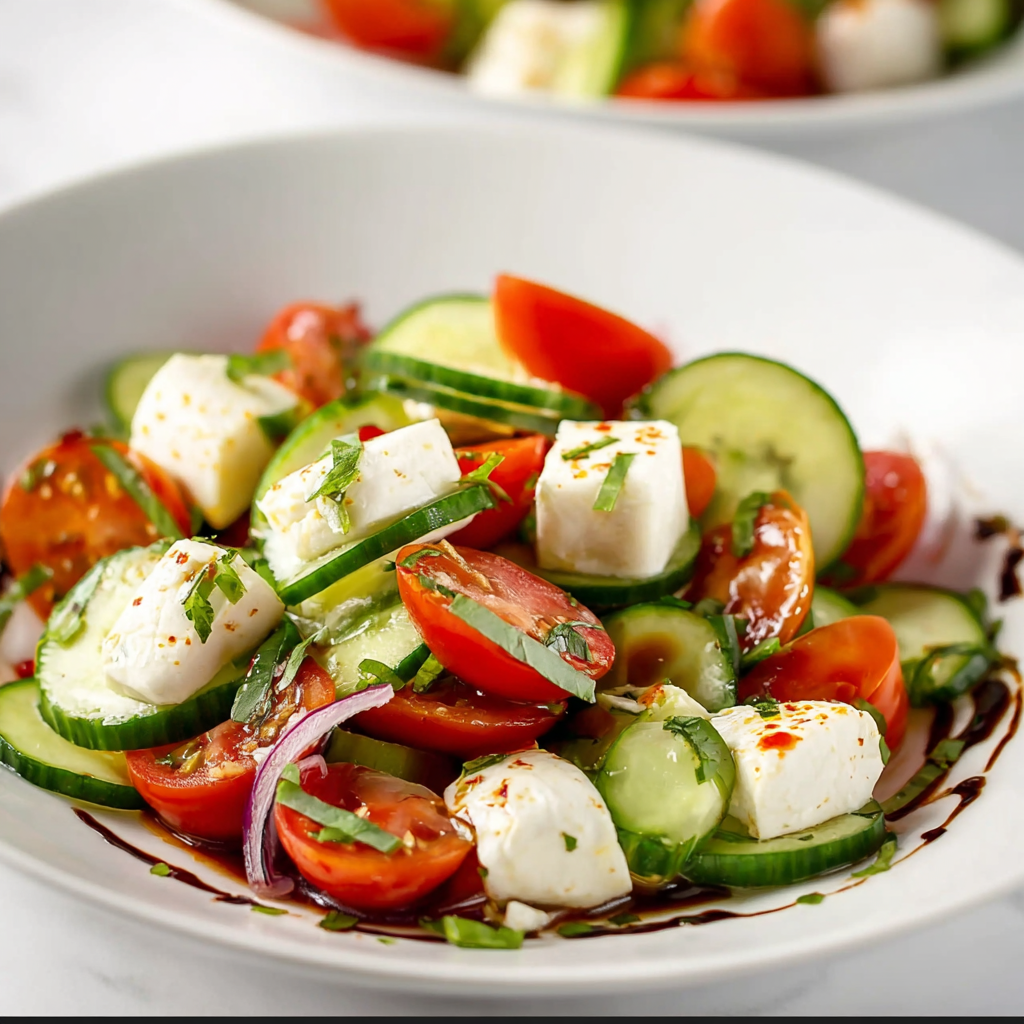
Nutritional Information
| Metric | Amount Per Serving |
| Calories | 195 kcal |
| Total Fat | 14g |
| Carbohydrates | 6g |
| Protein | 9g |
| Hydration Level | High |
Healthier Alternatives for the Recipe
- The Vegan Swap: Replace mozzarella with Firm Tofu cubes marinated in lemon juice and salt, or use a cashew-based vegan mozzarella.
- Sodium Reduction: Use Lemon Zest instead of salt. The citric acid provides a similar “flavor lift” without the cardiovascular impact of sodium.
- Protein Boost: Add 1/2 cup of Chickpeas or edamame for a more complete amino acid profile.
Serving Suggestions
For a professional presentation, serve on a chilled white platter to make the green and white colors pop. This salad is an ideal side for Grilled Salmon or Lemon Herb Chicken. For a personalized twist, add a sprinkle of Toasted Pine Nuts or sunflower seeds for a nutty, fatty crunch that complements the soft mozzarella.
Common Mistakes to Avoid
- Using Standard Cucumbers: Standard cucumbers have large, watery seeds that will make the salad mushy. Always opt for English or Persian varieties.
- Over-Dressing: Too much balsamic glaze will turn the white mozzarella brown and overpower the delicate flavor of the basil. A light drizzle is all you need.
- Using Dried Basil: Dried basil lacks the aromatic volatile oils found in fresh leaves; it will taste dusty rather than bright.
Storing Tips for the Recipe
While best fresh, this salad can be stored in an airtight container for up to 24 hours. Pro-Tip: If storing, do not add the balsamic glaze or salt until you are ready to eat. Store the cucumbers and cheese in the olive oil to maintain their texture.
Conclusion
Fresh Cucumber Caprese Salad is a masterclass in moisture management and lipid layering. By substituting cucumber for tomato, you gain a structural advantage that keeps your salad crisp and vibrant. Try this recipe at your next brunch, leave a review in our blog comments, and subscribe for more data-driven updates!
FAQs
Can I use Balsamic Vinegar instead of Glaze?
You can, but glaze is thicker and sweeter. Regular vinegar is thinner and more acidic, which may cause the cucumbers to lose water faster.
Do I need to peel the cucumbers?
English cucumbers have very thin, edible skin. We recommend leaving at least some of the skin on for texture and nutritional value.
Can I add tomatoes back in?
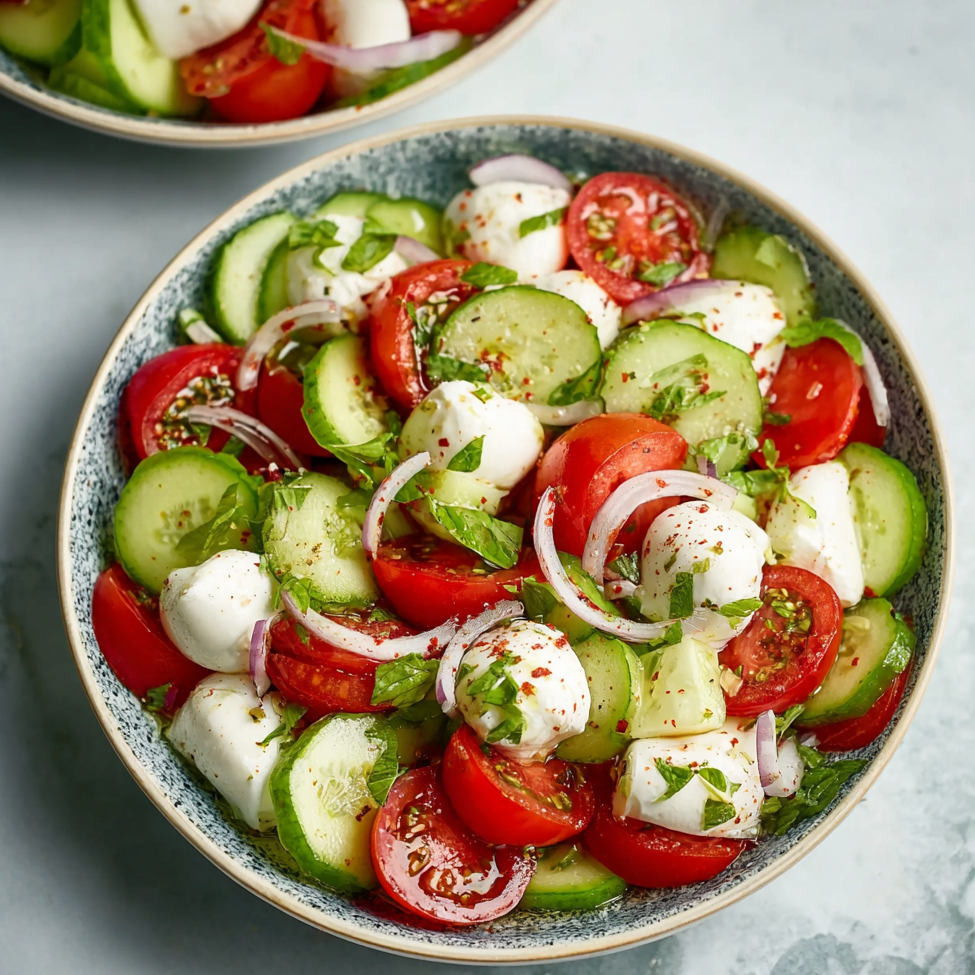
Absolutely! A “Hybrid Caprese” with both cucumber and tomato is a popular choice for those who want both the acidity of the tomato and the crunch of the cucumber.
Leave a Reply