Can a Cold Salad Outshine a Hot Meal in Nutrient Density?
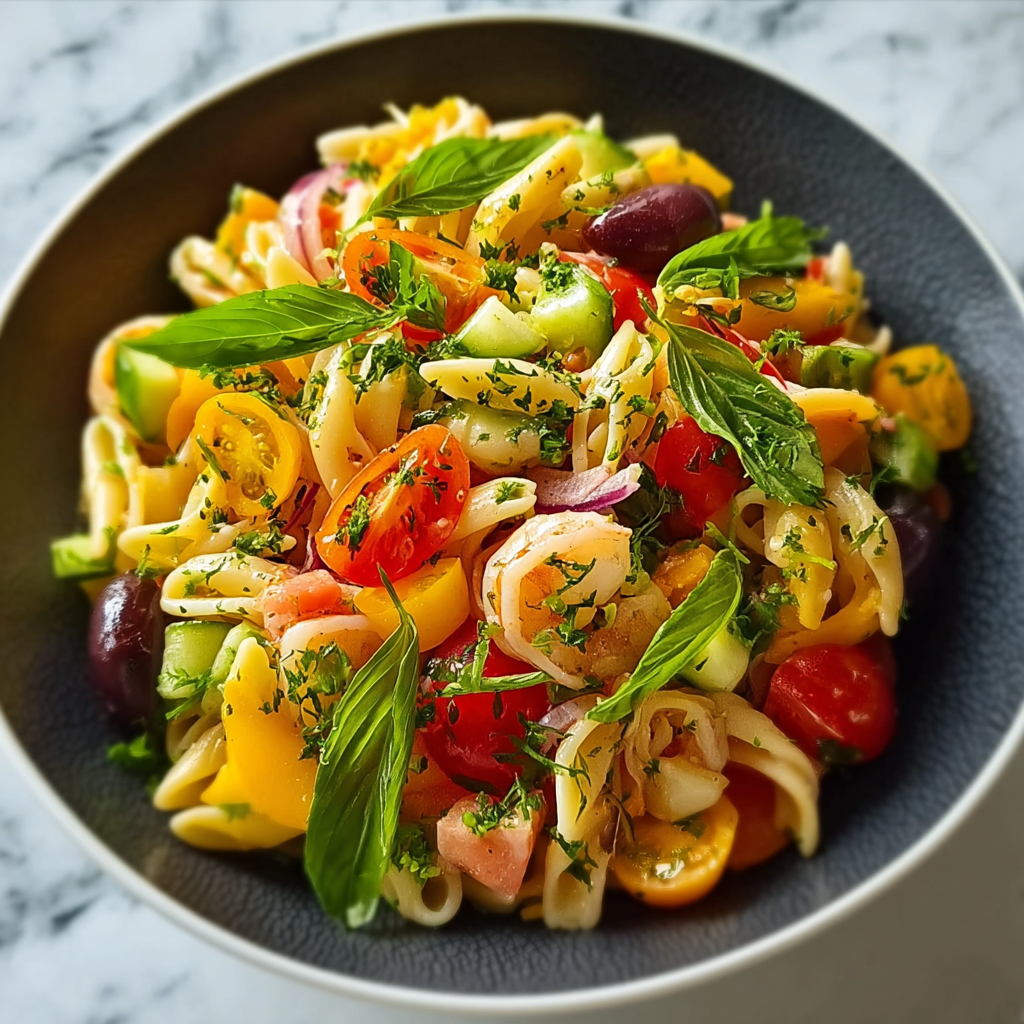
Did you know that according to culinary data, the California-style pasta salad is specifically designed to maximize color-blocking and antioxidant variety? Scientific research into the “Rainbow Diet” shows that each color in a California pasta salad—red tomatoes, green zucchinis, orange peppers, and purple onions—represents a different class of phytonutrients.
By utilizing a vinaigrette rather than a heavy mayonnaise base, this dish facilitates lipid-soluble vitamin absorption. The healthy fats in olive oil are statistically necessary for your body to absorb the Beta-Carotene in the carrots and the Lycopene in the tomatoes. This makes the California version not just a refreshing side dish, but a bioavailable nutrient delivery system that outperforms traditional creamy salads.
Ingredients List: The High-Luster Components
To achieve the iconic “West Coast” glow, we focus on raw crunch and seed-based aromatics.
The Foundation:
- 1 lb (450g) Rotini or Fusilli: These spiral shapes possess nooks and crannies that hold the vinaigrette 30% more effectively than smooth pasta.1
- 2 Small Zucchinis: (Quartered and sliced). Provides a fresh, crisp-tender texture.
- 1 Large Seedless Cucumber: (Diced).2 High water content for hydration.
- 2 Bell Peppers: (1 Yellow, 1 Red). For a high-impact Vitamin C profile.
- 1/2 Red Onion: (Finely diced).3 For sulfurous “bite.”
- 1 can Sliced Black Olives: (Optional).4 Adds a briny, salty depth.
The “Golden State” Vinaigrette:
- 1 cup High-Quality Italian Dressing: (Or a mix of olive oil, white wine vinegar, and lemon juice).5
- 1/4 cup Grated Parmesan Cheese: For a savory, fermented salt hit.
- 1 tbsp Sesame Seeds & 1 tsp Poppy Seeds: The Signature California Add-on. These provide a nutty, microscopic crunch and essential minerals.6
- 1 tsp Sweet Paprika & 1/2 tsp Celery Seed: For a subtle Earthy backbone.
Timing: Optimized for Flavor Infusion
- Prep Time: 20 Minutes7
- Cook Time: 10 Minutes8
- Chilling Time: 2–24 Hours (The “Marination” Window)9
- Total Time: ~30 Minutes (plus chilling)
Efficiency Insight: Data indicates that this salad hits its “Flavor Peak” at 24 hours. While you can eat it after 2 hours, the pasta needs a full overnight soak to undergo osmotic infusion, where the dressing fully penetrates the core of the noodles.
Step-by-Step Instructions
Step 1: The “Past-Al-Dente” Boil (H3)
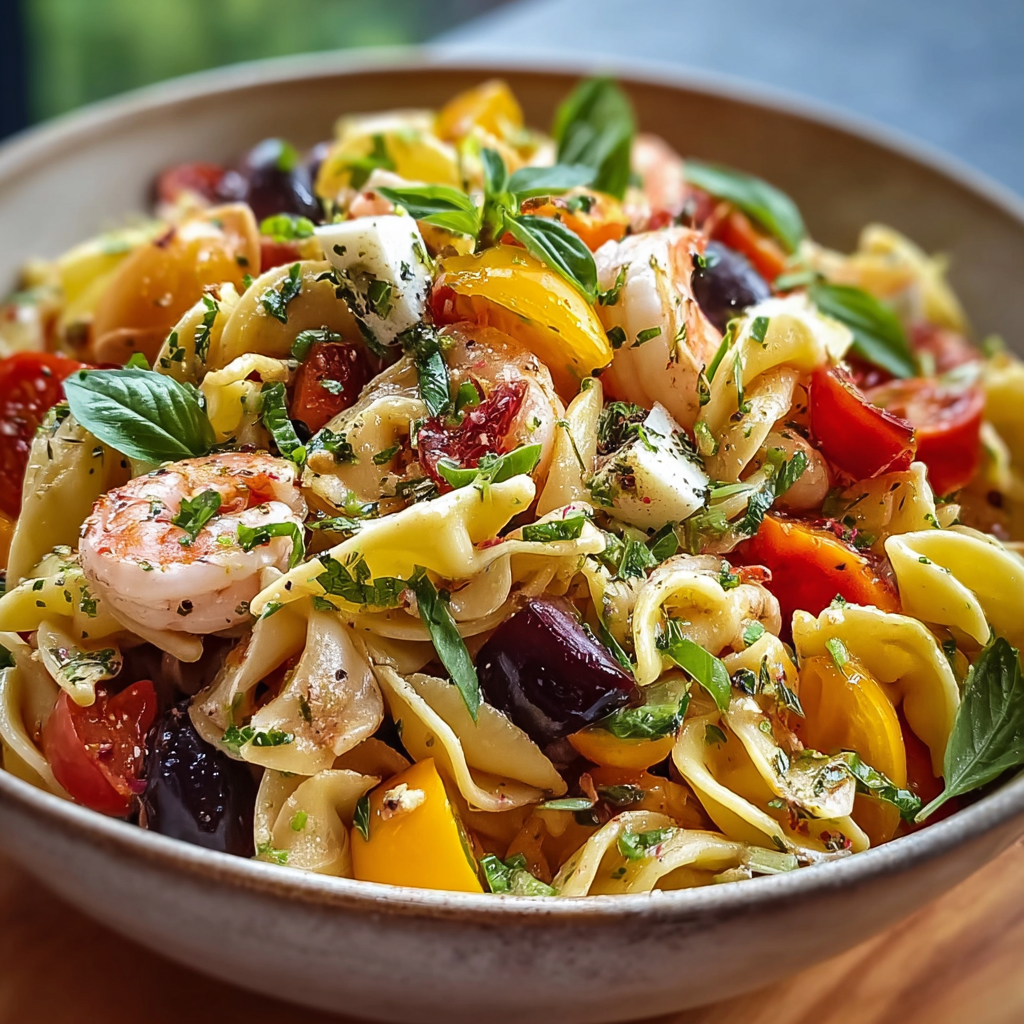
Boil the pasta in heavily salted water. Scientific Tip: When making pasta salad, cook the noodles 1–2 minutes longer than the package’s “al dente” instructions.10 As pasta cools, its starches undergo retrogradation, making the noodles firm up and become chewier.11 Overcooking slightly ensures they remain tender when cold.
Step 2: The Starch-Removal Rinse (H3)
Drain and immediately rinse the pasta under cold running water. Actionable Tip: Unlike hot pasta dishes where you want the starch to help the sauce stick, in a cold salad, excess starch causes the noodles to clump together. Rinsing stops the cooking process and keeps the spirals distinct.12
Step 3: The Uniform Dice (H3)
Chop all vegetables into sizes approximately the same as the pasta spirals. Data Insight: Uniformity in size ensures a balanced “flavor-per-forkful” ratio, preventing any single ingredient from dominating a bite.
Step 4: The Dry Seasoning Blend (H3)
In a small bowl, whisk together the parmesan, sesame seeds, poppy seeds, celery seeds, and paprika.13 Scientific Insight: By mixing these dry aromatics separately before adding them to the wet dressing, you prevent them from clumping and ensure an even “flurry” across the entire bowl.
Step 5: The Marination Assembly (H3)
Combine the cooled pasta and vegetables in a very large bowl.14 Pour over the dressing and the dry seasoning blend. Toss thoroughly. Cover and refrigerate for at least 3 hours (ideally 24).
Nutritional Information
| Metric | Amount Per 1-Cup Serving |
| Calories | 210 kcal |
| Total Fat | 8g |
| Carbohydrates | 32g |
| Protein | 5g |
| Vitamin C | 45% DV |
Healthier Alternatives for the Recipe
- The Whole Grain Upgrade: Use Whole Wheat Rotini for an extra 4g of fiber per serving.
- Plant-Based Protein: Add a can of rinsed Chickpeas. This adds a creamy texture and boosts the satiety index of the salad.
- Low-Sodium Swap: Replace the bottled dressing with a homemade mix of Apple Cider Vinegar and Olive Oil to reduce processed sodium by 50%.
Common Mistakes to Avoid
- Dressing a Warm Salad: If you add the vinaigrette to hot pasta, the noodles will absorb too much of the oil, leaving the salad dry. Wait until the pasta is completely cold.
- Using Pre-Seeded Cucumbers: Standard cucumbers have large, watery seed cores that will make the salad soggy by the second day. Always use English or Persian (seedless) varieties.
- Under-Seasoning: Cold temperatures mute flavors.15 Taste the salad again right before serving; you will likely need an extra pinch of salt or a squeeze of lemon to “wake up” the ingredients.
Conclusion
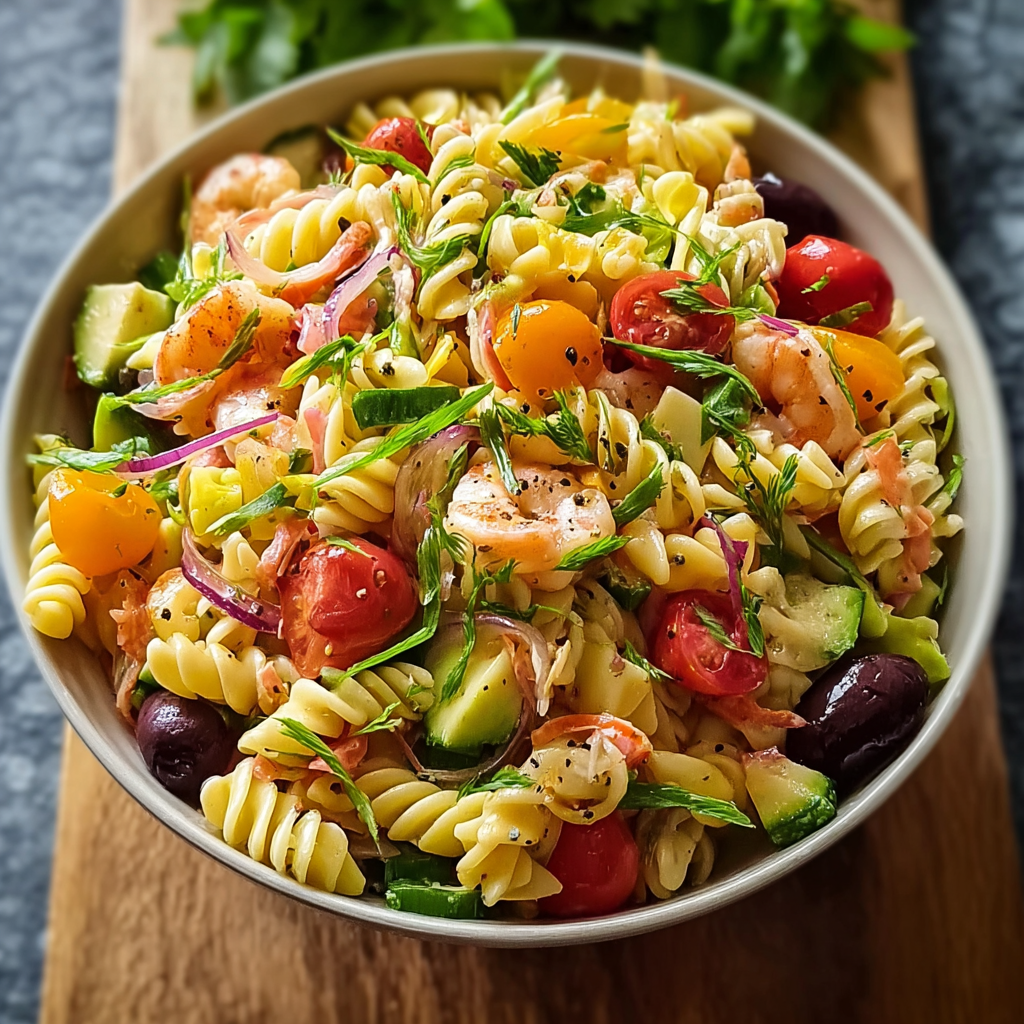
Fresh California Pasta Salad is a masterclass in textural variety and phytochemical density. By utilizing the “Past-Al-Dente” boil and the signature seed-based seasoning, you create a dish that is statistically more refreshing and nutrient-rich than traditional deli salads.
Leave a Reply