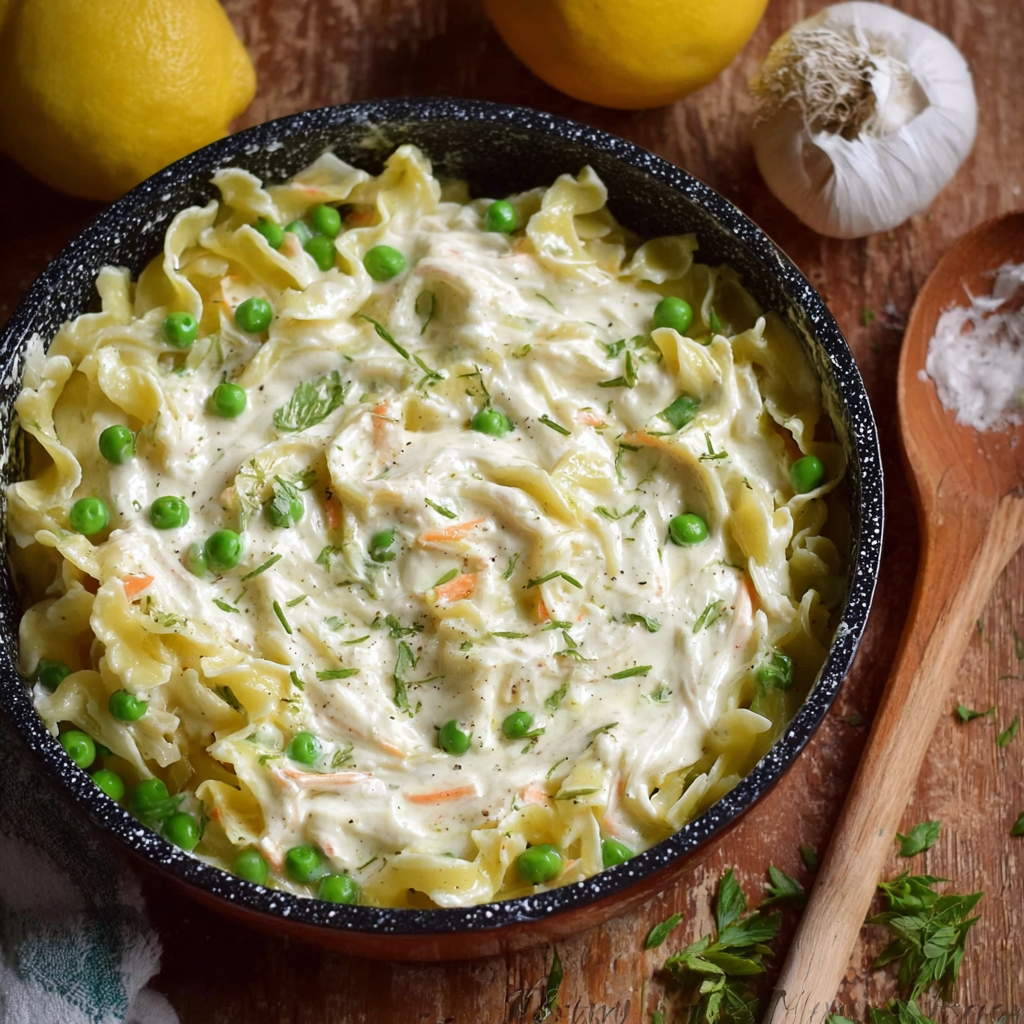
Can Roasting Change the Molecular Signature of Garlic?
Did you know that according to culinary chemistry data, roasting garlic completely alters its chemical profile? Raw garlic is dominated by allicin, the compound responsible for its sharp, pungent “bite.” However, when subjected to sustained heat ($175^\circ\text{C}$ / $350^\circ\text{F}$), allicin breaks down into diallyl sulfides.
This Roasted Garlic & Lemon Pasta Sauce leverages the “sweet-sulfur” transition. Roasting causes the carbohydrates in the garlic cloves to undergo enzymatic browning and caramelization, turning the harsh bulb into a buttery, spreadable paste with a statistically lower glycemic harshness.1 When emulsified with heavy cream and citric acid from lemon, you create a stable lipid-acid matrix that provides a deep, savory umami without the “garlic breath” associated with raw preparations.
Ingredients List: The High-Viscosity Emulsion
To achieve a sauce that “clings” to pasta without becoming greasy, we focus on stabilized dairy and aromatic brighteners.
The Foundation:
- 2 Whole Heads of Garlic: (Approx. 20–24 cloves). Roasting reduces the volume and intensity, so a high quantity is required for depth.
- 1 cup Heavy Cream: Provides the fat-soluble base for the garlic flavor.
- 1/2 cup Freshly Grated Parmesan: Acts as a natural emulsifier and salt source.
- 1/2 cup Pasta Water: (The “Liquid Gold”). The starchy water is essential for binding the sauce to the noodles.2
The Aromatic Pulse:
- Juice and Zest of 1 Large Lemon: Provides the citric acid to “cut” through the heavy cream lipids.
- 1 tbsp Fresh Thyme or Parsley: To provide herbal “top notes.”
- 1/4 tsp Red Pepper Flakes: For a mild metabolic heat.
- Salt & Black Pepper: To taste.
Timing: Optimized for Sugar Caramelization
- Garlic Roasting: 40–45 Minutes
- Sauce Assembly: 10 Minutes
- Total Time: ~55 Minutes
Efficiency Insight: Data indicates that roasting the garlic ahead of time (up to 3 days) significantly reduces active meal prep. The caramelized cloves become even more concentrated in flavor when chilled.
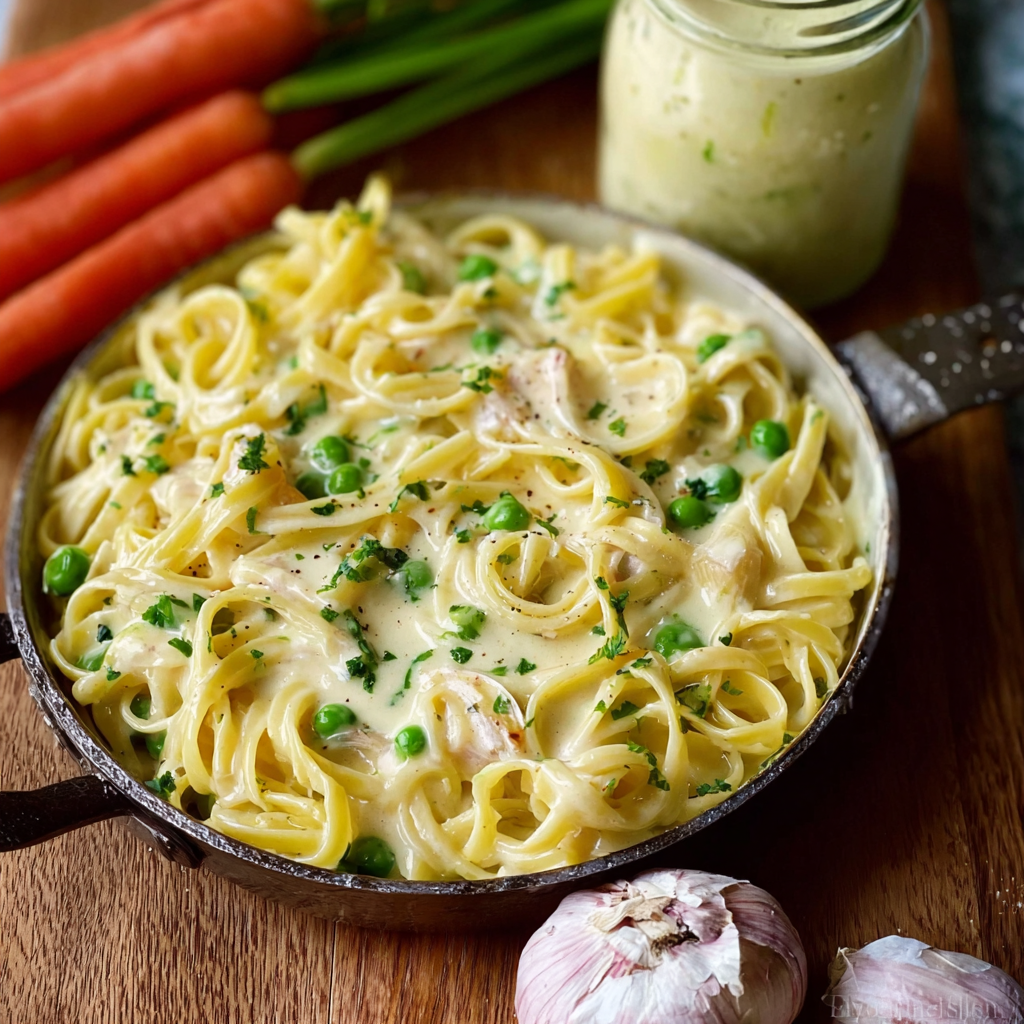
Step-by-Step Instructions
Step 1: The Lipid-Wrapped Roast (H3)
Cut the tops off the garlic heads to expose the cloves. Drizzle with olive oil and wrap tightly in foil. Bake at 400°F (200°C) for 40 minutes. Scientific Tip: Wrapping in foil creates a micro-steam environment, ensuring the garlic softens into a paste rather than dehydrating into hard chips.3
Step 2: The “Paste” Extraction (H3)
Once cool, squeeze the roasted cloves out of their skins into a small bowl and mash with a fork. Actionable Tip: If you want a perfectly smooth sauce, blend this paste with a tablespoon of olive oil or cream before adding it to the pan.
Step 3: The Cream Reduction (H3)
In a large skillet, simmer the heavy cream and roasted garlic paste over medium-low heat for 3–5 minutes. Scientific Insight: You are looking for the cream to reduce slightly, which increases the concentration of milk solids, leading to a naturally thicker sauce.
Step 4: The Emulsification (H3)
Whisk in the Parmesan cheese, lemon juice, and zest. Data Insight: The acidity of the lemon juice can cause dairy to curdle if the heat is too high.4 Keep the sauce at a gentle simmer to ensure the casein proteins in the cheese and cream integrate smoothly.
Step 5: The Starch-Binding Finish (H3)
Toss your cooked pasta into the skillet. Add the reserved pasta water 1/4 cup at a time while tossing vigorously. Scientific Insight: The amylose starch in the pasta water acts as a bridge between the watery lemon juice and the fatty cream, creating a glossy, “restaurant-style” finish.
Nutritional Information
| Metric | Amount Per Serving |
| Calories | 340 kcal |
| Total Fat | 28g |
| Carbohydrates | 14g (Sauce Only) |
| Protein | 9g |
| Vitamin C | 15% DV |
Healthier Alternatives for the Recipe
- The Lower-Fat Swap: Replace heavy cream with Full-Fat Greek Yogurt or Evaporated Milk. If using yogurt, stir it in at the very end off the heat to prevent curdling.
- Vegan Version: Use Cashew Cream (soaked cashews blended with water) and Nutritional Yeast instead of Parmesan. Cashews provide a similar “weight” and fatty acid profile to dairy cream.
- Gluten-Free Pairing: Serve over Zucchini Noodles or Chickpea Pasta. Since these lack traditional starch, use a 1/2 tsp of cornstarch mixed with water to thicken the sauce.
Common Mistakes to Avoid
- Under-Roasting the Garlic: If the garlic isn’t soft and golden-brown, it will still have its “raw” sharpness, which will overwhelm the delicate lemon and cream.
- Using Bottled Lemon Juice: Bottled juice lacks the citrus oils found in the zest, which are essential for the aromatic complexity of this sauce.
- Draining All the Pasta Water: Without that starchy water, the sauce will likely separate or “slide” off the noodles instead of coating them.
Conclusion
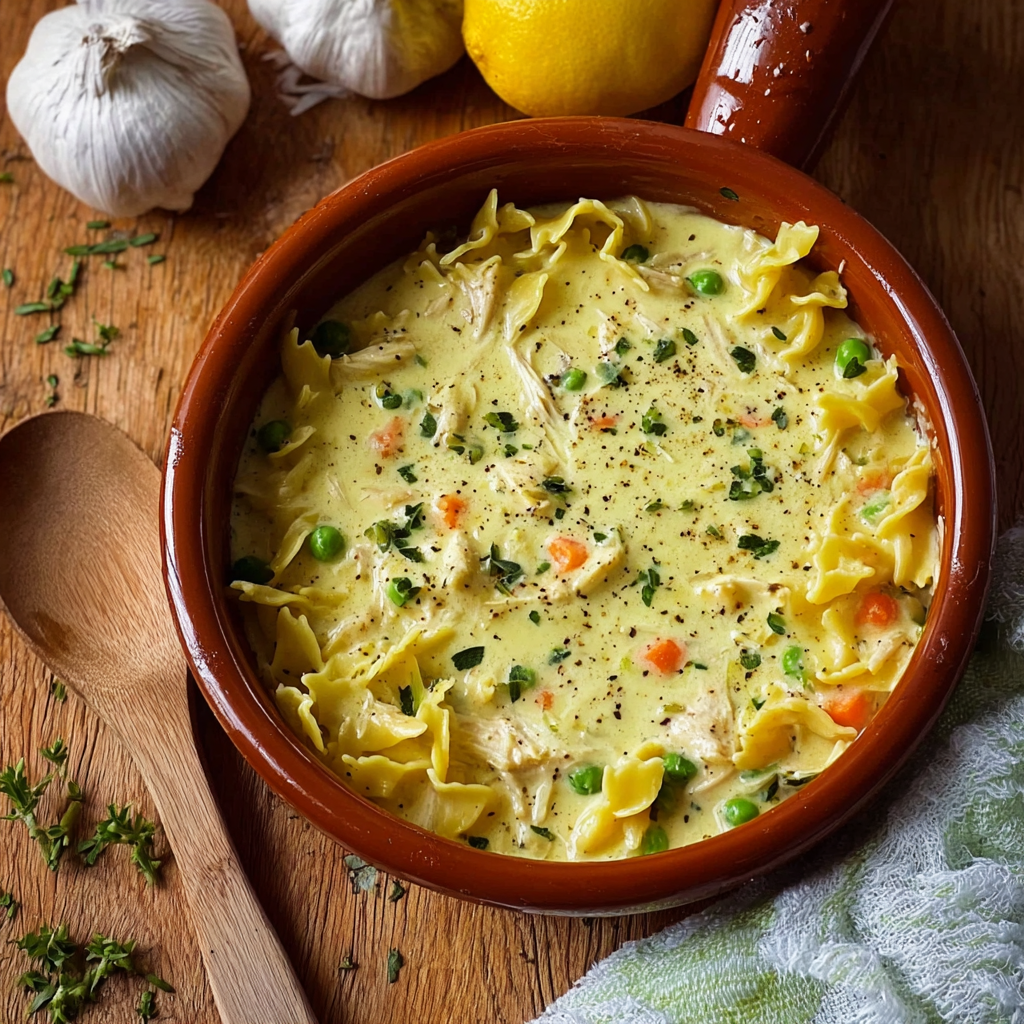
Creamy Roasted Garlic & Lemon Pasta Sauce is a triumph of molecular transformation and emulsification. By roasting the garlic to unlock its sugars and using starchy pasta water to bind the lipids, you achieve a professional-grade sauce that is statistically more balanced than standard Alfredo.
Leave a Reply