The Chemistry of Pineapple and Dairy
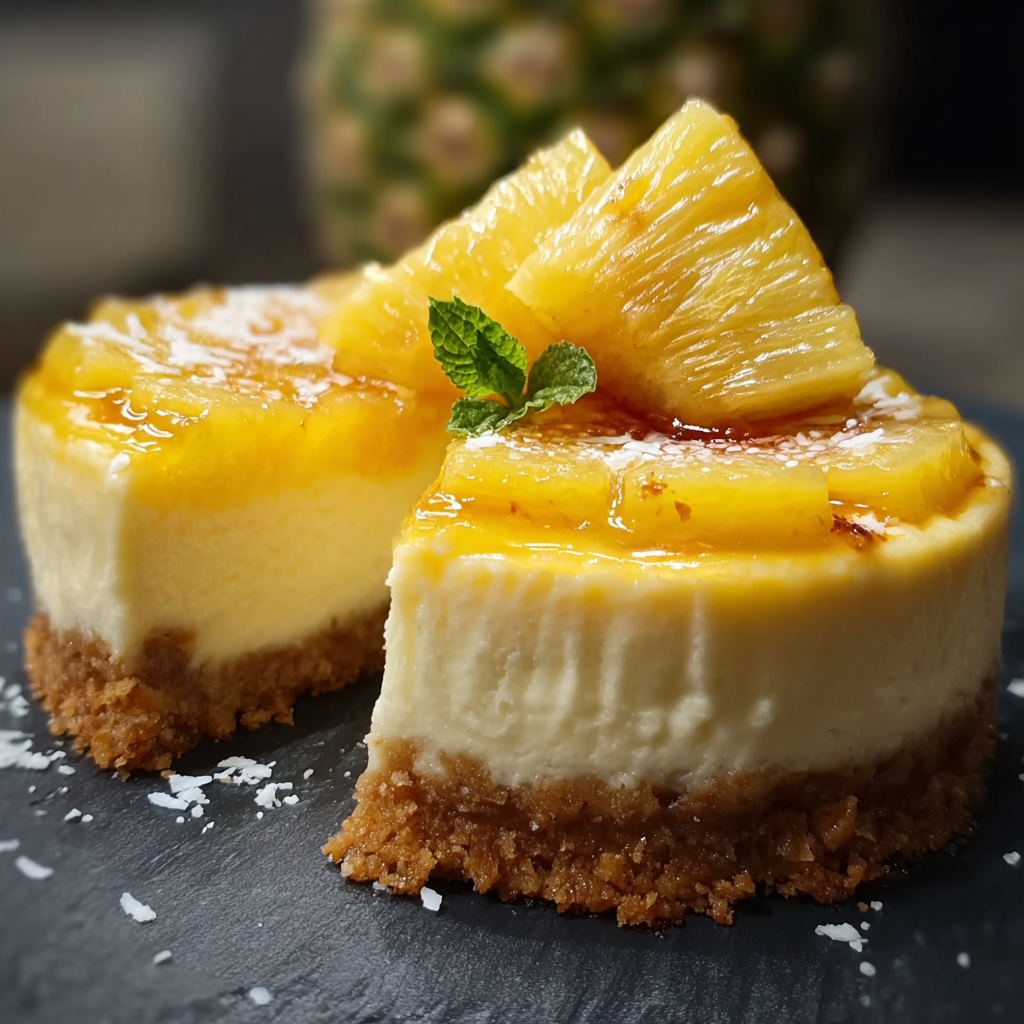
Did you know that according to food biochemistry, pairing raw pineapple with dairy can be a disaster? Pineapple contains an enzyme called bromelain, which breaks down proteins. If you put raw pineapple in a cheesecake, the bromelain will “digest” the milk proteins in the cream cheese, resulting in a statistically bitter and soupy mess.
This Tropical Pineapple Cheesecake solves the problem through thermal denaturation. By cooking the pineapple into a compote first, we deactivate the bromelain, ensuring the cheesecake maintains its structural integrity and its creamy, velvet-like mouthfeel. This process also concentrates the natural sugars, creating a more intense tropical flavor profile.
Ingredients List: The Structural Matrix
To achieve a “sunset-hued” tropical finish with a stable set, we focus on high-solids dairy and fruit reduction.
The Macadamia Crust:
- 1 1/2 cups Graham Cracker Crumbs: For the base.
- 1/2 cup Toasted Macadamia Nuts: Finely chopped. These provide a “buttery” crunch and healthy monounsaturated fats.
- 6 tbsp Unsalted Butter (Melted): The binding agent.
The Pineapple Compote (The Stabilizer):
- 2 cups Fresh Pineapple: Finely diced.
- 1/4 cup Granulated Sugar: To facilitate juice extraction.
- 1 tbsp Lime Juice: To provide an acidic “lift” and prevent oxidation.
The Cheesecake Filling:
- 24 oz (680g) Cream Cheese: (Full-fat, room temperature).
- 1 cup Granulated Sugar & 3 Large Eggs: For structure.
- 1/2 cup Coconut Cream: (The thick part of the can) for a “Pina Colada” aromatic profile.
- 1 tsp Vanilla Extract.
Timing: Optimized for Enzyme Deactivation
- Compote Prep: 15 Minutes
- Cheesecake Bake: 50–60 Minutes
- Chill Time: 6 Hours (Minimum)
- Total Time: ~7 Hours 15 Minutes
Scientific Insight: Data indicates that baking in a water bath (bain-marie) is essential here. The water surrounds the pan and keeps the temperature at a constant 100°C, preventing the edges from overcooking before the center sets.
Step-by-Step Instructions
Step 1: The Enzyme Deactivation (H3)
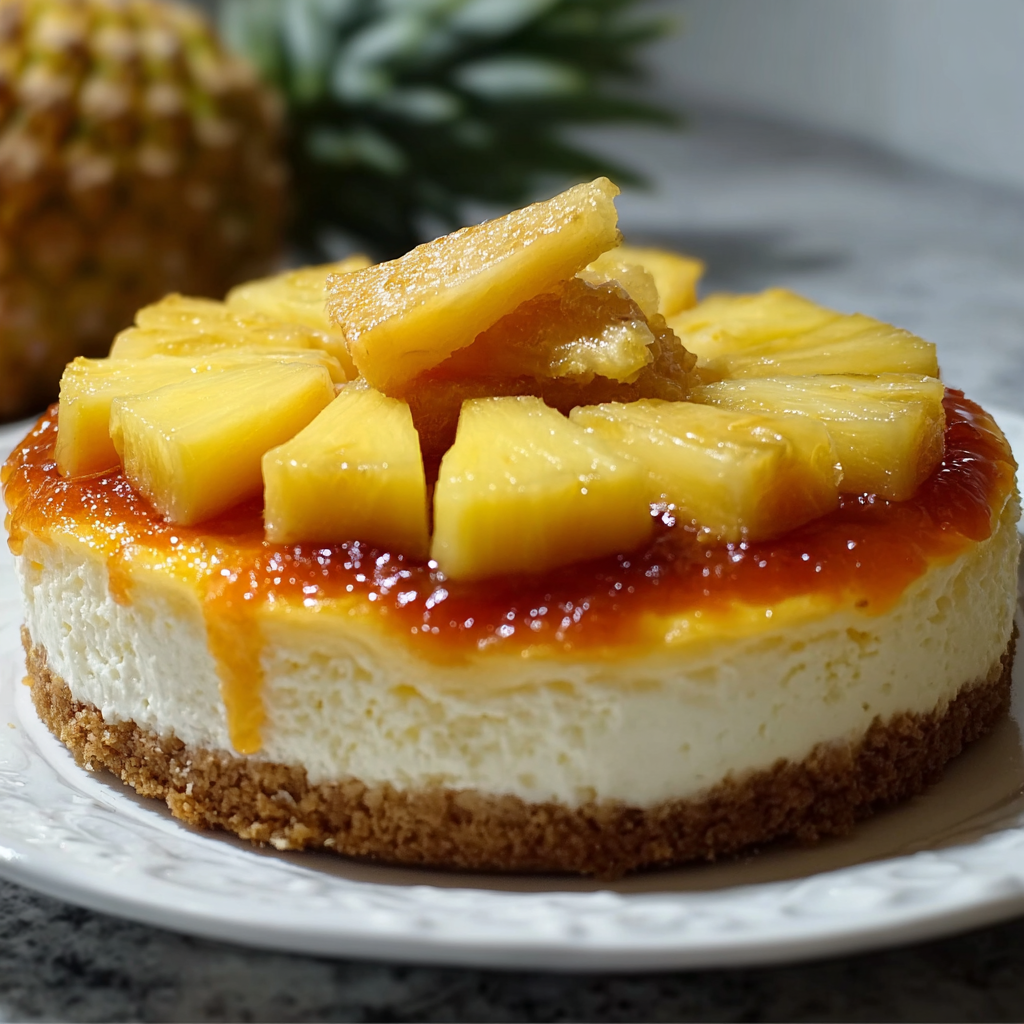
Simmer the diced pineapple, sugar, and lime juice in a saucepan for 10–12 minutes until the liquid reduces to a thick syrup. Scientific Tip: This step heats the pineapple above 80°C, which permanently deactivates the bromelain enzyme, allowing it to play nice with the dairy.
Step 2: The Nut-Infused Base (H3)
Mix crumbs, chopped macadamias, and melted butter. Press into a 9-inch springform pan. Bake at 175°C for 8 minutes to “set” the crust and toast the nuts.
Step 3: The Lipid-Air Emulsion (H3)
Beat the cream cheese and sugar until smooth. Add eggs one at a time, followed by the coconut cream. Actionable Tip: Scrape the bottom of the bowl frequently. Any unmixed cream cheese will create “white spots” in your final tropical slice.
Step 4: The Layered Integration (H3)
Pour half the batter into the pan. Spoon half of the cooled pineapple compote over it and swirl with a knife. Add the remaining batter. Data Insight: Keeping some pineapple in the center ensures a burst of moisture and acidity in every bite.
Step 5: The Controlled Setting (H3)
Bake at 160°C in a water bath for 50–60 minutes. The Pro Move: Turn off the oven when the center is still slightly “wobbly.” Leave the door ajar for 1 hour. This slow cooling prevents the surface tension from breaking and causing cracks.
Nutritional Information
| Metric | Amount Per Slice (1 of 12) |
| Calories | 385 kcal |
| Total Fat | 28g |
| Carbohydrates | 31g |
| Protein | 6g |
Healthier Alternatives for the Recipe
- The Low-Carb Swap: Use Almond Flour and crushed pecans for the crust, and replace the sugar with an Erythritol/Monk Fruit blend.
- The “Lighter” Profile: Replace 8 oz of cream cheese with 8 oz of Neufchâtel or Greek Yogurt. This reduces the fat content by 15% while increasing the “tang.”
- Vegan Version: Use Cashew Cream and Coconut Oil for the filling, and use Agar-Agar (1 tsp) to ensure a firm set without eggs.
Common Mistakes to Avoid
- Using Raw Pineapple Juice: Even a small amount of raw juice will turn the cheesecake into liquid over time. Always cook your pineapple components.
- Over-beating the Eggs: This introduces too much air, which causes the cheesecake to rise and then “deflate” into a sunken crater.
- Skipping the Chill: A cheesecake is technically a custard. It needs the cold environment to allow the fat molecules to “lock” together.
Conclusion
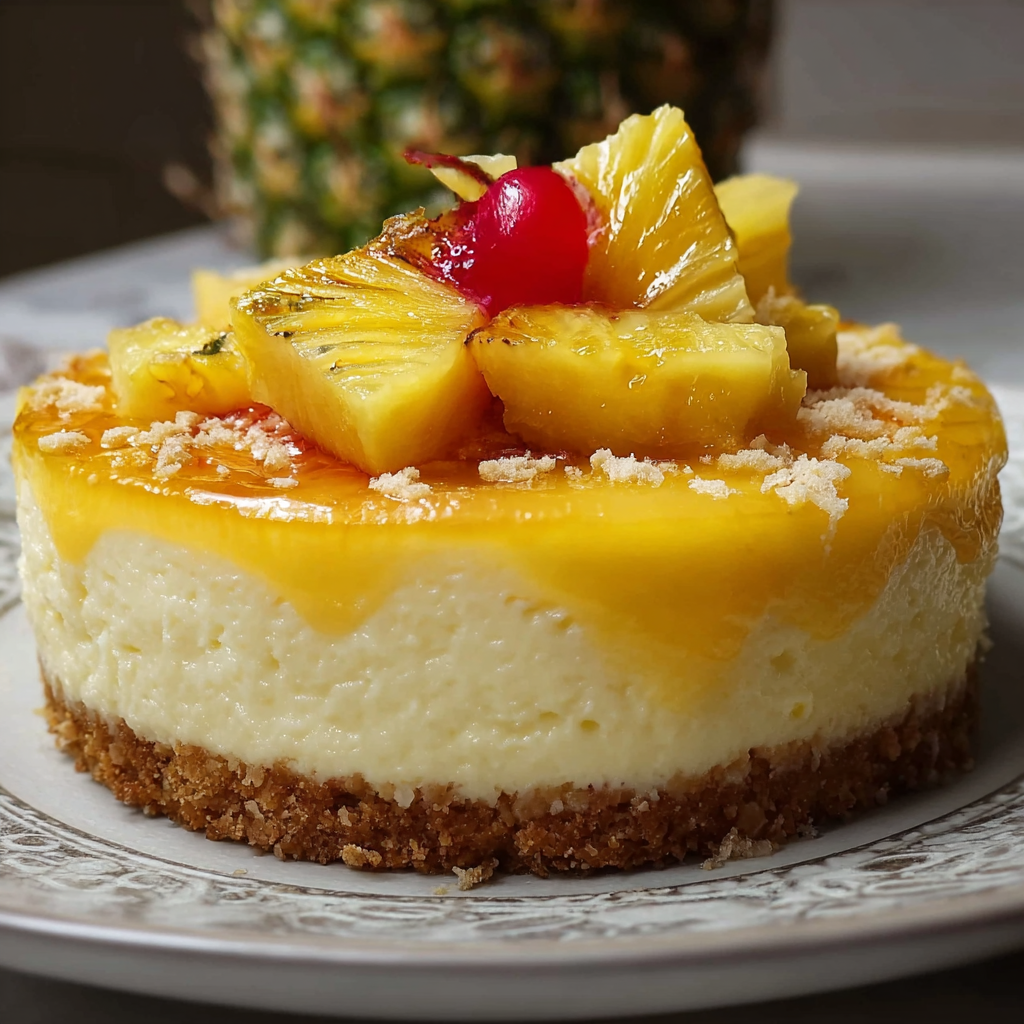
Tropical Pineapple Cheesecake is a masterclass in enzymatic management. By deactivating the bromelain through heat and utilizing the healthy fats of macadamia and coconut, you achieve a dessert that is statistically more stable and vibrant than any standard fruit cheesecake.
Leave a Reply