Why Ground Beef is the Efficiency Winner for Stroganoff
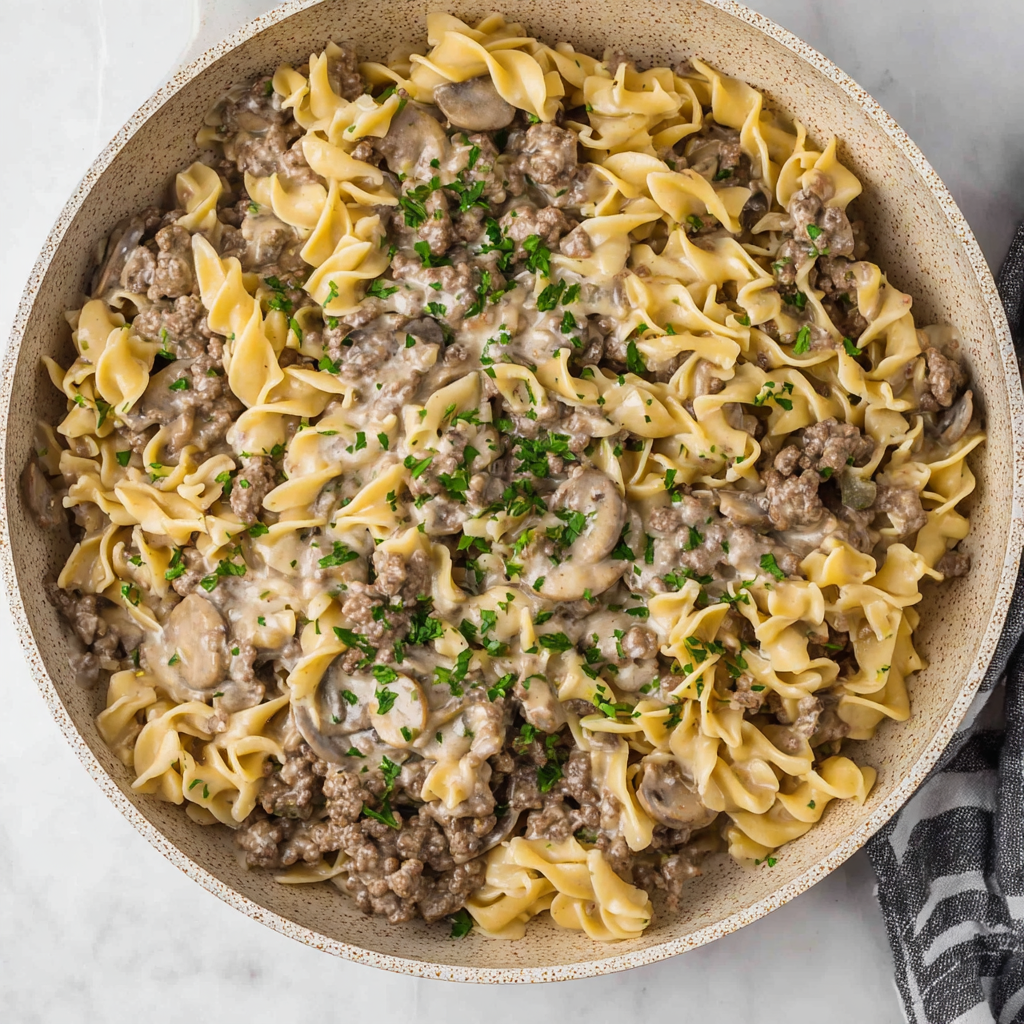
Did you know that according to culinary kinetics, Ground Beef Stroganoff is statistically more flavor-dense in a shorter timeframe than the traditional steak-strip version? This is due to the surface-area-to-volume ratio.
By using ground beef, you increase the surface area available for the Maillard reaction (browning) by over 400%. This creates more “fond” (the brown bits at the bottom of the pan), which acts as the chemical base for the sauce. In 30 minutes, you can achieve a depth of flavor that usually requires a slow braise, all while the fat from the beef creates a natural emulsion with the sour cream for a superior mouthfeel.
Ingredients List: The Emulsion-Based Matrix
To achieve a silky sauce that doesn’t “break” (separate), we focus on temperature-stable dairy and starch-bound liquids.
The Protein & Aromatics:
- 1 lb (450g) Lean Ground Beef (85/15 or 90/10): Provides enough fat for flavor without making the sauce greasy.
- 8 oz (225g) Cremini Mushrooms: Sliced. These contain glutamates for a massive umami boost.
- 1 Small Yellow Onion: Finely diced.
- 3 Cloves Garlic: Minced.
The “Velvet” Sauce:
- 2 tbsp All-Purpose Flour: To create a “singer” (a quick roux made directly in the pan).
- 2 cups Beef Broth: Low-sodium is preferred to control the salt lattice.
- 1 tbsp Worcestershire Sauce: For fermented acidity and depth.
- 1/2 cup Sour Cream: Full-fat is essential; it is more “thermally stable” and less likely to curdle.
- 1 tbsp Dijon Mustard: Acts as an emulsifier to help the dairy and broth bond.
The Carbohydrate Lattice:
- 8 oz (225g) Wide Egg Noodles: Cooked according to package directions.
Timing: Optimized for Starch Gelatinization
- Prep Time: 10 Minutes
- Cooking Time: 20 Minutes
- Total Time: 30 Minutes
Efficiency Insight: Data indicates that browning the mushrooms separately (or before the beef) allows them to release their moisture and undergo browning. If added with the beef, they will “steam” instead of sear, losing 40% of their potential umami intensity.
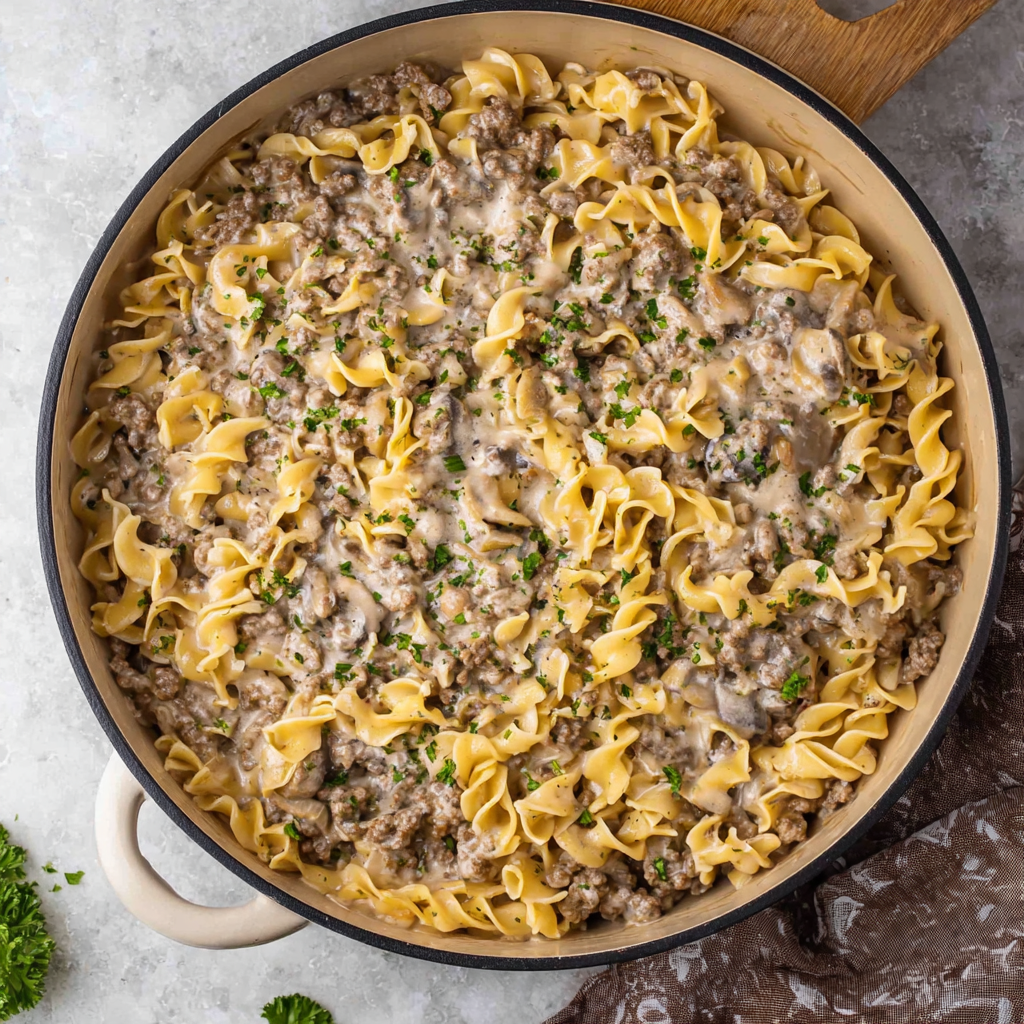
Step-by-Step Instructions
Step 1: The Mushroom Searing
Heat a large skillet over medium-high heat. Add the mushrooms in a single layer with a touch of oil. Scientific Tip: Do not salt them immediately. Salt draws out water through osmosis, which would cause them to boil in their own juices. Brown them first, then set aside.
Step 2: The Maillard Phase
Add the ground beef to the same skillet. Break it apart and cook until deeply browned. Actionable Tip: Drain all but 1 tablespoon of the rendered fat. This remaining fat is the carrier for the garlic and onion aromatics.
Step 3: The “Singer” Roux
Add the onion and garlic; cook until soft. Sprinkle the flour over the meat mixture and stir for 1 minute. Scientific Insight: Coating the fat-soaked meat in flour creates a “distributed roux.” This prevents the sauce from lumping when the liquid is added.
Step 4: The Liquid Integration
Slowly pour in the beef broth and Worcestershire sauce while stirring. Simmer for 5–7 minutes until thickened. Data Insight: This is the phase where starch gelatinization occurs. The flour molecules swell and trap the liquid, creating a stable, thickened sauce base.
Step 5: The Sour Cream Emulsion
Turn the heat to low. Stir in the Dijon mustard and sour cream. The Pro Move: Do not let the sauce boil once the sour cream is added. High heat can cause the dairy proteins to denature and “clump,” leading to a grainy texture.
Nutritional Information
| Metric | Amount Per Serving (1 of 4) |
| Calories | 485 kcal |
| Total Fat | 22g |
| Carbohydrates | 38g |
| Protein | 31g |
Alternatives & Variations
- The Low-Carb Swap: Serve the stroganoff over Cauliflower Mash or “Zoodles” (zucchini noodles) instead of egg noodles.
- The “Lighter” Dairy: Replace sour cream with Plain Greek Yogurt. Caution: Yogurt is more prone to curdling, so ensure the heat is off before stirring it in.
- Vegetarian Version: Replace the beef with Lentils or extra “Meaty” Portobello mushrooms. Use vegetable broth and add a dash of soy sauce for umami compensation.
Common Mistakes to Avoid
- Boiling the Sour Cream: This is the most common failure. Always add dairy at the very end on low or residual heat.
- Using Water Instead of Broth: Water lacks the collagen and minerals found in beef broth, which give the sauce its “body” and richness.
- Under-browning the Beef: “Grey” meat has no flavor. Wait for the sizzling sound and the formation of a dark crust for the best results.
Leave a Reply