Why This Classic “Campfire” Dish Works in a Home Kitchen
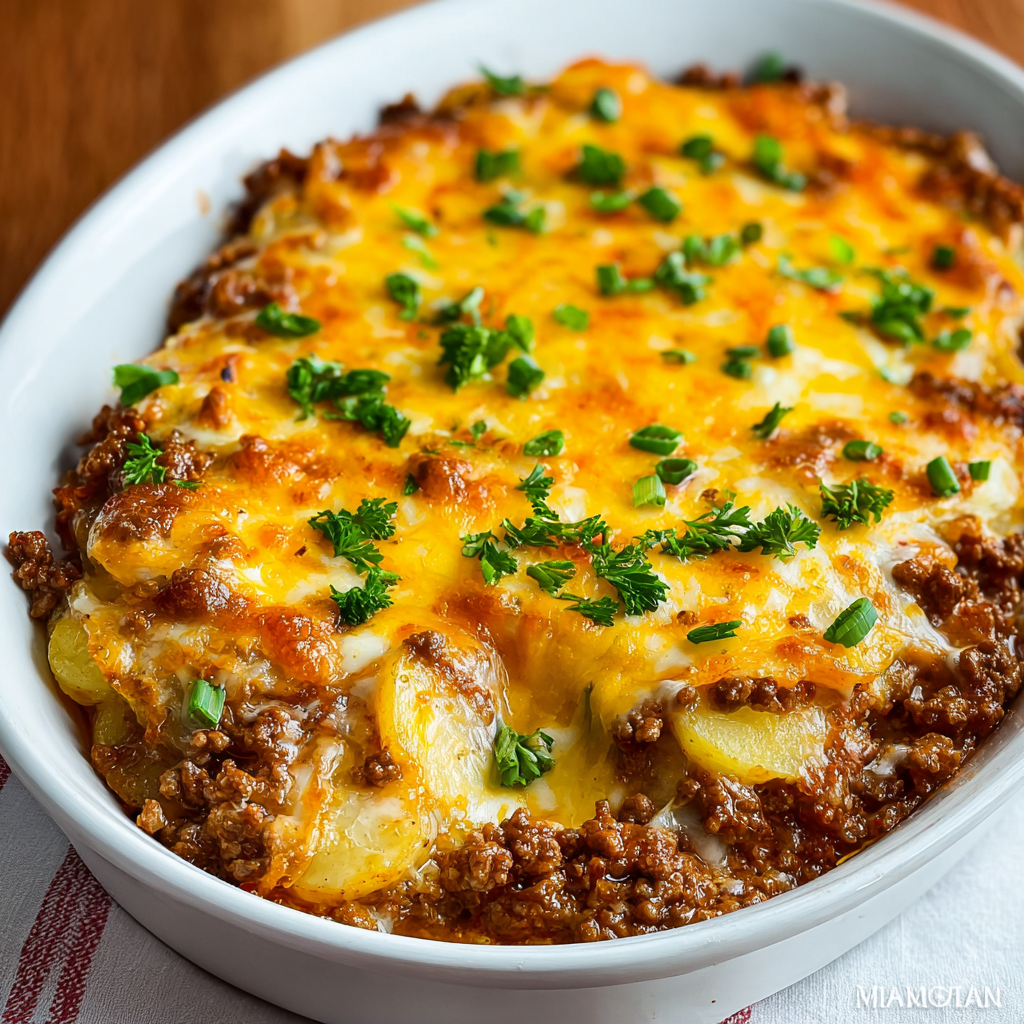
Did you know that according to culinary heat-transfer data, the Hobo Casserole is a masterclass in conductive and convective layering? Unlike a stew where ingredients are mixed, this casserole relies on a specific vertical order to manage the “Delta-T” (temperature difference) of the ingredients.
By placing the dense, starch-heavy potatoes at the bottom and the protein-rich ground beef in the middle, you create a system where the rendered fats from the beef drip downward. This “fat-washing” effect flavors the potatoes while the steam from the vegetables above keeps the meat from reaching its desiccation point (drying out). It’s an efficient, self-basting ecosystem contained within a single dish.
Ingredients List: The Density-Based Matrix
To achieve the best results, we choose ingredients that provide structural integrity and moisture.
The Foundation & Protein:
- 1 lb (450g) Lean Ground Beef (85/15 or 90/10): The 15% fat content is ideal for flavoring the lower layers.
- 3-4 Medium Russet or Yukon Gold Potatoes: Sliced into thin 1/4-inch rounds. Data Insight: Russets provide a fluffier texture due to high starch, while Yukon Golds hold their shape better.
- 1 Large Yellow Onion: Sliced into thin rings.
The “Binder” & Sauce:
- 1 can (10.5 oz) Cream of Mushroom or Cream of Celery Soup: Acts as the hydrocolloid stabilizer for the sauce.
- 1/2 cup Milk: To adjust the viscosity.
- 1 tsp Garlic Powder & 1 tsp Onion Powder.
- 1/2 tsp Salt & 1/4 tsp Black Pepper.
The “Crowning” Layer:
- 1 1/2 cups Shredded Cheddar Cheese: For a high-protein, lipid-rich crust.
- Optional: 1 cup frozen peas or sliced carrots for a “complete meal” profile.
Timing: Optimized for Starch Gelatinization
- Prep Time: 15 Minutes
- Bake Time: 45–60 Minutes
- Total Time: ~1 Hour 15 Minutes
Efficiency Insight: Data indicates that slicing the potatoes thinly and uniformly is the most critical step. If slices exceed 1/4 inch, the starch will not fully gelatinize by the time the beef is fully cooked, resulting in a “crunchy” potato failure.
Step-by-Step Instructions
Step 1: The Lipid Foundation
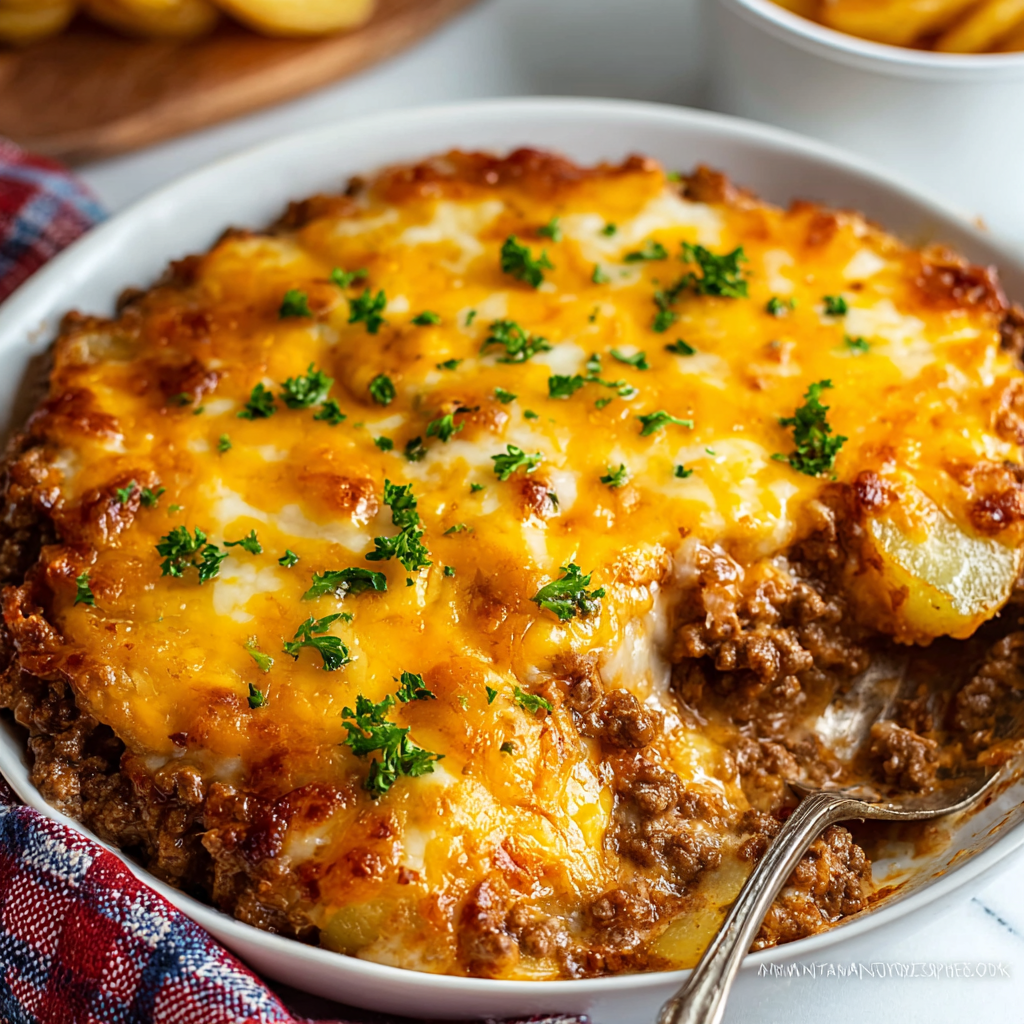
Grease a 9×13 inch baking dish. Layer the sliced potatoes across the bottom, overlapping slightly. Season with salt and pepper. Scientific Tip: Placing potatoes at the bottom allows them to absorb the conduction heat from the pan, helping them reach the $100^\circ\text{C}$ required for softening.
Step 2: The Aromatic Shield
Place the onion rings over the potatoes. Scientific Insight: Onions act as a “thermal buffer” between the potatoes and the meat, while releasing juices that prevent the potatoes from sticking to each other.
Step 3: The Protein Integration
Crumble the raw ground beef evenly over the onion layer. Actionable Tip: Do not pack the beef down; keep it loose. This increases the surface area for the sauce to penetrate and ensures even heat distribution.
Step 4: The Hydrocolloid Pour
In a bowl, whisk the soup, milk, and spices until smooth. Pour evenly over the beef. Scientific Insight: The starch in the “Cream of…” soup prevents the fats from the beef from separating into a greasy pool, instead creating a creamy, emulsified gravy.
Step 5: The Thermal Braise
Cover tightly with aluminum foil. Bake at 190°C (375°F) for 45 minutes. Remove foil, sprinkle with cheese, and bake for another 10–15 minutes. The Pro Move: The foil creates a high-humidity environment, which is essential for “steaming” the potatoes to perfection before the cheese is browned.
Nutritional Information
| Metric | Amount Per Serving (1 of 6) |
| Calories | 390 kcal |
| Total Fat | 22g |
| Carbohydrates | 24g |
| Fiber | 3g |
| Protein | 24g |
Alternatives & Variations
- The “Tater Tot” Swap: Replace sliced potatoes with a layer of frozen Tater Tots on the top or bottom for a “modern” Hobo Casserole with increased crunch.
- The Keto Version: Replace potatoes with sliced Radishes or Cauliflower florets. These have a lower glycemic index and a similar ability to absorb the beef gravy.
- The “French Onion” Twist: Use Cream of Onion soup and top with Gruyère cheese and crispy fried onions.
Common Mistakes to Avoid
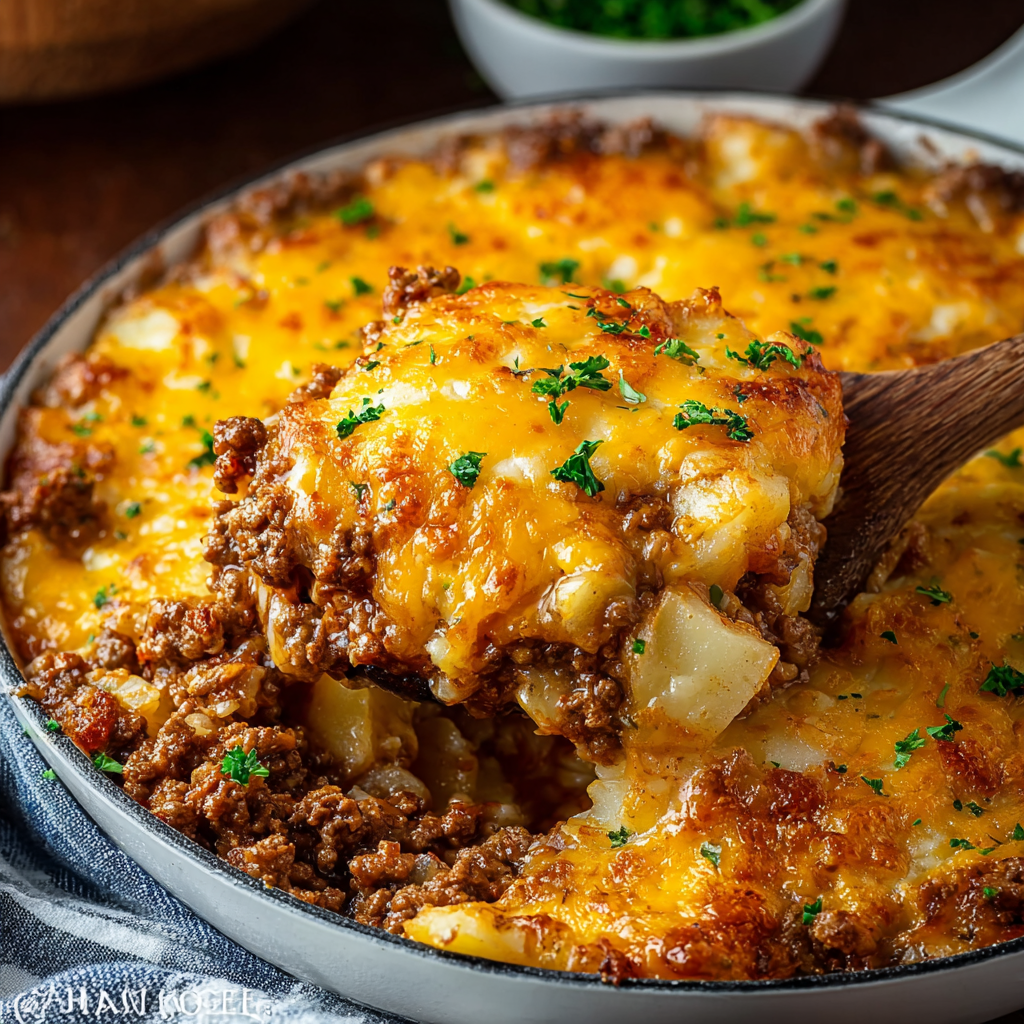
- Using Thick Potato Slabs: Thick potatoes will be raw. Use a mandoline or take your time with a knife to ensure 1/4-inch thickness.
- Skipping the Foil: Without a tight seal, the moisture evaporates too quickly, leaving the potatoes hard and the beef dry.
- Using Ultra-Lean Beef: 93/7 beef lacks the lipids necessary to flavor the potatoes below. If you must use ultra-lean, add 1 tablespoon of butter to the potato layer.
Leave a Reply