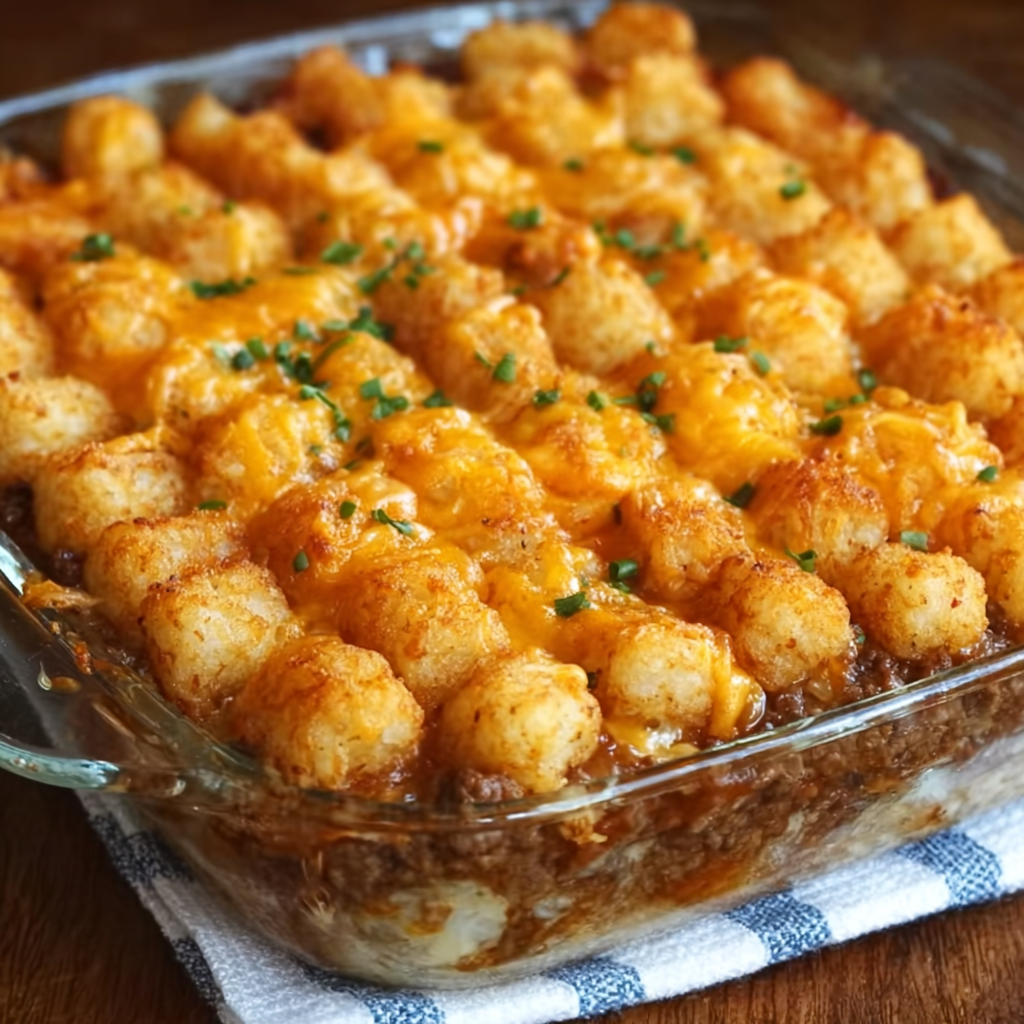
Why is the Tater Tot Casserole a Structural Masterpiece?
Did you know that according to culinary engineering, the Tater Tot Casserole (often called “Hotdish” in the Upper Midwest) is a study in moisture-gradient management? The dish is designed to solve a specific problem: how to keep a potato crisp while it sits atop a bubbling lake of gravy.
The secret lies in the porous structure of the tater tot itself. Unlike a solid slice of potato, a tater tot is composed of shredded potato pieces with high surface area. When baked, the bottom of the tot absorbs the savory fats from the meat through capillary action, while the top remains exposed to the dry, hot air of the oven. This creates a “dual-texture” result that is statistically more satisfying than a standard mashed-potato topping.
Ingredients List: The Emulsion-Based Matrix
To achieve the iconic “creamy-yet-crunchy” balance, we focus on high-viscosity binders and high-surface-area starches.
The Foundation (The Protein):
- 1 lb (450g) Ground Beef: (80/20 or 85/15). The fat is a flavor carrier for the potatoes.
- 1/2 Small Yellow Onion: Diced.
- 2 Cloves Garlic: Minced.
- 1 tsp Worcestershire Sauce: To add fermented umami depth.
The “Binder” (The Gravy):
- 1 can (10.5 oz) Cream of Mushroom Soup: The hydrocolloid stabilizer that prevents the sauce from breaking.
- 1/2 cup Milk or Beef Broth: To achieve the perfect “flow” consistency.
- 1 cup Frozen Mixed Vegetables: (Peas, carrots, corn).
The “Shield” (The Topping):
- 1 bag (approx. 28 oz) Frozen Tater Tots: Do not thaw. Frozen tots retain their internal moisture better during the initial bake.
- 1 1/2 cups Shredded Cheddar Cheese: For the final protein-lipid melt.
Timing: Optimized for Starch Gelatinization
- Prep Time: 15 Minutes
- Bake Time: 35–40 Minutes
- Total Time: ~55 Minutes
Efficiency Insight: Data indicates that browning the beef thoroughly before assembly is the most critical step. This ensures the meat undergoes the Maillard reaction, creating a complex flavor profile that the mild potatoes cannot provide on their own.
Step-by-Step Instructions
Step 1: The Maillard Phase
In a large skillet, brown the ground beef and onion. Drain the excess fat, leaving about 1 tablespoon. Scientific Tip: Leaving a small amount of fat allows the garlic (added in the last 60 seconds) to release its fat-soluble aromatics without burning.
Step 2: The Gravy Emulsion
Stir in the soup, milk, Worcestershire sauce, and frozen vegetables. Actionable Tip: Taste the mixture now. Because the tater tots are often pre-salted, you want the “gravy” to be savory but not overly salty.
Step 3: The Geometric Assembly
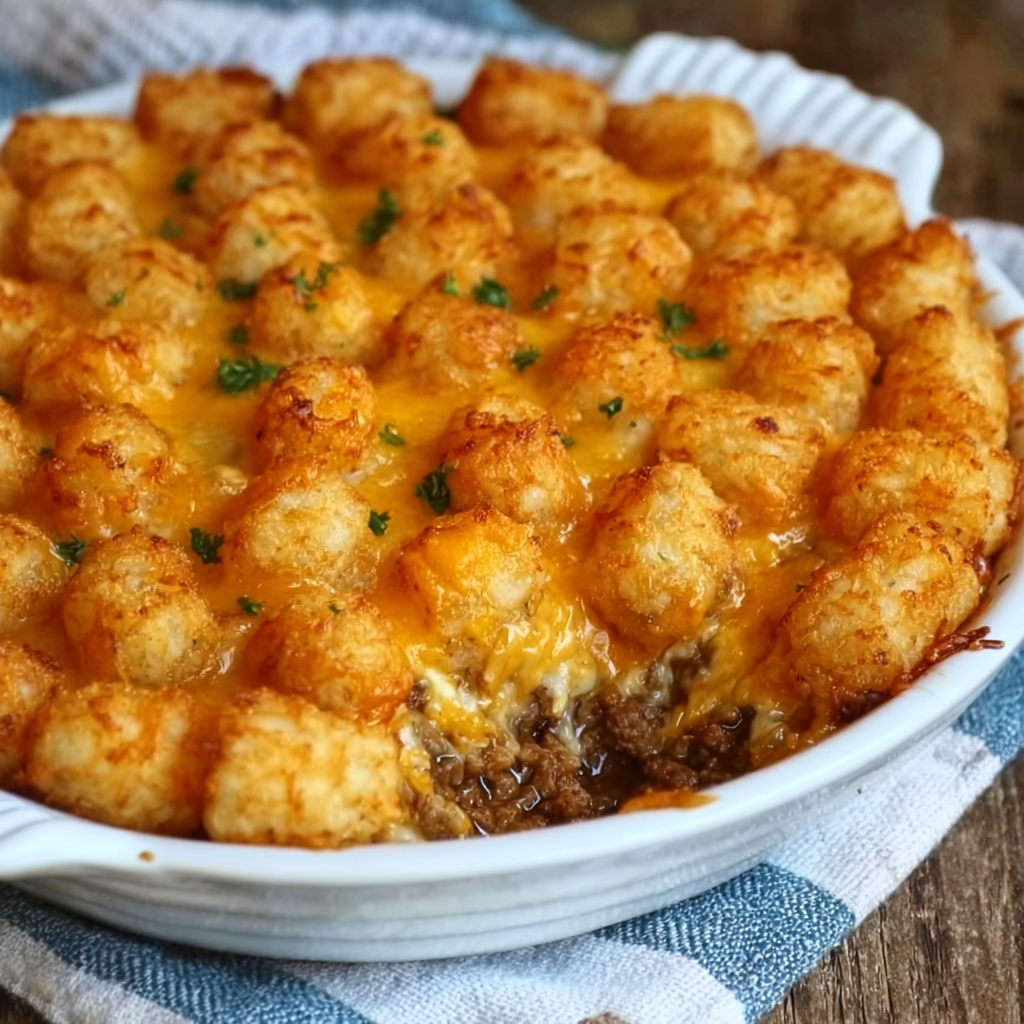
Pour the beef mixture into a 9×13 inch baking dish. Arrange the tater tots in neat, vertical rows. Scientific Insight: Arranging tots in rows rather than dumping them randomly allows for better air convection between the tots, leading to a crisper exterior on all sides.
Step 4: The Thermal Dehydration
Bake at 190°C (375°F) for 30 minutes. Data Insight: High heat is required to evaporate the surface moisture of the frozen tots quickly, turning the starch into a rigid, crispy shell.
Step 5: The Cheese “Fossilization”
Sprinkle the cheese over the top and bake for another 5–10 minutes until bubbling. The Pro Move: Switch to the “Broil” setting for the last 2 minutes. This creates a “lace-like” browned cheese crust that provides a final layer of textural contrast.
Nutritional Information
| Metric | Amount Per Serving (1 of 6) |
| Calories | 445 kcal |
| Total Fat | 28g |
| Carbohydrates | 32g |
| Fiber | 4g |
| Protein | 22g |
Common Mistakes to Avoid
- Thawing the Tots: Thawed tater tots will absorb the gravy too quickly and become “mushy” before the top can crisp. Keep them in the freezer until the second you are ready to assemble.
- Skipping the Onions: Onions provide the necessary sulfur compounds that balance the richness of the cream soup.
- Using a Shallow Pan: If your pan is too shallow, the gravy will bubble over. Use a dish with at least 2 inches of depth to accommodate the “expansion” of the sauce.
Conclusion
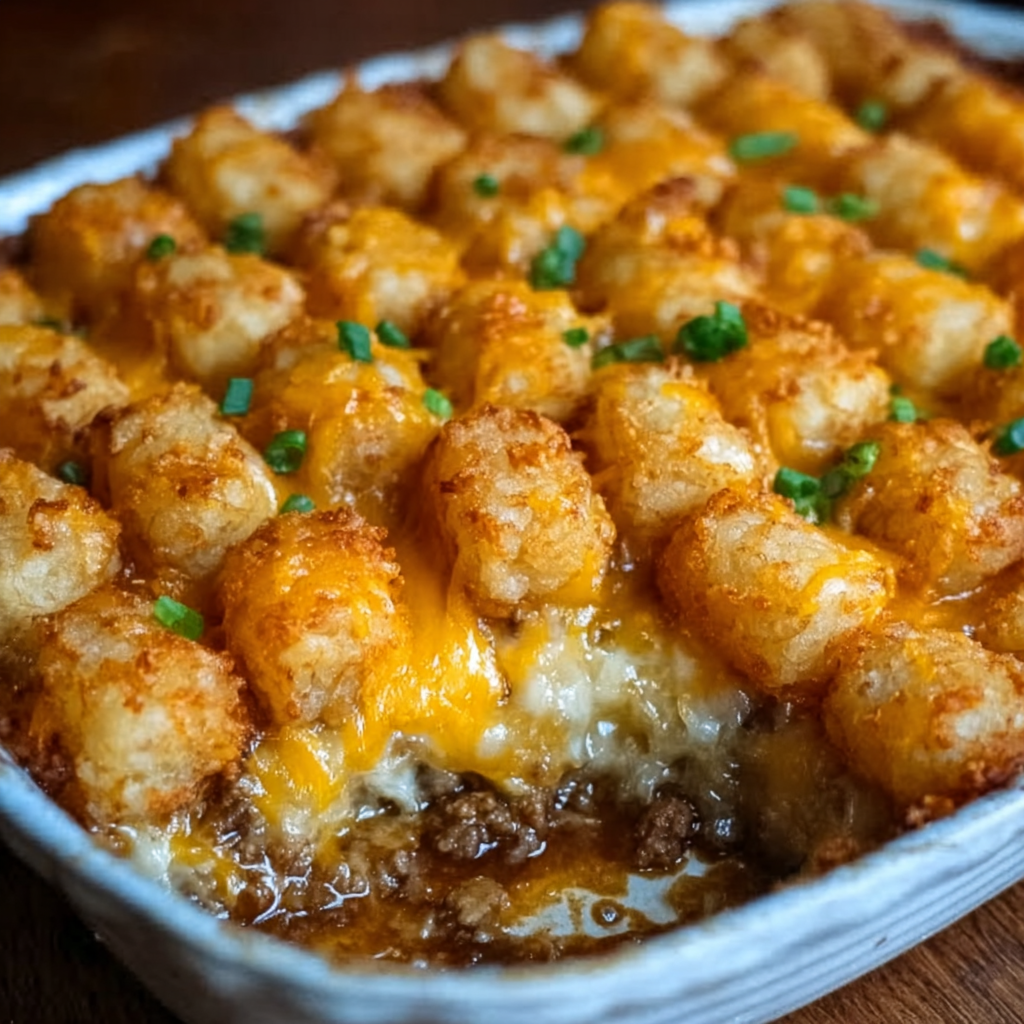
Tater Tot Casserole is a triumph of vertical layering and moisture control. By utilizing the unique geometry of the tater tot and a stabilized cream base, you achieve a dish that is statistically more comforting and texturally diverse than a standard beef stew.
Leave a Reply