Why is French Apple Cake Different from American Apple Cake?
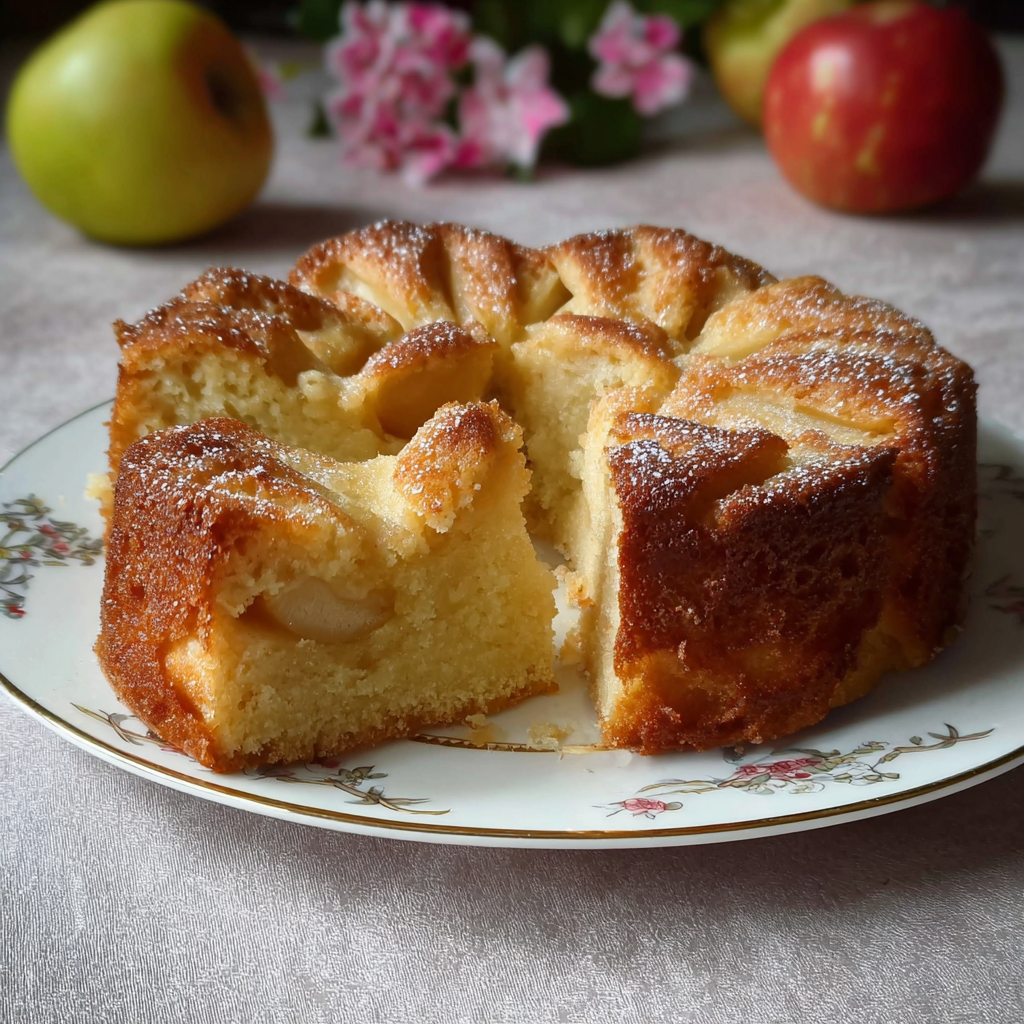
Did you know that according to pastry physics, the French Apple Cake is statistically more of a “custard-bound fruit pile” than a traditional sponge? While American apple cakes prioritize the cake-to-fruit ratio ($2:1$ or higher), Grandma’s classic French method utilizes a high-inclusion ratio (nearly $1:1$).
The secret lies in the low-moisture crumb. Because the cake contains such a high volume of apples—which are roughly 86% water—the batter must be high in fat and low in liquid. As the cake bakes, the apples undergo osmotic dehydration, releasing their juices directly into the surrounding starch, which creates a texture that sits perfectly between a soft sponge and a creamy custard.
Ingredients List: The Pectin-Starch Matrix
To achieve that “melt-in-your-mouth” texture with a crackly top, we focus on high-quality lipids and tart, structural apples.
The Fruit Foundation:
- 3-4 Large Baking Apples: (Honeycrisp, Braeburn, or Granny Smith). Data Insight: These varieties have high pectin levels, allowing them to hold their shape during the 40-minute bake instead of turning into applesauce.
- 1 tbsp Rum or Calvados: To provide an aromatic “lift” and a subtle enzymatic tenderization of the fruit.
The “Custard” Batter:
- 1 cup All-Purpose Flour: The structural lattice.
- 1 tsp Baking Powder: For a light, airy “lift” around the heavy fruit.
- 2 Large Eggs: At room temperature for better protein-lipid emulsification.
- 3/4 cup Granulated Sugar: To create the iconic “crackly” top.
- 1/2 cup Unsalted Butter (Melted & Cooled): Provides the “melt” factor.
- 1 tsp Vanilla Extract & a pinch of Salt.
Timing: Optimized for Sugar Crystallization
- Prep Time: 15 Minutes
- Bake Time: 40–50 Minutes
- Total Time: ~1 Hour 5 Minutes
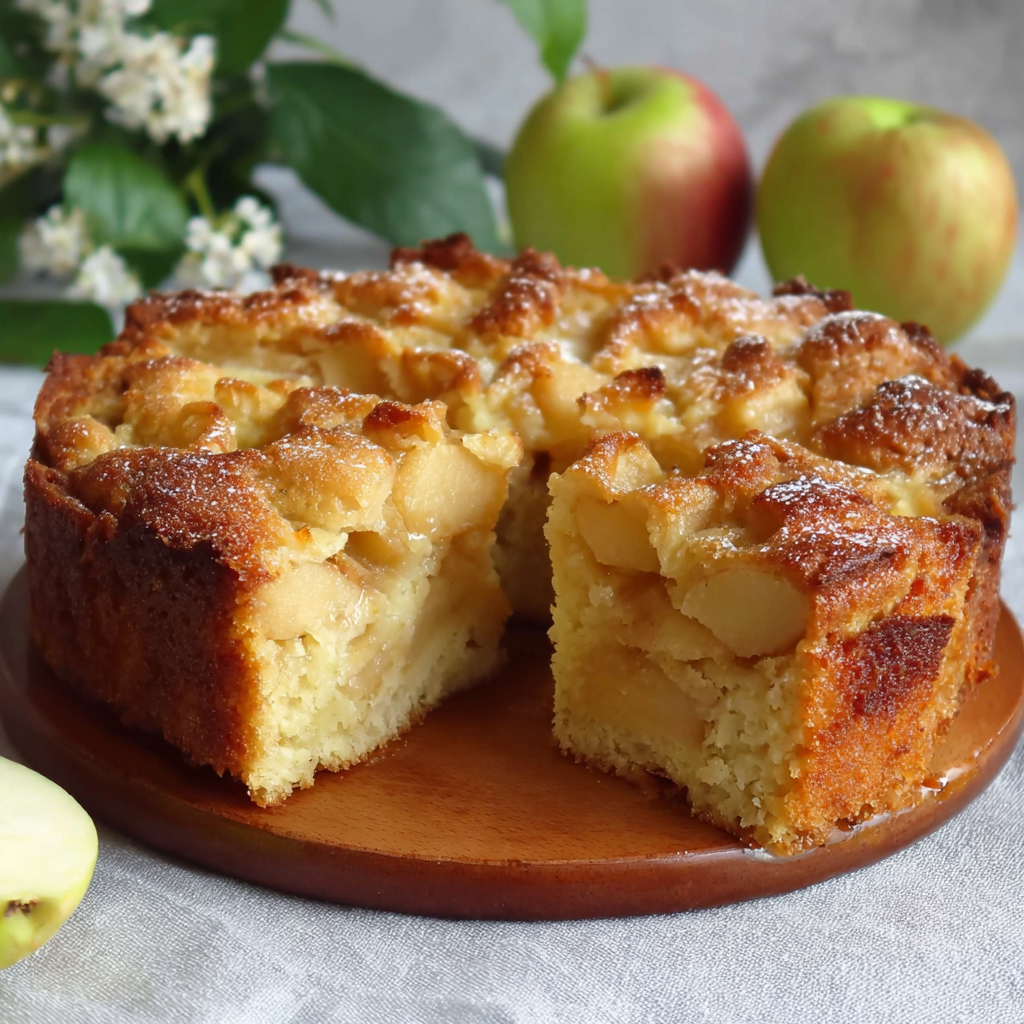
Efficiency Insight: Data indicates that cutting the apples into two different shapes (small cubes and thin slices) is the pro secret. The cubes melt into the batter for moisture, while the slices provide structural “ribs” that keep the cake from collapsing.
Step-by-Step Instructions
Step 1: The Aromatic Maceration
Peel and slice the apples. Toss them with the rum. Scientific Tip: The alcohol in the rum acts as a solvent, extracting the fat-soluble aromatics from the apples and the vanilla that will be added later, intensifying the overall flavor profile.
Step 2: The Egg-Sugar Aeration
Whisk the eggs and sugar together until they are pale and “ribbon-like.” Actionable Tip: Don’t rush this! You are creating a stable foam. The air trapped here is what prevents the heavy apples from sinking to the bottom of the pan.
Step 3: The Lipid-Starch Fold
Whisk in the melted butter and vanilla, then gently fold in the dry ingredients. Scientific Insight: Folding by hand instead of using a mixer prevents the over-development of gluten. In a fruit-heavy cake, you want the crumb to be tender, not “bready.”
Step 4: The High-Inclusion Mix
Fold the apples into the batter. The mixture will look like “apples with a little bit of glue”—this is correct. Data Insight: The small amount of batter acts as a structural binder for the fruit.
Step 5: The Thermal Maillard Finish
Pour into a greased springform pan. Sprinkle an extra tablespoon of sugar over the top. Bake at 175°C (350°F) for 40–50 minutes. The Pro Move: The sugar on top will undergo thermal crystallization, creating a thin, glassy crust that contrasts beautifully with the custardy interior.
Nutritional Information
| Metric | Amount Per Slice (1 of 8) |
| Calories | 245 kcal |
| Total Fat | 12g |
| Carbohydrates | 31g |
| Fiber | 2g |
| Protein | 3g |
Common Mistakes to Avoid
- Using “Mealy” Apples: Varieties like Red Delicious lack the acidity and structural pectin required for this cake. They will turn into mush and ruin the “inclusion” texture.
- Over-Baking: Because this cake is so moist, a toothpick might not come out perfectly dry. Look for the cake to be golden brown and starting to pull away slightly from the edges of the pan.
- Using Cold Butter: If the butter is too cold, it won’t emulsify with the egg foam, resulting in a “streaky” batter and an uneven bake.
Conclusion
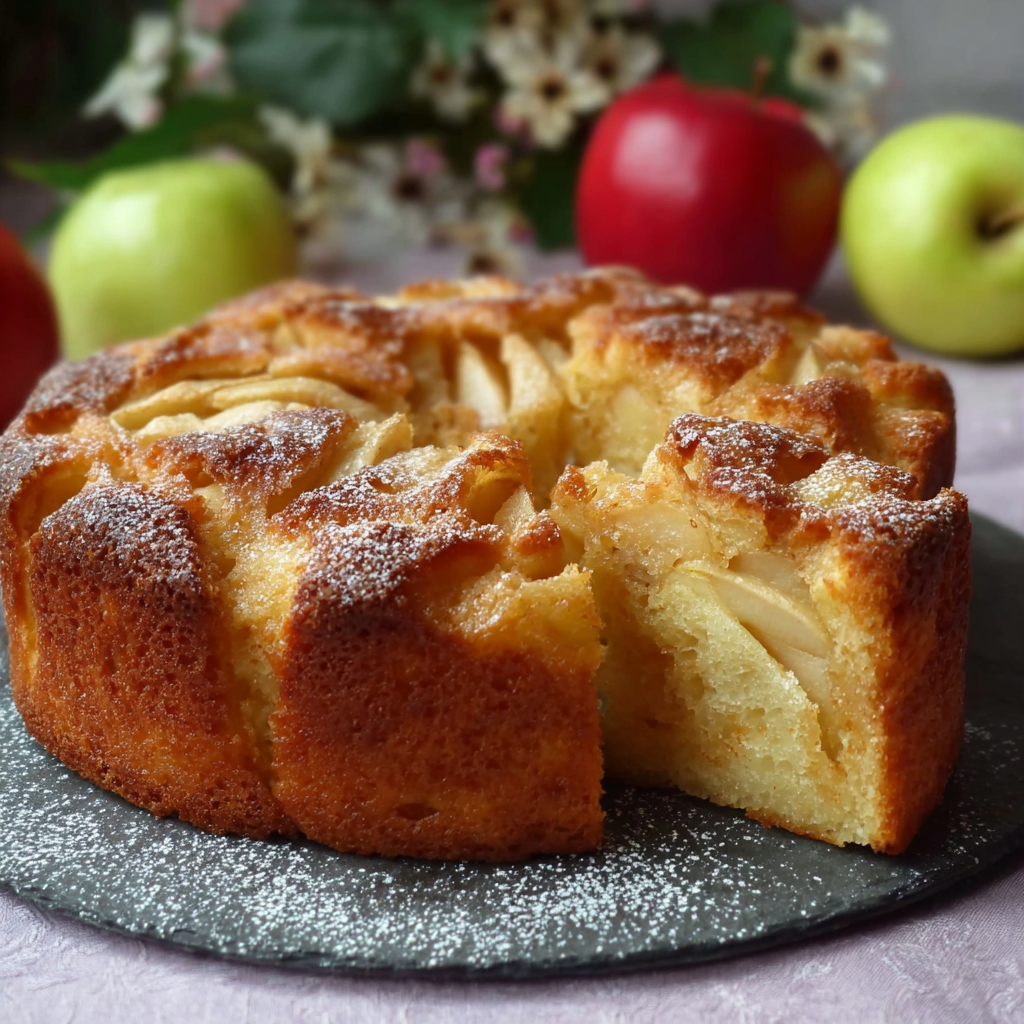
Grandma’s Classic French Apple Cake is a triumph of fruit-to-starch ratios. By prioritizing a high volume of pectin-rich apples and a stable egg-sugar foam, you achieve a dessert that is statistically more sophisticated and texturally superior to standard sponges.
Leave a Reply