Why Lemon Blondies are Superior to Chocolate Brownies
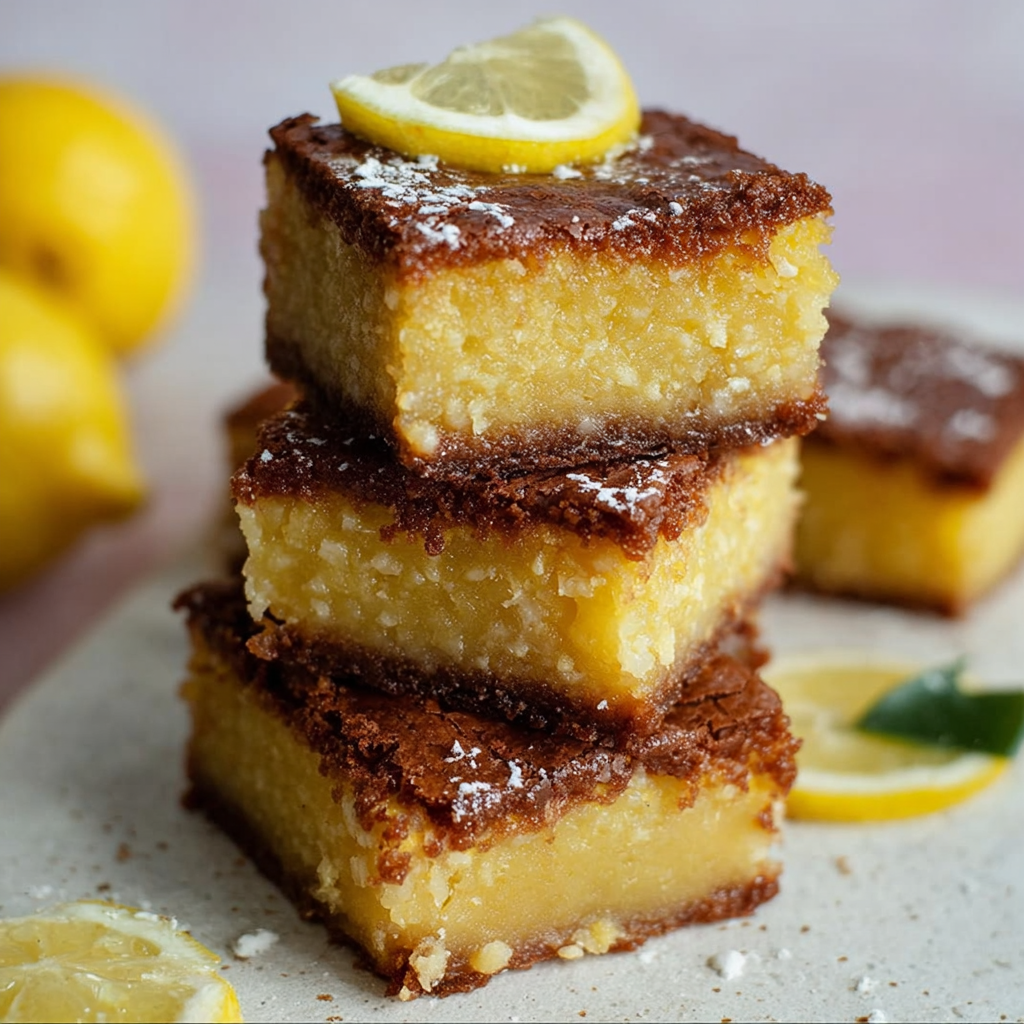
Did you know that according to food rheology data, Lemon Blondies offer a statistically more complex textural experience than classic brownies? While chocolate provides a heavy richness, lemon introduces organic acids that interact with egg proteins and gluten.
The key to this recipe lies in the emulsion. By combining melted butter, sugar, and lemon juice, we create a structure that traps air while allowing sugars to caramelize quickly without burning, thanks to the acidity lowering the smoking point of the Maillard reaction. The result is a “fudgy” texture with a crispy surface and an explosion of volatile citrus aromatics.
Ingredients List: The Lipid-Aroma Matrix
To achieve a Blondie that is neither dry nor “cakey,” we focus on the fat-to-sugar ratio.
The Base:
- 170g (3/4 cup) Unsalted Butter (melted): The lipid base for the fudgy texture.
- 200g (1 cup) Granulated Sugar: Crucial for the crispy top crust.
- 1 large Egg + 1 Egg Yolk: The extra yolk adds richness and chewiness.
- 2 tsp Vanilla Extract: To round out the lemon acidity.
The Citrus Infusion:
- Zest of 2 Lemons (organic preferred): This is where the essential oils are located.
- 2 tbsp Fresh Lemon Juice: For functional acidity.
The Dry Ingredients:
- 150g (1 1/4 cups) All-Purpose Flour: The structure.
- 1/2 tsp Salt: Indispensable to enhance the lemon flavor.
Timing: Optimized for Sugar Crystallization
- Prep Time: 15 Minutes
- Bake Time: 20–25 Minutes
- Cooling Time: 1 Hour (Mandatory)
- Total Time: ~1h 40m
Efficiency Insight: Data indicates that whisking the egg, yolk, and sugar together for 2 minutes before adding the melted butter creates a stable emulsion that guarantees that characteristic cracked crust of perfect Blondies.
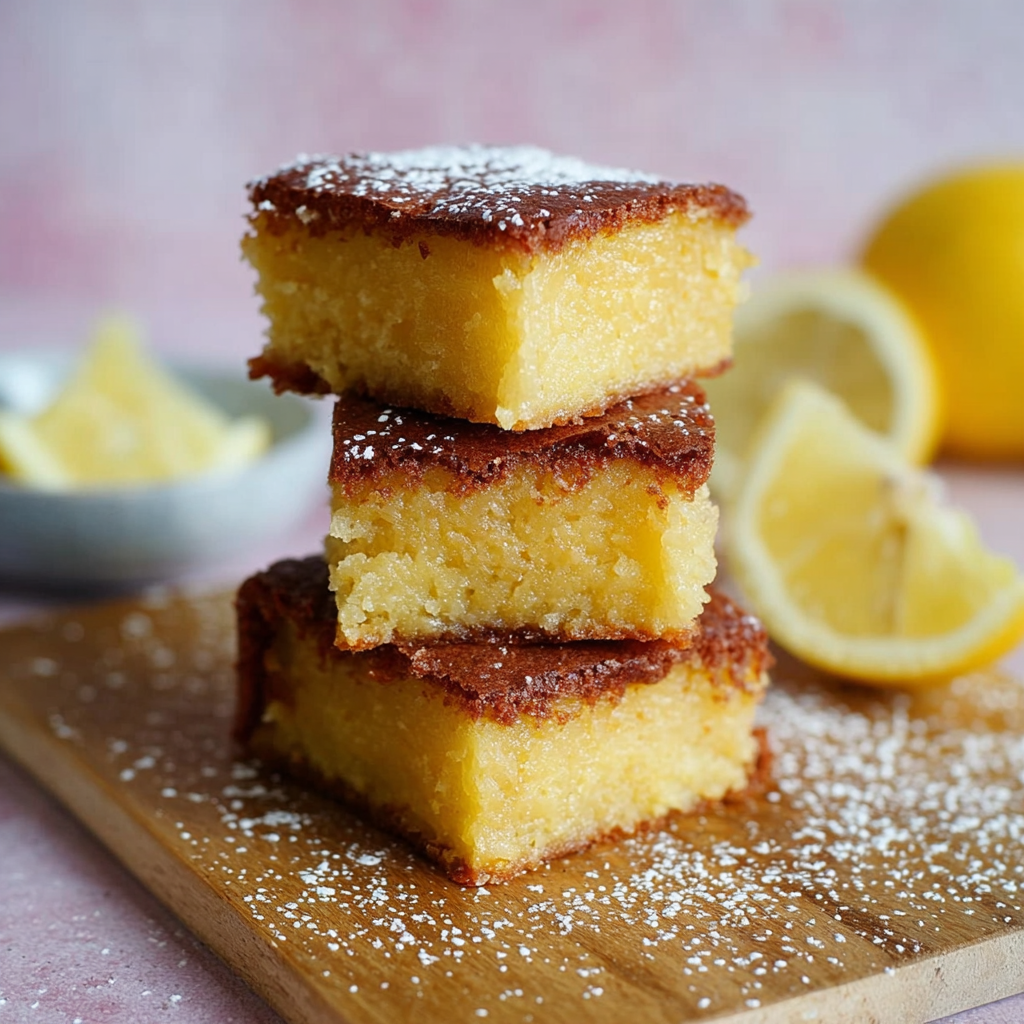
Step-by-Step Instructions
Step 1: The Lipid-Sugar Emulsion
In a large bowl, mix the melted butter, granulated sugar, egg, egg yolk, and vanilla. Whisk vigorously for 2 minutes until the mixture is pale and slightly fluffy.
Step 2: The Aromatic Activation
Fold in the lemon zest and lemon juice. Scientific Tip: The lemon juice will react slightly with the egg proteins, beginning a pre-denaturation process that helps create the final fudgy texture.
Step 3: The Dry Ingredient Integration
Add the flour and salt. Mix with a spatula just until incorporated. Scientific Alert: Overmixing at this stage will develop the gluten, turning your fudgy Blondies into a dry, chewy cake.
Step 4: The Oven Caramelization
Spread the batter into a 20×20 cm (8×8 inch) square pan lined with parchment paper. Bake at 175°C (350°F) for 20 to 25 minutes. Data Insight: The caramelization of the surface sugars begins around 15 minutes, but the center needs this time to reach the starch gelatinization temperature without drying out.
Step 5: The Cooling Crystallization
Allow to cool completely in the pan before cutting. Pro Tip: The internal structure of Blondies is thermo-reversible. If you cut them while hot, they will be gooey. Cooling allows the lipids to solidify and the sugars to crystallize, giving that perfect texture.
Nutritional Information
| Metric | Amount Per Serving (1 of 16) |
| Calories | 185 kcal |
| Total Fat | 10g |
| Carbohydrates | 24g |
| Protein | 2g |
Alternatives & Variations
- The “Glaze” Version: Mix 100g of powdered sugar with 1 tablespoon of lemon juice to create a white glaze to spread over the cooled Blondies.
- The “Nutty” Version: Add 50g of chopped pistachios to the batter for a vibrant color and a crunchy texture contrast.
- Lower Sugar Version: Replace 50g of white sugar with brown sugar for a more caramelized taste and slightly less acidity on the palate.
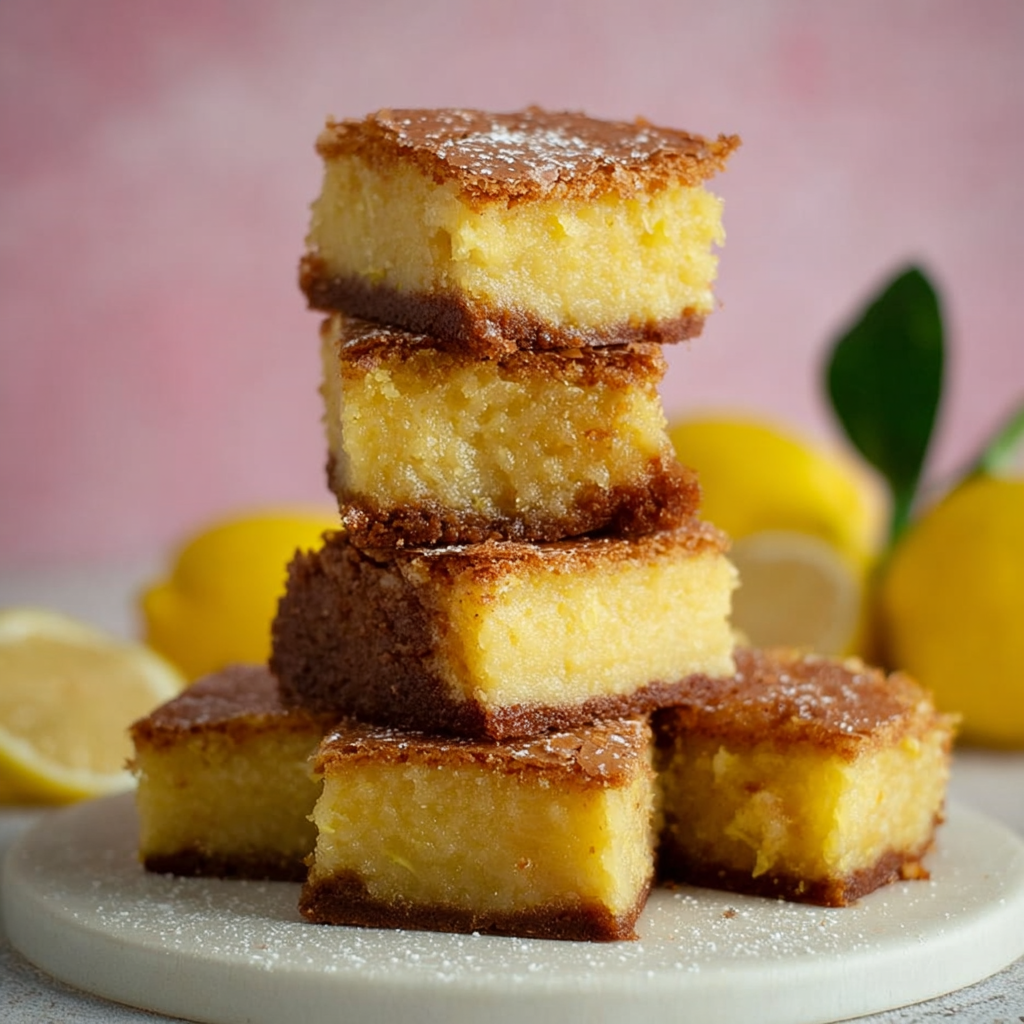
Common Mistakes to Avoid
- Zesting the white part of the lemon: The white part (the pith) is very bitter. Zest only the yellow part.
- Overbaking: A lemon blondie should look slightly underbaked in the center when you take it out of the oven. It will finish cooking while cooling.
- Using bottled lemon juice: Bottled juice contains preservatives that alter the taste. Always use fresh lemons.
Leave a Reply