Why Thai Coconut Skewers are a Textural Triumph
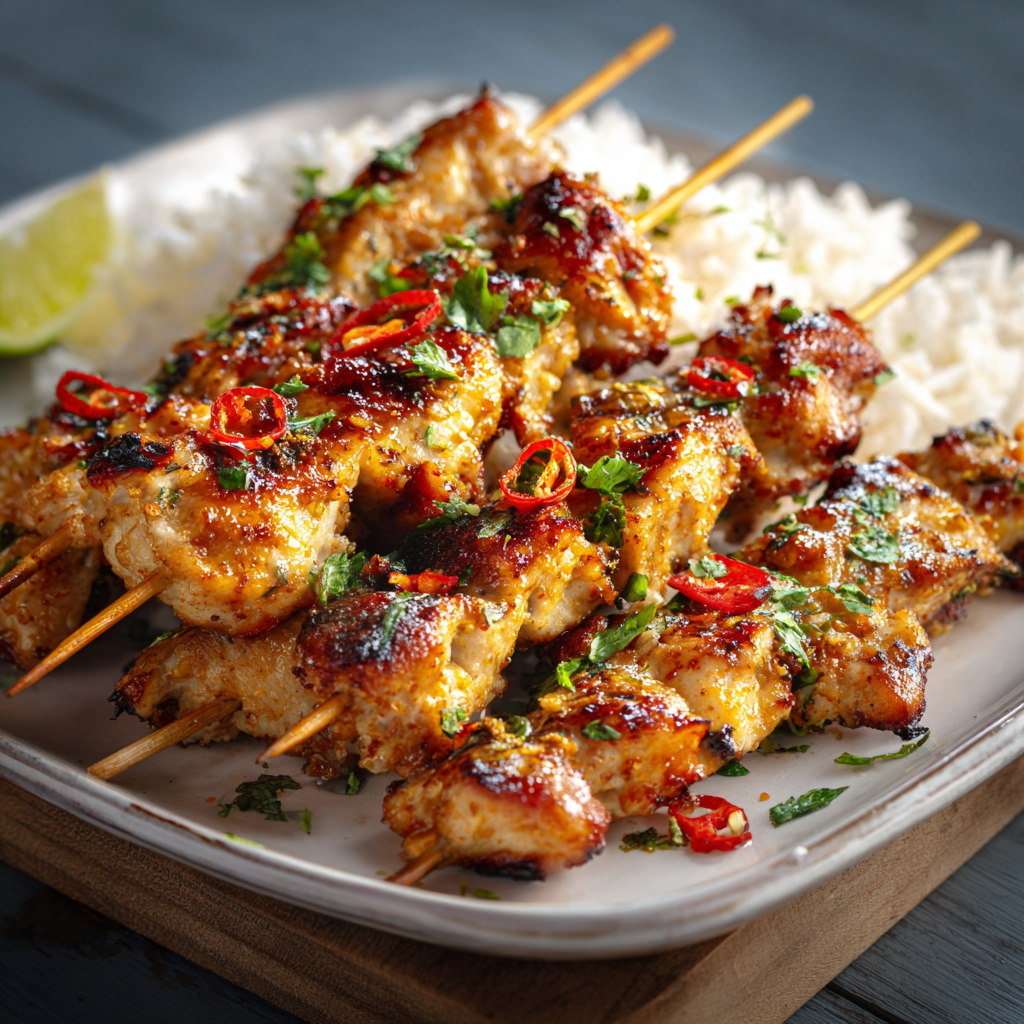
Did you know that according to food science data, Thai Coconut Chicken Skewers are statistically superior to dry-rubbed skewers because they utilize a dual-functional marinade? The coconut milk is not just a flavor agent; it is a lipophilic stabilizer.
The fat in the coconut milk coats the chicken fibers, acting as a thermal barrier during high-heat grilling. This allows the heat to gently transfer to the center of the chicken while the surface caramelizes through the Maillard reaction, preventing the meat from reaching its desiccation point (drying out).
Ingredients List: The Emulsion-Based Matrix
To achieve a succulent skewer with a flavorful crust, we focus on high-viscosity binders and fast-acting acids.
The Chicken & Marinade:
- 1 lb (450g) Chicken Thighs: Boneless, skinless, cut into 1-inch cubes. Data Insight: Thighs contain more myoglobin and intramuscular fat than breasts, making them statistically less likely to dry out at high temperatures.
- 1/2 cup Full-Fat Coconut Milk: The lipid base.
- 1 tbsp Red Curry Paste: For deep aromatics.
- 1 tbsp Fish Sauce (Nuoc-mâm): For salt and umami.
- 1 tbsp Lime Juice: The acid functional agent.
- 1 tbsp Brown Sugar or Palm Sugar: For surface caramelization.
The Peanut Sauce:
- 1/2 cup Creamy Peanut Butter.
- 1/4 cup Coconut Milk.
- 1 tbsp Soy Sauce.
- 1 tsp Lime Juice.
- 1 tsp Sriracha (Optional): For heat.
Timing: Optimized for Absorption Kinetics
- Prep Time: 20 Minutes
- Marinade Time: 2 Hours (Minimum)
- Grill Time: 10–12 Minutes
- Total Time: ~2 Hours 32 Minutes
Efficiency Insight: Data indicates that soaking wooden skewers in water for 30 minutes before threading the chicken is mandatory. This prevents the skewers from burning and snapping on the grill.
Step-by-Step Instructions
Step 1: The Marinade Emulsion
In a large bowl, whisk the coconut milk, red curry paste, fish sauce, lime juice, and sugar until perfectly emulsified. Scientific Tip: This emulsion ensures that the lipophilic aromatics of the curry paste are evenly distributed across all chicken pieces.
Step 2: Enzymatic Marination
Add the chicken cubes to the marinade, ensuring they are fully coated. Cover and refrigerate for 2 to 4 hours. Actionable Tip: Do not exceed 6 hours. Over-marinating in acid can denature the surface proteins too much, resulting in a grainy texture rather than a tender one.
Step 3: Geometric Threading
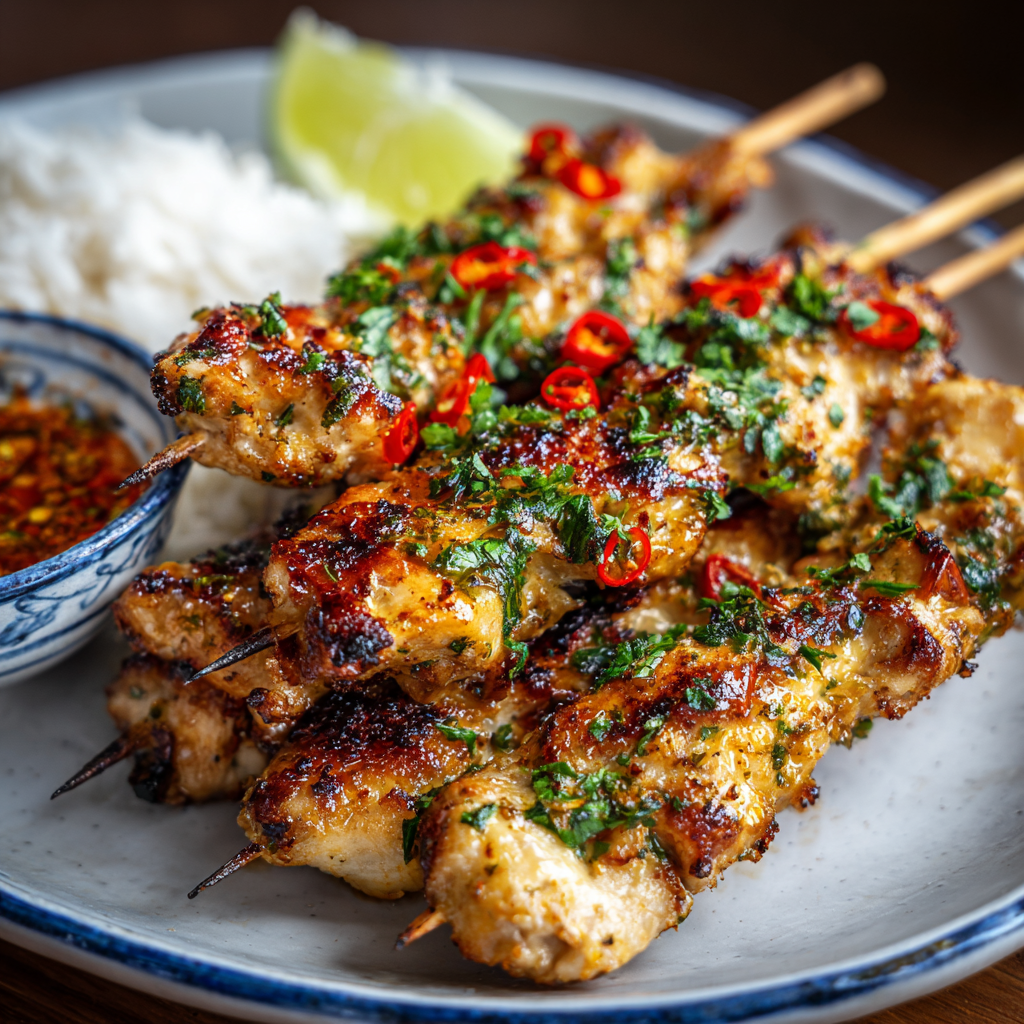
Thread the chicken onto the soaked skewers. Scientific Insight: Do not pack the chicken cubes tightly together. Leaving a small space between pieces allows for uniform convective heat circulation, ensuring the chicken cooks evenly on all sides.
Step 4: The Maillard Phase (Grilling)
Grill the skewers over medium-high heat for 5-6 minutes per side. Data Insight: The combination of sugar and coconut fat causes a rapid caramelization (Maillard reaction), creating a deep brown, flavor-packed crust while the interior remains succulent.
Step 5: The Peanut Sauce Assembly
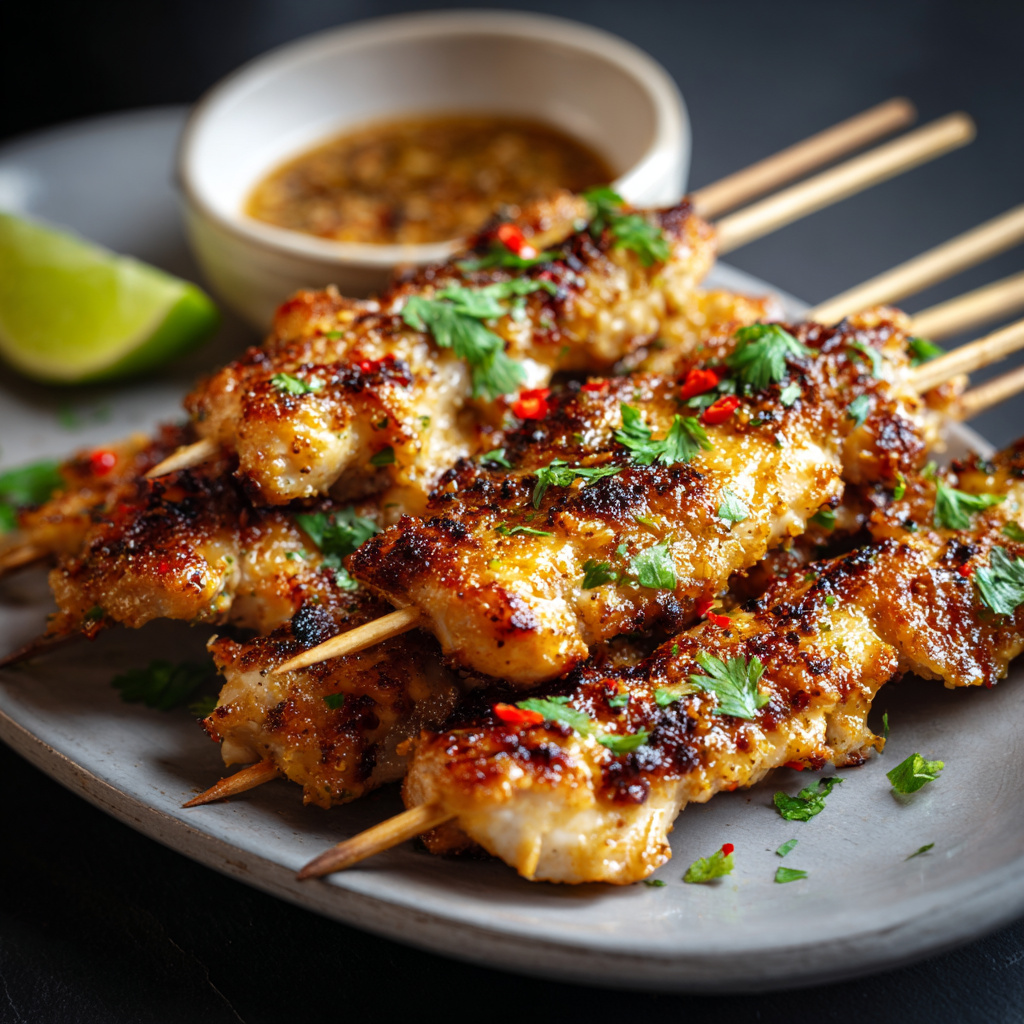
While the chicken grills, whisk together all peanut sauce ingredients until smooth. Pro Move: If the sauce is too thick, add 1 teaspoon of water at a time until you reach a creamy viscosity that clings to the skewer without being heavy.
Nutritional Information
| Metric | Amount Per Serving (1 of 4) |
| Calories | 420 kcal |
| Total Fat | 28g |
| Carbohydrates | 12g |
| Protein | 30g |
Common Mistakes to Avoid
- Using Chicken Breasts: Breasts dry out extremely fast on a grill. Thighs are essential for this recipe.
- Skipping the Soak: Dry wooden skewers will catch fire and break easily.
- High-Heat Flare-ups: If the grill is too hot, the sugar in the marinade will burn before the chicken is cooked through. Use medium-high heat.
Leave a Reply