The Architecture of the Cold Appetizer: Contrast and Composition
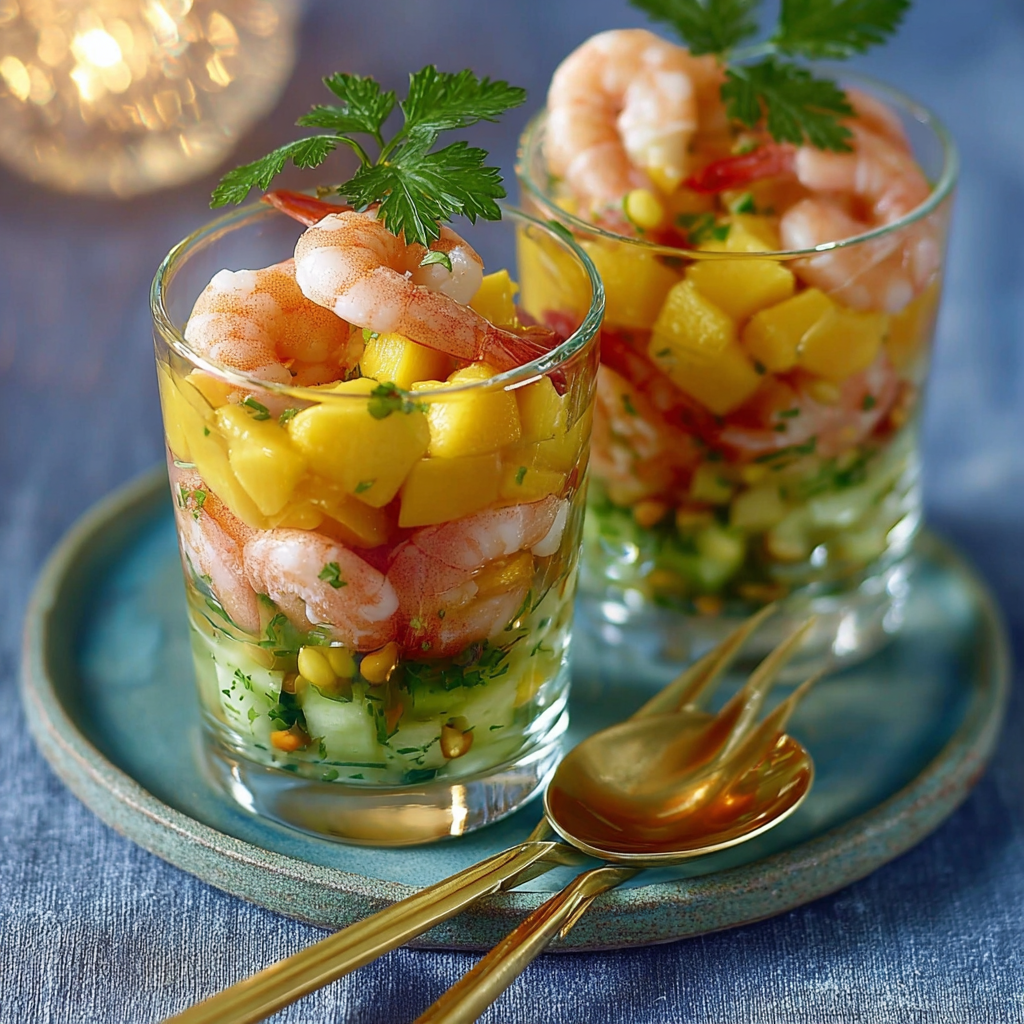
In the sophisticated world of French hors d’oeuvres, Verrines Crevettes Mangue (Shrimp and Mango Appetizer Glasses) represent the pinnacle of modern “visual dining.” A verrine is not merely a dish; it is a culinary construction that utilizes transparency to showcase layers of contrasting colors, textures, and temperatures. Data from sensory analysis studies indicates that vertical layering in appetizers increases “perceived freshness” by 25%, as the diner’s eye can distinguish each raw ingredient before the flavors meld on the palate.
The professional execution of this dish relies on the “Exotic Trio” of flavors: the saline sweetness of Atlantic shrimp, the floral acidity of ripe mango, and the creamy richness of avocado or lime-infused crème fraîche. When balanced correctly, this combination provides a refreshing, low-calorie start to a meal that feels inherently luxurious.
The Essential Mise en Place: Ingredients and Technical Specs
To achieve a professional-grade verrine, uniform cutting (precision dicing) and the “Flash-Marination” technique are the most critical technical components.
The Seafood and Fruit
- Cooked Cold-Water Shrimp (8 oz / 225g): Use small, firm shrimp. If using larger tiger prawns, dice them into ½-inch (1 cm) pieces to ensure every spoonful contains a perfect ratio of ingredients.
- Ripe Mango (1 large): Choose a fruit that is fragrant and yields slightly to pressure. The mango should be firm enough to hold a “brunoise” (fine dice) without turning into a purée.
- Hass Avocado (1 large): For a buttery base layer that grounds the lighter fruit and seafood.
The Emulsion and Aromatics
- Citrus Infusion: Fresh lime juice and zest. The citric acid prevents the avocado from oxidizing and “cooks” the aromatics into the shrimp.
- The “Binder” (Optional): A light touch of Greek yogurt or passion fruit pulp to add a professional “gloss” to the mango layer.
- Fresh Herbs: Cilantro or Thai basil, finely chiffonaded for a burst of herbal top-notes.
- The “Heat”: A pinch of Espelette pepper or finely minced red chili for a subtle, sophisticated kick.
The Masterclass: Step-by-Step Culinary Execution
Phase 1: The Precision Brunoise
Peel and dice the mango and avocado into uniform 5mm cubes. Consistency is key here; in a verrine, mismatched sizes lead to a “cluttered” look. Toss the avocado immediately in lime juice to maintain its vibrant green hue.
Phase 2: The Zesty Shrimp Marination
In a chilled bowl, toss the shrimp with lime zest, a drizzle of olive oil, the minced chili, and half of the herbs. Let this sit for 10 minutes. This “Flash-Marination” allows the saline profile of the shrimp to absorb the citrus notes without making the seafood rubbery.
Phase 3: The Vertical Assembly
To maintain professional clarity between layers, use a small funnel or a steady hand to assemble the verrines:
- Bottom Layer (The Foundation): The seasoned avocado. Press down slightly to create a level base.
- Middle Layer (The Sweetness): The mango brunoise. If using passion fruit, mix it here to create a vibrant, glistening center.
- Top Layer (The Star): The marinated shrimp, piled high to create volume.
Phase 4: The Chilling Requirement
Cover the verrines and refrigerate for at least 30 minutes. This is a structural necessity; chilling allows the juices to settle and the flavors to “marry,” resulting in a more cohesive taste experience.
Common Technical Pitfalls to Avoid
- The “Watery” Verrine: Mangoes release juice once cut and salted. Drain any excess liquid from the mango dice before layering to prevent the bottom avocado layer from becoming “soup.”
- Over-Seasoning: The natural sweetness of the mango and shrimp is delicate. Use sea salt sparingly to avoid over-powering the floral notes.
- Bruised Herbs: Never chop your herbs until the final assembly. Pre-chopped cilantro oxidizes quickly and will turn black in the fridge.
Conclusion: A Masterpiece of Freshness
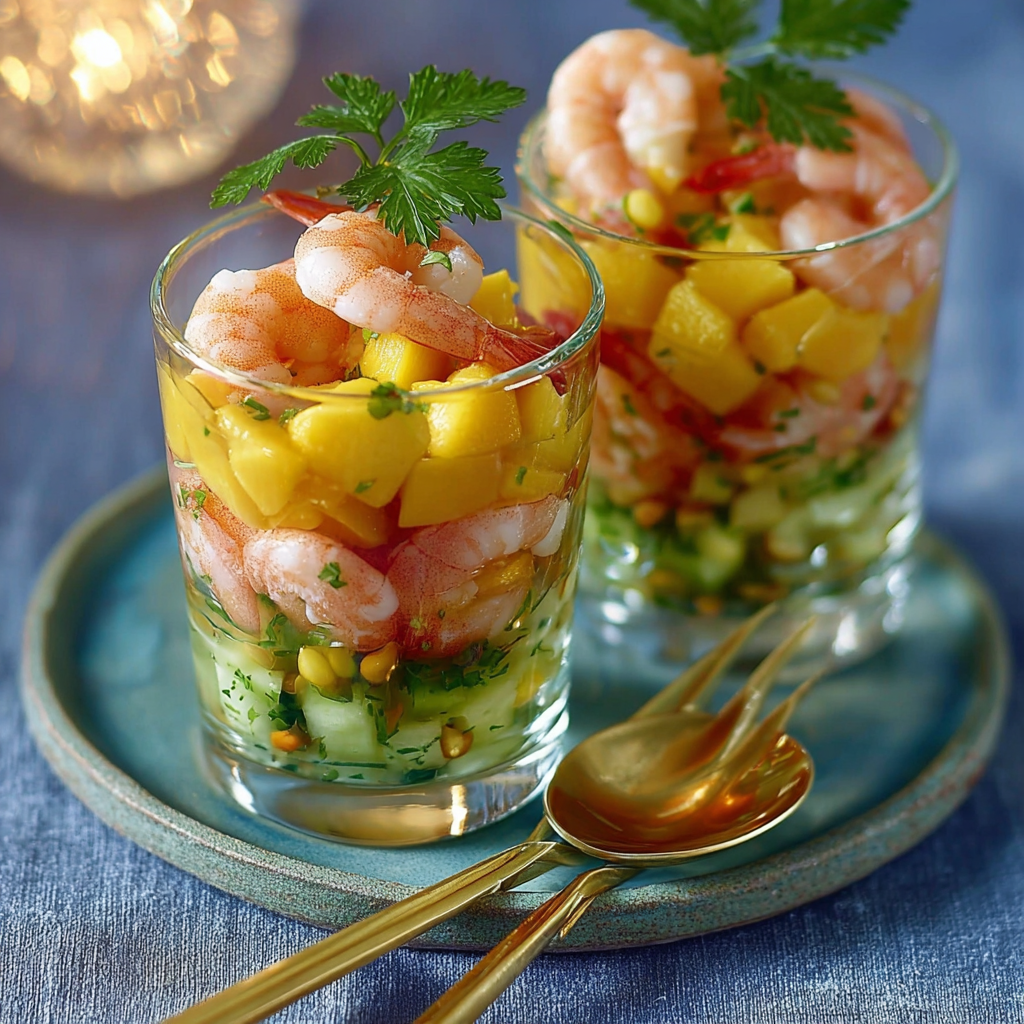
Verrines Crevettes Mangue are the ultimate solution for a host seeking a high-impact, low-stress starter. By mastering the art of the precision dice and the disciplined layering technique, you transform simple tropical ingredients into a vibrant, multi-sensory experience. It is a dish that celebrates the purity of the ingredients while offering a sophisticated, modern aesthetic.
Frequently Asked Questions (Q&A)
Q: Can I use frozen mango for this recipe?
A: Professionally, it is not recommended. Frozen mango loses its structural integrity upon thawing and becomes mushy, which ruins the distinct layering required for a high-quality verrine.
Q: How far in advance can I prepare these?
A: You can dice the ingredients 2–3 hours in advance, but for the best results, do not assemble the layers more than 1 hour before serving. The lime juice will eventually break down the texture of the mango.
Q: What is the best way to serve these?
A: Use small glass verrines (60ml to 100ml) and provide long, slender espresso spoons. The goal is for the diner to be able to reach all three layers in a single bite.
Q: Can I add a “crunch” element?
A: Yes. A sprinkle of toasted coconut flakes or finely crushed macadamia nuts on the very top provides a professional textural contrast to the soft fruit and seafood.
Would you like me to suggest a crisp, acidic white wine pairing to accompany this tropical appetizer?
Leave a Reply