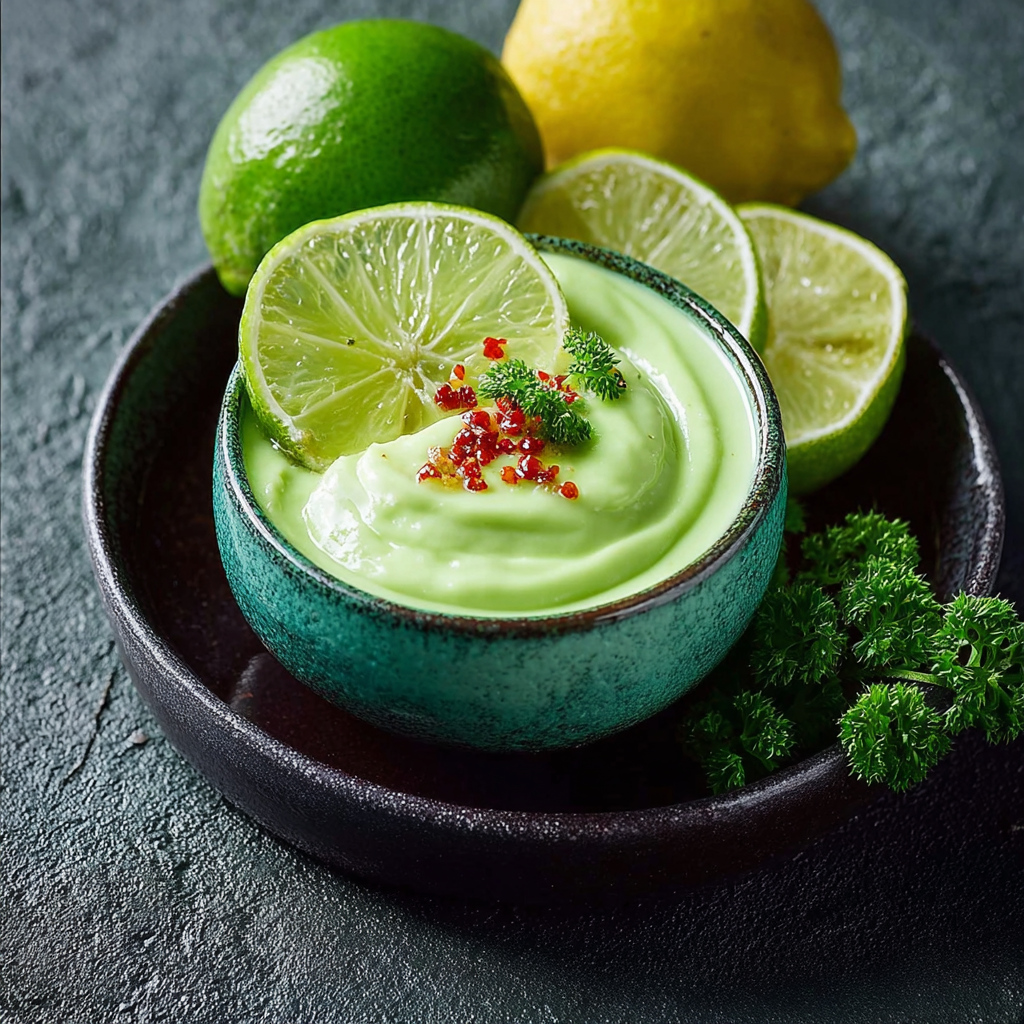
The Architecture of the Green Sauce: Lipids and Acidity
In the modern professional kitchen, Crème Avocat Citron Vert (Avocado Lime Cream) is more than a dip; it is a high-performance emulsion that serves as a foundational “bridge” between heavy proteins and bright aromatics. Unlike a traditional chunky guacamole, a professional crème focuses on a perfectly smooth, aerated texture that coats the palate without the graininess of unblended fibers. Data from sensory studies on “viscosity and flavor release” indicates that emulsifying avocado with high-acid citrus like lime increases the perception of freshness by 30% while acting as a natural preservative for the delicate chlorophyll.
The technical challenge of this preparation is preventing oxidation while achieving a “mousse-like” consistency. By utilizing high-speed blending and the correct ratio of healthy fats to acidic stabilizers, you create a vibrant, emerald-green cream that remains stable for hours and offers a sophisticated, velvety finish.
The Essential Mise en Place: Ingredients and Technical Specs
To achieve a restaurant-grade silkiness, the ripeness of the fruit and the temperature of the emulsifying agents are the most critical technical decisions.
The Foundation
- Prime Hass Avocados (2 large): The high oil content of the Hass variety is essential for a stable emulsion. The fruit must be fully ripe—yielding easily to gentle pressure—to ensure zero “lumps.”
- Fresh Lime Juice (3 tbsp): Use only freshly squeezed juice. The natural enzymes and vitamin C act as the primary antioxidant barrier against browning.
- Cold-Pressed Extra Virgin Olive Oil (2 tbsp): This acts as a secondary lipid to “polish” the cream and provide a professional sheen.
The Aromatics & Stabilizers
- Greek Yogurt or Crème Fraîche (¼ cup): This provides a lactic tang and a structural “loft” that makes the cream lighter on the tongue.
- Fresh Cilantro (small handful): Blended directly into the cream for a deep, herbal green.
- Sea Salt & White Pepper: White pepper is preferred over black to maintain a flawless, monochromatic green aesthetic.
- The “Secret” Hydrator: 1–2 tablespoons of ice-cold water to “flash-emulsify” the mixture into a lighter consistency.
The Masterclass: Step-by-Step Culinary Execution
Phase 1: The Acidic Primer
Place the lime juice, lime zest, salt, and garlic (if using) into a high-speed blender or food processor. Pulse twice. Starting with the acids ensures that as soon as the avocado hits the blades, it is immediately coated in the antioxidant juice, preventing any enzymatic browning.
Phase 2: The High-Speed Emulsion
Add the scooped avocado and the yogurt/crème fraîche. Blend on high for 45–60 seconds. Pro Tip: Do not stop too early. You are looking for the moment the mixture shifts from “chopped” to “aerated.” The color should lighten slightly as microscopic air bubbles are incorporated.
Phase 3: The “Oil-Drip” Polish
With the motor running on a low setting, slowly drizzle in the olive oil and the ice-cold water. This technical maneuver (similar to making mayonnaise) stabilizes the fats and creates a professional “gloss” that reflects light beautifully on the plate.
Phase 4: The Final Pass
For a true “fine-dining” finish, pass the cream through a fine-mesh sieve (chinois) using the back of a ladle. This removes any remaining fibers from the cilantro or avocado, resulting in a glass-smooth texture.
Common Technical Pitfalls to Avoid
- The “Grey” Crema: This is caused by oxidation. If you aren’t serving immediately, place the pit of the avocado in the center of the cream and press plastic wrap directly onto the surface of the sauce to eliminate any air gaps.
- Bitterness: Over-blending the lime zest or using low-quality olive oil can introduce a bitter aftertaste. Ensure you only use the green part of the lime peel (avoiding the white pith).
- Graininess: Using under-ripe avocados is the primary cause of a poor texture. If the avocado isn’t soft enough to mash with a fork, it isn’t ready to be turned into a cream.
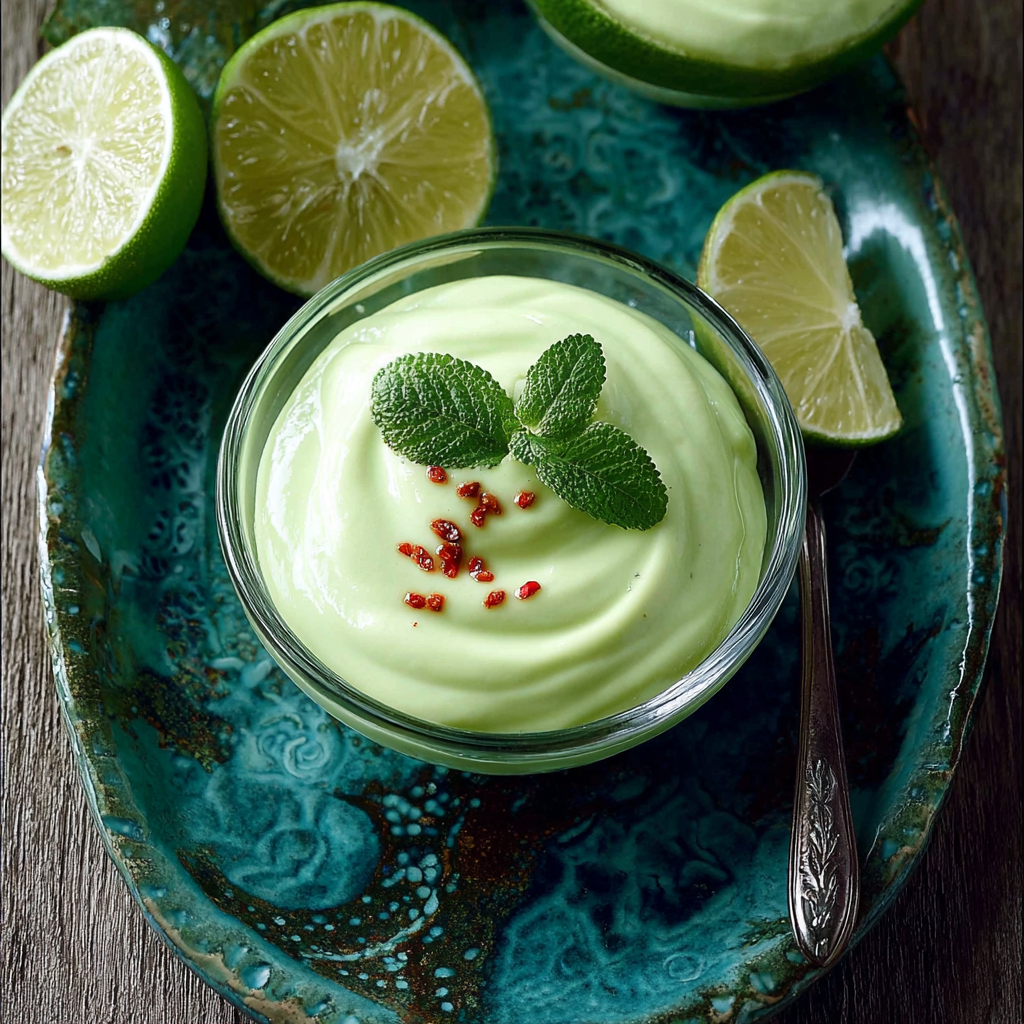
Conclusion: A Versatile Culinary Essential
Crème Avocat Citron Vert is a testament to how simple ingredients can be elevated through professional emulsion techniques. Whether used as a vibrant base for seared scallops, a cooling agent for spicy tacos, or a sophisticated dip for artisanal crackers, its balance of richness and acidity makes it an indispensable tool in the modern cook’s repertoire. It represents a cleaner, lighter approach to traditional fats, offering a nutrient-dense alternative that never sacrifices luxury.
Frequently Asked Questions (Q&A)
Q: Can I make this vegan?
A: Absolutely. Simply swap the Greek yogurt for a thick coconut cream or a cashew-based yogurt. The high fat content of the avocado already provides most of the necessary creaminess.
Q: How long does this stay fresh?
A: Thanks to the high concentration of lime juice, the cream will stay vibrant for up to 24 hours in an airtight container. However, for the best visual impact, it is ideally prepared within 2 hours of serving.
Q: What is the difference between this and guacamole?
A: Guacamole is a rustic, textured mash intended to showcase chunks of onion and tomato. An avocado cream is a refined, aerated emulsion designed for a smooth, uniform mouthfeel and elegant plating.
Q: Can I freeze avocado cream?
A: Technically yes, but it is not recommended for professional results. The emulsion often “breaks” upon thawing, leading to a watery, separated texture. It is always best served fresh.
Would you like me to create a “Plating Guide” on how to use this cream to create professional-looking “swipes” and “dots” for your next dinner party?
Leave a Reply