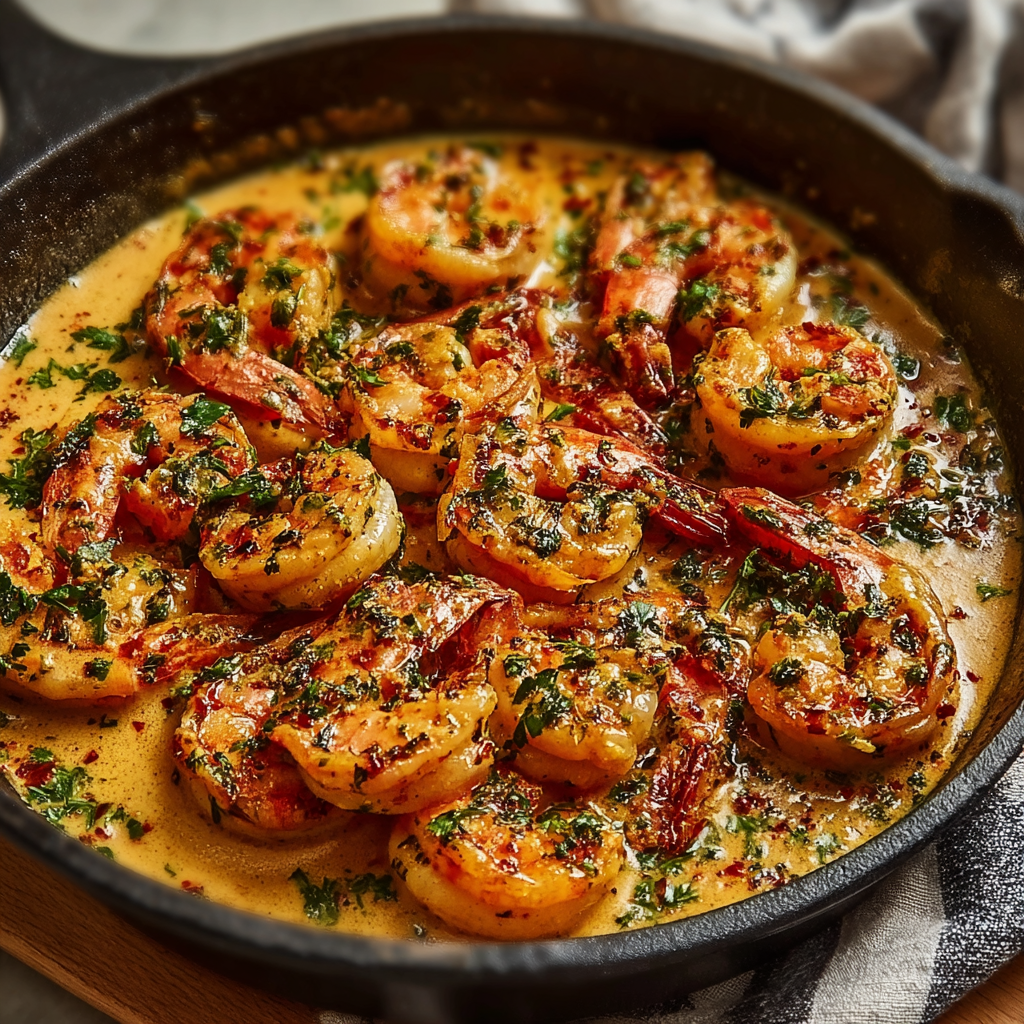
The Gastronomic Architecture of the “Flash-Searing” Technique
In the world of high-velocity seafood cookery, the Creamy Garlic-Paprika Shrimp Skillet represents a sophisticated balance of rapid protein coagulation and lipid emulsification. The technical challenge of shrimp is their narrow “window of perfection”—approximately 120 seconds—beyond which they transition from succulent to rubbery. Data from culinary moisture-management studies indicates that by utilizing a “High-Heat Sear” followed by a “Low-Heat Finishing Emulsion,” you can lock in the saline sweetness of the shrimp while developing a robust, mahogany-hued sauce.
The soul of this dish lies in the Smoked Paprika (Pimentón). Unlike standard paprika, the smoked variety provides a deep, “wood-fired” backbone that cuts through the heavy cream, creating a vibrant orange hue and a professional-grade savory depth.
The Essential Mise en Place: Ingredients and Technical Specs
To achieve a restaurant-grade result, the size of the shrimp and the fat content of the cream are the most critical technical decisions.
The Seafood (The Star)
- Jumbo Shrimp (450g / 1 lb): Size 16/20 is ideal. Larger shrimp withstand high heat better without overcooking. Technical Requirement: Pat them bone-dry with paper towels. Any surface moisture will cause them to steam rather than sear.
- The “Dry Rub”: 1 tsp Smoked Paprika, ½ tsp Garlic Powder, sea salt, and fresh cracked black pepper.
The Emulsion (The Sauce)
- Heavy Cream (180ml / ¾ cup): Use a minimum of 30% fat to prevent the sauce from “breaking” when it meets the acidic lemon juice.
- Fresh Garlic (4–5 cloves): Smashed and finely minced. Do not use jarred garlic; the sulfurous notes will over-power the delicate shrimp.
- Unsalted Butter (30g / 2 tbsp): For a professional, silken finish.
- Acidity: The juice of half a lemon and a splash of dry white wine (optional).
The Masterclass: Step-by-Step Culinary Execution
Phase 1: The High-Heat Sear
Heat a large heavy-gauge skillet (cast iron is preferred) over medium-high heat with a tablespoon of olive oil. Once the oil shimmers, add the seasoned shrimp in a single layer. Sear for 60–90 seconds per side until they turn opaque and develop a slight char. Remove them from the pan immediately—they should be about 80% cooked.
Phase 2: The Aromatic Bloom
Reduce the heat to medium. Add the butter to the same pan. Once melted, sauté the minced garlic and a pinch more paprika for 30 seconds. This “blooms” the fat-soluble compounds in the spices, intensifying the flavor profile without burning the garlic.
Phase 3: The Deglaze and Reduction
Pour in the white wine (if using) or a splash of broth to lift the “fond” (the brown bits) from the bottom of the pan. Add the heavy cream and simmer for 2–3 minutes until it reduces slightly and begins to thicken.
Phase 4: The Final Fusion
Return the shrimp and any accumulated juices to the skillet. Toss gently for 30 seconds to coat. Turn off the heat and stir in the fresh lemon juice and a handful of chopped parsley. The residual heat will finish the shrimp perfectly without toughening the proteins.
Common Technical Pitfalls to Avoid
- The “Rubbery” Shrimp: This happens if you leave the shrimp in the pan while making the sauce. Always remove them after the initial sear.
- Curdled Sauce: If you add lemon juice to boiling cream, it may curdle. Always add the acid after removing the pan from the heat.
- Crowding the Pan: If you put too many shrimp in at once, the pan temperature will drop, and the shrimp will release water and boil. Sear in two batches if necessary.
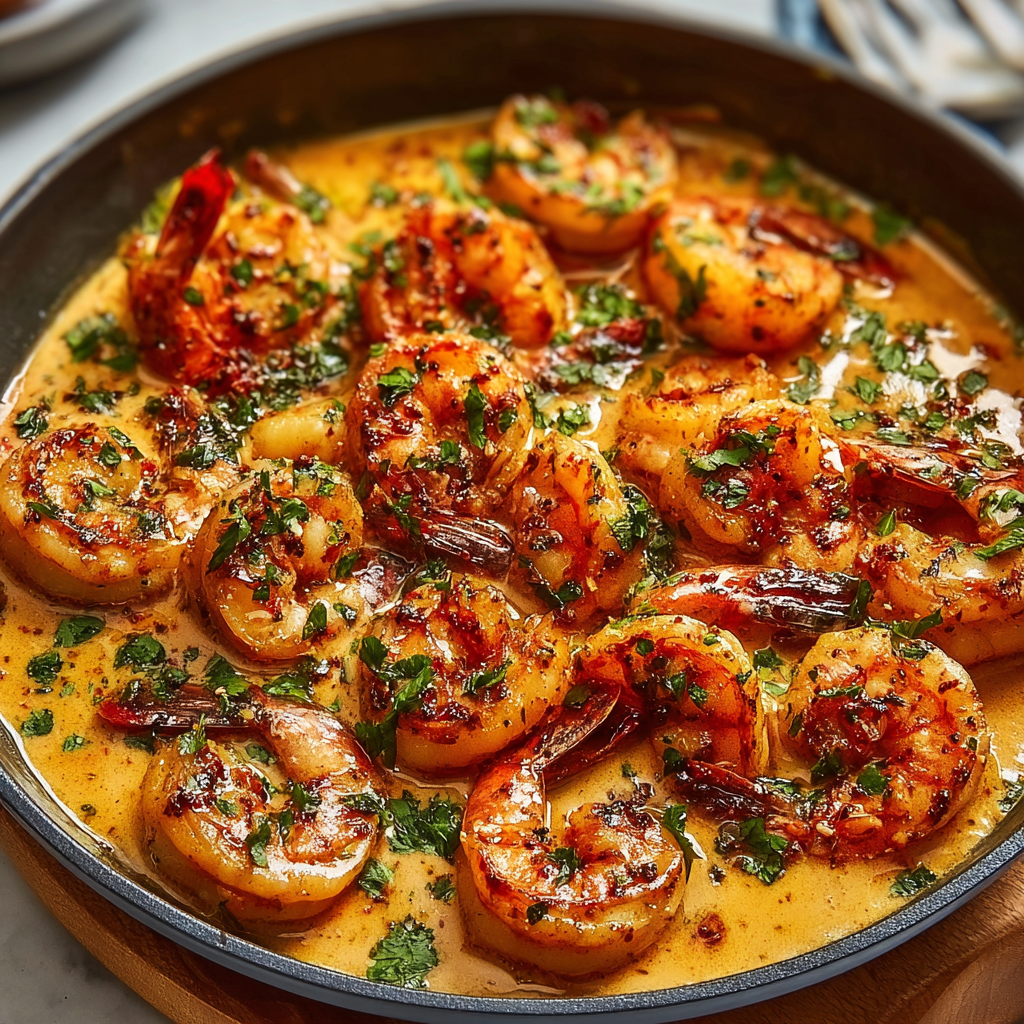
Conclusion: A Masterpiece of Speed and Sophistication
The Creamy Garlic-Paprika Shrimp Skillet is a testament to the fact that luxury doesn’t require hours of labor. By mastering the “staggered-cook” method—searing the protein and then emulsifying the sauce—you produce a dish with professional clarity and deep, smoky resonance. It is a vibrant, nutrient-dense entrée that pairs perfectly with crusty sourdough, over a bed of linguine, or alongside roasted asparagus.
Frequently Asked Questions (Q&A)
Q: Can I use frozen shrimp?
A: Yes, provided they are fully thawed and patted extremely dry. Frozen shrimp often hold more water, so be extra diligent with the paper towels to ensure a proper sear.
Q: How do I make this lighter (lower calorie)?
A: Substitute half of the heavy cream with chicken broth and a teaspoon of cornstarch mixed with cold water (a slurry). You will lose some of the “velvet” mouthfeel, but the flavor remains excellent.
Q: What can I use if I don’t have Smoked Paprika?
A: You can use sweet paprika and a drop of liquid smoke, or a pinch of chipotle powder. However, the unique “Pimentón” flavor is the hallmark of this dish.
Q: Can I add vegetables to the skillet?
A: Absolutely. Sautéed spinach, sundried tomatoes, or sliced bell peppers are professional-grade additions that pair beautifully with the paprika cream.
Leave a Reply