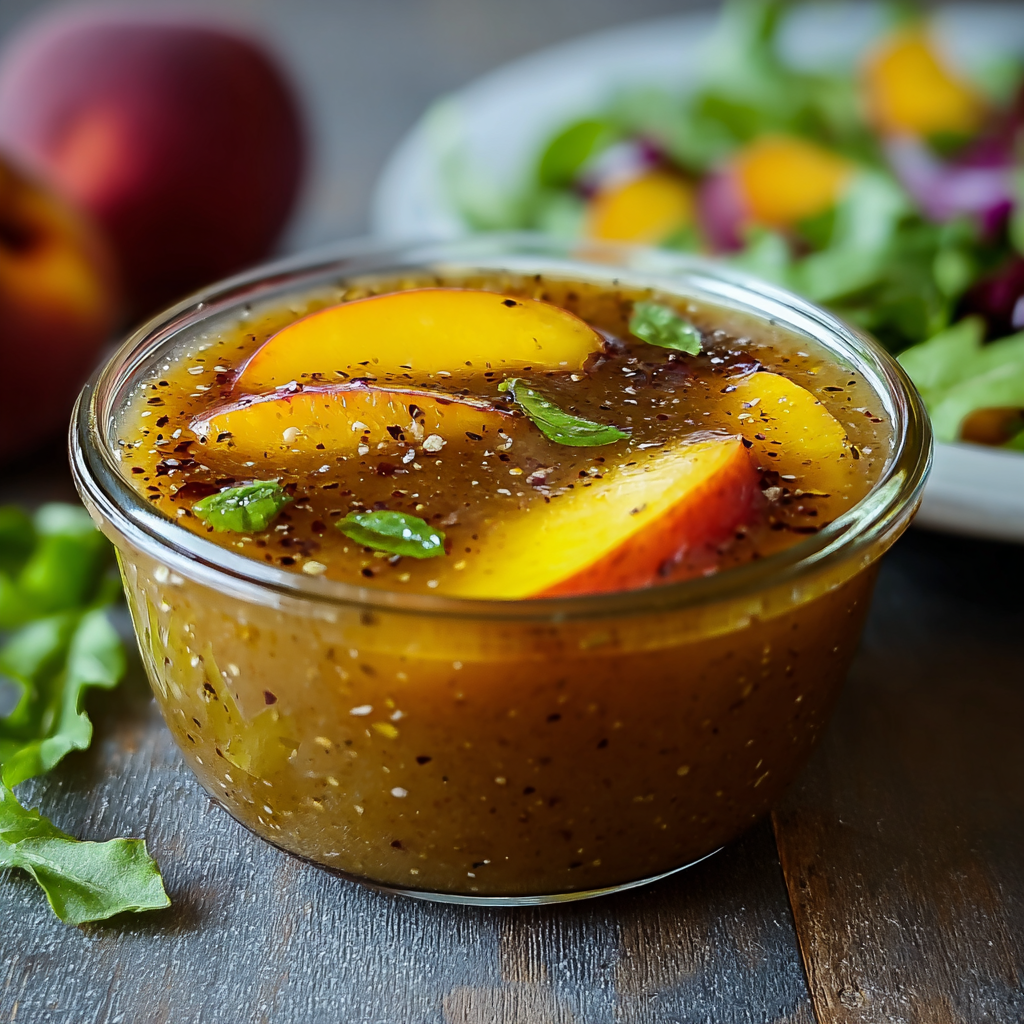
The Gastronomic Architecture of the “Stone Fruit” Emulsion
In the hierarchy of artisanal dressings, a Peach Honey Dijon Balsamic Vinaigrette represents a sophisticated study in molecular suspension and sugar-acid equilibrium. The technical challenge of this vinaigrette is the “Phase Separation”—the tendency of oil and vinegar to decouple. By utilizing the natural pectins in the peach and the lecithin in the Dijon mustard, you create a “biological bridge” that binds the balsamic vinegar to the olive oil, resulting in a thick, creamy texture without the use of heavy dairy.
Data from flavor chemistry indicates that the Peaches’ Malic Acid provides a “bright” top note that vibrates against the deep, earthy tartness of the Balsamic’s Acetic Acid, while the honey acts as a thermal buffer, smoothing out the sharp edges of the vinegar.
The Essential Mise en Place: Technical Specs
To achieve a restaurant-grade “clinging” viscosity, the ripeness of the fruit and the quality of the oil are the most critical factors.
The Foundation (The Aromatics)
- Ripe Peach (1 medium): Technical Requirement: Must be “soft-ripe.” Under-ripe peaches lack the necessary pectins and sugars to emulsify the sauce properly.
- Aged Balsamic Vinegar (60ml / 1/4 cup): Look for a “Modena” style for a deep, syrupy base.
- Extra Virgin Olive Oil (120ml / 1/2 cup): A “buttery” or “mild” profile is preferred over a “peppery” one to allow the peach to dominate.
The Emulsifiers (The “Bond”)
- Honey (1 tbsp): Acts as a humectant and sweetener.
- Dijon Mustard (1 tsp): The primary mechanical emulsifier.
- Fresh Thyme or Basil (1 tsp): To provide a floral “lift” to the stone fruit.
The Masterclass: Step-by-Step Culinary Execution
Phase 1: The “Puree” Extraction
Pit and skin the peach. Place the flesh in a high-speed blender or food processor. Pulse until perfectly liquid. This “Liquefaction” technique ensures that the fruit solids are small enough to stay in suspension within the oil-vinegar matrix.
Phase 2: The “Aqueous” Base
Add the balsamic vinegar, honey, Dijon mustard, salt, and pepper to the peach puree. Pulse for 30 seconds. This creates the “Aqueous Phase” of the emulsion, where all water-soluble flavors are fully integrated before the oil is introduced.
Phase 3: The “Slow-Stream” Emulsification
With the blender running on its lowest setting, drizzle the olive oil in a micro-stream. This is the professional “Shear-Force” technique; it breaks the oil into microscopic droplets that are immediately surrounded by the mustard and peach molecules, preventing them from coalescing back into large oil slicks.
Phase 4: The “Flavor-Bloom”
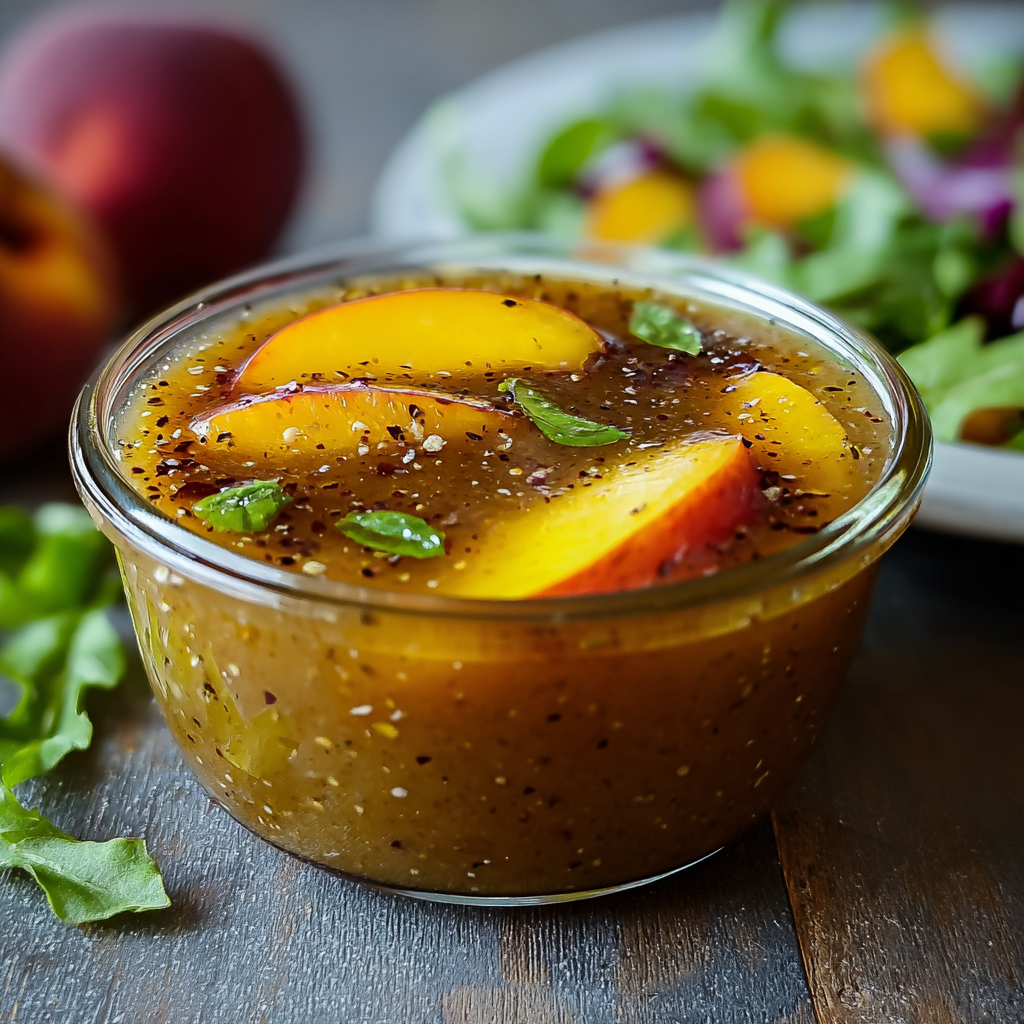
Transfer the vinaigrette to a glass jar. Let it rest at room temperature for 20 minutes before serving. This allows the volatile aromatics in the peach and herbs to “bloom” and distribute evenly throughout the fat.
Common Technical Pitfalls to Avoid
- The “Broken” Vinaigrette: Occurs if the oil is added too quickly. If the dressing separates into oil and juice, add another teaspoon of Dijon and re-blend at high speed.
- The “Muted” Peach: If the peach flavor is weak, your fruit was likely too cold or under-ripe. A tiny pinch of salt can “up-regulate” the fruit’s sweetness perception.
- Overly Tart Finish: Balsamic vinegars vary in acidity. If it’s too sharp, add honey half-teaspoon at a time until the “Acid-Sugar Balance” is restored.
Frequently Asked Questions (Q&A)
| Question | Expert Answer |
| Can I use frozen peaches? | Yes, but thaw them completely and include any “thaw-juice,” as it contains concentrated flavor and pectins. |
| What is the best salad pairing? | This is a “power-pairing” for goat cheese, toasted pecans, and bitter greens like arugula or radicchio. |
| How long does it keep? | Store in the refrigerator for up to 5 days. The pectin may cause it to thicken; simply shake vigorously or add a teaspoon of water to restore flow. |
Leave a Reply