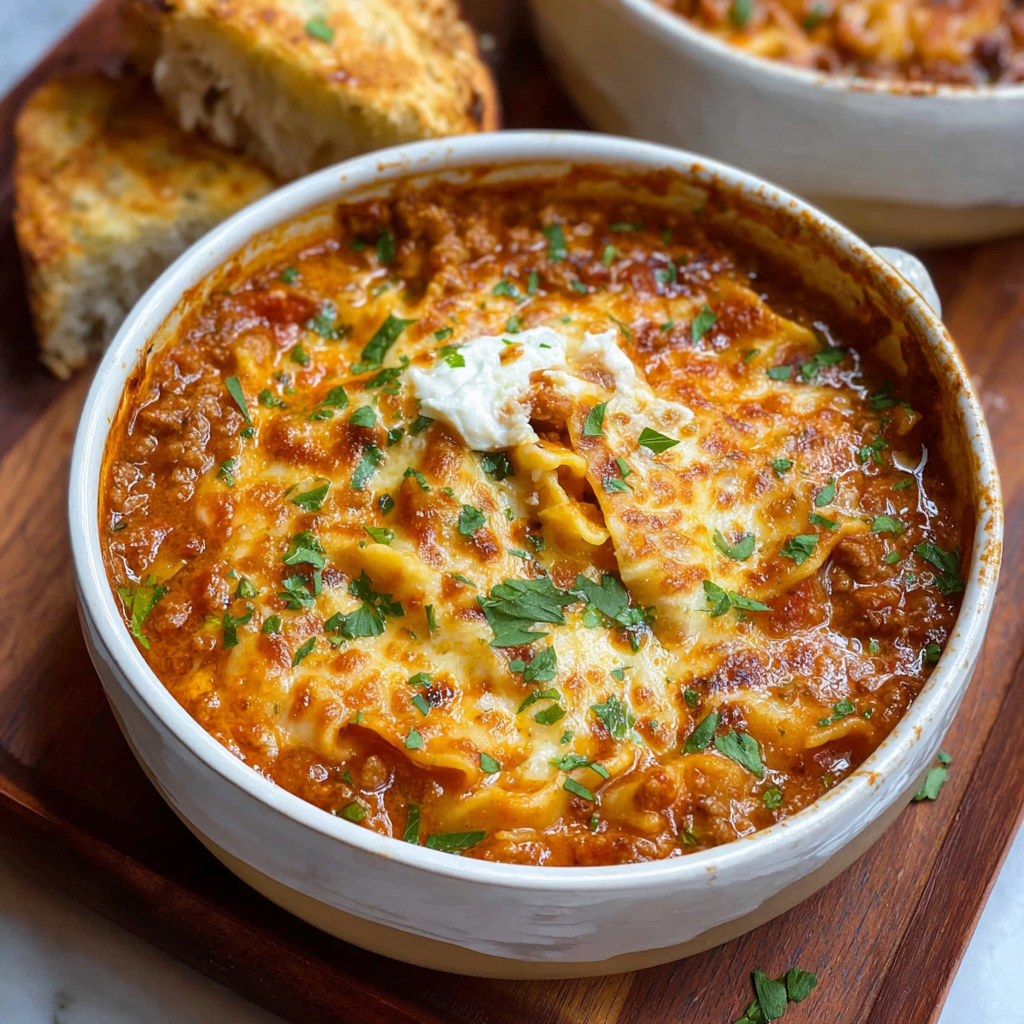
The Culinary Engineering: Concentrated Flavor & Starch Management
In the hierarchy of “One-Pot” performance meals, Lasagna Soup represents a sophisticated study in deconstructing an Italian classic. The technical challenge lies in Starch Migration: unlike a traditional layered lasagna where pasta sheets are isolated by béchamel and ragù, here the pasta cooks directly in the broth. If the timing isn’t mastered to the second, the pasta will absorb all the liquid, transforming your soup into a thick, gummy stew.
The objective is to extract deep umami from the meat and tomato base while maintaining al dente pasta fragments, all topped with a cheese emulsion that simulates the richness of traditional ricotta filling.
Essential Mise en Place: Technical Specs
To achieve a fluid yet savory soup, the quality of the broth and the pasta shape are the most critical factors.
The Aromatic Base (The “Sofrito”)
- Ground Beef or Italian Sausage (450g / 1 lb): Sausage provides fennel and pepper notes that enrich the soup without extra spices.
- Garlic & Yellow Onion: For foundational aromatic depth.
- Tomato Paste (2 tbsp): To be “caramelized” with the meat for an intense brick-red color and deep sweetness.
The Texture Matrix
- Lasagna Noodles (6-8 sheets): Broken by hand into irregular bite-sized pieces. The ridged edges are mechanical tools designed to trap the cheese garnish.
- Chicken or Beef Broth (1.2 L / 5 cups): Use a high-quality stock, as it forms the skeletal structure of the dish.
- The “Ricotta Crown”: A blend of Ricotta, shredded Mozzarella, and Parmesan to recreate the creaminess of the original layers.
The Masterclass: Step-by-Step Culinary Execution
Phase 1: Maillard Reaction & Browning
Brown the meat in a large Dutch oven over high heat. Once well-colored, add the onion and garlic. Stir in the tomato paste and cook for 2 minutes until it turns dark and fragrant. This “pinching” of the paste is the secret to a professional-grade depth of flavor.
Phase 2: Wetting & Infusion
Pour in the broth and a can of crushed tomatoes. Add dried basil and oregano. Bring to a boil, then reduce heat to a simmer for 10 minutes to allow the flavors to fuse.
Phase 3: Direct Pasta Cookery
Submerge the broken lasagna pieces into the boiling soup. Technical Requirement: Stir frequently to prevent the pieces from fusing together. Cook for 1 minute less than the package instructions. The pasta will finish cooking through residual heat.
Phase 4: The Cheese Emulsion
While the pasta cooks, mix the ricotta and parmesan in a small bowl. Upon serving, place a generous dollop of this mixture in the center of each hot bowl. It will melt into the broth, creating white “veins” of creaminess.
Common Technical Pitfalls to Avoid
- The “Pasta Sponge”: Do not exceed the prescribed amount of pasta. Noodles continue to swell even after the heat is off.
- Skipping the Rest: Let the soup sit for 5 minutes before serving; this allows the starch to stabilize the broth’s texture.
- Cold Ricotta: Take your cheeses out of the fridge 30 minutes before serving so they melt instantly upon contact with the soup.
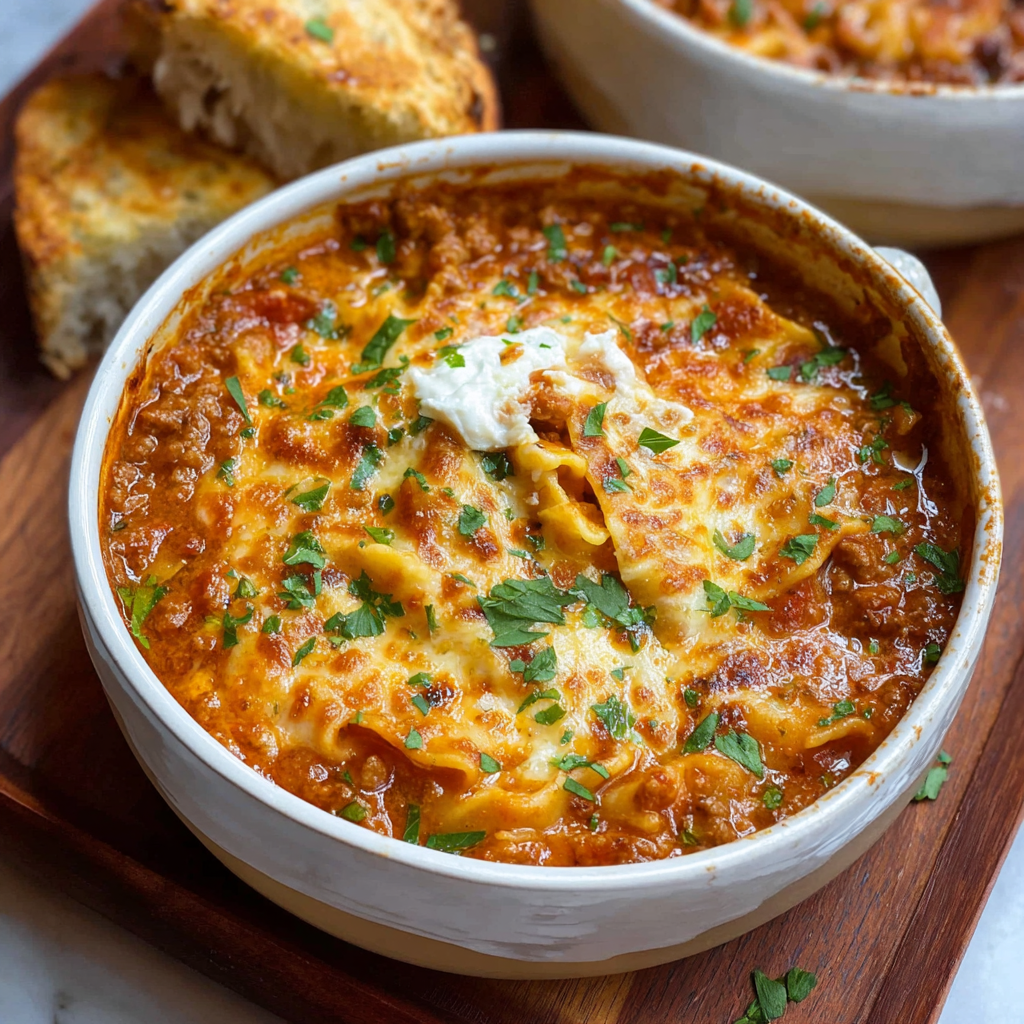
Frequently Asked Questions (Q&A)
| Question | Expert Answer |
| Can I reheat this? | Yes, but plan to add a splash of broth or water, as the pasta will have absorbed liquid in the fridge. |
| Vegetarian version? | Replace the beef with finely chopped mushrooms (for Umami) or green lentils. |
| Which herbs are best? | Fresh basil added at the very end provides a floral top note that transforms the dish. |
Leave a Reply