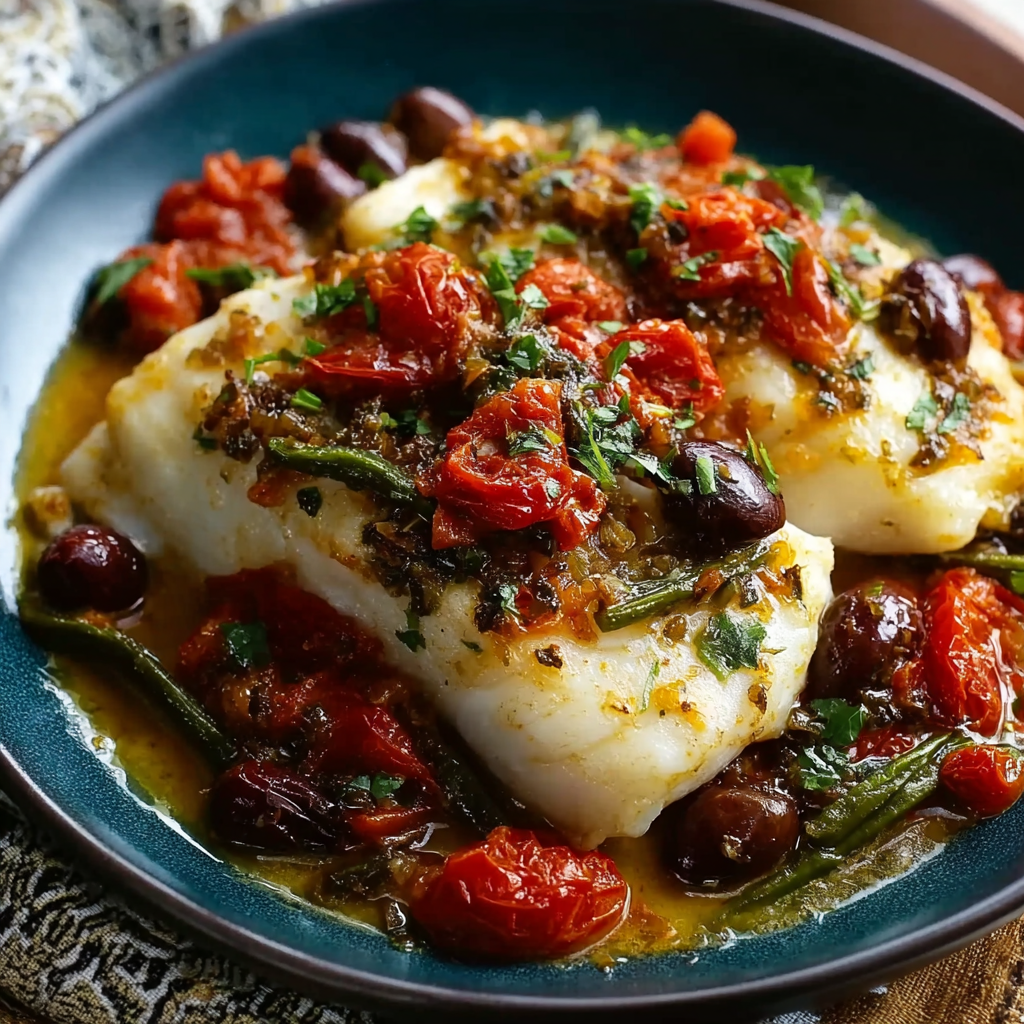
The Gastronomic Architecture: The “Lipid-Flake” Integrity
In the hierarchy of premium seafood, Chilean Sea Bass (Patagonian Toothfish) represents a sophisticated study in High-Fat Muscle Density and Thermal Resilience. Unlike lean white fish like cod, it possesses an exceptionally high oil content. This creates a “Self-Basting” mechanism, allowing the fish to maintain a buttery, succulent interior even under the high-heat searing typical of Mediterranean preparations.
The technical challenge is the “Sear-to-Silk” Ratio: achieving a Maillard-crusted exterior while preserving the structural integrity of the large, moist flakes. By utilizing a Mediterranean “Aromatic Cap” (olives, capers, and tomatoes), you introduce high-acidity buffers that cut through the rich, fatty lipids of the fish.
Essential Mise en Place: Technical Specs
To achieve a restaurant-grade “shatter-crisp” skin and ivory flakes, surface moisture and thermal mass are the most critical factors.
The Foundation (The Protein)
- Chilean Sea Bass Fillets (180g – 200g per person): Technical Requirement: Center-cut portions are preferred for uniform heat distribution. Ensure they are at least 3cm thick.
- The “Dry-Brine”: A light dusting of sea salt 15 minutes before cooking draws out surface moisture and seasons the deep muscle fibers.
The Mediterranean “Provençal” Matrix
- Cherry Tomatoes (200g): Halved to release their natural sugars and acidity.
- Kalamata Olives & Non-Pareil Capers: Provide the “saline-umami” punch.
- Dry White Wine (60ml): (Pinot Grigio or Sauvignon Blanc) to deglaze and create a steam-emulsion.
- Fresh Parsley & Lemon Zest: For a “high-frequency” aromatic finish.
The Masterclass: Step-by-Step Culinary Execution
Phase 1: The “Skin-Pore” Dehydration
Pat the skin side of the fish obsessively dry. Technical Requirement: If the skin is damp, it will steam rather than sear. Use a sharp knife to score the skin slightly; this prevents the fillet from curling when the proteins contract upon hitting the heat.
Phase 2: The High-Conductivity Sear
Heat a heavy stainless steel or cast-iron skillet over medium-high heat with a high-smoke point oil (avocado or grapeseed). Place the fish skin-side down. Press firmly with a fish spatula for 30 seconds to ensure 100% surface contact for a uniform crust.
Phase 3: The “Butter-Basting” Reduction
Once the skin is golden and releases easily (approx. 4–5 minutes), flip the fish. Immediately add a knob of butter, the tomatoes, olives, and capers to the pan. The butter will foam and pick up the Mediterranean aromatics, basting the fish in a flavored lipid bath.
Phase 4: The Deglaze & Steam-Finish
Pour in the white wine. The resulting steam will finish cooking the interior of the thick fillet without drying out the exterior. Cover for 2 minutes until the tomatoes “burst” and the fish reaches an internal temperature of 54°C (130°F).
Common Technical Pitfalls to Avoid
- The “Flake-Break”: Chilean Sea Bass is delicate once cooked. Use a wide spatula and avoid flipping the fish more than once.
- Overcrowding: If you put too many fillets in one pan, the temperature drops, the wine won’t reduce properly, and the fish will “poach” rather than sear.
- Soggy Skin: Once the wine is added, try to keep the liquid in the bottom of the pan and avoid pouring it directly over the crispy skin.
Frequently Asked Questions (Q&A)
| Question | Expert Answer |
|---|---|
| Can I bake it instead? | Yes. Bake at 200°C for 12–15 minutes. It is very forgiving due to the fat content. |
| Is it sustainable? | Look for MSC-certified (Marine Stewardship Council) labels to ensure it was sourced responsibly. |
| Why is it so expensive? | It is a slow-growing deep-sea fish with a unique fat structure that is difficult to replicate. |
Leave a Reply