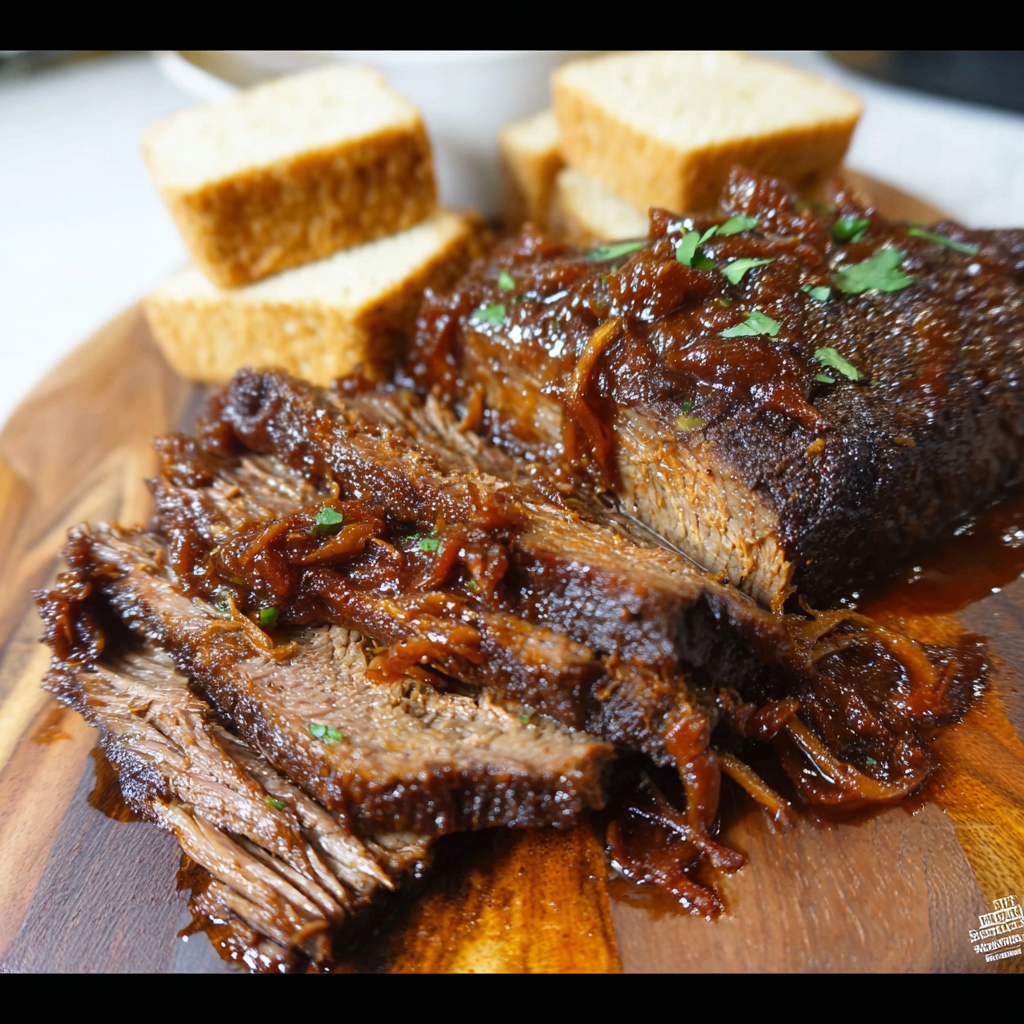
The Gastronomic Architecture: The “Collagen-to-Gelatin” Transition
In the hierarchy of low-and-slow barbecue, Beef Brisket represents a sophisticated study in Connective Tissue Denaturation and Hygroscopic Moisture Management. Brisket is a high-movement muscle packed with Type I Collagen. The technical challenge is the “Thermal Plateau”: if cooked too fast, the muscle fibers contract and expel all moisture before the collagen can liquefy.
By utilizing the Crock Pot’s consistent, low-intensity radiant heat (75°C to 95°C), you allow for a Long-Duration Proteolysis. This transforms the tough connective tissue into succulent gelatin, which coats the individual muscle fibers, creating the “melt-in-your-mouth” texture characteristic of professional-grade BBQ.
Essential Mise en Place: Technical Specs
To achieve a restaurant-grade “bark” and a tender profile without a smoker, the surface seasoning and the “Acid-Sugar” balance are the most critical factors.
The Foundation (The Protein)
- Beef Brisket (1.5kg – 2kg): Technical Requirement: Look for a “flat” cut with a thin fat cap (approx. 5mm). Do not trim the fat; it acts as a Self-Basting Shield during the 8-hour cook.
- The “Dry-Brine” Rub: A heavy hand of kosher salt, coarse black pepper, smoked paprika (for the “false smoke” profile), and garlic powder.
The “Barbecue” Matrix (The Liquid)
- High-Quality BBQ Sauce (250ml): The primary sugar and vinegar carrier.
- Liquid Smoke (1 tsp): Expert Tip: This is a distilled wood-smoke condensate. A small amount provides the essential guaiacol compounds found in traditional wood-fired pits.
- Beef Stock or Dark Beer (125ml): To provide the initial steam-hydration layer.
The Masterclass: Step-by-Step Culinary Execution
Phase 1: The “Maillard” Pre-Sear
Heat a large skillet with a splash of oil until smoking. Sear the seasoned brisket for 4 minutes per side until a deep mahogany crust forms. This “Pre-Treatment” creates the savory pyrazines that the Crock Pot cannot produce on its own due to low temperatures.
Phase 2: The “Fat-Side Up” Alignment
Place the brisket in the Crock Pot with the fat cap facing upwards. As the fat renders, it will trickle down through the meat fibers, preventing dehydration. Pour the stock and half the BBQ sauce around the meat, not over it, to preserve the seared crust.
Phase 3: The “Hydrolysis” Simmer
Cover and cook on LOW for 8–10 hours. Technical Requirement: Do not open the lid. Every time the seal is broken, you lose the accumulated steam and drop the internal temperature by 10°C, extending the cook time and risking a “tough” finish.
Phase 4: The “Reverse-Reduction” Glaze
Carefully remove the brisket (it will be fragile). Skim the fat from the juices in the pot and whisk in the remaining BBQ sauce. Brush this “Power-Glaze” over the brisket and place it under an oven broiler (grill) for 5 minutes. This “Flash-Caramelization” creates the sticky, professional “bark” texture.
Common Technical Pitfalls to Avoid
- The “Boiled Beef” Syndrome: If you submerge the brisket entirely in liquid, you are “pot-roasting,” not “barbecuing.” Use only enough liquid to reach 1/4 of the way up the meat.
- The “Mushy” Texture: Cooking on HIGH for 4 hours instead of LOW for 8 hours. High heat causes the proteins to seize and toughen before the collagen can liquefy.
- Slicing Errors: Always slice against the grain. Brisket fibers are long and rope-like; cutting with the grain results in a “stringy” and difficult-to-chew experience.
Frequently Asked Questions (Q&A)
| Question | Expert Answer |
|---|---|
| Why fat-side up? | Gravity allows the rendering fat to permeate the meat, essentially “confit-ing” the brisket from the inside out. |
| Can I use a slow cooker liner? | Yes, it makes cleanup easier, but ensure it doesn’t interfere with the seal of the lid, as moisture retention is key. |
| What is the “stall”? | In a smoker, evaporation cools the meat. In a Crock Pot, this is less common, but if the temp stops rising, just wait—the collagen is busy melting. |
Leave a Reply