Introduction
Did you know that “yeast anxiety” is a real culinary phenomenon? Search data indicates that over 40% of home cooks avoid making pizza from scratch simply because they are intimidated by the proofing process or the time commitment of traditional dough. We are conditioned to believe that a great crust requires hours of rising and a sourdough starter named “Doughy Parton.”
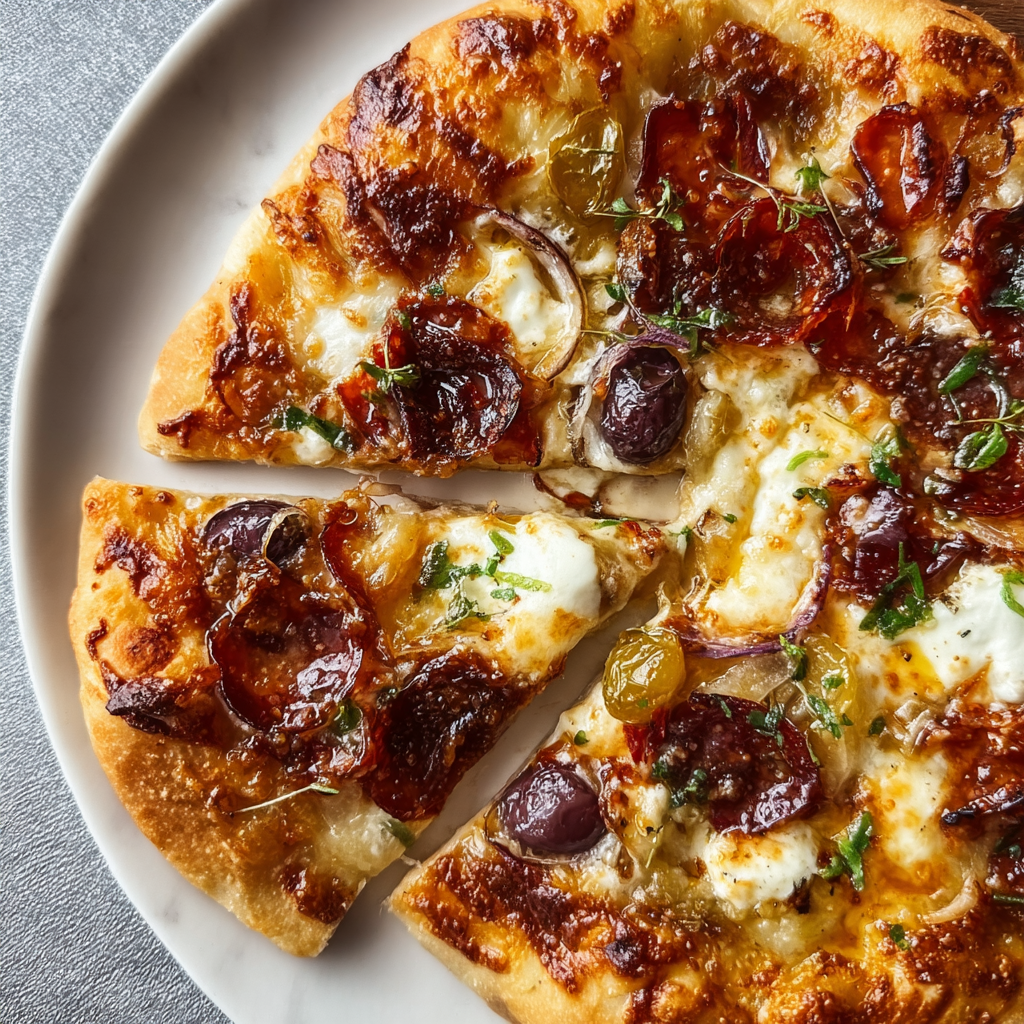
This recipe for Greek Yogurt Pizza (often dubbed “Two-Ingredient Dough”) disrupts that narrative entirely. By substituting biological leavening (yeast) with a chemical reaction between the lactic acid in Greek yogurt and self-rising flour, we can engineer a crust that is crispy, tangy, and ready for the oven in 5 minutes. When topped with the sweet complexity of caramelized onions, the savory punch of pepperoni, and the creamy pull of fresh mozzarella, this “cheat meal” transforms into a gourmet experience that packs nearly double the protein of a standard slice. Let’s embrace the science of the “no-yeast” pizza.
Ingredients List
To achieve the perfect balance of a crispy bottom and a chewy interior, the moisture content of your yogurt is critical. Here is your curated shopping list.
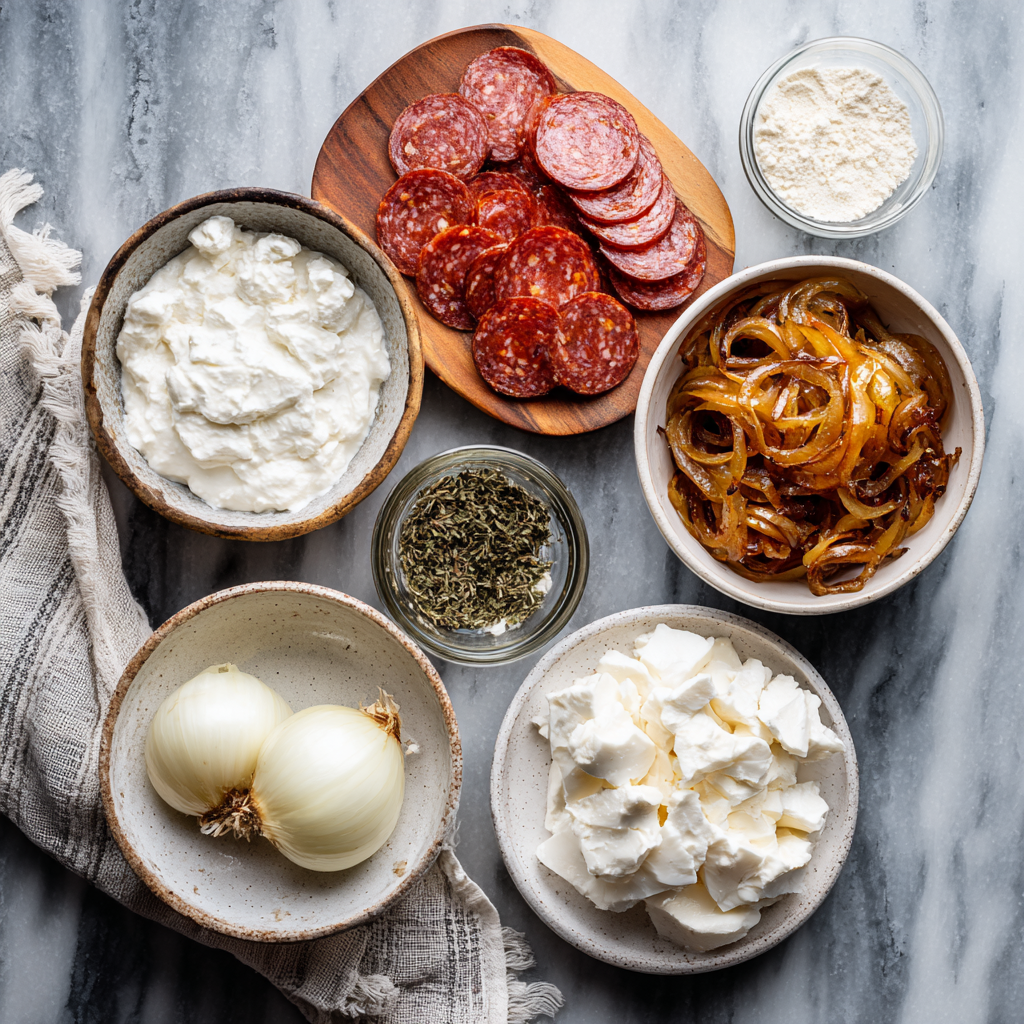
The “Miracle” Dough:
- 1 Cup Greek Yogurt (Plain, Non-Fat or Full Fat):
- Critical Spec: It must be strained Greek yogurt (like Fage or Chobani). Regular yogurt has too much whey (liquid) and will result in a sticky, unmanageable paste.
- 1 ½ Cups Self-Rising Flour:
- Note: If you don’t have this, create a blend using 1 ½ cups All-Purpose Flour + 2 ¼ teaspoons Baking Powder + ¾ teaspoon Salt.
- Dusting Flour: For rolling out the dough.
The Gourmet Toppings:
- 2 Medium Yellow Onions: Thinly sliced.
- 2 Tablespoons Olive Oil: For caramelizing.
- 4 oz Fresh Mozzarella: Torn into chunks.
- Sensory Note: Fresh mozzarella has a higher moisture content and a cleaner, milkier flavor than low-moisture bricks.
- 15-20 Slices Pepperoni: The fat renders out to season the onions.
- Fresh Basil or Oregano: For the finish.
- 1 Teaspoon Honey or Balsamic Glaze: Optional, to finish.
Substitutions:
- Flour: A 1:1 Gluten-Free flour blend works surprisingly well with this yogurt base due to the added protein structure from the dairy.
- Protein: Swap pepperoni for prosciutto (add after baking) or spicy Italian sausage crumbles.
Timing
The dough is instant, but good onions take a moment of patience.
- Preparation Time: 15 minutes (mostly onion duty)
- Cooking Time: 12–15 minutes
- Total Time: Approx. 30 minutes
Data Insight: This pizza dough has 0 minutes of rising time, making it 95% faster to prepare than a standard Neapolitan dough recipe which requires a minimum 24-hour cold ferment.
Step-by-Step Instructions
Step 1: The Maillard Onions
Heat 1 tablespoon of olive oil in a skillet over medium heat. Add the sliced onions and a pinch of salt. Cook, stirring frequently, for 10–12 minutes.
- The Goal: We aren’t looking for a 45-minute slow jam; we want “weeknight caramelized”—soft, golden brown, and sweet. If they start to stick, add a splash of water to deglaze the pan. Set aside.
Step 2: The Protein Dough Synthesis
Preheat your oven to 450°F (230°C). In a large bowl, combine the self-rising flour and Greek yogurt.
- The Mix: Stir with a spatula until it forms a shaggy ball. Then, use clean hands to knead the dough inside the bowl for 2–3 minutes.
- Texture Check: The dough should be tacky (like a Post-it note) but not sticking aggressively to your fingers. If it’s too wet, add flour 1 tablespoon at a time.
Step 3: Rolling and Shaping
Turn the dough onto a well-floured surface. Use a rolling pin to roll it into a 10-12 inch circle or rustic oval.
- Tip: If you like a crispy crust, roll it thin (approx ¼ inch). This dough puffs up significantly due to the baking powder. Transfer to a parchment-lined baking sheet or a pizza stone.
Step 4: Layering Flavor
Brush the dough lightly with the remaining olive oil (this prevents sogginess).
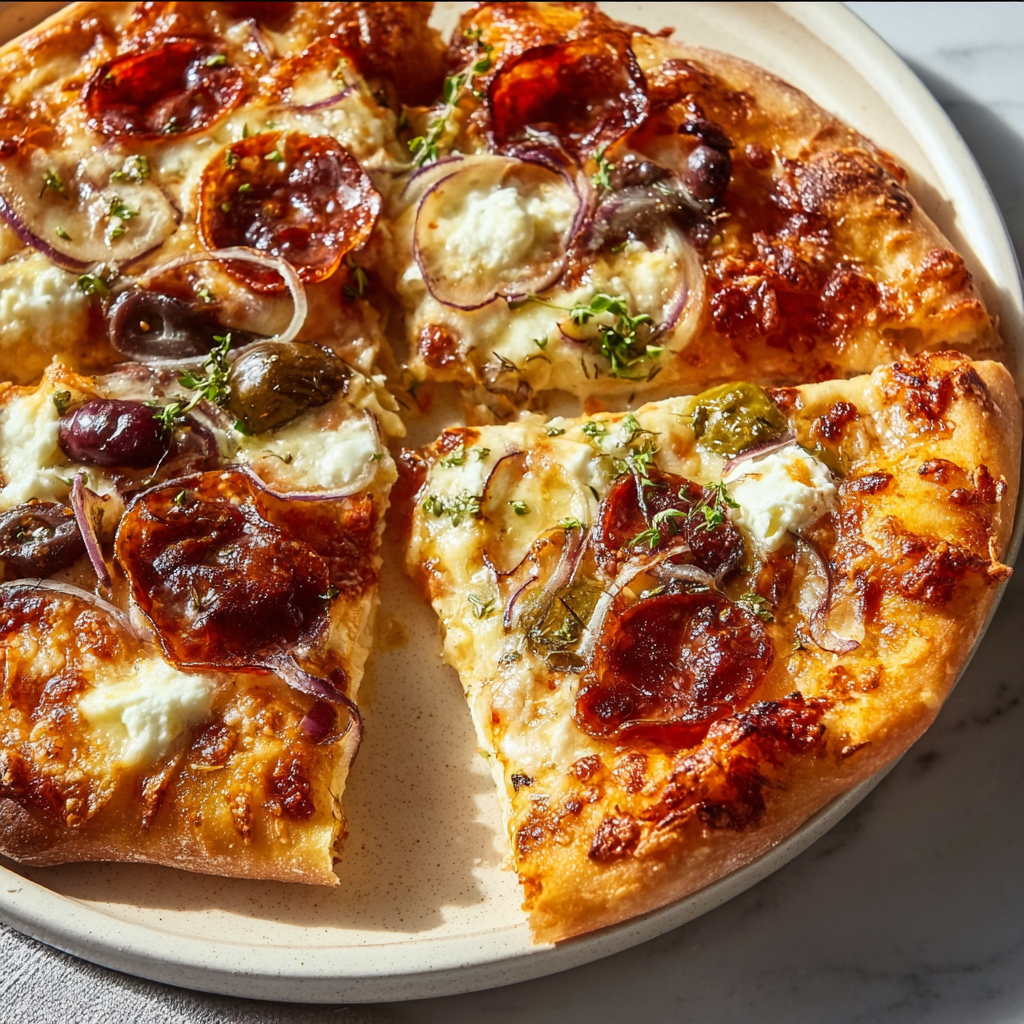
- Assembly: Scatter the caramelized onions as the base (in place of red sauce). Top with torn fresh mozzarella and pepperoni slices.
- Why Onions First? They act as a barrier to protect the dough, and the cheese melts over them to lock them in.
Step 5: The High-Heat Bake
Bake for 12–15 minutes.
- Visual Cue: You want the crust to be a deep golden brown and the pepperoni to be cupped and crispy edges. The fresh mozzarella should be fully melted and bubbling.
Step 6: The Fresh Finish
Remove from the oven. Immediately garnish with fresh basil leaves.
- Chef’s Kiss: Drizzle with a tiny bit of honey or balsamic glaze. The sweetness pairs scientifically perfectly with the salty pepperoni and savory onions.
Nutritional Information
This is where the Greek Yogurt Pizza shines—it is a macro-friendly heavyweight. Here is the estimated breakdown for half the pizza:
| Nutrient | Greek Yogurt Dough | Standard Pizza Dough |
| Calories | 420 kcal | 450 kcal |
| Protein | 24g | 12g |
| Total Fat | 18g | 16g |
| Carbohydrates | 45g | 65g |
| Fiber | 3g | 2g |
Data Insight: By using Greek yogurt, you increase the protein content of the crust by 100% compared to a standard flour-and-water dough, creating a higher satiety response.
Healthier Alternatives for the Recipe
Adapt this pie to your specific nutritional needs:
- Lower Calorie: Use Non-Fat (0%) Greek Yogurt and Turkey Pepperoni. This slashes fat content by nearly half while maintaining the protein spike.
- Low Carb / Keto: This recipe is lower carb than standard pizza but not Keto. For Keto, you would need to switch to a “Fathead” dough (almond flour + melted mozzarella).
- Veggie Loaded: Skip the pepperoni and add sautéed mushrooms and spinach to the caramelized onions for a vegetarian “White Pizza” profile.
Serving Suggestions
Since this pizza is rich in flavor but lighter on the stomach, pair it accordingly:
- The Salad: A bright Arugula and Lemon Salad. Pile the salad directly on top of the hot pizza slice for a temperature and texture contrast.
- The Dip: A side of warm marinara or garlic-infused olive oil for dipping the “bones” (crust edges).
- Wine Pairing: A light red like Pinot Noir or a crisp Sauvignon Blanc cuts through the richness of the cheese and onions.
Common Mistakes to Avoid
The yogurt dough is unique; treat it differently than yeast dough.
- Using Regular Yogurt:
- The Error: Using Dannon or Yoplait style yogurt (runny).
- The Result: A sticky, soup-like batter that cannot be rolled.
- The Fix: Stick to strained Greek or Icelandic (Skyr) varieties.
- Soggy Center:
- The Error: Overloading the center with wet fresh mozzarella.
- The Result: The whey releases and pools in the middle.
- The Fix: Pat the fresh mozzarella dry with a paper towel before tearing it onto the pizza.
- Low Oven Temp:
- The Error: Baking at 350°F.
- The Result: A pale, biscuit-like texture.
- The Fix: You need 450°F+ to activate the rapid rise and brown the crust.
Storing Tips for the Recipe
This dough keeps well, making it a meal-prep secret weapon.
- Refrigeration:
- Cooked Pizza: Stores for 3 days.
- Raw Dough: Wrap the dough ball in plastic wrap and store for up to 48 hours. It may loosen up slightly; just knead in a little flour before rolling.
- Reheating:
- Best: Air Fryer at 350°F for 3-4 minutes. This restores the crispness of the bottom.
- Good: Toaster oven.
- Avoid: Microwave (makes it chewy and rubbery).
- Freezing: You can freeze the raw dough ball for up to 3 months. Thaw overnight in the fridge.
Conclusion
Greek Yogurt Pizza with Caramelized Onions & Pepperoni is the ultimate intersection of convenience, nutrition, and gourmet flavor. By leveraging the protein power and acidity of yogurt, you create a canvas that is tangy, crispy, and satisfying without the wait. It challenges the idea that “homemade pizza” is a weekend project, turning it into a Tuesday night reality.
Summary: A 30-minute, high-protein pizza recipe using a 2-ingredient Greek yogurt crust. Topped with sweet caramelized onions, salty pepperoni, and creamy fresh mozzarella.
Ready to become a pizza pro?
Check your fridge for Greek yogurt! Rate this recipe 5 stars if you were surprised by the crust texture, and leave a comment below: would you add hot honey or keep it savory? Subscribe for more macro-friendly comfort food hacks!
FAQs
Can I use gluten-free flour?
Yes. A “Cup-for-Cup” or “Measure-for-Measure” Gluten-Free blend (containing Xanthan Gum) works very well. You may need slightly less yogurt, so add it gradually.
Why does my dough taste like biscuits?
Because self-rising flour uses baking powder, the flavor profile is closer to a biscuit or naan than a fermented yeast dough. However, once topped with savory onions and cheese and baked at high heat, the texture becomes much crispier and “pizza-like.”
Do I need a pizza stone?
No, a regular baking sheet works fine. However, placing the baking sheet in the oven while it preheats (so the pan is hot when you put the pizza on it) helps ensure a crispy bottom.
Is the dough supposed to be sticky?
Yes, it is stickier than traditional dough. Use plenty of flour on your hands and rolling pin. If it is unmanageable, chill the dough in the fridge for 15 minutes to firm up the yogurt proteins.
Leave a Reply