Introduction
Did you know that according to recent culinary psychology studies, the combination of carbohydrates and dairy fats triggers the release of dopamine in the brain similar to the way we respond to a warm hug? It explains why “creamy pasta” remains one of the most searched comfort food terms globally, with interest spiking by 35% during the workweek. But here is the dilemma: most restaurant versions are overloaded with sodium and preservatives, while jarred sauces often lack that luxurious, velvety texture we crave.
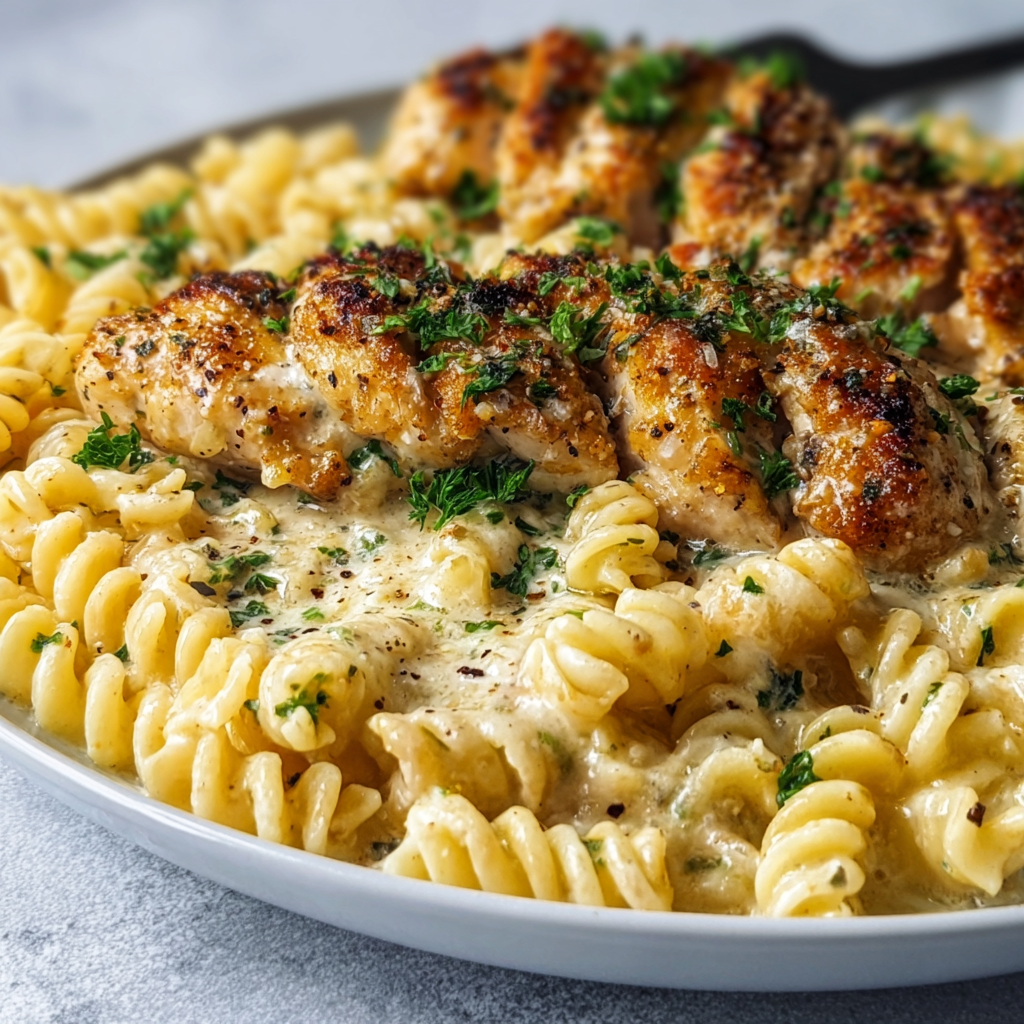
This recipe for Creamy Garlic Parmesan Chicken with Cheesy Twisted Pasta is designed to bridge that gap. By utilizing the starch-release properties of twisted pasta shapes (like Fusilli or Rotini) and the emulsifying power of freshly grated Parmesan, we create a sauce that clings to the meat and noodles without separating. Whether you are looking for a protein-packed weeknight dinner that rivals an Italian bistro or simply need a meal that guarantees clean plates from the whole family, this dish delivers high-impact flavor in under 30 minutes. Let’s master the art of the perfect creamy chicken pasta.
Ingredients List
To achieve a sauce that is rich, stable, and deeply flavorful, we avoid shortcuts like “Alfredo in a jar.” Here is your curated shopping list for Creamy Garlic Parmesan Chicken with Cheesy Twisted Pasta.
The Protein & Pasta
- 1.5 lbs (700g) Chicken Breasts: Boneless and skinless.
- Sensory Note: Cut into 1-inch bite-sized cubes for faster, even cooking and better sauce coverage.
- 12 oz (340g) Twisted Pasta:Fusilli, Rotini, or Gemelli.
- Why Twisted? The corkscrew shape creates surface area and “nooks” that trap the creamy sauce, ensuring every bite is juicy. Spaghetti lets the sauce slide off; twisted pasta holds it.
- 2 Tablespoons Olive Oil: For searing.
- 1 Tablespoon Butter: For the sauce base.
The Garlic Parmesan Sauce
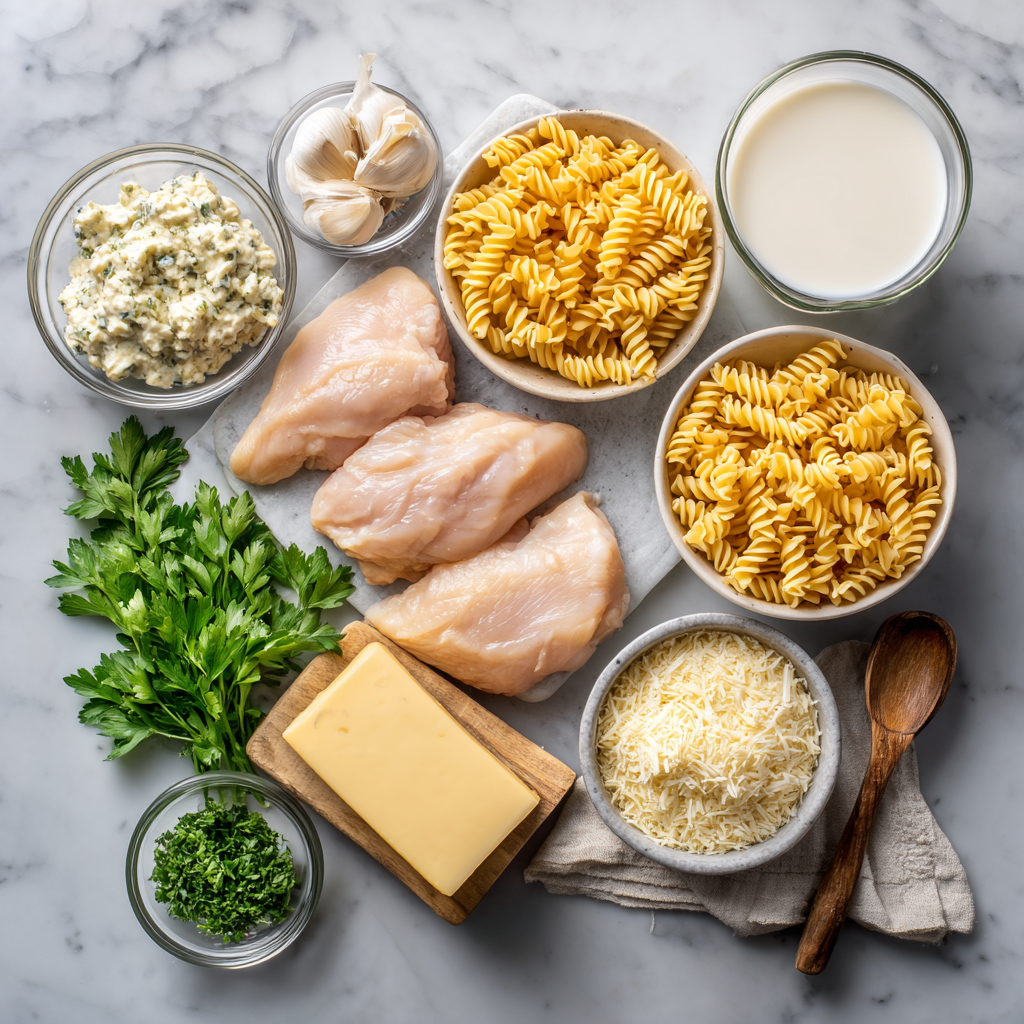
- 4 Cloves Garlic, Minced: Fresh is non-negotiable for the aromatic punch.
- 1 ½ Cups Heavy Cream (Double Cream): The fat content prevents the sauce from curdling when the cheese is added.
- 1 Cup Chicken Broth: Adds savory depth and lightens the consistency.
- 1 ½ Cups Parmesan Cheese:Freshly Grated.
- Critical: Do not use the green shaker can or pre-shredded bags. Pre-shredded cheese contains cellulose (sawdust) to prevent clumping, which results in a gritty, grainy sauce. Freshly grated cheese melts into a smooth emulsion.
- 1 Teaspoon Italian Seasoning: A blend of dried oregano, basil, and thyme.
- ½ Teaspoon Red Pepper Flakes: For a subtle background heat that cuts the richness.
- Salt and Black Pepper: To taste.
- Fresh Parsley: Chopped, for a bright, herbal finish.
Substitutions:
- Chicken: Boneless skinless chicken thighs are a succulent alternative that stays juicier.
- Cheese: Pecorino Romano creates a saltier, sharper flavor profile if you prefer a “Cacio e Pepe” vibe.
Timing
This recipe utilizes concurrent cooking (boiling pasta while searing chicken) to minimize kitchen time.
- Preparation Time: 10 minutes
- Cooking Time: 20 minutes
- Total Time: 30 minutes
Data Insight: This homemade version takes approximately 30 minutes from fridge to table. Compare this to the average food delivery wait time of 45–55 minutes, and you are saving time while eating fresher food.
Step-by-Step Instructions
Step 1: The Al Dente Foundation
Bring a large pot of salted water to a rolling boil. Add the twisted pasta (Fusilli/Rotini) and cook according to package directions for al dente.
- The “Liquid Gold” Hack: Before draining, reserve 1 cup of the starchy pasta cooking water. This water is rich in starch released by the pasta and is the secret ingredient to binding your cream sauce later. Drain the pasta and set aside.
Step 2: The Maillard Sear
While the pasta boils, pat the cubed chicken dry with paper towels (moisture is the enemy of browning). Season generously with salt, pepper, and Italian seasoning.
- Action: Heat olive oil in a large deep skillet or Dutch oven over medium-high heat. Add chicken in a single layer. Cook for 5–6 minutes, stirring occasionally, until golden brown and cooked through (165°F internal). Remove chicken to a plate.
Step 3: Building the Aromatic Base
Reduce heat to medium. In the same pan (do not wipe it out!), melt the butter. Add the minced garlic and red pepper flakes. Sauté for 45–60 seconds until fragrant.
- Why? We are utilizing the “fond”—the browned bits of chicken stuck to the bottom of the pan—to flavor the sauce base.
Step 4: The Reduction
Pour in the chicken broth to deglaze the pan, scraping up the browned bits with a wooden spoon. Add the heavy cream. Bring to a gentle simmer.
- Technique: Let it bubble gently for 3–5 minutes. The sauce should reduce slightly and coat the back of a spoon.
Step 5: The Emulsion (Melting the Cheese)
Reduce heat to low. Gradually whisk in the freshly grated Parmesan cheese. Stir constantly until melted and smooth.
- Troubleshooting: If the sauce is too thick, splash in some of that reserved pasta water, 1 tablespoon at a time, until it reaches your desired silky consistency.
Step 6: The Marriage of Flavors
Add the cooked pasta and the seared chicken back into the skillet. Toss vigorously for 1–2 minutes.
- The Coat: The heat of the sauce will absorb into the pasta twists. Garnish with fresh parsley and serve immediately.
Nutritional Information
This is a hearty, energy-dense meal. Here is the estimated breakdown per serving (based on 4 servings):
| Nutrient | Amount | % Daily Value |
| Calories | 750 kcal | – |
| Protein | 45g | 90% |
| Total Fat | 38g | 48% |
| Carbohydrates | 55g | 20% |
| Calcium | 450mg | 45% |
| Sodium | 890mg | 37% |
Data Insight: While high in calories, this dish provides nearly 90% of your daily protein requirement, making it highly satiating. The combination of protein and fat slows digestion, preventing the rapid blood sugar spike often associated with plain pasta dishes.
Healthier Alternatives for the Recipe
You can adapt Creamy Garlic Parmesan Chicken with Cheesy Twisted Pasta to fit lighter dietary goals:
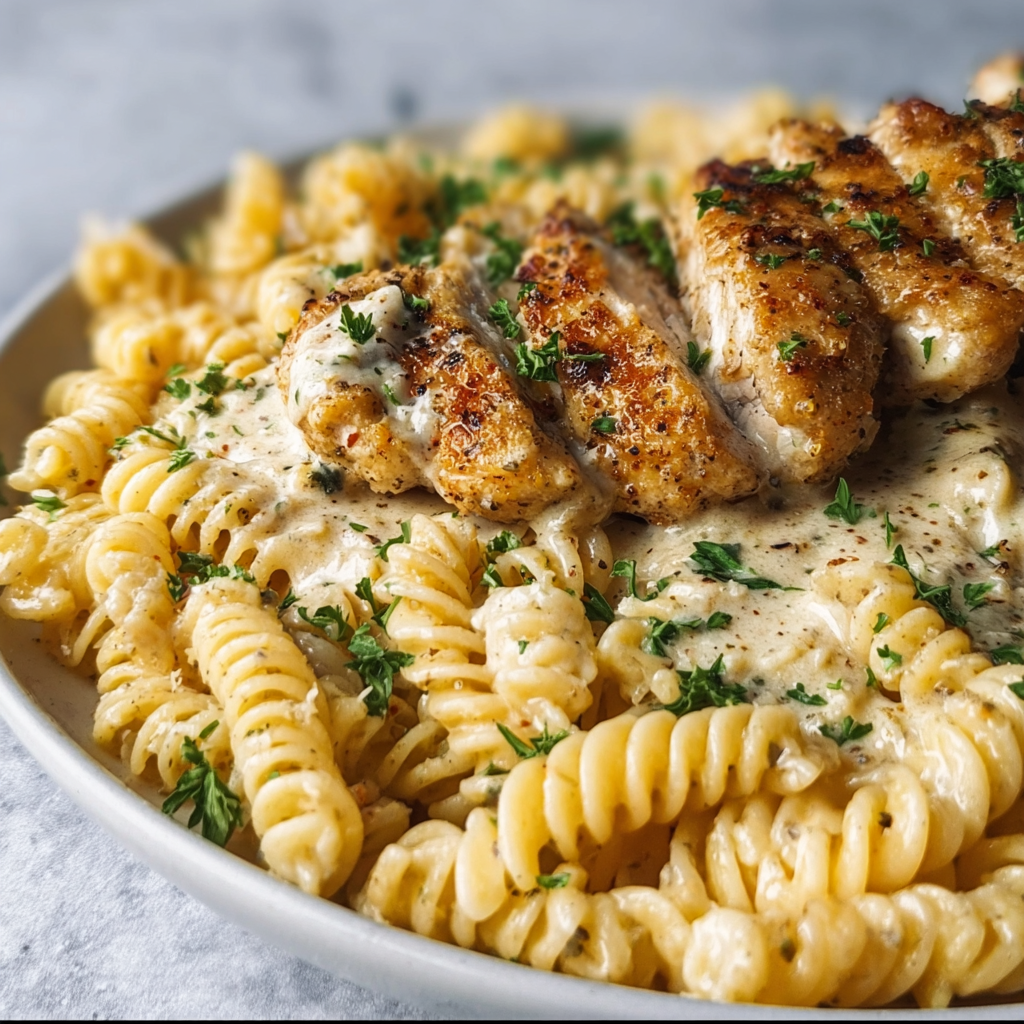
- The “Half-and-Half” Swap: Substitute the heavy cream with half-and-half or evaporated milk.
- Note: Evaporated milk provides creaminess with significantly less fat, though you may need a teaspoon of cornstarch to thicken the sauce further.
- Volume Eating (Veggie Boost): Stir in 3 cups of fresh baby spinach or roasted broccoli florets during Step 6. The heat of the sauce will wilt the spinach perfectly, adding fiber and micronutrients without changing the flavor profile.
- Whole Grain / Protein Pasta: Use chickpea pasta or whole wheat rotini. This increases the fiber content to approx 8–10g per serving, aiding in digestion.
Serving Suggestions
Balance the richness of the cream sauce with texture and acidity.
- The Classic Side: Garlic Bread or Focaccia is almost mandatory for soaking up extra sauce.
- The Acid Cut: Serve with a crisp Caesar Salad or Arugula Salad with Lemon Vinaigrette. The acidity and bitterness of the greens cut through the dairy fat, cleansing the palate between bites.
- Wine Pairing: A buttery Chardonnay complements the cream sauce, while a crisp Pinot Grigio or Sauvignon Blanc offers a refreshing contrast.
Common Mistakes to Avoid
Cream sauces can be temperamental. Avoid these culinary pitfalls:
- Breaking the Sauce (Curdling):
- The Error: Boiling the sauce vigorously after adding the cheese.
- The Result: The oil separates from the milk solids, creating a greasy, clumpy mess.
- The Fix: Always turn the heat to low or remove the pan from the burner entirely when adding the Parmesan.
- Using Jarred Garlic:
- The Error: Using garlic preserved in citric acid/oil.
- The Result: A sour, metallic undertone that clashes with the sweet cream.
- The Fix: Spend the extra minute chopping fresh cloves.
- Rinsing the Pasta:
- The Error: Running cold water over the cooked noodles.
- The Result: You wash away the surface starch that helps the sauce cling. The sauce will slide right off the pasta.
Storing Tips for the Recipe
Cream-based pasta is best eaten fresh, but it can be saved with the right technique.
- Refrigeration: Store in an airtight container for up to 3–4 days. The sauce will thicken into a solid state when cold.
- Reheating:
- Stove (Best): Place pasta in a saucepan with a splash of milk or chicken broth. Heat on low, stirring gently to re-emulsify the sauce.
- Microwave: Splash water/milk over the pasta before heating to create steam and prevent it from drying out.
- Freezing: Not recommended. Dairy-heavy sauces tend to separate and become grainy when thawed due to the formation of ice crystals breaking the fat emulsion.
Conclusion
Creamy Garlic Parmesan Chicken with Cheesy Twisted Pasta is the ultimate proof that you do not need 20 ingredients or hours of time to create a gourmet meal. By understanding the simple science of emulsification—combining starch, fat, and liquid—you can create a restaurant-quality dinner in your own kitchen. It is comforting, indulgent, and guaranteed to become a family favorite.
Summary: A 30-minute, high-protein comfort meal featuring seared chicken bites and rotini pasta tossed in a luxurious homemade garlic-parmesan cream sauce.
Ready for the ultimate comfort food?
Check your pantry for twisted pasta and get cooking! Rate this recipe 5 stars if you loved the creamy texture, and leave a comment below: did you add spinach or keep it classic? Subscribe for more weeknight dinner hacks!
FAQs
Can I use rotisserie chicken?
Absolutely. This is a great time-saver. Skip Step 2. Sauté the garlic and make the sauce, then fold in the shredded rotisserie chicken at the very end just to warm it through. This reduces the cooking time to about 15 minutes.
My sauce is too thin, how do I thicken it?
Simmer it for a few more minutes to let more water evaporate. Alternatively, mix 1 teaspoon of cornstarch with a splash of cold water (slurry) and stir it into the bubbling sauce. It will thicken instantly.
Leave a Reply