Introduction
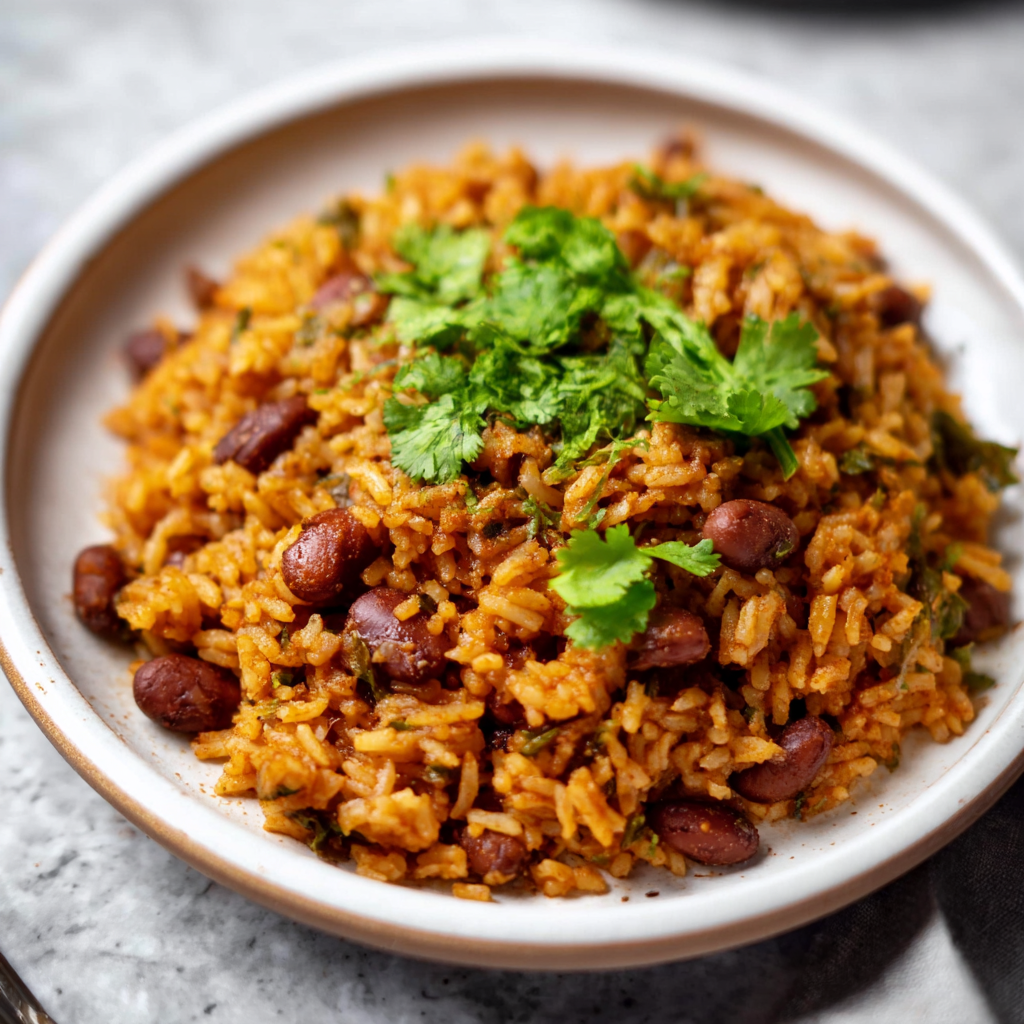
Did you know that Arroz con Gandules is officially recognized as the national dish of Puerto Rico? While many cultures have a version of rice and beans, this specific variation holds a distinct culinary status, particularly during the holiday season.1 Search trends for this recipe spike by over 500% globally during December, proving that for millions, it simply isn’t Christmas (Nochebuena) without a heavy cauldron of this orange-hued rice on the table.
But here is the secret that separates “rice with stuff in it” from Mom’s Authentic Puerto Rican Rice & Beans: it is all about the Sofrito and the Pegao. Sofrito is the aromatic green cooking base that provides the soul of the dish, while Pegao is the crispy, caramelized layer of rice at the bottom of the pot—a delicacy often fought over at the dinner table. This recipe challenges the idea that rice is just a side dish; here, it is the main event. By mastering the “spoon test” for liquid measurement and the art of the steam, you can recreate this heritage masterpiece in your own kitchen, delivering a savory, aromatic experience that tastes like home.
Ingredients List
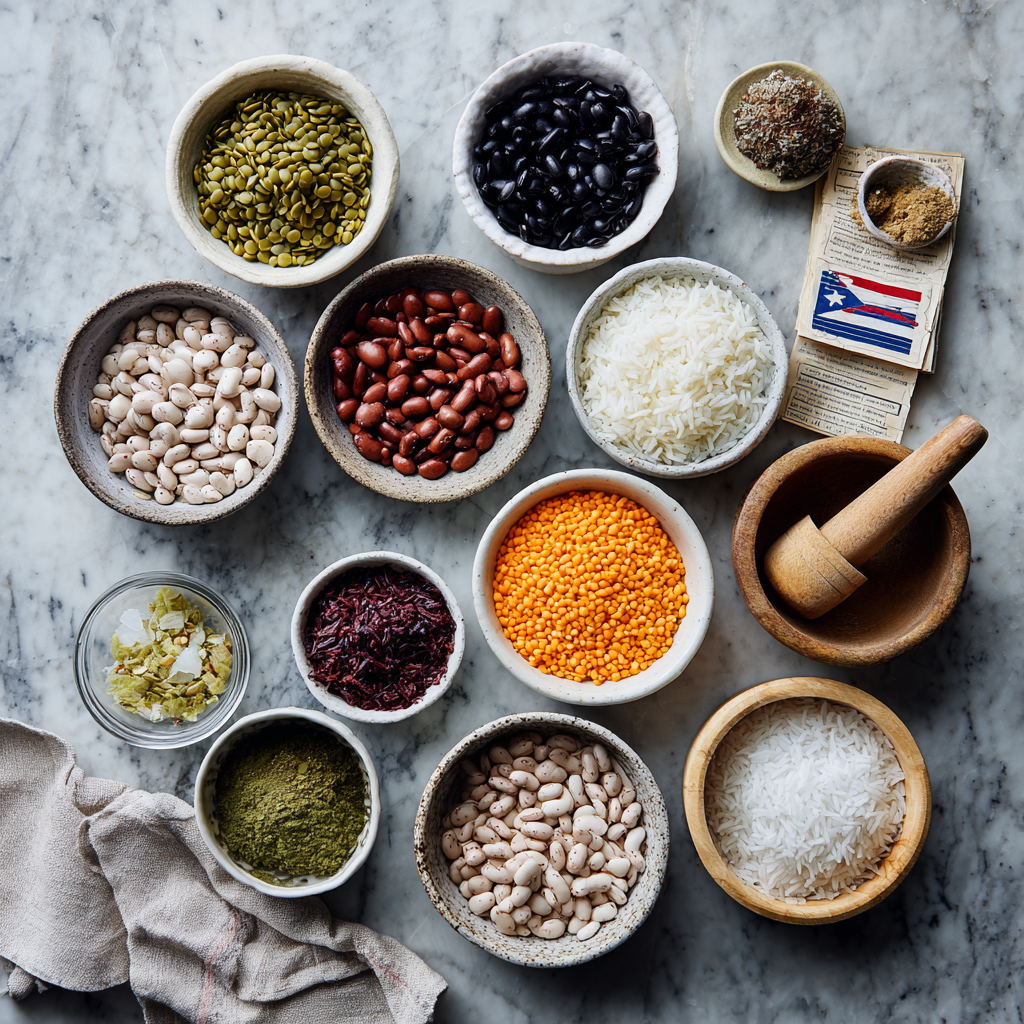
To replicate the authentic flavor profile, you cannot substitute the core aromatics. Here is your curated shopping list for Arroz con Gandules.
The Foundation:
- 3 Cups Medium-Grain White Rice:
- Critical Spec: Do not use Jasmine or Basmati. Medium-grain rice (like Goya or Rico brand) has the specific starch content needed to be fluffy yet sticky enough to hold the flavor. Long grain is too dry; short grain is too mushy.
- 1 Can (15 oz) Gandules (Green Pigeon Peas):2 Undrained.
- What are Gandules? They are not green peas. They are a legume with a nutty, earthy flavor distinct to Caribbean cooking.3
- ½ Cup Sofrito:
- The Soul: A blend of culantro (recao), cilantro, onions, peppers, and garlic. Homemade is best, but frozen sections in grocery stores carry high-quality tubs. Avoid the shelf-stable jarred red versions if possible.
The Flavor & Color:
- 1 Packet Sazón with Culantro and Achiote (Annatto): This provides the signature orange color and savory MSG-umami boost.
- 1 Packet Powdered Chicken or Ham Bouillon.
- ½ Cup Tomato Sauce: Adds body and acidity.4
- ¼ Cup Alcaparrado (Olives and Capers mix): Or just pimento-stuffed green olives.
- 2 Tablespoons Oil with Achiote (Annatto Oil) or Vegetable Oil.5
The Meat (Optional but Traditional):
- 4 oz Salt Pork, Ham, or Bacon: Diced.
- Role: Rendered fat provides the smoky, salty base.
The Liquid:
- Water: Amount varies based on the “Spoon Test” (approx. 3-4 cups).
Substitutions:
- Vegetarian: Skip the pork and use vegetable oil. The Sofrito and Sazón carry enough flavor to make it delicious without meat.
- Beans: If you can’t find Gandules, you can use kidney beans, but technically that changes the dish to Arroz con Habichuelas.
Timing
This recipe requires “active attention” followed by “passive steaming.”
- Preparation Time: 15 minutes.
- Cooking Time: 35–45 minutes.
- Total Time: Approx. 1 hour.
Data Insight: Using a heavy-bottomed aluminum pot (called a caldero) reduces cooking time variance and increases the likelihood of achieving perfect Pegao (crispy bottom) by conducting heat evenly.
Step-by-Step Instructions
Step 1: Rendering the Base
Heat your caldero (or Dutch oven) over medium-high heat. Add the diced salt pork (or ham/bacon) and the oil.
- Action: Cook for 5–7 minutes until the fat renders out and the meat is crispy.
- The Science: This fat will coat the rice grains later, preventing them from sticking together into a gluey mess.
Step 2: The Sofrito Bloom
Add the Sofrito, olives (alcaparrado), tomato sauce, Sazón packet, and bouillon powder.
- Sauté: Stir constantly for 2–3 minutes.
- Why? Cooking the Sofrito (“blooming”) removes the raw onion/garlic taste and melds the aromatics into a thick, fragrant paste.
Step 3: The Gandules
Add the can of Pigeon Peas (including the liquid from the can). Stir to combine.
- Flavor Tip: The liquid in the can is full of starch and flavor from the peas; never drain it for this specific recipe.
Step 4: Rice and Water (The Spoon Test)
Add the washed rice to the pot. Stir until every grain is dyed orange by the sauce.
- Adding Water: Pour in water until it covers the rice by about 1 inch.
- The Magic Spoon Test: Take a large serving spoon. Place it vertically in the absolute center of the pot, resting gently on top of the rice.
- The Rule: If the spoon stands up straight or wobbles slightly but stays upright, the water ratio is perfect. If it falls over immediately, there is too much water. If it stands too rigidly (like in sand), you need more water.
Step 5: The “Secado” (Drying)
Bring the liquid to a rolling boil. Do not cover. Let it boil until the water evaporates and you can see the rice grains pitting (craters forming) on the surface.6
- Visual Cue: It should look like the water has mostly disappeared from the top layer.
Step 6: The Steam and Pegao
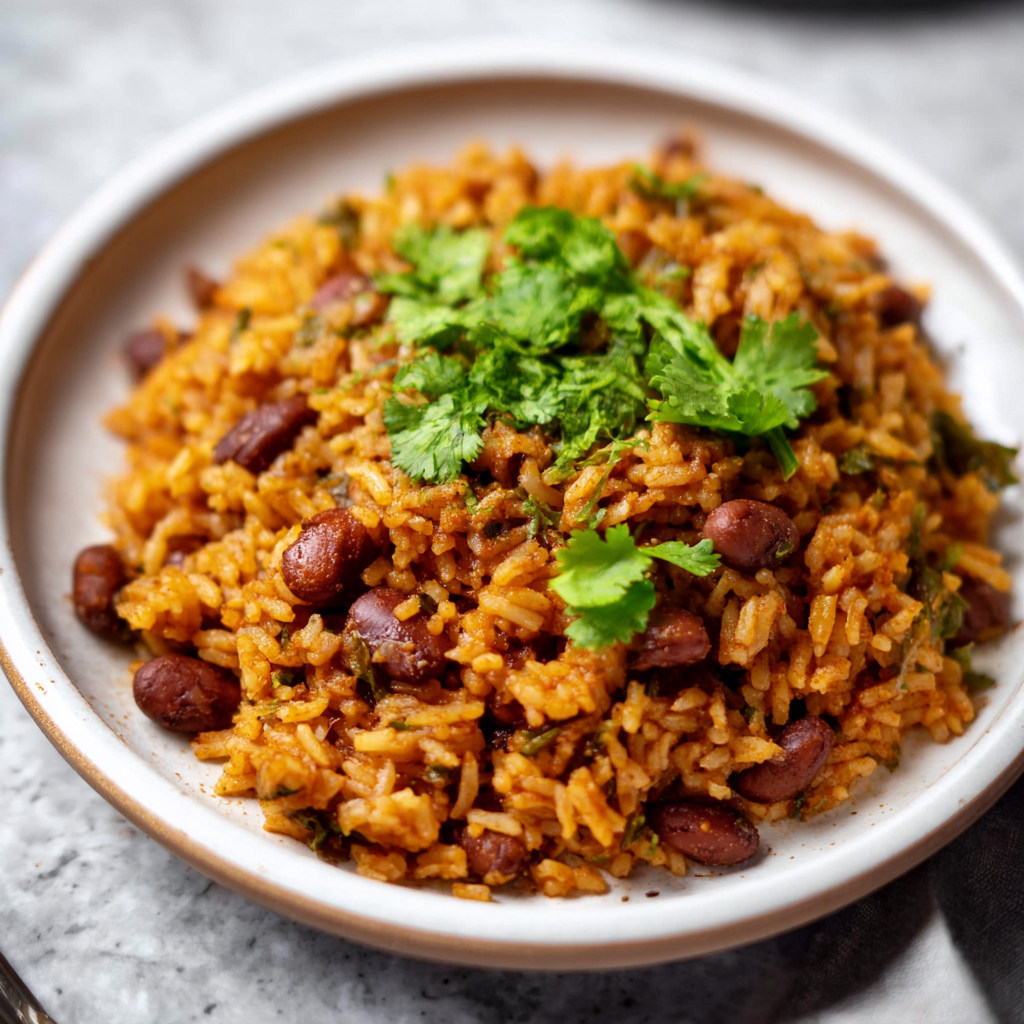
Once the water evaporates, stir the rice one time from bottom to top to distribute the ingredients.7
- Cover: Place a tight-fitting lid on the pot (some Abuelas cover the rice with a banana leaf or aluminum foil first to trap steam).8
- Low Heat: Turn the heat to LOW. Simmer undisturbed for 25–30 minutes.
- The Pegao: If you want the crispy bottom, turn the heat to medium-high for the last 2 minutes of cooking (listen for a crackling sound), then turn off. Fluff and serve.
Nutritional Information
This is a high-carb, energy-dense side dish. Here is the estimated breakdown per serving (based on 8 servings):
| Nutrient | Amount | % Daily Value |
| Calories | 320 kcal | – |
| Carbohydrates | 58g | 21% |
| Protein | 8g | 16% |
| Total Fat | 6g | 9% |
| Fiber | 4g | 16% |
| Sodium | 650mg | 28% |
Data Insight: Pigeon peas are a nutritional powerhouse compared to standard peas, offering higher levels of Potassium, Copper, and Magnesium.
Healthier Alternatives for the Recipe
Adapt Mom’s Authentic Puerto Rican Rice & Beans to fit specific dietary needs:
- Whole Grain:
- Use Brown Medium Grain Rice.
- Modification: You will need approx. ½ cup more water and 15–20 minutes longer cooking time during the steaming phase.
- Lower Sodium:
- Use homemade Sofrito (salt-free).
- Use “No Salt Added” tomato sauce and skip the bouillon/Sazón (use turmeric and paprika for color instead).
- Cauliflower Arroz:
- Sauté the cauliflower rice in the Sofrito base. Do not add water. Just stir-fry until tender. It mimics the flavor profile with a fraction of the carbs (Keto-friendly).
Serving Suggestions
This rice is rarely eaten alone.
- The Classic: Pair with Pernil (Slow Roasted Pork Shoulder). The fatty pork complements the savory rice perfectly.
- The Weeknight: Serve alongside stewed chicken (Pollo Guisado) or a simple fried egg and avocado slice.
- Holiday Side: Serve with Pasteles (root vegetable tamales) and Potato Salad.
Common Mistakes to Avoid
Rice is temperamental. Avoid these errors:
- Stirring Too Much:
- The Error: Stirring constantly while it boils.
- The Result: You break the rice starch, resulting in a risotto-like mush (mogolla) instead of distinct fluffy grains.
- The Fix: Stir once at the beginning, once before covering. That’s it.
- Lifting the Lid:
- The Error: Checking the rice during the 30-minute steam.
- The Result: The steam escapes, and the top layer of rice remains hard and undercooked.
- The Fix: Trust the process. Keep it closed.
- Wrong Rice Type:
- The Error: Using Jasmine rice.
- The Result: It becomes too soft and sticky.
- The Fix: Stick to Medium Grain.
Storing Tips for the Recipe
Rice keeps well but needs moisture to reheat.9
- Refrigeration: Store in an airtight container for up to 4–5 days.
- Reheating:
- Microwave: Sprinkle a tablespoon of water over the rice, cover with a damp paper towel, and heat. The steam revives the grain.
- Stove: Add a splash of water and oil to a pan and “fry” the leftover rice to crisp it up.
- Freezing: You can freeze cooked rice for up to 1 month.10 Thaw in the fridge before reheating.
Conclusion
Mom’s Authentic Puerto Rican Rice & Beans (Arroz con Gandules) is more than a recipe; it is a cultural touchstone. It represents the blending of Spanish, African, and Taino influences into one pot of golden, savory perfection.11 By respecting the sofrito and trusting the steam, you can bring the heart of Puerto Rico to your table any night of the week.
Summary: An authentic recipe for Puerto Rican yellow rice with pigeon peas, flavored with a cilantro-based sofrito, pork, and spices. The ultimate holiday side dish.
Ready to find the Pegao?
Get your caldero ready! Rate this recipe 5 stars if the spoon test worked for you, and leave a comment below: do you fight for the crispy bottom or the fluffy top? Subscribe for more authentic Caribbean recipes!
FAQs
What if I can’t find Gandules (Pigeon Peas)?
While Gandules have a unique nutty flavor, you can substitute them with canned chickpeas (garbanzos) or kidney beans. The flavor will be different (it becomes Arroz con Garbanzos), but still delicious.
Is this recipe spicy?
No. Despite the rich color and spices, Puerto Rican food is generally savory and herbal, not spicy-hot. There is no chili heat in this dish unless you add hot sauce at the table.
Do I have to wash the rice?
Yes. Washing the rice removes surface starch. If you don’t wash it, the excess starch will make the rice clumpy and sticky rather than loose and fluffy.12 Wash until the water runs mostly clear.
What is the difference between Sofrito and Recaito?
In most grocery stores, they are similar. Recaito is typically a green, cilantro/culantro-based cooking base (which is what we want here).13 Some jars labeled “Sofrito” are red and tomato-based.14 For this rice, the green base (Recaito or homemade green Sofrito) is preferred for the authentic herbal flavor.
Leave a Reply