
Introduction
Did you know that the smell of baking bread is consistently ranked among the top three “most comforting scents” in global psychological surveys? There is a biological reason for this: the breakdown of carbohydrates and the release of yeast byproducts trigger a dopamine response before we even take a bite.
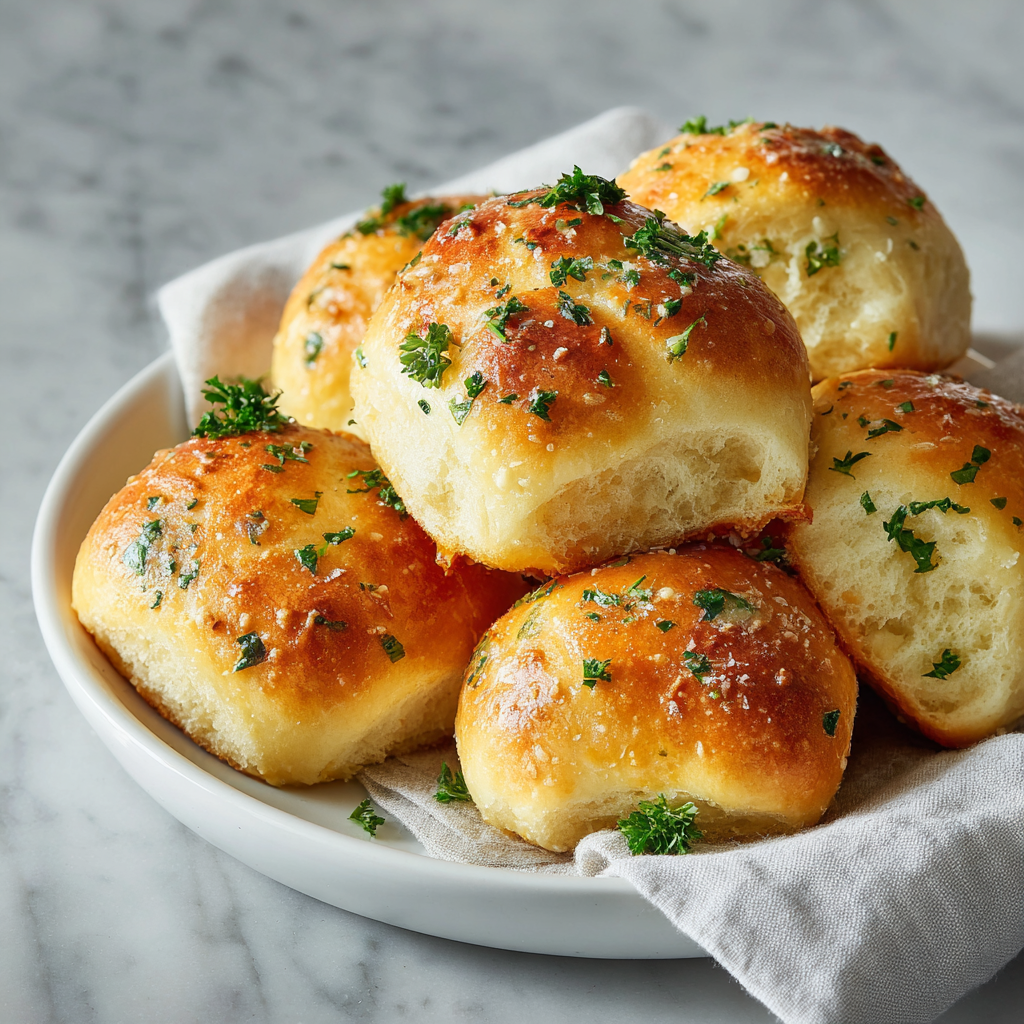
This recipe for Soft Garlic Butter Dinner Rolls takes that sensory experience to the next level. While store-bought rolls often rely on preservatives to stay soft, these homemade gems rely on an enriched dough—a dough fortified with milk, butter, and egg. This fat inhibits gluten formation just enough to create a tender, pillowy crumb rather than a chewy loaf. Generously brushed with a garlic-herb butter not once, but twice (before and after baking), these rolls are savory, golden, and scientifically designed to disappear from the dinner table in minutes.
Ingredients List
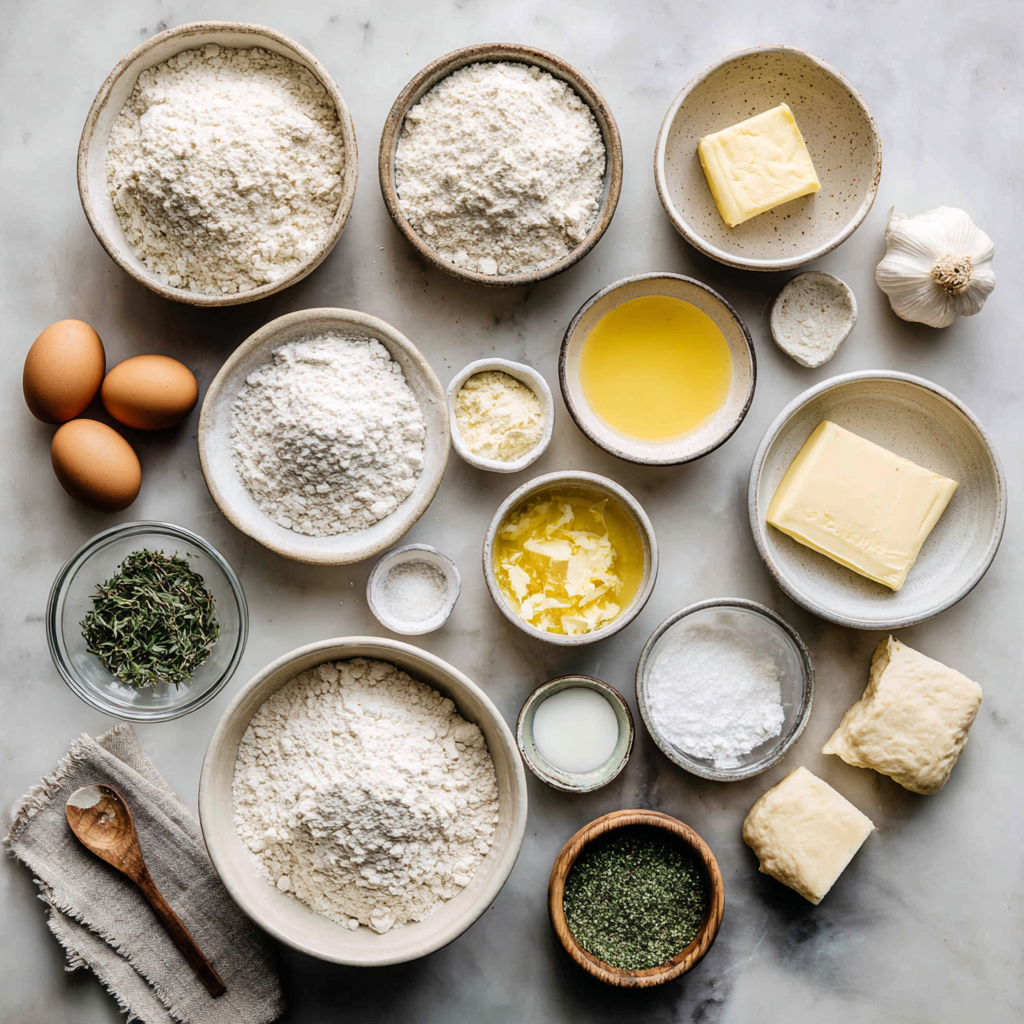
To achieve the signature “pull-apart” texture without them being dense, the fat-to-flour ratio is key. Here is your curated shopping list.
The Enriched Dough:
- 3 ½ to 4 Cups All-Purpose Flour:
- Why AP? Unlike chewy sourdough which needs bread flour, we want soft rolls. All-Purpose has a lower protein content (10-11%), yielding a lighter crumb.
- 1 Cup Whole Milk: Warmed to approx. 110°F.
- ¼ Cup Granulated Sugar: Feeds the yeast and aids browning.
- 2 ¼ Teaspoons Instant Yeast: (1 standard packet).
- 1 Large Egg: Room temperature.
- 1/3 Cup Unsalted Butter: Softened.
- 1 Teaspoon Salt.
The Garlic Herb Butter:
- ½ Cup (1 stick) Unsalted Butter: Melted.
- 4 Cloves Garlic: Minced finely.
- Pro Tip: Sauté the garlic in the butter for 1 minute to remove the sharp, raw bite, or use garlic powder for a milder flavor.
- 2 Tablespoons Fresh Parsley: Chopped.
- ½ Teaspoon Garlic Salt: Or a pinch of sea salt.
- 1 Tablespoon Parmesan Cheese: (Optional) Finely grated for a savory crust.
Substitutions:
- Yeast: If using Active Dry Yeast, you must dissolve it in the warm milk with a pinch of sugar and let it sit for 5 minutes until foamy before mixing.
- Dairy-Free: Use oat milk and a high-quality vegan butter stick. The texture remains surprisingly similar.
- Flour: Bread flour can be used if you prefer a chewier, heartier roll.
Timing
Bread requires patience, but the active work is minimal.
- Preparation Time: 25 minutes.
- First Rise: 1 to 1.5 hours.
- Second Rise: 30–45 minutes.
- Baking Time: 20–25 minutes.
- Total Time: Approx. 2.5 to 3 hours.
Data Insight: Enriched doughs take longer to rise than lean doughs (water/flour) because the fat weighs down the gluten network. Do not rush the rise; volume is flavor.
Step-by-Step Instructions
Step 1: The Activation
In the bowl of a stand mixer (or large bowl), combine the warm milk, 1 tablespoon of the sugar, and the yeast.
- Wait: Let it sit for 5 minutes. Even with Instant Yeast, this ensures your yeast is alive and kicking. It should look bubbly.
Step 2: The Dough Mix
Add the rest of the sugar, the softened butter, the egg, salt, and 2 cups of the flour.
- Mix: Using the dough hook, mix on low speed until combined.
- Incorporate: Gradually add the remaining flour, ½ cup at a time.
- Knead: Knead on medium-low speed for 5–7 minutes.
- Texture Check: The dough should be soft and tacky (sticky to the touch) but should pull away cleanly from the sides of the bowl. If it’s a sticky mess, add 1 tablespoon of flour at a time.
Step 3: The First Rise
Lightly grease a large bowl with oil. Form the dough into a ball and place it inside, turning once to coat in oil.
- Cover: Cover with plastic wrap or a warm damp towel.
- Proof: Let rise in a warm, draft-free spot for 1 to 1.5 hours, or until doubled in size.
Step 4: The Shape
Punch the dough down gently to release air bubbles. Turn onto a lightly floured surface.
- Divide: Cut the dough into 12 to 15 equal pieces.
- Roll: Cup your hand over a piece of dough on the counter. Move your hand in a circular motion, keeping your fingers touching the counter, to roll the dough into a tight, smooth ball.
Step 5: The Second Rise
Place the rolls into a greased 9×13 inch baking pan. Leave a little space between them; they will expand and touch as they rise.
- Cover: Cover and let rise for another 30–45 minutes. They should look puffy.
- Preheat: While rising, preheat oven to 375°F (190°C).
Step 6: The Bake & Brush
Mix your melted butter, minced garlic, and parsley.
- First Brush: Gently brush half of the garlic butter mixture over the unbaked rolls.
- Bake: Bake for 20–25 minutes.
- Visual Cue: They should be golden brown on top.
- Second Brush: Remove from oven and immediately brush with the remaining garlic butter and sprinkle with Parmesan/salt.
Nutritional Information
A rich, carb-forward side dish. Estimated breakdown per roll (based on 12 rolls):
| Nutrient | Amount | % Daily Value |
| Calories | 210 kcal | – |
| Total Fat | 9g | 12% |
| Saturated Fat | 5g | 25% |
| Carbohydrates | 28g | 10% |
| Protein | 4g | 8% |
| Sodium | 250mg | 11% |
Data Insight: Using fresh garlic provides trace amounts of Allicin, but primarily, the inclusion of fat (butter) lowers the glycemic index of the white flour slightly by slowing gastric emptying compared to eating plain baguette.
Healthier Alternatives for the Recipe
Customize your Garlic Rolls for wellness goals:
- Whole Grain:
- Use White Whole Wheat Flour. It has the nutritional profile of whole wheat but a softer texture that works well in rolls.
- Lower Fat:
- Reduce the butter in the dough to 2 tablespoons.
- Use olive oil for the brushing step instead of butter (heart-healthy fats).
- Added Fiber:
- Add 2 tablespoons of ground flaxseed to the flour mixture.
Serving Suggestions
These rolls go with almost everything.
- Pasta Night: The perfect vessel for soaking up extra marinara sauce from Lasagna or Spaghetti.
- Soup Side: Serve with creamy soups like Potato Soup or Tomato Bisque.
- Holiday Table: They are fancy enough for Thanksgiving but easy enough for a Tuesday.
Common Mistakes to Avoid
Dough is temperamental.
- Killing the Yeast:
- The Error: Milk too hot (over 120°F).
- The Result: Dead yeast, dense rocks.
- The Fix: If the milk burns your finger, it will burn the yeast. Aim for “baby bottle warm.”
- Too Much Flour:
- The Error: Scooping flour directly with the measuring cup (packing it down).
- The Result: Dry, heavy rolls.
- The Fix: Spoon the flour into the cup and level it off, or weigh it.
- Rushing the Rise:
- The Error: Baking before they double.
- The Result: Small, dense rolls.
- The Fix: Let them grow!
Storing Tips for the Recipe
Homemade bread has no preservatives.
- Room Temperature: Store in an airtight container or Ziploc bag for up to 3 days.
- Reheating: Microwave for 10-15 seconds to restore that “fresh-baked” softness.
- Freezing:
- Baked: Freeze fully cooled rolls in a freezer bag for up to 2 months. Thaw on the counter.
- Unbaked: Freeze the shaped balls on a tray, then bag them. Thaw in the fridge overnight and let rise on the counter before baking.
Conclusion
Soft Garlic Butter Dinner Rolls are the ultimate act of culinary love. They transform simple pantry staples—flour, yeast, and butter—into a side dish that often steals the show from the main course. With their golden tops, fluffy interiors, and intense garlic aroma, they are impossible to resist.
Summary: Soft, fluffy yeast rolls made with an enriched dough, brushed with garlic-parsley butter before and after baking.
Ready to knead?
Warm that milk! Rate this recipe 5 stars if they came out fluffy, and leave a comment below: do you add cheese to the top? Subscribe for more baking basics!
FAQs
Can I make the dough ahead of time?
Yes. You can do the first rise in the refrigerator overnight (8–12 hours). The cold slows down the yeast (retarding), which actually develops deeper flavor. Punch down, shape, and let rise for about 1 hour before baking.
Why are my rolls hard?
This is usually due to too much flour or over-baking. The dough should be slightly sticky when you finish kneading. If you added so much flour that it was dry to the touch, the rolls will be tough.
Can I use garlic powder instead of fresh?
Yes. For the topping, use 1 teaspoon of garlic powder instead of fresh cloves. It will have a more uniform, savory flavor without the risk of burning bitter garlic bits.
Leave a Reply