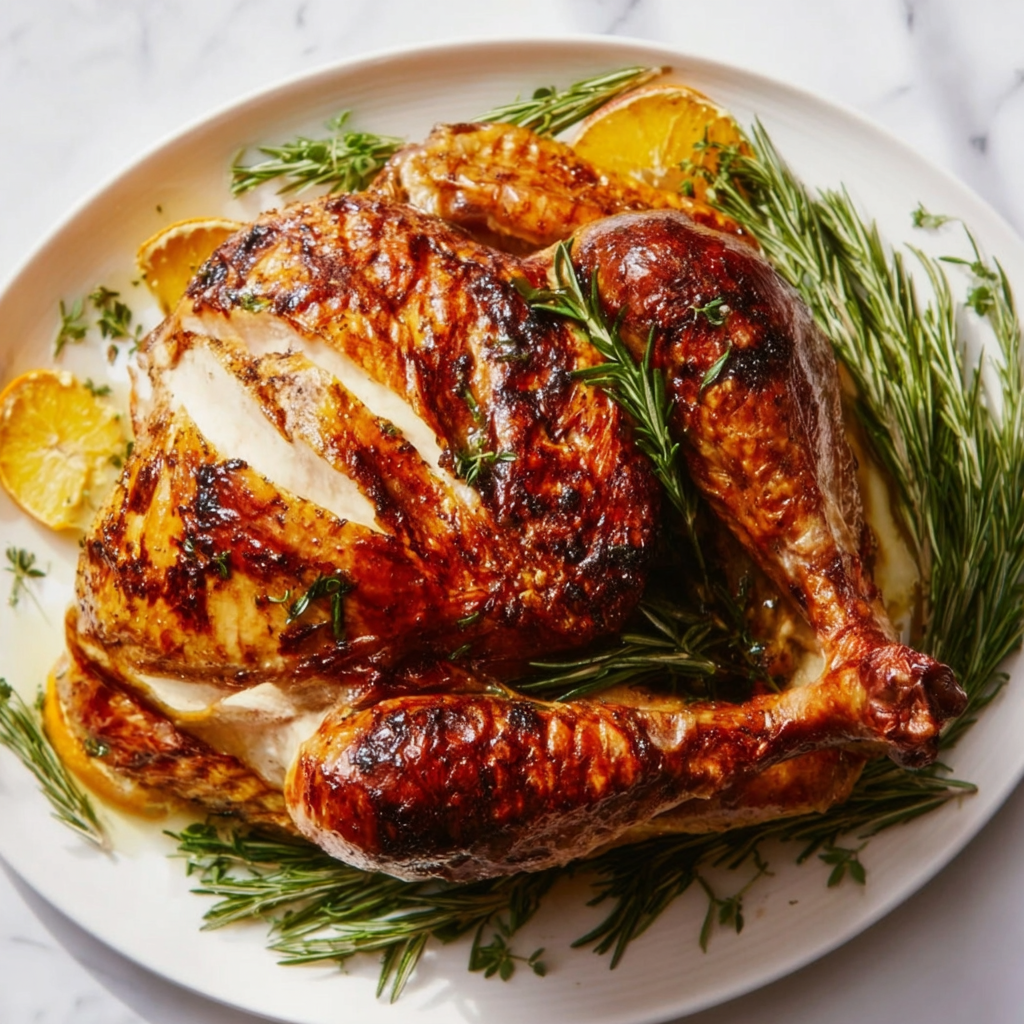
Introduction
Did you know that Samin Nosrat, author of Salt, Fat, Acid, Heat, famously declared that buttermilk is the single best way to brine a chicken or turkey? While salt-water brines can make meat juicy but watery, and dry brines take days, a Buttermilk Brine offers a magical third option.
The lactic acid and calcium in buttermilk work enzymatically to break down proteins differently than salt alone, tenderizing the meat without turning it mushy. Simultaneously, the milk sugars (lactose) caramelize in the oven, creating the darkest, most mahogany skin you have ever seen on a roast bird. This recipe for Easy Buttermilk Brined Turkey simplifies the daunting holiday task. It requires no boiling of water, no massive coolers, and produces a turkey that is impossibly tender, golden-brown, and full of tang and depth.
Ingredients List
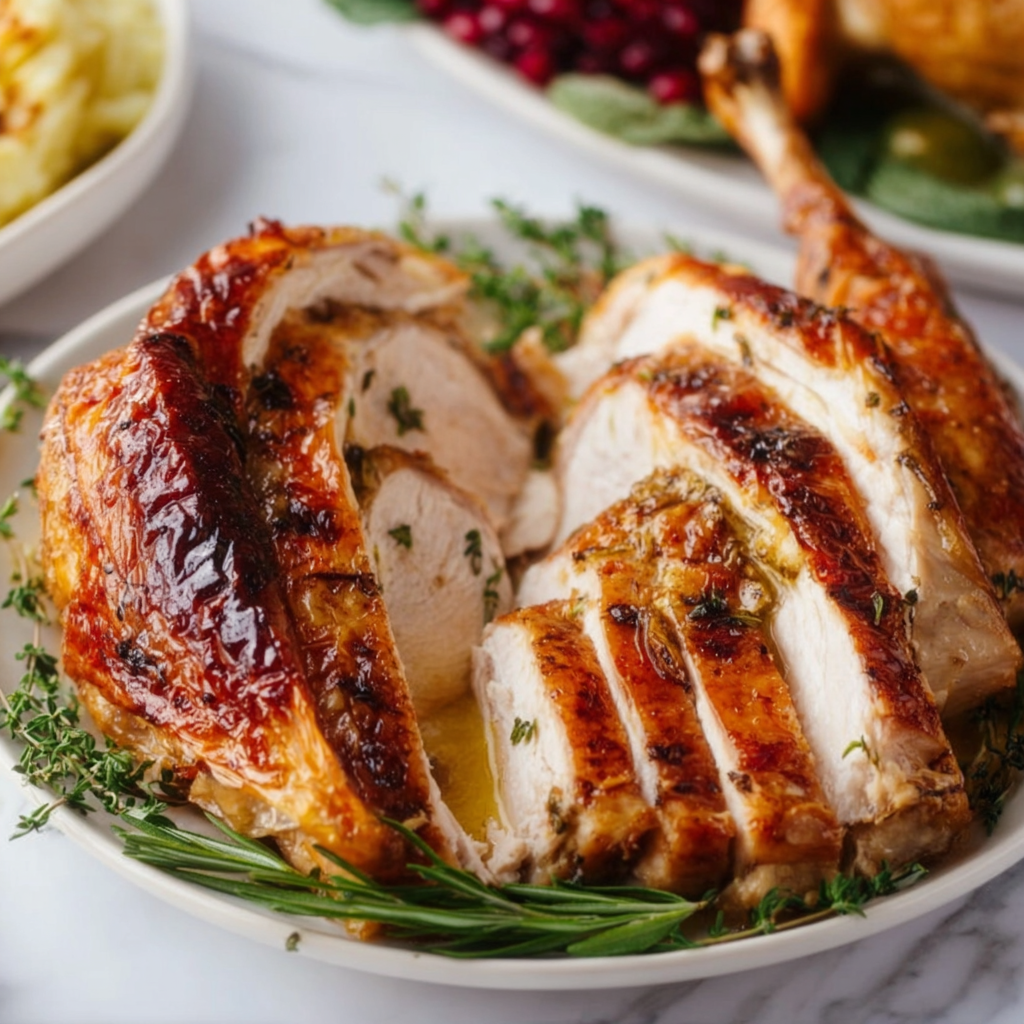
The brine is surprisingly simple. You don’t need a spice cabinet full of aromatics because the buttermilk does the heavy lifting.
The Bird:
- 1 Whole Turkey (10–14 lbs):
- Size Note: A smaller turkey (12 lbs) is ideal for this method as it fits easier in the fridge and brines faster. If serving a crowd, roast two smaller birds rather than one massive 20-pounder.
- Prep: Thaw completely. Remove neck and giblets.
The Buttermilk Brine:
- 2 Quarts (½ Gallon) Buttermilk: Full fat is best, but low-fat works.
- Chemistry: The acidity is key. Do not use regular milk.
- ¼ Cup Kosher Salt:
- Critical Spec: Use Diamond Crystal Kosher Salt. If using Morton’s, reduce to 3 tablespoons. Do not use table salt (it will be too harsh).
- 2 Tablespoons Sugar: To balance the tang and aid browning.
- 1 Tablespoon Black Peppercorns: Crushed.
- 4-5 Cloves Garlic: Smashed.
- Fresh Herbs: 2 sprigs Rosemary, 4 sprigs Thyme, 1 Bay Leaf.
- 1 Lemon: Sliced into rounds.
The Roast:
- 2 Tablespoons Unsalted Butter: Melted (for basting).
- Vegetables: Onions, carrots, celery for the roasting pan rack.
Substitutions:
- Buttermilk Hack: If you can’t find 2 quarts of buttermilk, mix 2 quarts of Whole Milk with ½ cup of White Vinegar or Lemon Juice. Let sit for 10 minutes to curdle.
- Spices: Fennel seeds, coriander, or red pepper flakes are great additions to the liquid.
Timing
This is a 24-hour process, but active time is minimal.
- Preparation Time: 20 minutes.
- Brining Time: 24 hours (Essential).
- Roasting Time: 2.5–3.5 hours (approx. 13–15 mins per pound).
- Resting Time: 30 minutes.
- Total Time: Approx. 28 hours.
Data Insight: Buttermilk contains enzymes and acids that tenderize meat more gently than the harsh chloride ions in table salt. Studies suggest that dairy-brined poultry retains 15-20% more moisture after roasting compared to unbrined birds.
Step-by-Step Instructions
Step 1: The Brine Bag Setup
You need a container large enough to hold the turkey and liquid. A large brining bag (turkey oven bag) placed inside a stockpot is the safest method to prevent leaks.
- Mix: In a large bowl or pitcher, whisk together the buttermilk, salt, and sugar until the grains dissolve. Stir in the garlic, peppercorns, herbs, and lemon slices.
Step 2: The Submersion
Place the thawed turkey into the brining bag.
- Pour: Pour the buttermilk mixture over the turkey.
- Massage: Squish the bag around to ensure the liquid coats every inch of the bird. Squeeze out as much air as possible and seal the bag tightly.
- Refrigerate: Place the bagged turkey in the fridge (or a cooler with ice if you are short on space) for 24 hours. Flip the bird halfway through if the liquid doesn’t fully cover it.
- Limit: Do not brine longer than 48 hours, or the texture can become too soft.
Step 3: The Wipe Down
Remove the turkey from the fridge 1 hour before roasting.
- Drain: Remove turkey from the bag. Discard the brine.
- Wipe: Using paper towels, wipe the excess buttermilk off the skin.
- Note: You don’t need to rinse it with water (which spreads bacteria). A thin film of buttermilk is good—it helps the browning. But wipe off any big clumps of herbs or peppercorns that might burn.
Step 4: The Roast
Preheat oven to 400°F (200°C).
- Setup: Place chopped veggies in the bottom of a roasting pan. Place the turkey on a rack on top of the veggies. Tuck the wings under the body and tie the legs together with kitchen twine.
- Brush: Brush the skin lightly with the melted butter.
- Start High: Roast at 400°F for 30 minutes. This blasts the skin to start the browning and caramelize the milk sugars.
Step 5: Low and Slow
Reduce oven temperature to 325°F (165°C).

- Continue: Continue roasting for another 2 to 3 hours.
- Check: If the skin (especially the breast) is getting too dark too fast (common with buttermilk), cover the breast loosely with a sheet of aluminum foil.
- Doneness: The turkey is done when a meat thermometer inserted into the thickest part of the thigh reads 165°F (74°C).
Step 6: The Rest
Remove from the oven. Transfer to a cutting board.
- Wait: Let it rest for at least 30 minutes. This allows the juices to redistribute. Carving too soon will result in a dry bird.
Nutritional Information
A lean, protein-packed holiday main. Estimated breakdown per serving (4 oz meat):
| Nutrient | Amount | % Daily Value |
| Calories | 190 kcal | – |
| Protein | 28g | 56% |
| Total Fat | 8g | 12% |
| Carbohydrates | 0g | 0% |
| Sodium | 350mg | 15% |
Data Insight: Unlike sugar-heavy glazes, the caramelization here comes from Maillard reaction of the milk proteins and lactose, adding flavor complexity without significant added sugar.
Healthier Alternatives for the Recipe
Customize your Turkey for specific needs:
- Lower Sodium:
- Reduce the salt in the brine to 2 tablespoons. The acidity of the buttermilk will still tenderize the meat effectively.
- Dairy-Free:
- Unfortunately, you cannot make Buttermilk Turkey without dairy. Use a traditional cider-brine (apple cider, salt, water) instead.
- Herb Roasted:
- Stuff the cavity with extra aromatics (onion, apple, sage) during roasting to infuse flavor from the inside out without adding fat.
Serving Suggestions
- The Gravy: Use the drippings! Buttermilk brine drippings make a uniquely tangy, creamy gravy. Just whisk in flour and stock.
- The Side: Mashed Potatoes and Cranberry Sauce are mandatory.
- The Wine: A crisp Chardonnay or a light Pinot Noir pairs perfectly with the tangy undertones of the meat.
Common Mistakes to Avoid
Dairy brining is different.
- Burning the Skin:
- The Error: Roasting at 400°F the whole time.
- The Result: Black, charred bird.
- The Fix: Buttermilk browns fast. Start high, but drop to 325°F quickly. Use foil liberally.
- Using Table Salt:
- The Error: Using ¼ cup of fine table salt.
- The Result: Inedibly salty meat.
- The Fix: Use Diamond Crystal Kosher. If using table salt, cut the volume by half.
- Rinsing in the Sink:
- The Error: Washing the bird.
- The Result: Spreading salmonella all over your kitchen.
- The Fix: Just wipe with paper towels.
Storing Tips for the Recipe
Turkey leftovers are the best part.
- Refrigeration: Store carved meat in airtight containers for 3–4 days.
- Freezing: Freeze meat in vacuum-sealed bags for up to 3 months.
- Bone Broth: Save the carcass! Buttermilk-brined bones make a rich, cloudy, nutrient-dense stock.
Conclusion
Easy Buttermilk Brined Turkey is the technique that will convert you from a “turkey tolerance” person to a “turkey lover.” It eliminates the dryness that plagues holiday roasts and replaces it with succulent, flavorful meat that needs no gravy to be delicious (though gravy never hurts). It is forgiving, scientifically sound, and creates a centerpiece that looks like a Norman Rockwell painting.
Summary: A simple method for brining a whole turkey in salted buttermilk and herbs for 24 hours, resulting in incredibly tender meat and dark golden skin.
Ready to brine?
Buy that buttermilk! Rate this recipe 5 stars if you achieved the mahogany skin, and leave a comment below: do you stuff your bird or cook stuffing on the side? Subscribe for more holiday hosting hacks!
FAQs
Can I brine a frozen turkey?
No. The turkey must be thawed first, or the brine won’t penetrate the frozen flesh. Thaw it in the fridge (1 day for every 4 lbs) before brining.
Will the turkey taste like milk?
No. It will not taste milky. It will have a subtle, pleasant tanginess (similar to yogurt marinade) that balances the richness of the dark meat.
Do I need to baste?
With this method, basting is optional. The brine keeps the meat so moist that opening the oven door to baste is actually counterproductive (it lets heat out). Just let it roast.
Can I use the brine to make gravy?
NO. Discard the brine immediately. It contains raw poultry juice and bacteria. Use the drippings from the roasting pan for gravy, not the liquid from the bag.
Leave a Reply