
Introduction
Did you know that in 2021, the Basque Cheesecake was named the “Flavor of the Year” by the New York Times? Originating from the La Viña bar in San Sebastián, Spain, this dessert breaks every rule of traditional cheesecake making. There is no water bath. There is no graham cracker crust. And—most shockingly—you actually want to burn it.
This recipe for Indulgent Burnt Basque Cheesecake (known locally as Tarta de Queso) is a masterpiece of contrast. Baked at a scorching high temperature, the exterior caramelizes into a deep, dark brown crust that tastes of toasted caramel, while the interior remains barely set, creamy, and custard-like. It is rustic, messy, and arguably the most foolproof cake you will ever make. If it cracks, you did it right. If it sinks, perfect. It is the ultimate dessert for those who value flavor over flawless presentation.
Ingredients List
The magic of this cake lies in the ratio of fat to sugar. Do not use low-fat ingredients here; the structure depends on the solids in full-fat dairy.
The Custard Base:
- 2 lbs (32 oz) Cream Cheese:
- Critical Spec: Full-fat block style (like Philadelphia).
- Temperature: Room Temperature is non-negotiable. If it is cold, you will have lumps that never bake out.
- 1 ½ Cups Granulated Sugar: The high sugar content helps create the caramelized “burnt” crust.
- 6 Large Eggs: Room temperature.
- 2 Cups Heavy Whipping Cream: (Double Cream).
- 1 Teaspoon Salt: Essential to balance the sweetness and rich dairy.
- 1 Teaspoon Vanilla Extract.

The Stabilizer:
- 1/3 Cup All-Purpose Flour: (Or Cake Flour).
- Why? This small amount of starch ensures the custard holds its shape when sliced, preventing it from being a puddle.
Substitutions:
- Gluten-Free: This is one of the easiest cakes to make GF. Simply swap the 1/3 cup flour for Cornstarch or a 1:1 GF Flour blend. The texture is virtually identical.
- Flavor Twist: Add lemon zest or orange zest for a citrus note that cuts the richness.
Timing
This recipe requires a specific cooling process to achieve the right texture.
- Preparation Time: 20 minutes.
- Baking Time: 50–60 minutes.
- Cooling Time: 4 hours (Minimum).
- Total Time: Approx. 5.5 hours.
Data Insight: The “burnt” flavor comes from the Maillard reaction, which accelerates rapidly above 300°F. Unlike a New York cheesecake baked at 325°F, we bake this at 400°F+ to intentionally trigger this reaction on the surface before the center heats up enough to curdle.
Step-by-Step Instructions
Step 1: The “Rustic” Prep
Preheat oven to 400°F (200°C). Rack in the middle.
- The Pan: Grease a 9-inch or 10-inch springform pan.
- The Paper: Take two large sheets of parchment paper. Press one into the pan, pressing it against the bottom and sides (it will wrinkle, that’s good). Place the second sheet perpendicular to the first.
- Note: Ensure the paper extends 2-3 inches above the rim of the pan. The cake will rise like a soufflé and then collapse.
Step 2: The Creaming
In a stand mixer with the paddle attachment (or large bowl with hand mixer), beat the cream cheese and sugar on medium speed.
- Texture: Beat for 2–3 minutes until the sugar is completely dissolved and the mixture is smooth. Scrape down the sides.
Step 3: The Integration
- Eggs: Add eggs one at a time, beating for 15 seconds after each addition.
- Liquids: With the mixer on low, slowly pour in the heavy cream, vanilla, and salt.
- Solids: Sift the flour over the batter to prevent clumps. Mix just until combined.
Step 4: The Bake
Pour the batter into the parchment-lined pan. Tap the pan on the counter firmly to knock out large air bubbles.
- Bake: Bake for 50–60 minutes.
- The Visual Cue: This is the scary part. The top should look exceedingly dark brown (bordering on black). The center should still be very jiggly, like Jell-O. If it looks firm, it is overbaked.
Step 5: The Collapse
Remove from the oven.
- Cool: Let it cool in the pan on a wire rack.
- The Science: The cake will be puffed up high when it comes out, but as it cools, the steam escapes and the center collapses, creating the signature dense, creamy texture.
- Chill: Once it reaches room temperature, refrigerate for at least 4 hours before serving.
Nutritional Information
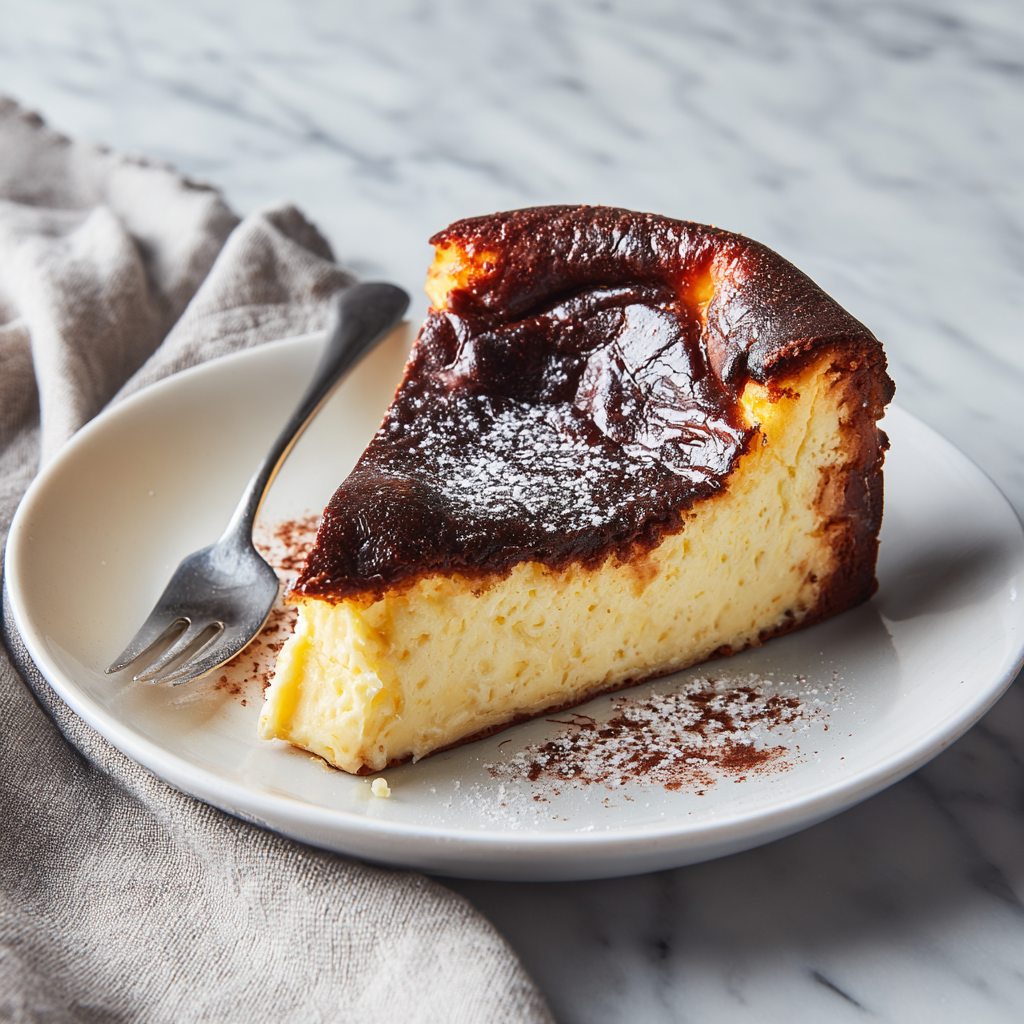
A decadent slice of luxury. Estimated breakdown per slice (12 slices):
| Nutrient | Amount | % Daily Value |
| Calories | 480 kcal | – |
| Total Fat | 38g | 58% |
| Saturated Fat | 22g | 110% |
| Carbohydrates | 30g | 10% |
| Protein | 8g | 16% |
Healthier Alternatives for the Recipe
Customize your Basque Cheesecake for wellness goals:
- Keto / Low Carb:
- Replace sugar with Allulose or Erythritol (powdered melts best).
- Replace flour with 1 tbsp Coconut Flour.
- This cake adapts exceptionally well to Keto because it is mostly fat and protein.
- Lighter:
- There is no “light” version of this cake that retains the texture. If you want lower calories, simply cut thinner slices. It is very rich, so a small sliver is satisfying.
Serving Suggestions
This cake is traditionally served at room temperature.
- The Purist: Serve a wedge on a plate with nothing else. Let the caramel flavor shine.
- The Pairing: A glass of Pedro Ximénez Sherry or a strong espresso cuts the fat perfectly.
- The Garnish: A simple pile of fresh raspberries or a drizzle of tart fruit coulis works well, but avoid heavy chocolate sauces which can overpower the delicate custard.
Common Mistakes to Avoid
Trust the wiggle.
- Overbaking:
- The Error: Waiting until the center is firm.
- The Result: A grainy, dry texture similar to overcooked scrambled eggs.
- The Fix: Pull it out while it wobbles significantly.
- Low Oven Temp:
- The Error: Baking at 350°F.
- The Result: A pale cake with no caramelized flavor.
- The Fix: Keep it hot (400°F or even 425°F depending on your oven).
- Removing Paper Too Soon:
- The Error: Trying to peel the paper while warm.
- The Result: The sides will tear.
- The Fix: Chill completely before peeling the parchment.
Storing Tips for the Recipe
- Refrigeration: Store in the fridge, wrapped loosely in the parchment or foil, for up to 5 days.
- Serving Temp: Remove from the fridge 30 minutes before eating to allow the center to soften to its optimal creamy state.
- Freezing: Freezes surprisingly well without the parchment. Wrap in plastic wrap and freeze for up to 1 month. Thaw in the fridge.
Conclusion
Indulgent Burnt Basque Cheesecake is the rebel of the baking world. It invites you to make a mess, burn your food, and ignore precision. The result is a dessert that feels sophisticated and artisanal, yet requires less effort than a batch of cookies. It is the perfect centerpiece for a dinner party where you want to impress without the stress.
Summary: A crustless cheesecake baked at high heat to create a dark, caramelized “burnt” top and a creamy, custard-like interior.
Ready to burn?
Crank up that oven! Rate this recipe 5 stars if you embraced the jiggle, and leave a comment below: do you serve it with sherry or coffee?
Leave a Reply