Introduction
Did you know you can make plastic right in your kitchen—without using any petroleum? It sounds like science fiction, but it’s actually simple chemistry.
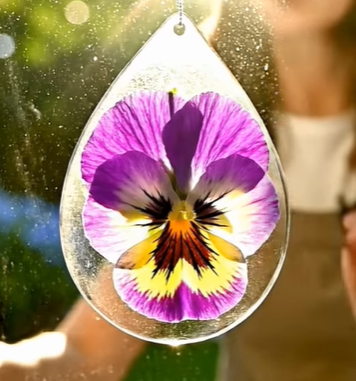
Most plastics we use today are synthetic, meaning they don’t break down easily. But with this DIY Bioplastic Flower Suncatcher experiment, we are going to create a biodegradable plastic using cornstarch! This polymer dries clear, flexible, and strong enough to hold beautiful dried flowers. When you hang it in the window, the sunlight shines through your homemade plastic, creating a stunning piece of eco-friendly art. It is the perfect blend of STEM learning and nature crafting.
Let’s cook up some chemistry!
Experiment Snapshot
- Difficulty: Medium (Requires stove use)
- Active Time: 15 Minutes
- Drying Time: 24–48 Hours
- Science Topic: Polymers & Plasticizers
Ingredients & Materials
You likely have the chemistry set in your pantry already.
The Bioplastic Formula
- 1 cup Water: The solvent.
- 2 tbsp Cornstarch: The polymer base (starch).
- 1 tbsp White Vinegar: The acid that helps organize the molecules.
- 1 tbsp Glycerin: Crucial Ingredient: This acts as a “plasticizer.” Without it, your plastic would dry brittle and crack like a cracker. Glycerin keeps it flexible and rubbery.
The Suncatcher Elements
- Dried Flowers or Leaves: Flat items work best.
- Food Coloring: Optional, for a tinted glass effect.
- String or Ribbon: For hanging.
- Tools:
- Saucepan and whisk.
- Silicone mat, plastic lids (like from a yogurt tub), or aluminum foil (for drying molds).
- A straw (to poke a hole for the string).
Step-by-Step Instructions
Step 1: The Cold Mix
In your saucepan (off the heat), whisk together the water, cornstarch, vinegar, and glycerin.
- Technique: You must whisk this while the water is cold to dissolve the cornstarch lumps. If you put it straight into hot water, it will clump up immediately!
- Color: If you want tinted plastic, add 1-2 drops of food coloring now.
Step 2: The Reaction
Place the pan on the stove over medium-high heat.
- Action: Stir constantly. Do not walk away!
- Observation: At first, it will look like cloudy milk. Suddenly, it will start to bubble and turn into a thick, clear, gooey gel (similar to Vaseline).
- Stop Point: Once it is mostly clear and bubbling (about 3-5 minutes), remove it from the heat.
Step 3: Pour and Shape
Quickly pour the hot gel onto your silicone mat or into your plastic lids.
- Spread: Use a spoon to spread it into a circle or oval. Aim for about 1/8 to 1/4 inch thickness. If it is too thick, it will take days to dry. If it is too thin, it might tear.
Step 4: Embed the Nature
While the gel is still wet and sticky, gently press your dried flowers or leaves into the surface.
- Technique: You can pour a tiny bit more gel on top to seal the flowers inside, or just leave them pressed on the surface for texture.
Step 5: Make the Loop
Take a straw and poke a hole near the top of your shape. This is where your string will go later.
Step 6: The Long Wait (Drying)
Move your suncatchers to a safe, sunny spot.
- Timeline: They need to dry for 24 to 48 hours. As the water evaporates, the bioplastic will shrink slightly, harden, and become more transparent.
- Finish: Once dry, peel them off the mold, thread a string through the hole, and hang them up!
The Science Behind It
Why does cornstarch turn into plastic?
Cornstarch is made of long chains of sugar molecules called amylose and amylopectin. In their dry powder form, these chains are all tangled up.
- Vinegar (Acid): Helps break up the branched chains (amylopectin) so they can line up straighter.
- Heat: Causes the starch to absorb water and expand (gelatinization), unravelling the chains.
- Glycerin (Plasticizer): This is the MVP. Glycerin molecules are small. They slide in between the long starch chains and stop them from stacking too tightly together. This extra space allows the chains to slide past each other, making the final plastic flexible instead of brittle!
Pro Tips for Success
- Use Dried Flowers: Fresh flowers contain water. If you put fresh flowers in the bioplastic, they might mold as the plastic dries. Press your flowers in a book for a few days first!
- Be Patient: It will look white and cloudy at first. Don’t panic! It becomes clearer as it dries.
- Removal: If the dried plastic sticks to your mold, gently pry up the edges. It should peel off like a sticker.
- Waterproof? No. Because this is starch-based, if you get it wet, it will turn back into slime. Keep these suncatchers indoors!
Conclusion
The Bioplastic Flower Suncatcher is a beautiful reminder that science and sustainability go hand in hand. You’ve just engineered a material that mimics the properties of oil-based plastics but is made entirely from renewable kitchen ingredients. It captures the light, preserves nature, and teaches a valuable lesson about polymers.
Ready to become a polymer engineer? Grab that cornstarch! If you make a suncatcher, hold it up to the light and snap a photo—we’d love to see your designs.
Leave a Reply