Introduction
If you have ever watched those viral videos of jiggly, bouncing cakes in Osaka, you know exactly what this is.
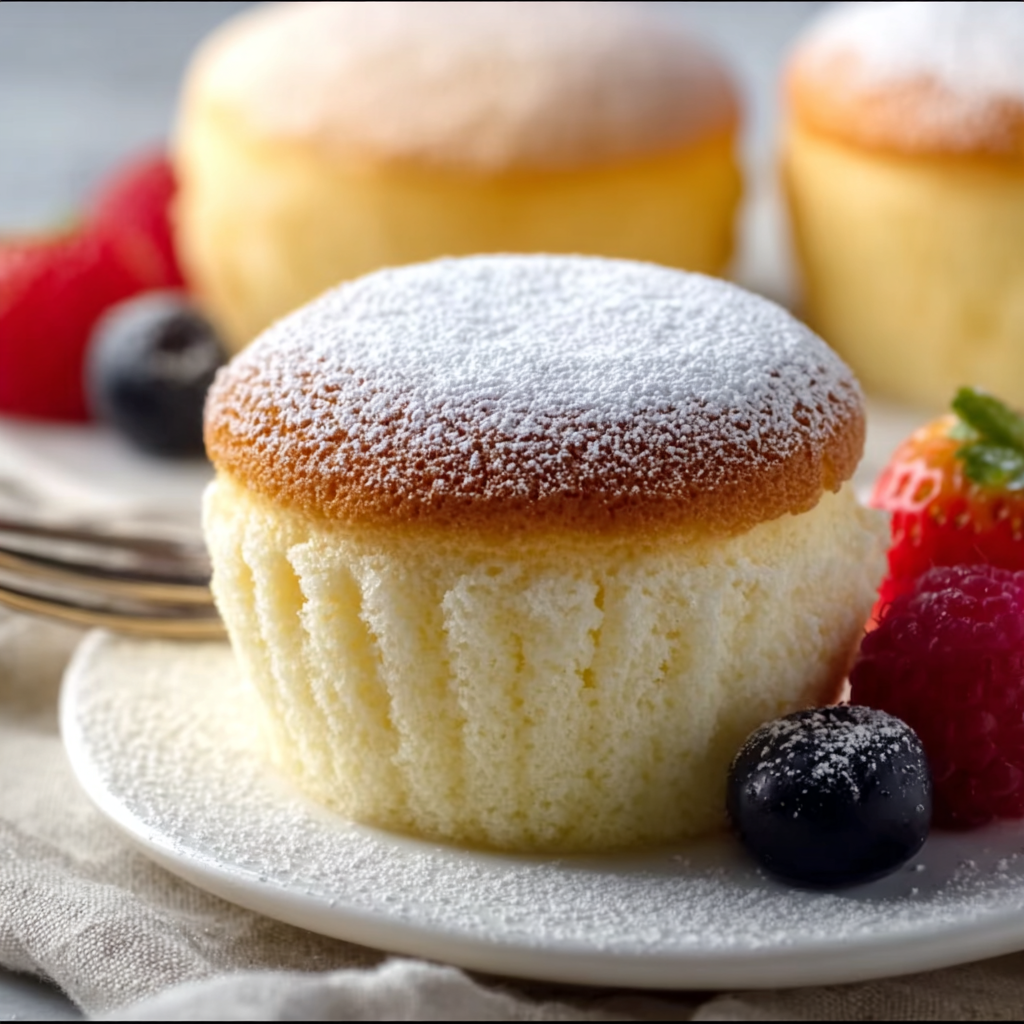
Japanese Cotton Cheesecake Cupcakes (also known as Soufflé Cheesecake) are the culinary missing link between a dense New York cheesecake and a fluffy chiffon cake. They are incredibly light, airy, and melt-in-your-mouth soft, with a tangy sweetness that isn’t overpowering.
The secret to that signature “cotton” texture lies in the engineering: separating the eggs. We create a rich custard base with the yolks and cream cheese, then fold in a cloud of whipped egg whites (meringue). Baked in a water bath at a low temperature, these cupcakes rise tall and golden without drying out. Unlike traditional cheesecake which can feel heavy, you could easily eat three of these without realizing it.
Ingredients List
This recipe relies on “mechanical leavening” (air bubbles) rather than baking powder.
The Cream Cheese Base
- 5 oz (140g) Cream Cheese: Full fat, cut into cubes.
- 2 tbsp Unsalted Butter: Cut into cubes.
- 1/3 cup Whole Milk: Do not use skim; you need the fat for stability.
- 3 Large Egg Yolks: Room temperature.
- ¼ cup Cake Flour:
- Why Cake Flour? It has lower protein content than All-Purpose flour, which inhibits gluten formation. This ensures the cake is tender, not chewy. (Sub: All-Purpose flour minus 1 tsp, replaced with cornstarch).
- 1 tbsp Cornstarch: Helps stabilize the structure so it doesn’t collapse.
- 1 tsp Vanilla Extract.
- 1 tsp Lemon Juice: Adds a subtle tartness to cut the richness.

The Meringue (The Lift)
- 3 Large Egg Whites: Cold egg whites whip up firmer, though room temp gives more volume. For beginners, cold is safer to separate.
- ¼ cup Granulated Sugar: Superfine sugar dissolves best.
- ¼ tsp Cream of Tartar:The Secret Weapon.
- Why? This acid strengthens the protein bonds in the egg whites, ensuring your meringue doesn’t weep or deflate during folding.
Sensory Note: The texture is audible—when you squeeze a piece, you can actually hear the “fizz” of the tiny air bubbles popping, like a freshly opened soda.
Timing
This is a slow-bake recipe. Do not rush the oven time.
- Prep Time: 30 minutes
- Bake Time: 50–60 minutes
- Cooling Time: 30 minutes
- Total Time: ~2 hours
- Yields: 8–10 Standard Cupcakes
Data Insight: A water bath (bain-marie) regulates the heat. Water boils at 212°F (100°C). By surrounding the cupcake pan with water, you ensure the sides of the cake never exceed this temperature, preventing the edges from overcooking before the center is set.
Step-by-Step Instructions
Step 1: The “Double Boiler” Melt
Preheat oven to 300°F (150°C). Note: We bake low to prevent cracking.
- Fill a small pot with 1 inch of water and simmer. Place a heatproof bowl on top (don’t let it touch the water).
- Add cream cheese, butter, and milk to the bowl.
- Whisk constantly until melted, smooth, and thick. Remove from heat.
Step 2: The Yolk Batter
- Whisk the egg yolks into the warm cheese mixture one at a time.
- Stir in vanilla and lemon juice.
- Sift the cake flour and cornstarch directly into the bowl. Whisk until just combined and no lumps remain.
Step 3: The Meringue (Crucial Step)
- In a pristine, grease-free bowl, beat the egg whites on low speed until foamy.
- Add cream of tartar.
- Increase speed to medium-high and gradually add the sugar (in 3 parts).
- Stop at Soft Peaks:
- The Rule: When you lift the beater, the tip of the egg white should curl over like a hook.
- Warning: Do not beat to stiff peaks (straight up). Stiff meringue is hard to fold and causes the cheesecake to crack.
Step 4: The Fold
- Add 1/3 of the meringue to the cheese batter. Whisk it in to lighten the batter (you can be a bit rough here).
- Add the remaining meringue in two batches. Fold gently with a spatula using a “cut down the middle and scoop up” motion.
- Goal: Keep as much air in the batter as possible. It should look pale and fluffy.
Step 5: The Water Bath Prep
- Line a muffin tin with paper liners.
- Tip: If you have silicone muffin cups, use them! Paper liners tend to wrinkle as the cake shrinks slightly during cooling.
- Pour batter into liners, filling them about 80% full. Tap the tray on the counter twice to release large air bubbles.
- Place the muffin tin inside a larger roasting pan.
- Pour hot water into the roasting pan until it reaches halfway up the sides of the muffin tin.
Step 6: Bake and Cool
- Bake for 50 to 60 minutes. The tops should be golden brown and spring back when touched.
- The Cool Down: Turn off the oven. Crack the door open slightly (stick a wooden spoon in the door) and let the cupcakes sit inside for 15 minutes.
- Why? A sudden temperature drop will cause the soufflé structure to collapse instantly.
- Remove from oven and cool completely on a wire rack.
Nutritional Information
Lighter than American cheesecake. Below is the estimated breakdown per cupcake.
| Nutrient | Amount per Serving | % Daily Value* |
| Calories | 160 kcal | 8% |
| Total Fat | 11g | 14% |
| Saturated Fat | 6g | 30% |
| Carbohydrates | 12g | 4% |
| Sugars | 8g | – |
| Protein | 4g | 8% |
Variations for the Recipe
- Matcha Cotton: Sift 1 tbsp of Matcha powder with the flour.
- Chocolate: Melt 1 oz of dark chocolate into the cream cheese/butter mixture during Step 1.
- Lemon Glazed: Top the cooled cupcakes with a simple mix of powdered sugar and lemon juice for a “Lemon Bar” vibe.
- Cheese Tart Style: Brush the tops with egg yolk before baking for a darker, glossier finish.
Serving Suggestions
- The Dusting: A simple dusting of powdered sugar (snow sugar) is traditional.
- The Fruit: Serve with fresh berries or a Strawberry Coulis to cut the creamy texture.
- Temperature: These are delicious warm (super fluffy) or chilled (denser and creamier).
Common Mistakes to Avoid
- Cracked Tops:
- The Issue: Oven too hot or meringue too stiff.
- The Fix: Use an oven thermometer to ensure it’s at 300°F, and stop whipping whites at the “hook” stage (soft peaks).
- Dense/Deflated Layer:
- The Issue: Over-folding (knocking out air) or under-baking.
- The Fix: Fold slowly and gently. Ensure the cake passes the “spring back” test before turning the oven off.
- Soggy Bottoms:
- The Issue: Water leaking into the muffin tin.
- The Fix: Ensure your roasting pan water level isn’t too high. If using a loose-bottom tin, wrap the bottom in foil.
Storing Tips for the Recipe
- Refrigeration: Store in an airtight container in the fridge for up to 3 days. The texture becomes more like a classic cheesecake as it sits.
- Freezing: These freeze surprisingly well. Wrap individually in plastic wrap and freeze for 2 weeks. Thaw in the fridge.
Conclusion
Japanese Cotton Cheesecake Cupcakes are a labor of love, but the result is magical. They offer a texture that feels impossible—rich like cheese, yet light like a feather. Whether you eat them warm from the oven or chilled with a cup of tea, they are a sophisticated step up from the standard cupcake.
Ready to whisk? Separate those eggs! If you try this recipe, please leave a star rating below and let us know: did you manage to get the “jiggle”? Don’t forget to subscribe to our newsletter for more global baking adventures.
FAQs
Q: Do I really need the water bath?
A: Yes. Without it, the direct heat will cause the eggs to scramble and the cake to rise unevenly and crack. It creates the humid environment needed for that soft skin on top.
Q: Can I use low-fat cream cheese?
A: Not recommended. Low-fat cheese has more water and stabilizers, which can affect the delicate structure.
Q: Why did my cupcakes shrink?
A: Some shrinkage is normal as the hot air inside cools. However, drastic collapsing means they were likely underbaked or cooled too fast.
Leave a Reply