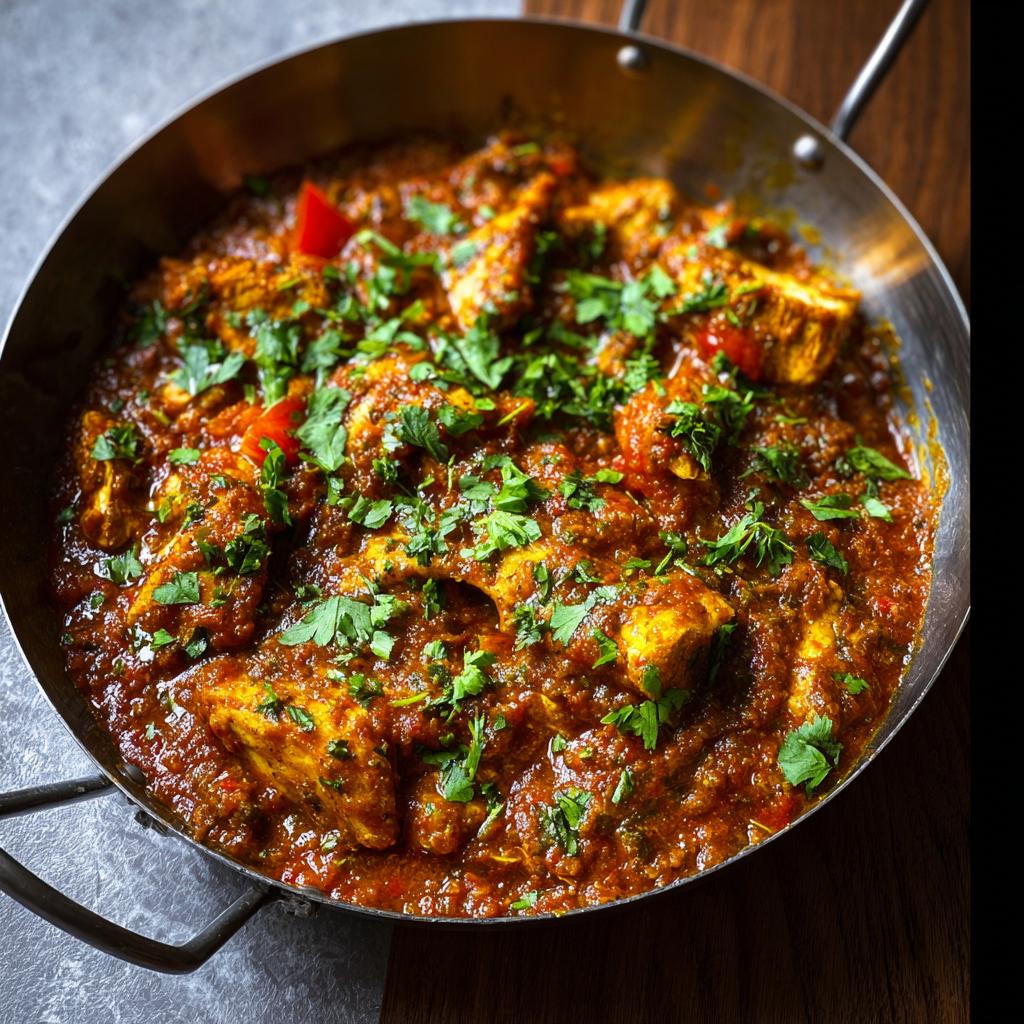
Introduction
Did you know that “Bhuna” is not actually the name of a specific spice mix, but rather a technique that originated in the Bengal region of India? It translates literally to “fried” or “sautéed.” In the culinary world, this refers to the process of frying spices in oil at high heat until the water evaporates and the oil separates, intensifying the flavors by up to 40% compared to boiled curries.
This culinary misconception often leads home cooks to create watery, bland stews instead of the thick, clingy, intensely savory dish served in restaurants. This recipe for Authentic Chicken Bhuna challenges the belief that restaurant-quality curry requires a tandoor or secret commercial sauces. By mastering the art of caramelizing onions and “blooming” spices, we can create a dish where the sauce is reduced to a rich glaze that coats the meat perfectly. Whether you are a spice connoisseur or a Friday-night-takeout enthusiast, this recipe puts the power of the curry house in your kitchen.
Ingredients List
The secret to a great Bhuna is the ratio of onions to meat. The onions disintegrate to form the thick sauce. Here is your shopping list:
The Aromatics & Whole Spices:
- 1.5 lbs (700g) Chicken Thighs: Boneless and skinless.
- Sensory Note: Thigh meat stays juicy during the “bhuna” (frying) process. Breast meat often dries out.
- 3 Large Onions: Finely sliced.
- Why so many? They form the body of the gravy.
- 2 Tablespoons Vegetable Oil or Ghee: Ghee adds a nutty richness.
- 1 Tablespoon Ginger-Garlic Paste: Freshly crushed is superior to jarred.
- Whole Spices: 1 Bay leaf, 1 Cinnamon stick, 3 Green Cardamoms, 2 Dried Red Chilies.
The Spice Powder Blend:
- 1 tsp Turmeric Powder: For earthy color.
- 1 tsp Red Chili Powder: Adjust heat to taste.
- 2 tsp Coriander Powder: The thickener.
- 1 tsp Cumin Powder: For savory depth.
- 1 tsp Garam Masala: Added at the end for aroma.
- 1 tsp Salt.
The Fresh Finish:
- 2 Medium Tomatoes: Chopped.
- Fresh Coriander (Cilantro): Chopped.
- Green Chilies: Slit (optional for extra heat).
Substitutions:
- Meat: Lamb is a classic semantic variation for Bhuna, though it requires a longer cooking time (approx. 1.5 hours) to tenderize.
- Vegan: Use mushrooms or chunks of paneer/tofu. The onion base remains the same.
Timing
Bhuna is a labor of love that rewards patience during the frying stage.
- Preparation Time: 20 minutes
- Cooking Time: 40 minutes
- Total Time: 1 hour
Data Insight: While a standard “curry in a hurry” takes 30 minutes, dedicating the extra 30 minutes to the Bhuna process results in a sauce with significantly higher viscosity and flavor concentration, eliminating the need for artificial thickeners like cornstarch or heavy cream.
Step-by-Step Instructions
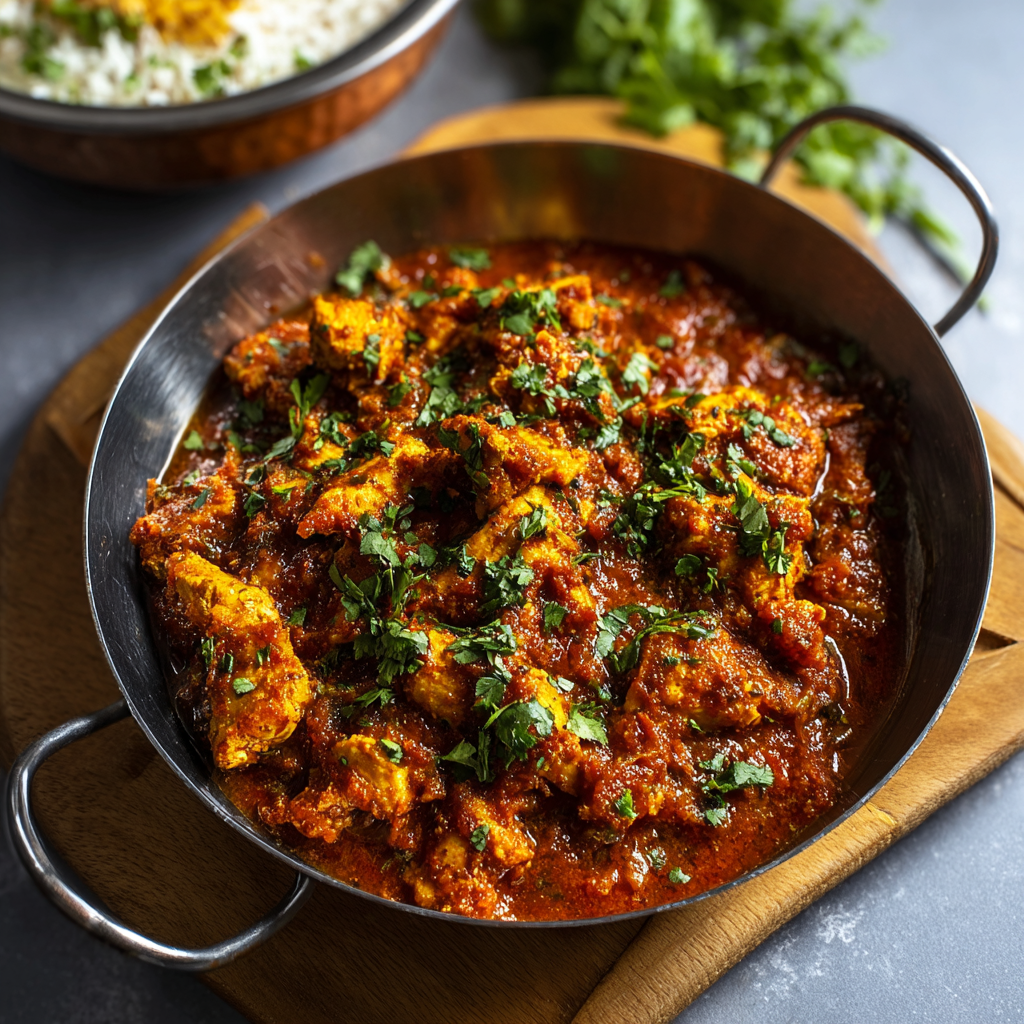
Step 1: The Whole Spice Bloom
Heat the oil or ghee in a heavy-bottomed pan (Dutch oven or Karahi) over medium heat. Add the bay leaf, cinnamon, cardamom, and dried red chilies. Sauté for 30–60 seconds.
- The Science: This step extracts the volatile essential oils from the spices, infusing the cooking fat with flavor before any other ingredients are added.
Step 2: Caramelizing the Onions
Add the sliced onions to the pan. This is the most critical step. Fry them for 15–20 minutes, stirring frequently.
- Goal: You want deep golden-brown onions. Not burnt, but past the point of just “translucent.” This browning (Maillard reaction) provides the sweetness that balances the spices.
Step 3: The Ginger-Garlic & Tomatoes
Add the ginger-garlic paste and sauté for 1 minute until the raw smell disappears. Add the chopped tomatoes and cook until they break down and become mushy.
- Actionable Tip: Use the back of your spoon to mash the tomatoes into the onions, creating a cohesive paste.
Step 4: The Masala Paste
Lower the heat. Add the turmeric, chili powder, coriander powder, cumin powder, and salt. Add a splash (2 tbsp) of water to prevent the spices from burning. Cook this paste for 3–4 minutes.
- Visual Cue: Cook until you see the oil separating from the sides of the masala paste. This is known in Indian cooking as Roghan separation, indicating the spices are cooked.
Step 5: The “Bhuna” (Frying the Meat)
Add the chicken pieces to the pan. Turn the heat up to medium-high. Stir and fry the chicken in the spice paste for 8–10 minutes.
- Technique: Do not add water yet! Let the chicken cook in its own juices and the masala. This searing process coats the meat and drives the flavor into the fibers.
Step 6: The Slow Simmer
Add just enough warm water to barely cover the chicken (about ½ cup). Remember, Bhuna is a “dry” curry, not a soup. Cover and simmer on low heat for 15 minutes.
- Finish: Remove the lid. If it looks watery, turn up the heat to evaporate excess liquid. Stir in the Garam Masala and fresh coriander.
Nutritional Information
Chicken Bhuna is generally healthier than creamy curries like Korma or Tikka Masala. Here is the estimated breakdown per serving:
| Nutrient | Amount | % Daily Value |
| Calories | 350 kcal | – |
| Protein | 28g | 56% |
| Total Fat | 18g | 23% |
| Carbohydrates | 12g | 4% |
| Fiber | 4g | 14% |
| Iron | 3mg | 16% |
Data Insight: The liberal use of turmeric provides Curcumin, a powerful anti-inflammatory compound. Consuming turmeric with black pepper (included in Garam Masala) increases curcumin absorption by 2,000%.
Healthier Alternatives for the Recipe
Customize this curry to fit strict dietary goals:
- Low Fat: Reduce the oil to 1 tablespoon and use a non-stick pan. You will need to stir more constantly to prevent sticking. Use chicken breast instead of thighs.
- Keto / Low Carb: This recipe is naturally low carb as it uses no flour or sugar. Just ensure you serve it with cauliflower rice instead of naan.
- Nightshade Free: If you have inflammation issues, omit the tomatoes and chili powder. Use extra black pepper for heat and a teaspoon of tamarind paste for acidity.
Serving Suggestions
Since Chicken Bhuna has a thick, clingy sauce, it pairs best with flatbreads.
- Bread: Garlic Naan or Chapati are essential for scooping up the caramelized onion gravy.
- Rice: A simple Jeera Rice (Cumin Rice) works well. Avoid wet or sticky rice, as the curry is already dry.
- Cooling Side: Serve with a Cucumber Raita or a yogurt-mint dip. The cool yogurt cuts through the intense savory spice of the Bhuna.
- Texture: Top with julienned fresh ginger for a zesty bite.
Common Mistakes to Avoid
Bhuna is unforgiving if you rush it.
- Undercooking the Onions:
- The Error: Leaving onions pale and translucent.
- The Result: A sweet, crunchy curry that lacks depth.
- The Fix: Have patience. Brown them properly.
- Adding Too Much Water:
- The Error: Drowning the chicken.
- The Result: You end up with a chicken soup, not a Bhuna.
- The Fix: Add water in small increments. You can always add more, but you can’t take it out easily without overcooking the meat.
- Burning the Powdered Spices:
- The Error: Adding powders to high heat without a splash of water.
- The Result: Bitter, acrid taste.
Storing Tips for the Recipe
Curries are famous for tasting better the next day.
- Refrigeration: Store in an airtight container for up to 3 days. The flavors will meld and deepen as the spices settle.
- Freezing: Chicken Bhuna freezes beautifully because it doesn’t contain cream or potatoes (which change texture). Freeze for up to 3 months.
- Reheating: Add a splash of water when reheating on the stove or microwave, as the thick sauce will have solidified in the cold.
Conclusion
Authentic Chicken Bhuna is a masterclass in flavor concentration. By trading excess water for technique and patience, you transform humble ingredients into a dish that is intense, aromatic, and deeply satisfying. It is the perfect recipe to transition from “cooking curry” to “mastering Indian cuisine.”
Summary: A rich, intense North Indian curry made by frying chicken with spices and caramelized onions until the sauce clings to the meat. Thick, medium-hot, and packed with flavor.
Ready to ditch the takeout menu?
Start slicing those onions! Rate this recipe 5 stars if you achieved that perfect thick gravy, and leave a comment below: do you prefer this with Naan or Rice? Subscribe for more restaurant-style recipes decoded for home cooks!
FAQs
Is Chicken Bhuna spicy?
Traditionally, yes, it is a medium-to-hot curry, usually sitting between a Tikka Masala and a Madras on the heat scale. However, because you are making it at home, you can control the heat entirely by adjusting the amount of red chili powder and fresh green chilies.
What is the difference between Bhuna and Rogan Josh?
Bhuna is a cooking technique involving frying spices to create a thick, dry sauce. Rogan Josh is a Kashmiri dish (usually lamb) that is much saucier, redder (using Kashmiri chilies), and uses yogurt and fennel powder as primary flavor drivers, resulting in a thinner, oilier gravy.
Can I make this in a Slow Cooker?
You can, but you must do Steps 1 through 5 on the stove first. The “Bhuna” flavor comes from the high-heat frying. If you throw raw onions and spices into a slow cooker, you will get a boiled stew. Do the frying, then transfer to the slow cooker on Low for 4 hours for ultra-tender meat.
Why is my sauce bitter?
Bitterness usually comes from burnt spices or burnt garlic. When adding the powdered spices in Step 4, ensure you lower the heat and add a splash of water immediately. If the garlic burns in Step 3, it’s best to start over, as that flavor will permeate the whole dish.
Leave a Reply