Introduction
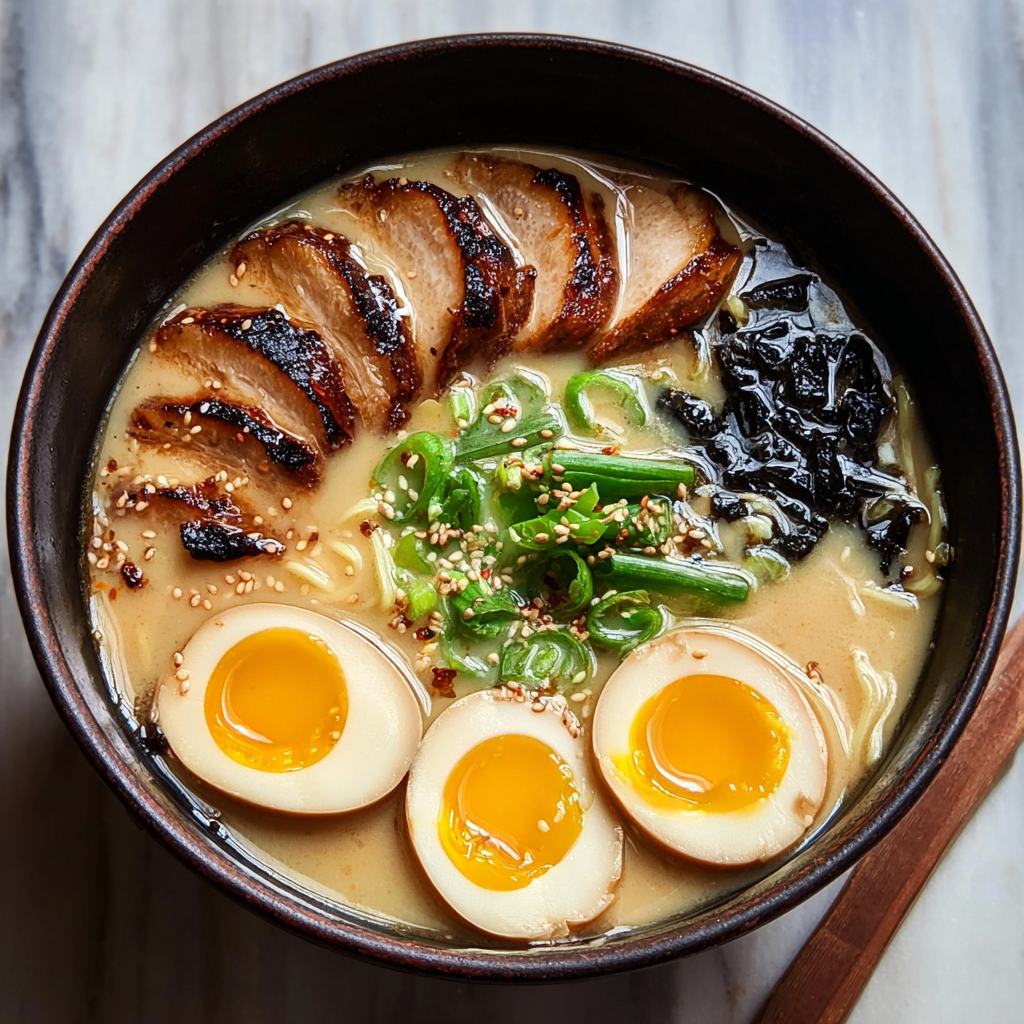
Did you know that the word “Tonkotsu” literally translates to “pork bone”? Unlike Shoyu (soy sauce) or Miso ramen, which are defined by their seasoning (tare), Tonkotsu is defined by its broth. It is the holy grail of ramen: a thick, opaque, creamy soup made not by adding cream, but by boiling pork bones for so long that the collagen, marrow, and fat emulsify into a liquid pork fat suspension.1
This recipe for Authentic Tonkotsu Ramen is not a “quick weeknight hack.” It is a project. It challenges the modern need for instant gratification by demanding patience, time, and attention. But the reward is a bowl of soup that is sticky with collagen, rich in umami, and infinitely superior to anything that comes out of a packet. Whether you are a dedicated home cook looking to master a Japanese classic or simply craving the deep, savory comfort of Hakata-style ramen, this guide covers every component: the creamy broth, the savory Chashu pork, the gooey Ajitsuke Tamago egg, and the garlic oil finish.
Ingredients List
Authentic ramen is modular. It consists of four distinct parts: Broth, Tare (Seasoning), Noodles, and Toppings. Here is your curated shopping list.
The Broth (The Soul):
- 4-5 lbs Pork Trotters (Pig’s Feet):
- Critical Spec: Trotters are essential because they contain the most collagen and skin, which creates the creamy mouthfeel.2
- 2-3 lbs Pork Neck Bones: For meaty flavor to balance the gelatin of the trotters.
- 1 Large Onion: Halved.
- 1 Bulb Garlic: Halved horizontally.
- 1 Piece Ginger (3 inches): Sliced.
- Green Onion (Negi) Whites: The roots/bottoms.
- 2 oz Pork Fatback: Optional, for melting into the soup for extra richness.3
The Chashu (Braised Pork Belly):
- 1 lb Pork Belly: Skin-on or skinless, rolled and tied.
- ½ Cup Soy Sauce.
- ¼ Cup Mirin.
- ¼ Cup Sake.
- 1 Tablespoon Sugar.
- 2 Slices Ginger & 1 Clove Garlic.
The Toppings & Tare:
- Ramen Noodles: Thin, straight noodles (Hakata style) are traditional for Tonkotsu.4 Fresh is best, high-quality dried (like Raoh) is acceptable.
- Ajitsuke Tamago: Soft-boiled eggs marinated in the leftover Chashu liquid.5
- Kikurage (Wood Ear Mushrooms): Rehydrated and sliced thin.6
- Black Garlic Oil (Mayu): Optional, for a nutty, roasted finish.7
- Green Onions: Finely chopped.8
- Nori Sheets.
Timing
This is a multi-day process ideally, but can be done in one very long day.
- Preparation Time: 1 hour (Cleaning bones).
- Broth Cooking Time: 12–18 hours.
- Chashu Cooking Time: 2 hours.
- Total Time: Approx. 14–20 hours.
Data Insight: The opacity of Tonkotsu broth is directly related to the boil intensity. A rolling boil agitates the fat and water, forcing them to emulsify.9 If you simmer gently (like a French stock), you will get a clear broth. You must maintain a boil to get it white and creamy.
Step-by-Step Instructions
Part 1: The Broth (Start This First)
Step 1: The Purge (Cleaning the Bones)
Place all pork bones (trotters and neck) in a large stockpot. Cover with cold water.
- Boil: Bring to a boil over high heat. Let it boil hard for 15 minutes. You will see grey scum and foam rise to the top.
- Scrub: Drain the water. Dump the bones into the sink. Scrub every bone under cold running water to remove coagulated blood and dark bits. This step is non-negotiable for a white broth.
Step 2: The Long Boil
Clean the pot thoroughly. Return the scrubbed bones to the pot. Add the fatback (if using), onion, garlic, ginger, and green onions. Fill with fresh water to cover bones by 2 inches.
- Cook: Bring to a rolling boil. Cover with a lid (slightly ajar to prevent boil-over, or fully covered if you monitor it).
- Maintain: Keep it boiling for 12 to 18 hours.
- Maintenance: Check every hour. Top up with water as needed to keep bones submerged. Stir occasionally to prevent scorching on the bottom.
- Texture Check: By hour 10, the broth should be opaque white. By hour 12-14, the bones should be falling apart.
Step 3: Strain
Strain the broth through a fine-mesh sieve (or cheesecloth) into a clean pot. Discard the solids. Keep the broth hot.
Part 2: The Chashu & Eggs (Do This While Broth Boils)
Step 4: Braise the Pork
In a small pot, combine soy sauce, mirin, sake, sugar, ginger, garlic, and water (enough to cover pork).
- Simmer: Add the rolled pork belly. Simmer gently for 1.5 to 2 hours until tender.
- Cool: Let the pork cool in the liquid (this prevents drying out). Once cool, remove pork and refrigerate (it slices easier when cold).
Step 5: The Eggs
Boil eggs for exactly 6 minutes and 30 seconds. Shock in ice water. Peel.
- Marinate: Place peeled eggs in a bag with some of the cooled Chashu braising liquid. Marinate in the fridge for 4–24 hours.
Part 3: Assembly (The Bowl)
Step 6: The Tare (Seasoning)
Tonkotsu broth itself is unseasoned pork milk. You need salt.
- Method: In the bottom of your ramen bowl, add 1-2 tablespoons of the Chashu braising liquid (Shoyu Tare) and a pinch of salt. (Some chefs add a splash of plain soy sauce and MSG here).
Step 7: Noodle & Soup
Boil noodles according to package instructions (usually 2 minutes for thin noodles).
- Pour: Pour 1 ½ cups (350ml) of the boiling hot white pork broth into the bowl. Whisk gently to combine with the Tare.
- Noodles: Drain noodles well and fold them into the soup.
Step 8: Topping
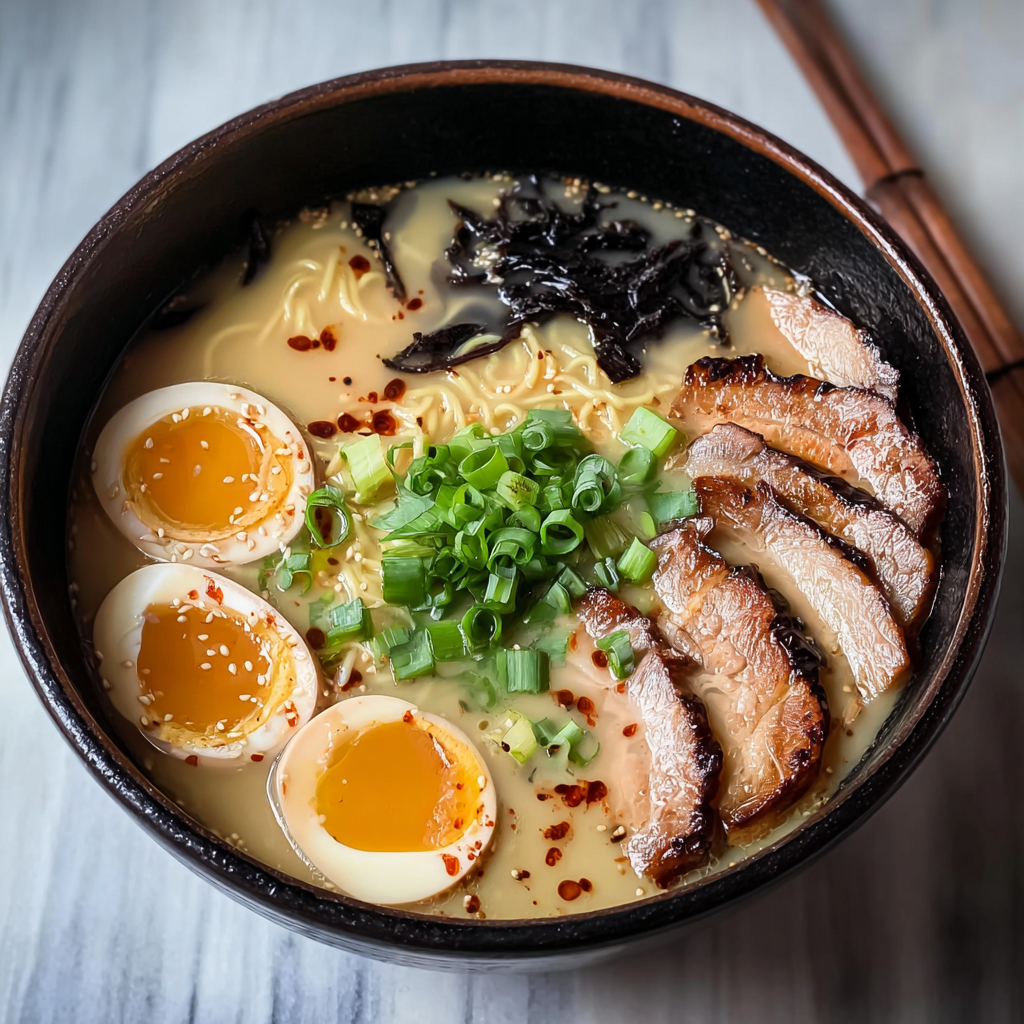
- Meat: Place 2-3 thin slices of Chashu on top. (Tip: Torch them briefly or warm them in the soup).
- Egg: Slice the marinated egg in half with a wire or fishing line (knife makes it messy). Place on top.
- Garnish: Add wood ear mushrooms, a pile of green onions, and a sheet of Nori.10 Drizzle with Black Garlic Oil if desired.
Nutritional Information
This is a calorie bomb of comfort. Estimated breakdown per bowl:
| Nutrient | Amount | % Daily Value |
| Calories | 850 kcal | – |
| Total Fat | 45g | 69% |
| Collagen | High | – |
| Protein | 35g | 70% |
| Sodium | 2200mg | 95% |
| Carbohydrates | 65g | 22% |
Data Insight: The gelatin in the broth (derived from collagen) is excellent for joint health and skin elasticity, though the high sodium and saturated fat content mean this should be a “sometimes” food.
Common Mistakes to Avoid
Don’t waste 12 hours on a mistake.
- Not Cleaning Bones:
- The Error: Skipping the initial boil/scrub.
- The Result: A brown, funky-smelling broth instead of a clean, creamy white one.
- Simmering Instead of Boiling:
- The Error: Low heat.
- The Result: Clear soup. You need the agitation of the boil to emulsify the fat.
- Adding Salt to the Big Pot:
- The Error: Salting the entire stockpot.
- The Result: You lose control over the saltiness of individual bowls. Season strictly in the bowl (Tare method).
Storing Tips
Since this takes all day, make a huge batch.
- Broth: Freezes perfectly. Portion into quart containers and freeze for up to 3 months.
- Chashu: Freezes whole or sliced.11
- Eggs: Do not freeze. Eat within 3 days.
Conclusion
Authentic Tonkotsu Ramen is culinary alchemy. It transforms the humblest ingredients—pig feet and water—into a broth so rich and creamy it feels luxurious. It is a labor of love that commands respect, and the first sip of that sticky, savory soup will confirm that every hour of boiling was worth it.
Summary: A traditional recipe for Hakata-style pork bone ramen. Features a 12-hour emulsified bone broth, soy-braised pork belly, and marinated soft-boiled eggs.
Ready for the long haul?
Call the butcher for trotters! Rate this recipe 5 stars if you achieved the “sticky lip” feel, and leave a comment below: do you prefer thin or wavy noodles? Subscribe for more masterclass recipes!
Leave a Reply