Introduction
Did you know that sensory play is crucial for brain development in early childhood? Studies show that tactile play helps build nerve connections in the brain’s pathways, which supports language development, cognitive growth, and fine motor skills.1 Yet, during the winter months, parents often struggle to find indoor activities that provide this stimulation without creating a disaster zone in the living room.
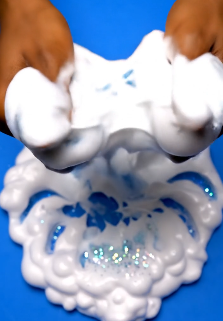
Enter Bubbling Blizzard Sensory Foam. Unlike shaving cream (which can smell strong and sting eyes) or store-bought “instant snow” (which is essentially pulverized plastic), this DIY foam uses household chemistry to create a mesmerizing, cloud-like texture. It is fluffy, sparkly, and remarkably easy to clean up—because it is mostly soap! In this guide, we will explore the science of foam stability using glycerin, how to make this “blizzard” safe for sensitive skin, and how to turn a simple bowl of suds into an hour of independent play.
Ingredients List
This recipe relies on the interaction between surfactants (soap) and mild abrasives (baking soda) to create a stiff, scoopable foam.
The Base
- Dish Soap (¾–1 cup): The foaming agent.
- Pro Tip: Clear dish soap yields the whitest “snow,” while blue soap gives an icy look. For toddlers, use tear-free baby wash or bubble bath to avoid eye irritation.
- Water (¼–⅓ cup): To dilute the soap for better aeration.
- Baking Soda (1–2 tbsp): This adds “body” and grit to the foam, making it feel less like bubbles and more like soft snow.
The Magic & Sparkle
- Glycerin (1 tsp, optional): The secret weapon. Glycerin strengthens the walls of the bubbles, making the foam last significantly longer before collapsing.2
- Glitter (White, Silver, Iridescent): For the blizzard effect.
- Eco-Tip: Use biodegradable glitter to keep your drain microplastic-free during cleanup.
- Mica Powder (¼ tsp, optional): Adds a pearlescent shimmer that glitter alone cannot achieve.
- Blue Food Coloring (1 tiny drop): For that “Frozen” aesthetic.
Timing
This is a low-prep, high-reward activity.
- Preparation Time: 5 minutes.
- Play Time: 45 minutes to 1 hour.
- Cleanup Time: 5 minutes (It dissolves!).
Data Insight: Sensory bins are statistically shown to increase a child’s attention span on a single task.3 While the average toddler attention span is 3-5 minutes per year of age, sensory play often engages them for 3x that duration.
Step-by-Step Instructions
Step 1: The Liquid Base
In a large mixing bowl, pour in the dish soap and water. Gently stir to combine.
- Note: If you stir too vigorously here, you’ll start making bubbles too early. Just mix the liquids.
Step 2: The Texture
Add the baking soda. Stir well.
- The Science: The baking soda increases the density of the mixture. You will feel it get slightly heavier. This is what allows the foam to hold a “peak” like meringue.
Step 3: The Aesthetic
Add your glycerin, glitter, mica powder, and that tiny drop of food coloring.
- Warning: Food coloring is potent. Start with a drop on a toothpick. You want “Ice Princess Blue,” not “Smurf Blue.”
Step 4: The Blizzard Whip
This is the most important step. While you can stir by hand, for the ultimate “Blizzard” effect, use a hand mixer or electric beater.
- Whip the mixture on high speed for 1–2 minutes.
- Visual Cue: Stop when the foam looks thick, stiff, and cloud-like. It should resemble whipped cream.
Step 5: The Setup
Transfer the foam into a deep tray, plastic bin, or water table.
- Play Prompt: Add scoops, spoons, plastic winter animals (penguins, polar bears), or toy cars to act as “snowplows.”
Developmental Benefits
This isn’t just messy fun; it’s learning.
| Skill | How it’s Developed |
| Fine Motor | Scooping, pouring, and squeezing the foam strengthens hand muscles needed for writing. |
| Olfactory/Tactile | Exploring temperature (cool foam) and texture (gritty/soft) aids sensory processing. |
| Cause & Effect | “If I squeeze this foam, it squishes through my fingers.” |
| Vocabulary | Introduces words like fluffy, sparkling, dissolving, opaque, translucent. |
Safety & Variations
Adapt Bubbling Blizzard Foam for your specific audience:
- The “Taste-Safe” Version (Babies/Toddlers):
- Replace dish soap with the liquid from a can of chickpeas (Aquafaba) and a ¼ tsp cream of tartar. Whip it just like the soap version. It creates a harmless, edible foam safe for curious mouths.
- The Fizzy Blizzard (STEM Twist):
- Since the recipe already contains baking soda, give your child a squirt bottle filled with vinegar. When they spray the foam, it will erupt in a fizzy reaction!
- Frozen Foam:
- Place the bin in the freezer for 20 minutes before play. The foam becomes stiff and icy cold, simulating real snow.
Cleanup Tips
The best part about this activity? It is literally cleaning supplies.
- The Sink Method: Scoop the foam into the sink and wash it down with warm water.
- The “Car Wash”: If you added plastic toys to the bin, fill a second bin with plain warm water and let the kids “wash” the toys. This extends playtime by another 20 minutes.
- Surfaces: Wipe down tables with a damp cloth. Since it’s soap, it won’t stain surfaces (unless you used excessive food dye).
Conclusion
Bubbling Blizzard Sensory Foam transforms a gloomy winter afternoon into a magical, sparkling experience. It costs pennies to make, cleans up in seconds, and provides essential sensory input that helps little brains grow.
Ready to make some snow? Grab that dish soap! If you try this activity, tag us in your photos or leave a comment below with your child’s reaction.
FAQs
Will the food coloring stain hands?
If you use just one drop as directed, it should not stain. However, if you are worried, use “washable watercolors” instead of food dye.
Can I save the foam for later?
No. Unlike playdough, foam is based on air bubbles. It will deflate and turn back into liquid soapy water after a few hours. This is a “one-time use” activity.
Does it irritate sensitive skin?
If your child has eczema or sensitive skin, ensure you use a hypoallergenic or tear-free soap brand. You can also have them wear rubber gloves for a “scientist” role-play.
Can I use laundry detergent?
No. Laundry detergent is too concentrated and harsh for direct skin contact. Stick to dish soap or bubble bath.
Leave a Reply