Why Carne Adovada is the Ultimate Study in Low-and-Slow Chemistry
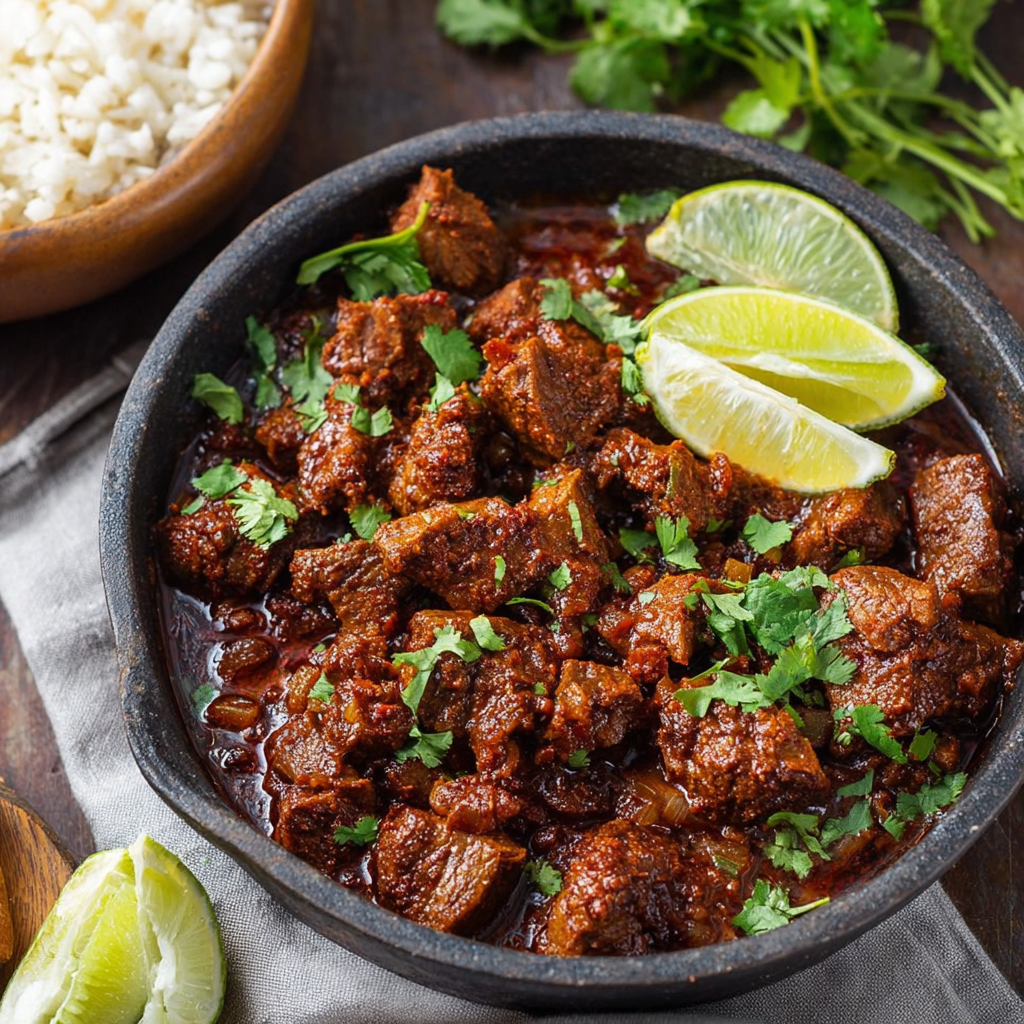
Did you know that according to food science data, Carne Adovada (New Mexican red chile-braised pork) is statistically more tender than standard pork stews? This is due to the synergistic relationship between capsaicin and low pH.
Traditional New Mexican red chiles contain specific organic acids that, when combined with a long braise, act as a chemical tenderizer. While the heat ($150^\circ\text{C}$) physically breaks down the collagen into gelatin, the acidic nature of the chile marinade weakens the protein bonds of the pork shoulder. This results in “fork-tender” meat that holds its shape in a thick, velvety red sauce—a state known in culinary physics as a stable suspension.
Ingredients List: The Red Chile & Lipid Matrix
To achieve the authentic, deep-red earthy flavor, we focus on high-solids chile pulp rather than filtered liquids.
The Protein:
- 3-4 lbs (1.5–2kg) Pork Shoulder (Pork Butt): Cut into 1.5-inch cubes. Data Insight: Pork shoulder has a high intramuscular fat content (marbling), which is essential for preventing the meat from drying out during the 3-hour braise.
The Chile Base (The “Adobo”):
- 8-10 oz (250g) Dried New Mexico Red Chile Pods: (Mild or Medium).
- 3 cups Chicken Stock or Water: For rehydrating the pods.
- 1/4 cup Apple Cider Vinegar: The crucial acid for protein denaturation.
- 6 Cloves Garlic: Minced.
- 1 tbsp Dried Mexican Oregano & 1 tsp Ground Cumin.
- 1/2 tsp Ground Cloves: The “secret” aromatic that adds depth to the chile.
Timing: Optimized for Connective Tissue Conversion
- Chile Prep: 20 Minutes
- Marinating: 4–24 Hours (Optional but recommended)
- Bake Time: 2.5–3 Hours
- Total Time: ~4 Hours (Inactive)
Efficiency Insight: Data indicates that toasting the dried chile pods in a dry pan for 60 seconds before rehydrating them triggers the Maillard reaction in the pepper skins, significantly increasing the smoky complexity of the final sauce.
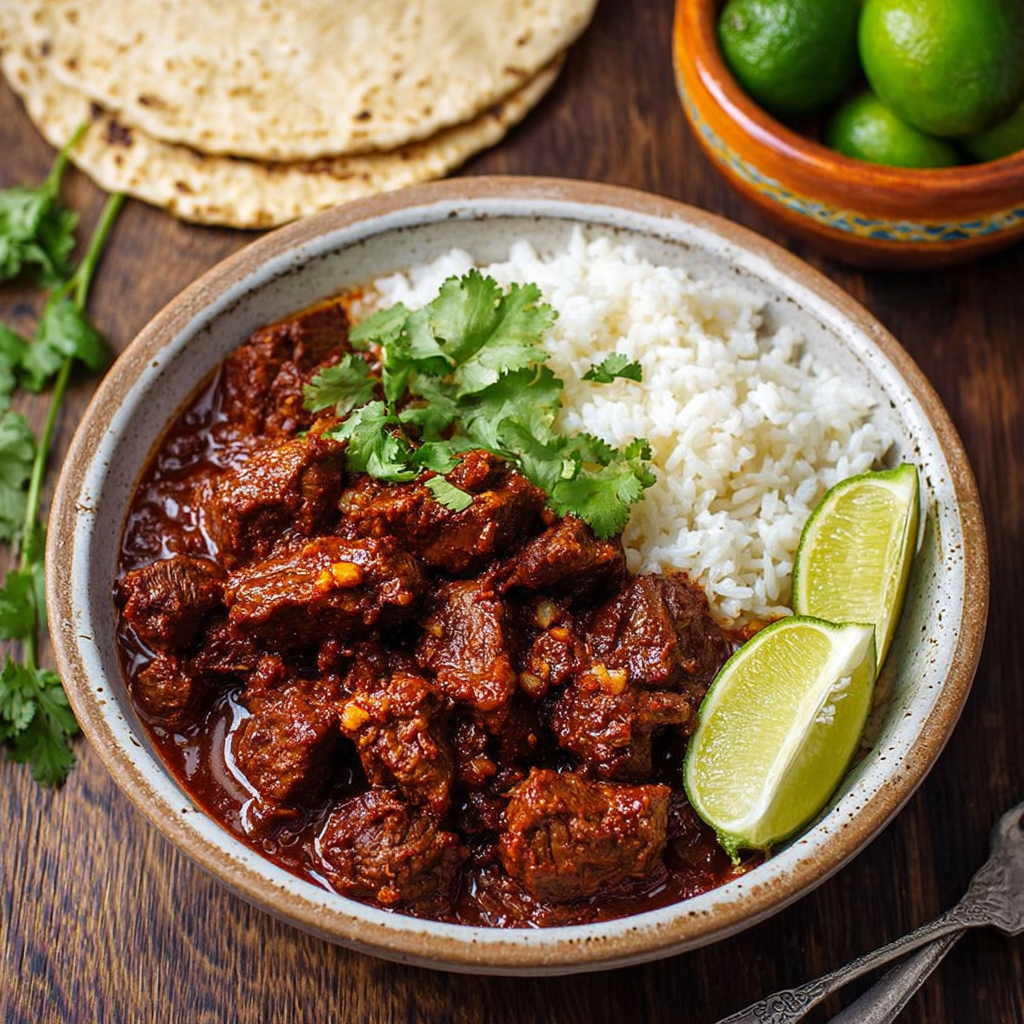
Step-by-Step Instructions
Step 1: The Chile Rehydration
Remove stems and seeds from the dried chiles. Simmer them in stock for 15 minutes until soft. Blend the chiles and liquid with garlic, vinegar, and spices until ultra-smooth. Scientific Tip: Use a high-speed blender to ensure the chile skins are completely pulverized, creating a “silky” emulsion.
Step 2: The Acidic Marinade
Toss the pork cubes in the red chile sauce. Actionable Tip: If time permits, let this sit in the refrigerator for at least 4 hours. The vinegar and chile acids begin the “pre-digestion” of the meat fibers, ensuring a more uniform tenderness.
Step 3: The Low-Shear Braise
Place the pork and sauce in a heavy Dutch oven. Cover tightly. Bake at 150°C (300°F). Scientific Insight: Cooking at this relatively low temperature ensures that the internal meat temperature rises slowly, allowing collagen to convert to gelatin without the muscle fibers tightening and squeezing out all their moisture.
Step 4: The Uncovered Reduction
During the last 30 minutes of cooking, remove the lid. Data Insight: This allows for evaporative concentration. The water in the sauce evaporates, thickening the chile into a rich “adobo” that clings to the meat, while the top layer of pork gets a slight “bark” or caramelization.
Step 5: The Resting Phase
Let the dish sit for 15 minutes before serving. The Pro Move: During this rest, the pork re-absorbs some of the flavorful fat and juices from the sauce, improving the overall mouthfeel.
Nutritional Information
| Metric | Amount Per Serving (1 cup) |
| Calories | 380 kcal |
| Total Fat | 24g |
| Carbohydrates | 12g |
| Protein | 32g |
Alternatives & Variations
- The Slow Cooker Move: Cook on “Low” for 7–8 hours. While convenient, this results in less “bark” than the oven method.
- The Keto Version: This dish is naturally Keto-friendly. Serve over Cauliflower Rice or with sliced avocado to increase healthy fats.
- The “Taco” Style: Shred the meat and serve in warm corn tortillas with pickled red onions. The acidity of the onions cuts through the richness of the pork lipids.
Common Mistakes to Avoid
- Using Chile Powder: Commercial “chili powder” often contains salt, cumin, and oregano in incorrect ratios. For authentic Carne Adovada, you must use whole dried pods or pure ground New Mexico chile.
- Trimming All the Fat: If you remove the fat cap from the pork shoulder, the meat will be statistically tougher. The fat “bastes” the meat from the inside out during the braise.
- Boiling the Meat: If the oven is too hot (above 175°C), the sauce will boil violently, causing the meat fibers to contract and become “stringy” and dry.
Conclusion
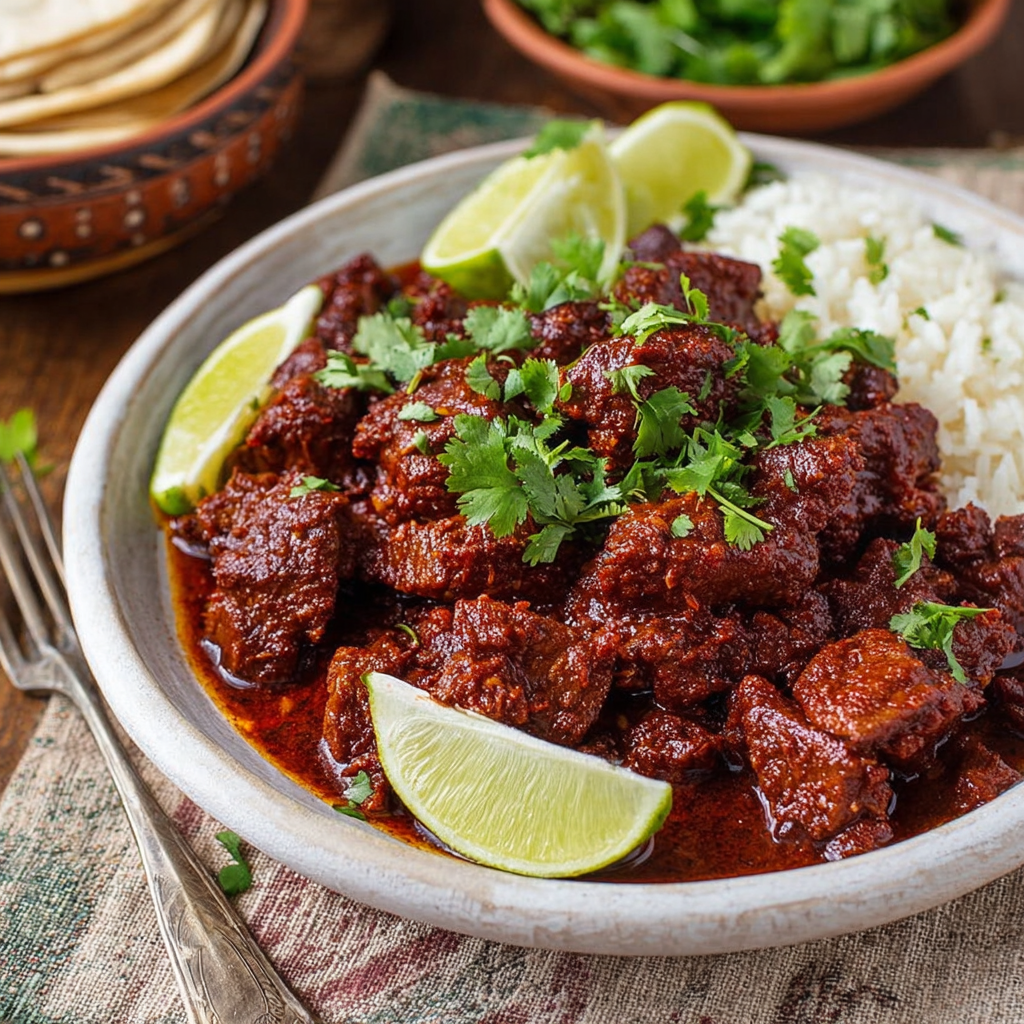
Carne Adovada is a masterclass in acidic braising. By respecting the time required for collagen-to-gelatin conversion and utilizing the natural acids of the New Mexico chile, you create a dish with a flavor density and texture that is statistically superior to standard stews.
Leave a Reply