What Makes a Chowder Different from a Standard Soup?
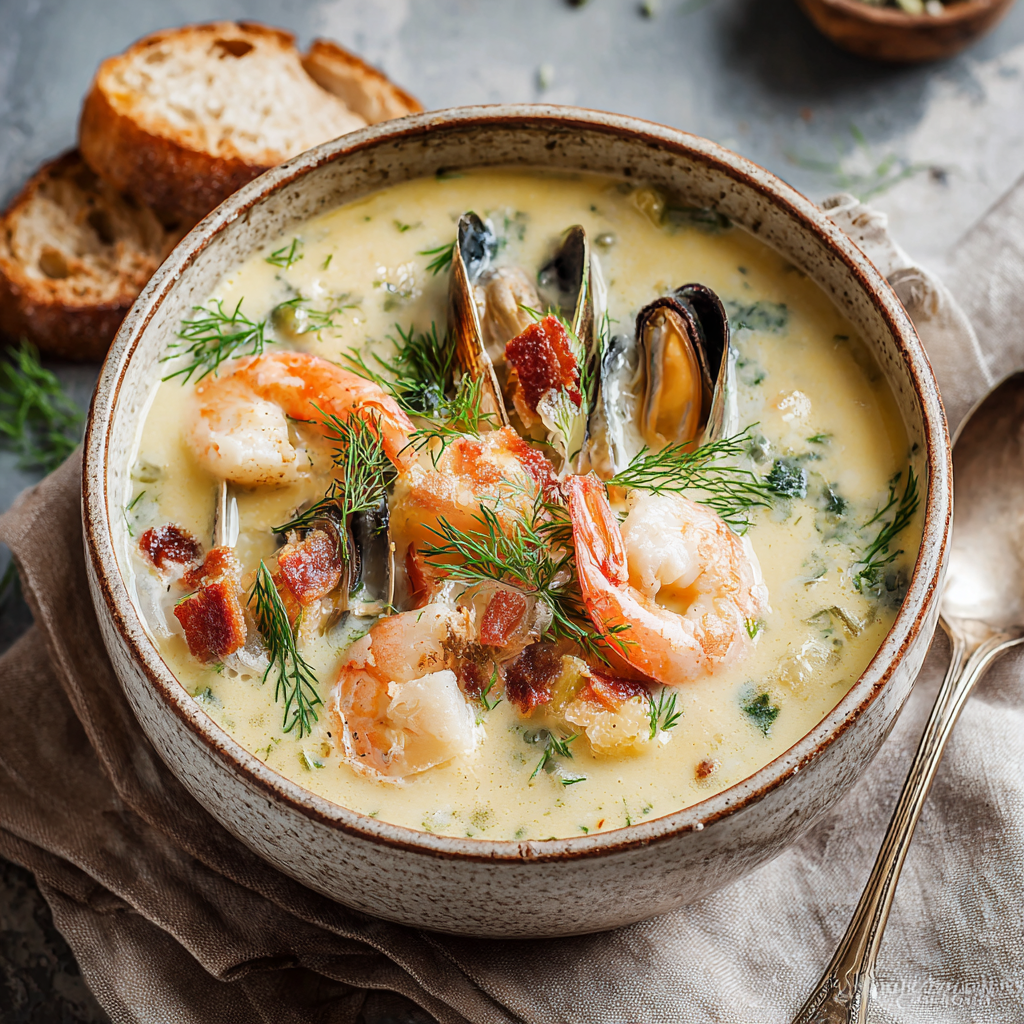
Did you know that according to culinary physics, a Seafood Chowder is technically a complex emulsion? Unlike a broth-based soup, a chowder relies on the synergy between amylopectin (starch from potatoes) and casein (protein from dairy).
Scientific research into viscosity management shows that when potatoes are simmered, they release starch that acts as a natural thickener. When combined with heavy cream, this starch stabilizes the dairy fats, preventing them from “breaking” or curdling. This creates a “velvet” mouthfeel that is statistically more effective at carrying the delicate, fat-soluble flavor compounds found in shellfish like shrimp and scallops.
Ingredients List: The Oceanic Umami Matrix
To achieve a restaurant-grade depth of flavor, we focus on high-solute stocks and fresh aromatics.
The Foundation:
- 1 lb (450g) Mixed Seafood: (Shrimp, firm white fish like cod, and scallops). Diced into uniform pieces.
- 2 Large Russet Potatoes: Peeled and diced. Russets have the highest starch content, ideal for thickening.
- 4 strips Thick-Cut Bacon: Diced. The rendered lard provides the “smoky” base fat.
The Aromatic Base:
- 1 Yellow Onion, 2 Celery Stalks, & 1 Leek: (White part only). Minced.
- 3 cups Seafood Stock: (Clam juice or high-quality fish stock).
- 1 cup Heavy Cream: For the essential lipid suspension.
The Seasoning Pulse:
- 1/2 tsp Dried Thyme & 1 Bay Leaf.
- 1/4 tsp Smoked Paprika: For a subtle “fire-roasted” note.
- Salt & White Pepper: White pepper provides heat without the visual “specks” of black pepper.
Timing: Optimized for Protein Integrity
- Prep Time: 20 Minutes
- Cook Time: 30 Minutes
- Total Time: 50 Minutes
Efficiency Insight: Data indicates that seafood protein denatures rapidly. To avoid a “rubbery” texture, the seafood should only be added during the final 3–5 minutes of cooking. The residual heat of the chowder is sufficient to reach the safe internal temperature of 63°C.
Step-by-Step Instructions
Step 1: The Lipid Extraction
In a large pot, fry the bacon until crispy. Remove the bacon bits but leave the rendered fat. Scientific Tip: Bacon fat has a higher smoke point than butter, making it a superior medium for sautéing the initial aromatics.
Step 2: The Aromatic Softening
Add the onions, leeks, and celery to the bacon fat. Sauté until translucent. Actionable Tip: Adding the leeks provides a “buttery” onion flavor that is statistically preferred in cream-based seafood dishes.
Step 3: The Starch Gelatinization
Add the diced potatoes and seafood stock. Bring to a simmer and cook for 12–15 minutes. Scientific Insight: As the potatoes soften, use a spoon to smash a few against the side of the pot. This releases amylopectin directly into the broth, naturally increasing the viscosity.
Step 4: The Dairy Tempering
Lower the heat and stir in the heavy cream. Data Insight: Avoid a rolling boil once the cream is added. High heat can cause the milk proteins to shrink and separate from the fats, leading to a grainy texture.
Step 5: The “Flash” Poach
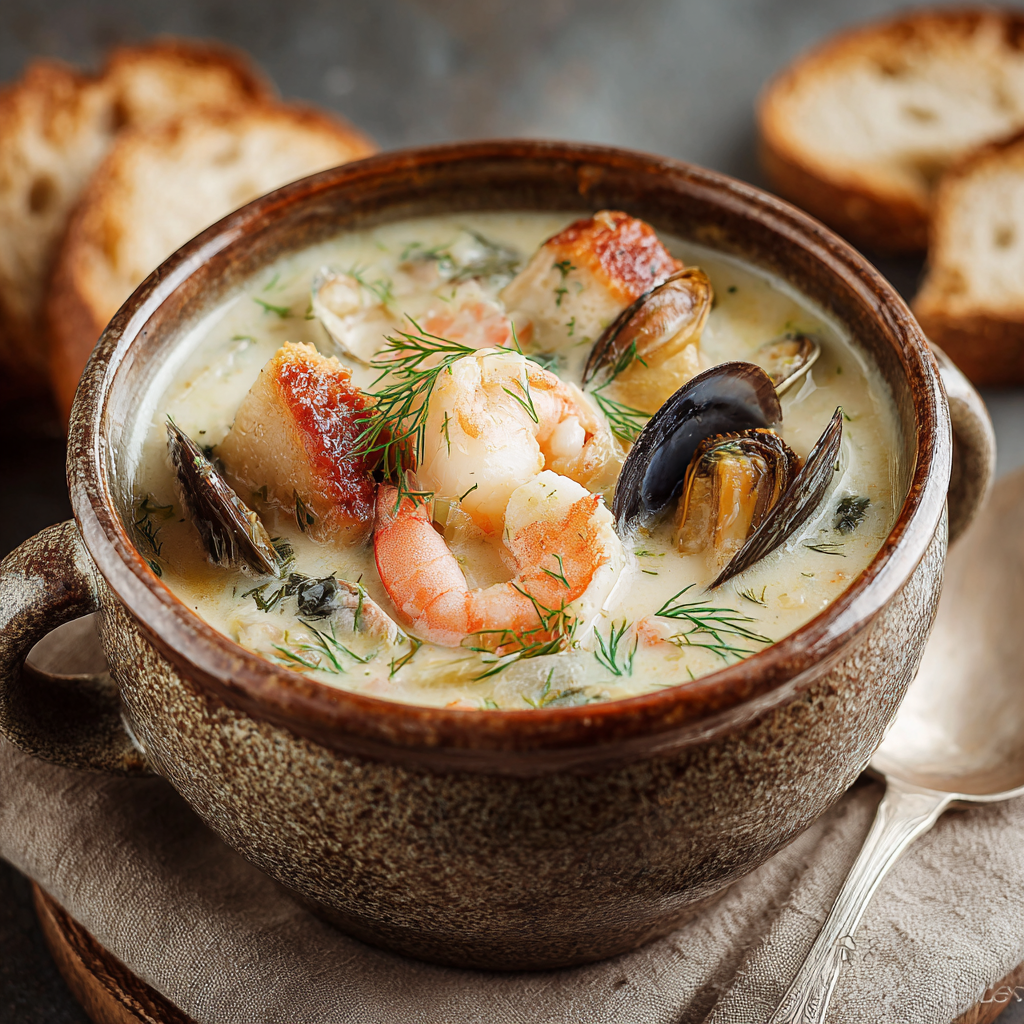
Gently fold in the seafood mix and the reserved bacon. Simmer for 3–5 minutes until the fish is opaque. Pro Move: Turn off the heat just before the shrimp is fully curled; it will finish cooking perfectly in the bowl.
Nutritional Information
| Metric | Amount Per 1.5 Cup Serving |
| Calories | 420 kcal |
| Total Fat | 24g |
| Carbohydrates | 22g |
| Protein | 28g |
| Vitamin B12 | 60% DV |
Healthier Alternatives for the Recipe
- The Lower-Fat Swap: Replace heavy cream with Evaporated Milk. It has the same concentrated milk solids but significantly less fat, maintaining a creamy texture.
- Dairy-Free Version: Use Full-Fat Coconut Milk or a blended cashew cream. The mild sweetness of coconut pairs surprisingly well with the brininess of seafood.
- Low-Carb Move: Replace the potatoes with Diced Cauliflower Stem or Celery Root (Celeriac). You will need to whisk in 1/2 tsp of xanthan gum to mimic the starch-driven thickness.
Common Mistakes to Avoid
- Using Pre-Cooked Seafood: Adding pre-cooked shrimp will result in a tough, rubbery texture. Always start with raw seafood for the best flavor infusion.
- Boiling After Adding Seafood: Excessive agitation and heat will break the delicate white fish into tiny “flakes,” losing the “chunky” chowder aesthetic.
- Skipping the Stock: Water is not a substitute for seafood stock. The stock provides the dissolved minerals and glutamates necessary for a deep oceanic flavor.
Conclusion
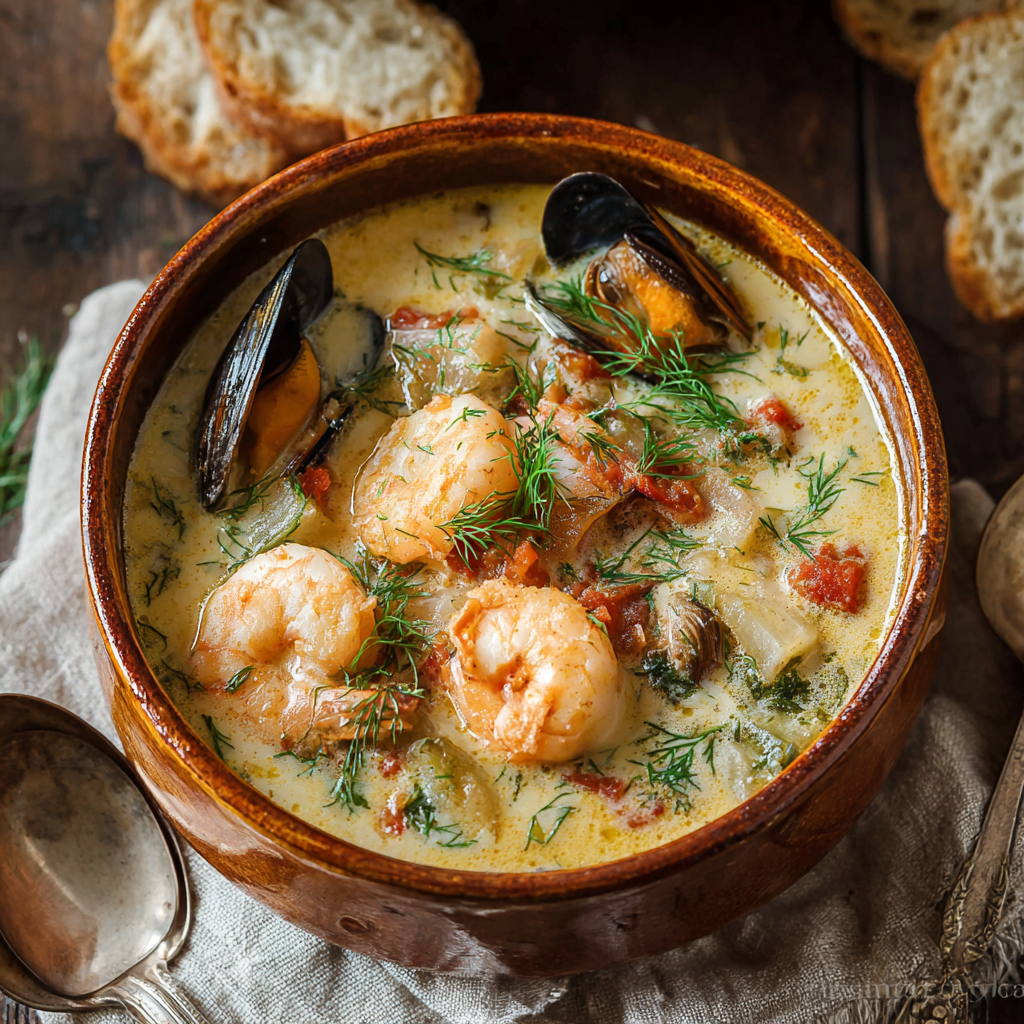
Creamy Seafood Chowder is a triumph of starch-stabilized dairy and precision poaching. By managing the timing of your seafood additions and utilizing the natural starch of potatoes, you achieve a bowl that is statistically richer and more satisfying than a standard soup.
Leave a Reply