
Introduction
Did you know that cucumbers are composed of 95% water? This makes them one of the most hydrating vegetables on the planet. While the classic Italian Caprese salad (tomatoes, mozzarella, basil) is a timeless masterpiece, culinary trends show a rising demand for “textural contrast” in salads. The traditional version can sometimes feel soft-on-soft; adding cucumber introduces a refreshing crunch that completely transforms the eating experience.
This Cucumber Caprese Salad is the perfect evolution of the classic. It retains the beloved flavor profile of sweet basil and creamy mozzarella but adds volume and hydration with zero guilt. In this guide, we will explore the importance of vegetable geometry (how you cut matters), the science of preventing a soggy salad, and how to whip up this 15-minute side dish that pairs with literally everything.
Ingredients List
The beauty of this salad lies in its simplicity. Because there are no spices to hide behind, ingredient quality is paramount.
The Fresh Crunch
- English Cucumbers (1 large): Also known as hothouse cucumbers.
- Why this variety? They have thin skin (no peeling needed) and tiny seeds, meaning less water leakage than standard garden cucumbers.
- Cherry or Grape Tomatoes (2 cups / 1 pint):
- Sensory Note: These have a higher skin-to-flesh ratio than beefsteak tomatoes, keeping the salad crisp rather than mushy.
The Creamy & Herby
- Fresh Mozzarella Balls (8 oz / 1 cup): Look for “Bocconcini” or “Pearls.”
- Flavor Hack: If you can only find a large ball of mozzarella, tear it into chunks rather than cutting it. Rough edges hold dressing better.
- Fresh Basil Leaves (½ cup): Do not use dried basil. It lacks the essential oils (eugenol) that give Caprese its signature aroma.
The Dressing
- Extra Virgin Olive Oil (2 tbsp): Use your “finishing oil” here.
- Balsamic Glaze (1-2 tbsp): Thicker and sweeter than vinegar.
- Salt & Cracked Black Pepper: To taste.
Timing
This is a “chop and drop” recipe—no cooking required.
- Preparation Time: 15 minutes.
- Cooking Time: 0 minutes.
- Total Time: 15 minutes.
Data Insight: Preparing this salad instead of a cooked vegetable side dish (like roasted asparagus) saves approximately 0.3 kWh of energy and keeps your kitchen cool, making it the statistically superior choice for summer dining.
Step-by-Step Instructions
Step 1: The Geometry of Cutting
Wash all vegetables.
- Cucumbers: Slice the English cucumber into half-moons about ¼ inch thick.
- Texture Tip: If using a standard waxy cucumber, peel it and scoop out the seeds with a spoon to prevent a watery salad.
- Tomatoes: Slice cherry tomatoes in half lengthwise.
- Mozzarella: If using pearls, leave whole. If using larger balls, cut them to match the size of the tomatoes. Uniformity equals the perfect bite.
Step 2: The Basil Technique
Stack your basil leaves, roll them into a tight cigar, and slice thinly (a technique called chiffonade).
- Science Check: Use a very sharp knife. A dull knife bruises the basil, turning the edges black due to oxidation. Alternatively, tear small leaves by hand for a rustic look.
Step 3: The Assembly
In a large bowl, combine the cucumbers, tomatoes, and mozzarella balls.
Step 4: The Dressing (Timing is Key)
Drizzle with olive oil and sprinkle with salt and pepper. Toss gently to coat.
- Crucial Action: Do not add the balsamic glaze yet. Add the glaze after plating or right on top of the serving bowl. Balsamic glaze is heavy and aesthetically pleasing; tossing it vigorously turns the mozzarella a muddy brown color.
Step 5: Serve
Transfer to a platter. Drizzle generously with the balsamic glaze and scatter the fresh basil on top. Serve immediately.
Nutritional Information
This twist reduces the calorie density of the original by adding volume. Breakdown per serving (based on 4 servings):
| Nutrient | Cucumber Caprese | Traditional Caprese |
| Calories | ~210 kcal | ~350 kcal |
| Water Content | Very High | Moderate |
| Carbohydrates | 10g | 8g |
| Total Fat | 14g | 28g |
| Protein | 10g | 12g |
| Vitamin K | High | Low |
- Data Insight: By swapping half the cheese/tomato volume for cucumber, you reduce the caloric load by nearly 40% while increasing the Vitamin K content (essential for bone health).
Healthier Alternatives for the Recipe
Adapt this Cucumber Caprese Salad to your lifestyle:
- Vegan: Replace dairy mozzarella with cubed Avocado. The texture is similarly creamy and fatty, or use a high-quality cashew-based vegan mozzarella.
- Keto / Low-Sugar: Balsamic glaze is concentrated grape must and sugar. For a strict Keto version, skip the glaze and use a splash of Balsamic Vinegar of Modena (thinner, less sugar) or lemon juice.
- Protein Boost: Add a can of rinsed Chickpeas or grilled chicken strips. This transforms the side dish into a complete lunch.
- Low-FODMAP: Ensure you use just the green parts of spring onions instead of garlic (if you were tempted to add it) and stick to a moderate portion of cheese.
Serving Suggestions
This salad is a versatile chameleon:
- The BBQ Side: Pairs perfectly with grilled steak or burgers. The coolness cuts through the smoky char of the meat.
- Pita Pocket: Stuff this salad inside a whole wheat pita with a little hummus for a Mediterranean sandwich.
- Pasta Salad Base: Toss this mixture with cold rotini or farfalle pasta for a potluck winner.
- Breakfast? Yes! Serve atop a slice of sourdough toast with a poached egg.
Common Mistakes to Avoid
Here is why your salad might get watery:
- Salting Too Early: Salt draws moisture out of vegetables (osmosis). If you salt the cucumbers and let them sit for 30 minutes, you will have a pool of liquid at the bottom of the bowl. Salt right before serving.
- Using Large Tomatoes: Beefsteak tomatoes leak juice everywhere when chopped. Stick to cherry/grape varieties.
- Refrigerating Tomatoes: Never store raw tomatoes in the fridge before making this. Cold temperatures damage the cell membranes, leading to a mealy texture and loss of flavor.
- Drowning it: You want to taste the vegetables, not just the vinegar. Start with less dressing; you can always add more.
Storing Tips for the Recipe
Unlike starchy salads (potato/pasta), this is a “fresh” dish.
- Refrigerator: Best eaten within 24 hours.
- The Day After: The cucumbers will release water and the basil will wilt. It is still safe to eat, but the texture will be soft rather than crunchy. Drain the excess liquid before serving leftovers.
- Freezing: Do not freeze. Cucumbers and fresh mozzarella do not survive the freezing process; they turn to mush.
- Make Ahead: You can chop the cucumbers and tomatoes hours in advance. Store them in separate containers in the fridge. Assemble and dress right before the guests arrive.
Conclusion
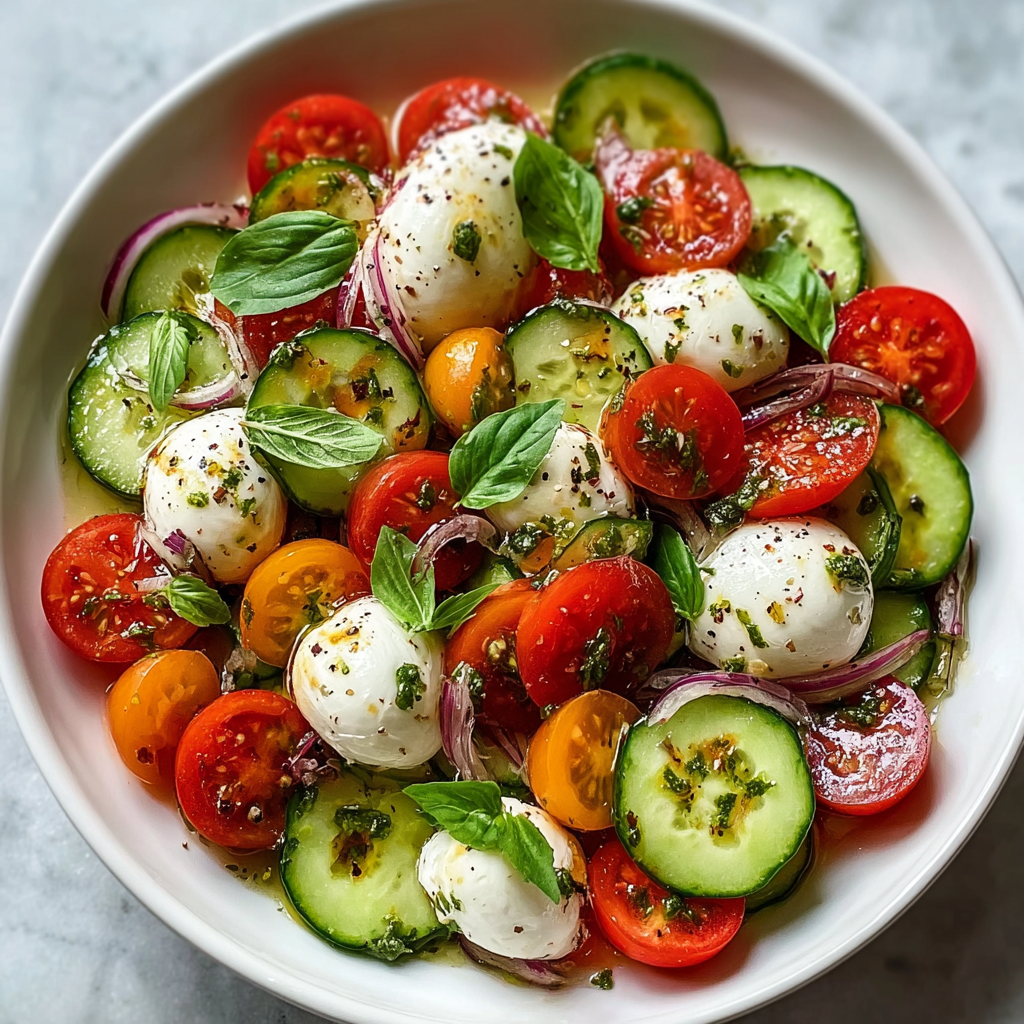
Cucumber Caprese Salad is the ultimate proof that healthy food doesn’t have to be boring. It takes the sophisticated flavors of Italy and merges them with the refreshing crunch of a garden cucumber. It is hydrating, vibrant, and ready in a flash.
Ready for the crunch? Grab your knife! If you try this recipe, please leave a 5-star rating below. Don’t forget to subscribe for more 15-minute healthy hacks.
FAQs
Do I need to peel the cucumbers?
If you use English (hothouse) or Persian cucumbers, no. The skin is thin and adds a nice color and crunch. If you use standard “slicing” cucumbers, the skin can be bitter and thick, so peeling is recommended.
Can I use dried basil?
I strongly advise against it. Caprese relies on the floral, sweet aroma of fresh basil. Dried basil tastes minty and dusty in a raw application. If you can’t find basil, fresh parsley or dill is a better substitute than dried basil.
Is balsamic glaze the same as vinegar?
No. Balsamic vinegar is a thin liquid. Balsamic glaze (or reduction) has been simmered until thick and syrupy. The glaze clings to the veggies better and is sweeter.
Can I add onion?
Absolutely. Thinly sliced Red Onion adds a nice spicy kick and beautiful purple color. Soak the onion slices in cold water for 10 minutes to tame the harsh bite before adding.
Is this gluten-free?
Yes, naturally! Just double-check your balsamic glaze label, as some cheaper brands use thickeners or caramel color that might contain gluten (though rare).
Leave a Reply