Introduction
Did you know that the “poke bowl” market size was valued at over $1.8 billion globally in recent years and is projected to grow annually? What started as a humble fisherman’s snack in Hawaii (using cut-offs or “poke” meaning “to slice”) has exploded into a global fast-casual phenomenon. However, the markup on these bowls is staggering. A standard poke bowl at a city lunch spot averages $14 to $18, while the raw ingredient cost is often less than $5.
This recipe for a Salmon Poke Bowl filled with seasoned sushi rice puts the power back in your hands. It challenges the misconception that handling raw fish at home is dangerous or overly complex. By understanding the sourcing of “sushi-grade” fish and mastering the ratio of rice vinegar to sugar for the rice, you can create a bowl that is fresher, customizable, and significantly cheaper than the chain restaurants. Whether you are looking for a post-workout protein bomb or a light, no-cook summer dinner (minus the rice boiling), this recipe delivers a refreshing, umami-packed experience that is as beautiful as it is delicious.
Ingredients List
To replicate the authentic poke shop experience, the texture of the rice and the quality of the fish are the two non-negotiable variables. Here is your curated shopping list for the ultimate Salmon Poke Bowl.
The Base (Sushi Rice):
- 1.5 Cups Short-Grain White Rice (Sushi Rice):
- Why Short Grain? Unlike jasmine or basmati, short-grain rice contains higher levels of amylopectin (starch), which makes it sticky enough to hold together but distinct enough to soak up the sauce.
- ¼ Cup Rice Vinegar: Unseasoned.
- 1 Tablespoon Granulated Sugar: Essential to balance the acid.
- 1 Teaspoon Salt.
The Protein:
- 1 lb (450g) Fresh Salmon Fillet:
- Critical Spec: Look for “Sushi Grade” or “Sashimi Grade” salmon. This isn’t a government regulation but a marketing term indicating the fish has been flash-frozen at very low temperatures (-31°F) to kill parasites. Farmed Atlantic salmon is often safer for raw consumption than wild Pacific salmon due to parasite control in feed.
- 2 Tablespoons Soy Sauce (Shoyu): Or Tamari for gluten-free.
- 1 Teaspoon Toasted Sesame Oil: A little goes a long way.
- 1 Teaspoon Rice Vinegar.
- ½ Teaspoon Grated Fresh Ginger.
- 1 Scallion (Green Onion): Finely sliced.
The Toppings (The Crunch & Cream):
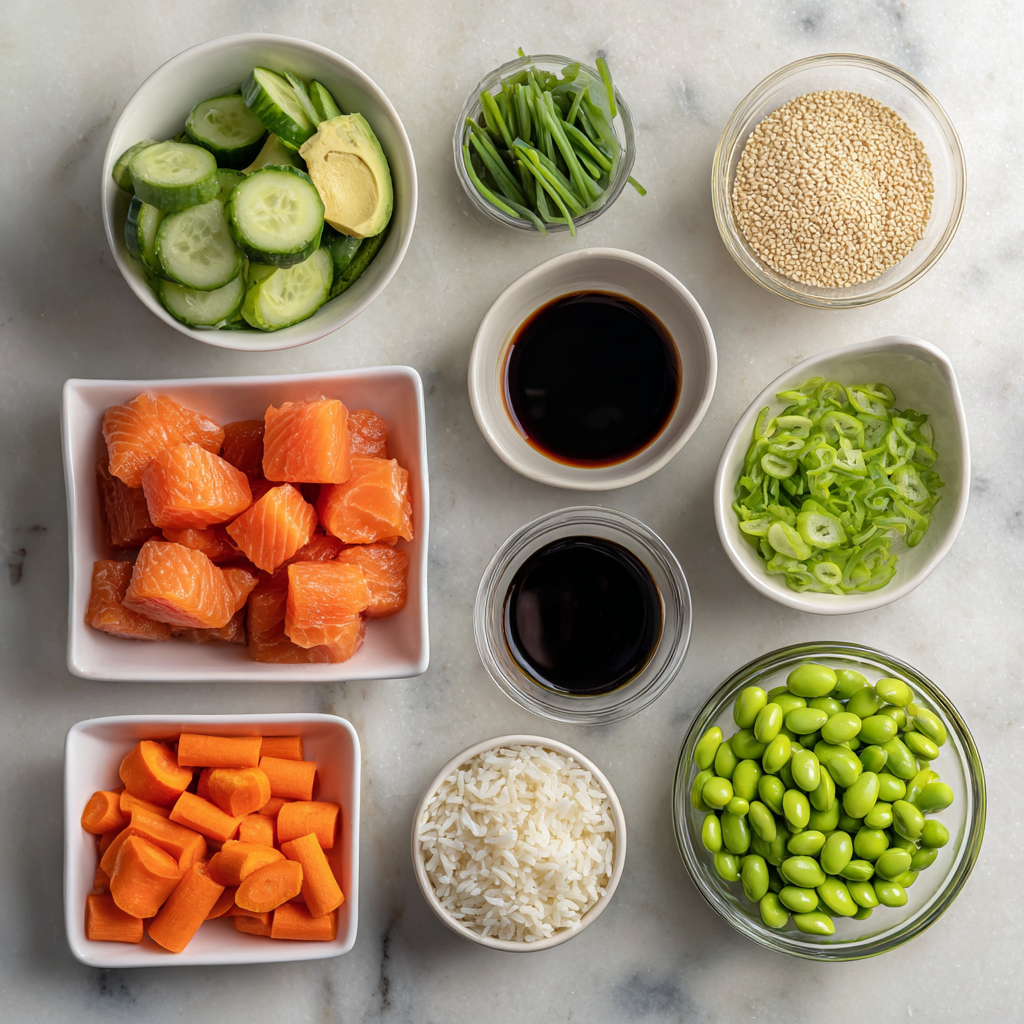
- 1 Ripe Avocado: Sliced or cubed.
- ½ Cup Shelled Edamame: Thawed.
- ½ Cucumber: Sliced into half-moons or ribbons.
- Sesame Seeds: Black and white for visual contrast.
- Spicy Mayo (Optional): 2 tbsp Mayonnaise + 1 tsp Sriracha.
- Furikake Seasoning: A Japanese rice seasoning blend (seaweed and sesame).
Substitutions:
- Fish: High-quality Yellowfin Tuna (Ahi) is the classic alternative. For a cooked option, use poached shrimp or cubed tofu.
- Base: Brown rice or quinoa works for a nuttier, healthier base, though they won’t have the traditional “sticky” mouthfeel.
Timing
This recipe requires precision with rice cooling, but assembly is fast.
- Preparation Time: 20 minutes.
- Cooking Time: 20 minutes (Rice).
- Cooling Time: 10 minutes.
- Total Time: Approx. 50 minutes.
Data Insight: Making your own sushi rice takes about 30 minutes, but the cost per serving is approx. $0.25. Buying pre-cooked microwavable sticky rice costs approx. $2.00 per serving. Cooking it yourself is an 87% cost saving.
Step-by-Step Instructions
Step 1: The Rice Rinse (Do Not Skip!)
Place the sushi rice in a fine-mesh sieve. Rinse under cold water, agitating with your fingers, until the water runs completely clear.
- The Science: This removes excess surface starch (talc). If you skip this, your rice will be a gummy, gluey block rather than fluffy, sticky grains.
Step 2: Cooking the Sushi Rice
Combine the rinsed rice and 1 ¾ cups water in a pot (or use a rice cooker). Bring to a boil, reduce to the lowest simmer, cover tightly, and cook for 15–18 minutes. Remove from heat and let sit, covered, for 10 minutes to steam.
Step 3: Seasoning the Rice (The “Su”)
While the rice steams, dissolve the sugar and salt in the ¼ cup rice vinegar (microwave for 30 seconds if needed).
- The Cut: Transfer the hot rice to a large, wide bowl (traditional wooden hangiri is best, but glass works). Pour the vinegar mixture over the rice.
- Technique: Use a rice paddle or spatula to “slice” and fold the rice gently. Do not mash. Fan the rice while mixing to cool it down and give it a glossy sheen. Cover with a damp towel to keep warm/room temp.
Step 4: The Salmon Prep
Remove the skin from the salmon if present. Using a very sharp knife, cut the salmon into uniform ½-inch cubes.
- Safety Tip: Keep the fish in the fridge until the very last second. Cold fish is easier to cut and safer to eat.
Step 5: The Marinade
In a medium bowl, whisk together the soy sauce, toasted sesame oil, 1 tsp rice vinegar, grated ginger, and sliced scallions.
- The Toss: Add the salmon cubes. Toss gently to coat.
- Timing: Do not let this sit for more than 10 minutes. The acid and salt will begin to “cure” the fish (like ceviche), changing the texture from silky to firm.
Step 6: Assembly
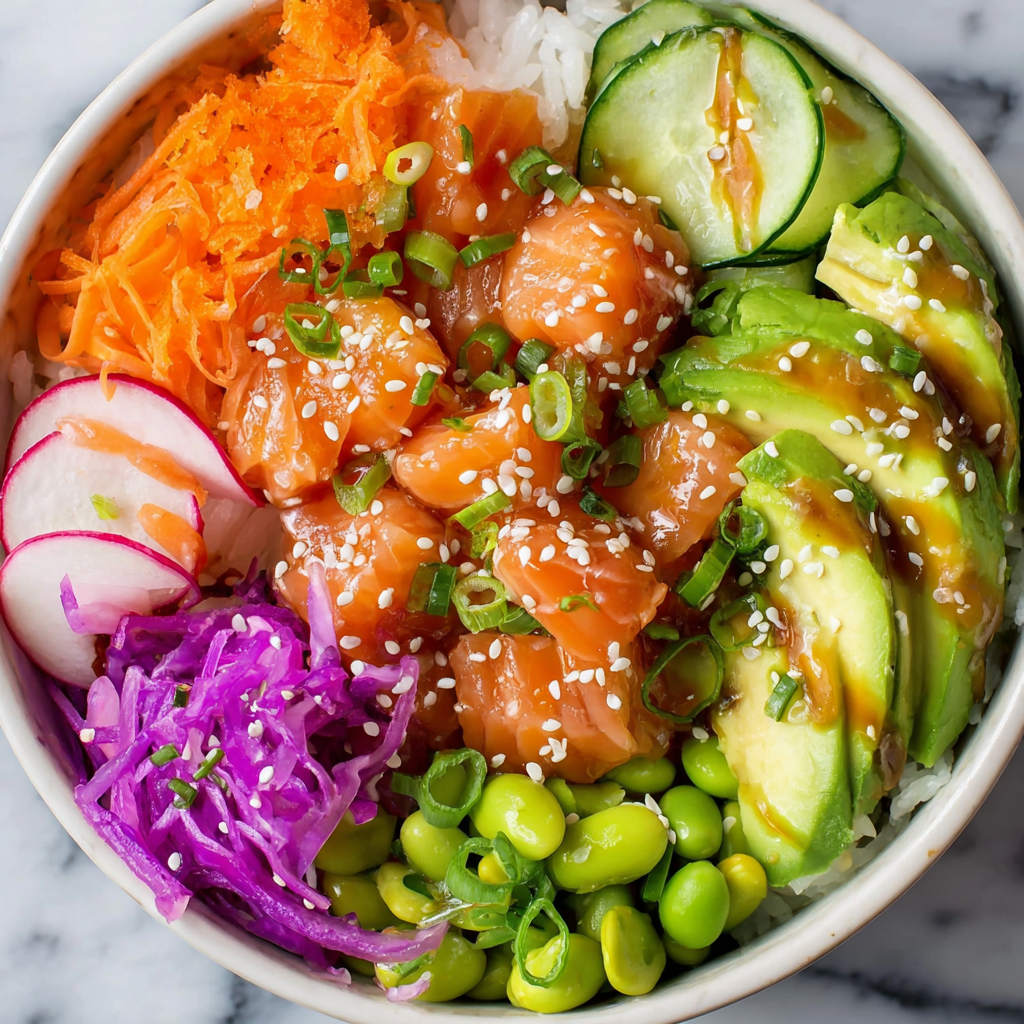
Scoop a generous mound of the seasoned sushi rice into a bowl. Top with the marinated salmon. Arrange the avocado, edamame, and cucumber in distinct sections around the fish.
- Garnish: Drizzle with spicy mayo, sprinkle with furikake and sesame seeds. Serve immediately.
Nutritional Information
Poke is a fantastic source of lean protein and healthy fats. Here is the estimated breakdown per bowl:
| Nutrient | Amount | % Daily Value |
| Calories | 550 kcal | – |
| Protein | 35g | 70% |
| Total Fat | 22g | 33% |
| Omega-3 | 2.5g | >100% |
| Carbohydrates | 55g | 20% |
| Sodium | 850mg | 37% |
Data Insight: Salmon is one of the best sources of long-chain Omega-3 fatty acids (EPA and DHA), which are crucial for brain health and reducing inflammation. One bowl covers your entire weekly recommendation.
Healthier Alternatives for the Recipe
Customize your Salmon Poke Bowl to fit specific dietary goals:
- Low Carb / Keto:
- Replace the sushi rice with Cauliflower Rice or a bed of mixed greens.
- Omit the sugar in the marinade (or use a drop of Stevia).
- Result: A high-fat, protein-forward salad with <10g net carbs.
- Sodium Conscious:
- Use Coconut Aminos instead of soy sauce. It is naturally sweeter and contains about 70% less sodium than standard soy sauce.
- Skip the furikake seasoning (which is salty) and stick to plain toasted sesame seeds.
- Plant-Based:
- Marinate cubes of Extra Firm Tofu or steamed beets instead of salmon. Beets mimic the color and earthy sweetness of tuna surprisingly well.
Serving Suggestions
Poke is a meal in itself, but you can enhance the experience.
- The Crunch: Add crispy fried onions (shallots) or crushed macadamia nuts for a Hawaiian texture contrast.
- The Fruit: Mango or pineapple cubes add a tropical sweetness that pairs perfectly with the fatty salmon and salty soy sauce.
- Drink Pairing: An iced Green Tea or a light lager cuts through the richness of the sesame oil and avocado.
Common Mistakes to Avoid
Raw fish requires care. Avoid these pitfalls:
- Using Warm Rice:
- The Error: Putting cold raw fish on piping hot rice.
- The Result: The fish starts to cook and gets lukewarm and fishy-smelling.
- The Fix: Let the rice cool to barely warm or room temperature (body temp is ideal for sushi rice).
- Over-marinating:
- The Error: Prepping the fish hours in advance.
- The Result: Mushy, salty fish.
- The Fix: Dress the fish right before eating.
- Dull Knives:
- The Error: Sawing at the fish.
- The Result: Ragged, torn chunks instead of clean cubes.
- The Fix: Sharpen your knife. You want to slice through in one motion.
Storing Tips for the Recipe
Food safety is paramount with raw protein.
- Refrigeration: The assembled bowl must be eaten within 24 hours. The rice will harden in the fridge, and the fish quality degrades rapidly.
- Leftovers: If you have leftover fish that has already been tossed in sauce, do not eat it raw the next day. Pan-sear it quickly to cook it through and serve it over fresh rice.
- Freezing: Do not freeze. Once thawed for consumption, the fish cannot be refrozen without severe texture loss and safety risks.
Conclusion
This Salmon Poke Bowl with Sushi Rice is the ultimate intersection of luxury and simplicity. It demystifies the art of the sushi chef, proving that with the right ingredients and a sharp knife, you can create a bowl that is fresh, vibrant, and incredibly nourishing in your own kitchen. It’s a taste of Hawaii, no plane ticket required.
Summary: A fresh, customizable bowl featuring marinated sushi-grade salmon, seasoned sushi rice, creamy avocado, and crunchy edamame. Cheaper and fresher than takeout.
Ready to become a poke master?
Find your local fishmonger today! Rate this recipe 5 stars if you loved the freshness, and leave a comment below: do you like spicy mayo or ponzu sauce? Subscribe for more restaurant-quality copycat recipes!
FAQs
Where can I buy sushi-grade fish?
Look for a reputable fishmonger or high-end grocery store (like Whole Foods or local Japanese markets). Ask specifically: “Is this safe to eat raw?” Many stores sell frozen blocks specifically labeled “Sashimi Grade” in the freezer section.
Is raw salmon safe to eat?
If it has been handled correctly (flash frozen to kill parasites), yes. However, pregnant women and those with compromised immune systems are generally advised to avoid raw seafood. For these groups, poached shrimp or seared tofu are excellent substitutes in this bowl.
Can I use brown rice?
Yes. Brown rice adds a nuttier flavor and more fiber. However, it is less sticky than white sushi rice. You can still season it with vinegar and sugar for that sushi flavor profile.
What is Furikake?
It is a dry Japanese seasoning meant to be sprinkled on top of cooked rice, vegetables, and fish. It typically consists of a mixture of dried fish, sesame seeds, chopped seaweed, sugar, and salt. It adds a massive “umami” bomb to the bowl.
Leave a Reply