Can a Simplified Version Maintain the “Five-Color” Nutritional Balance?
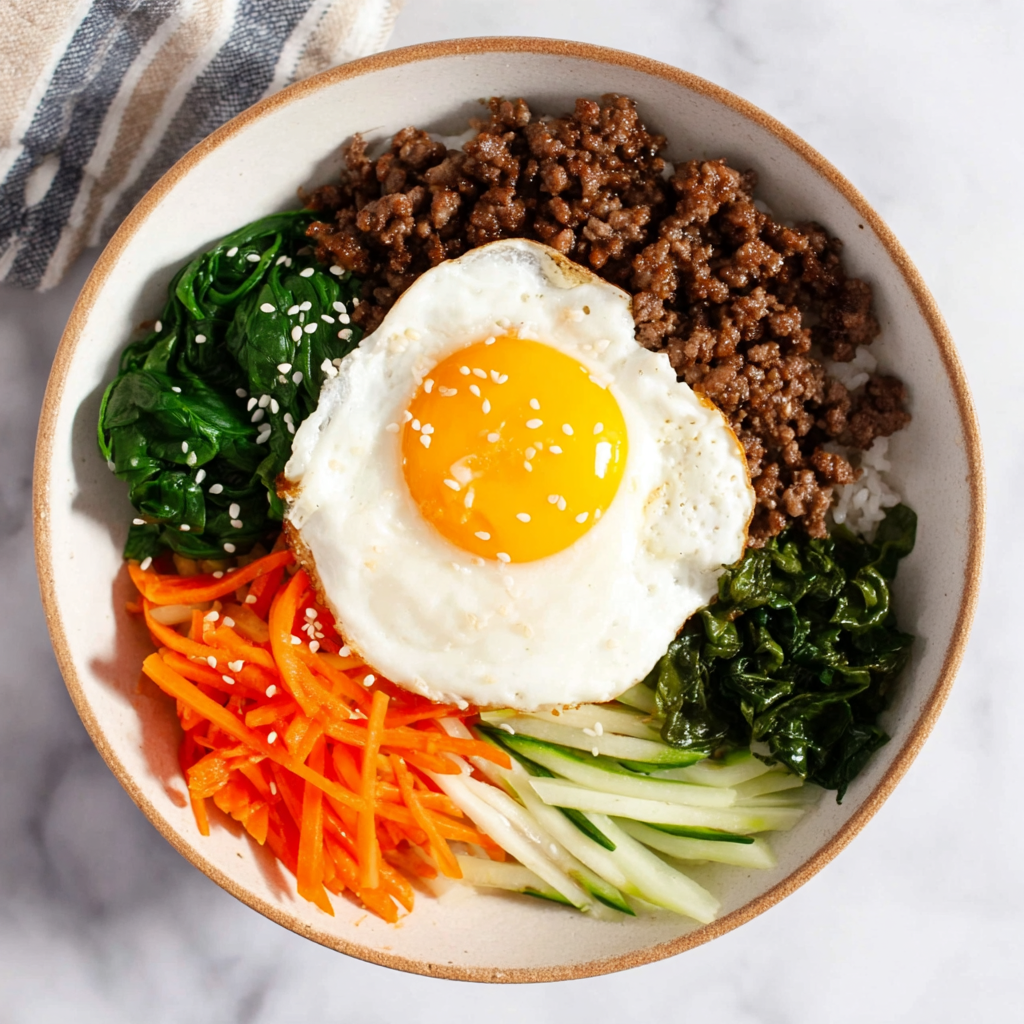
Did you know that traditional Bibimbap (literally “mixed rice”) is designed around the Korean philosophy of Obangsaek? This concept dictates that a meal should include five colors—green, red, yellow, white, and black—to represent the five elements and ensure a complete spectrum of vitamins and minerals.
While traditional versions require sautéing each vegetable individually (a process that can take over an hour), this Easy Ground Beef Bibimbap utilizes the “flash-cook” method. By using ground beef, you increase the surface area for the Maillard reaction, allowing you to achieve deep, savory umami in a fraction of the time. Scientific research into fermented foods also highlights that the addition of Gochujang (Korean chili paste) provides a metabolic boost and capsaicin-driven endorphin release, making this meal as functionally healthy as it is delicious.
Ingredients List: The “Obangsaek” Components
To master this bowl, we focus on high-fiber vegetables and a high-glucose fermented sauce.
The Savory Protein:
- 1 lb Lean Ground Beef: (90/10).
- 2 tbsp Soy Sauce & 1 tbsp Brown Sugar: For the “bulgogi” style glaze.
- 1 tbsp Toasted Sesame Oil: For the essential nutty finish.
The Quick-Prep Vegetables:
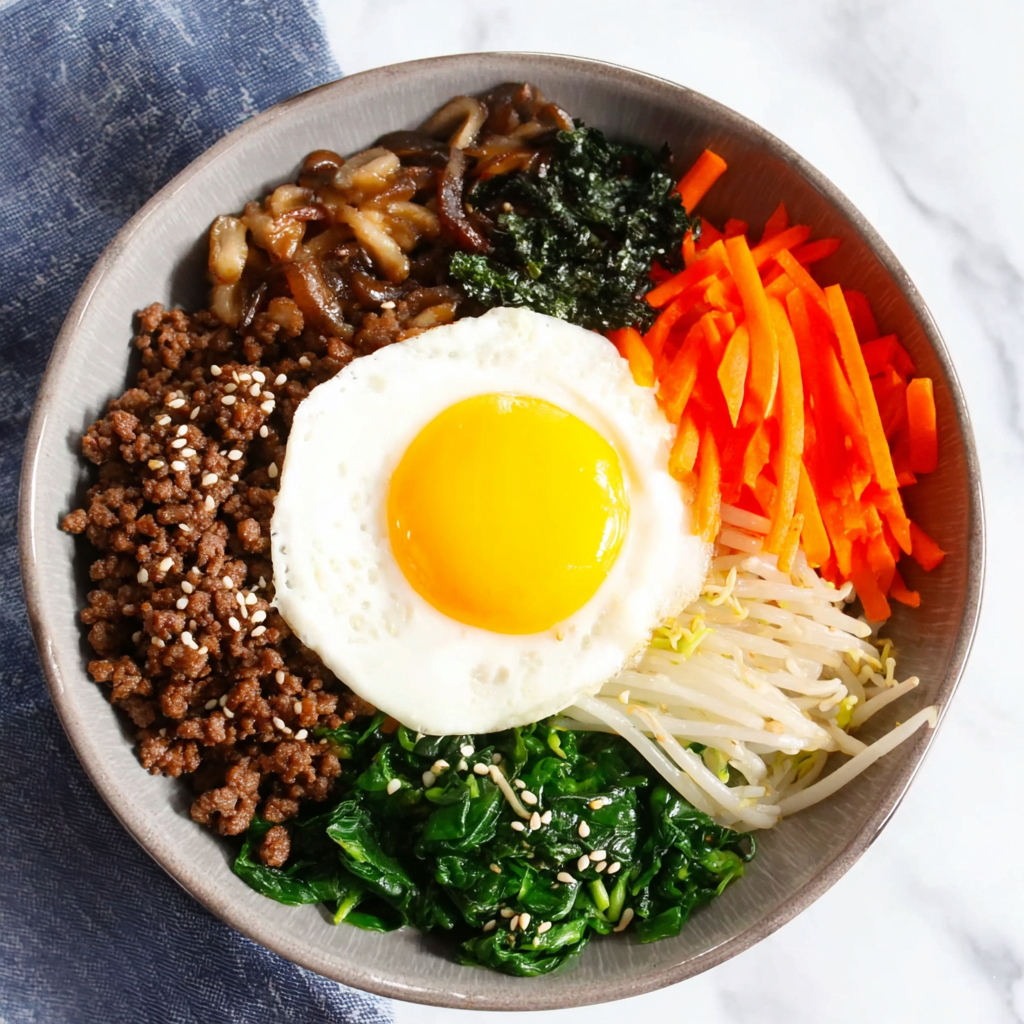
- 2 cups Fresh Spinach: Blanched or sautéed until wilted (Green).
- 2 Large Carrots: Julienned and lightly seared (Orange/Red).
- 1 cup Bean Sprouts: (White).
- 1 cup Shiitake Mushrooms or Dried Seaweed: (Black/Dark).
- 4 Large Eggs: Fried sunny-side up (Yellow/White).
The “Engine” (Bibimbap Sauce):
- 3 tbsp Gochujang: The fermented base.
- 1 tbsp Sesame Oil & 1 tbsp Rice Vinegar: To balance the spice with fat and acid.
- 1 tbsp Honey: For a glossy viscosity.
Timing: Optimized for 30-Minute Efficiency
- Prep Time: 15 Minutes
- Cook Time: 15 Minutes
- Total Time: 30 Minutes
Efficiency Insight: By using a single large skillet and cooking vegetables in “zones” or sequence, you reduce cleaning time and maintain a thermal momentum that keeps the entire dish hot.
Step-by-Step Instructions
Step 1: The Rice Base (H3)
Prepare 2 cups of short-grain white rice or jasmine rice. Scientific Tip: For a restaurant-style crust (Nurungji), lightly coat the bottom of your serving bowl with sesame oil and press the hot rice into it. The heat will create a golden, crunchy layer.
Step 2: The Ground “Bulgogi” (H3)
Brown the ground beef in a skillet over medium-high heat. Once cooked, add the soy sauce, brown sugar, and sesame oil. Simmer for 2 minutes until the sauce creates a “lacquer” on the meat.
Step 3: The Vegetable Flash-Sauté (H3)
In the same skillet (wipe it out first), sauté each vegetable quickly with a pinch of salt. Data Insight: Cook the carrots last; their beta-carotene is fat-soluble, so any residual oil in the pan helps your body absorb the nutrients.
Step 4: The Sunny-Side Up “Sauce” (H3)
Fry the eggs until the whites are set but the yolks are runny. Scientific Insight: In Bibimbap, the runny yolk acts as a secondary emulsifier, binding the spicy Gochujang sauce to the dry rice and vegetables.
Step 5: The Assembly and Mix (H3)
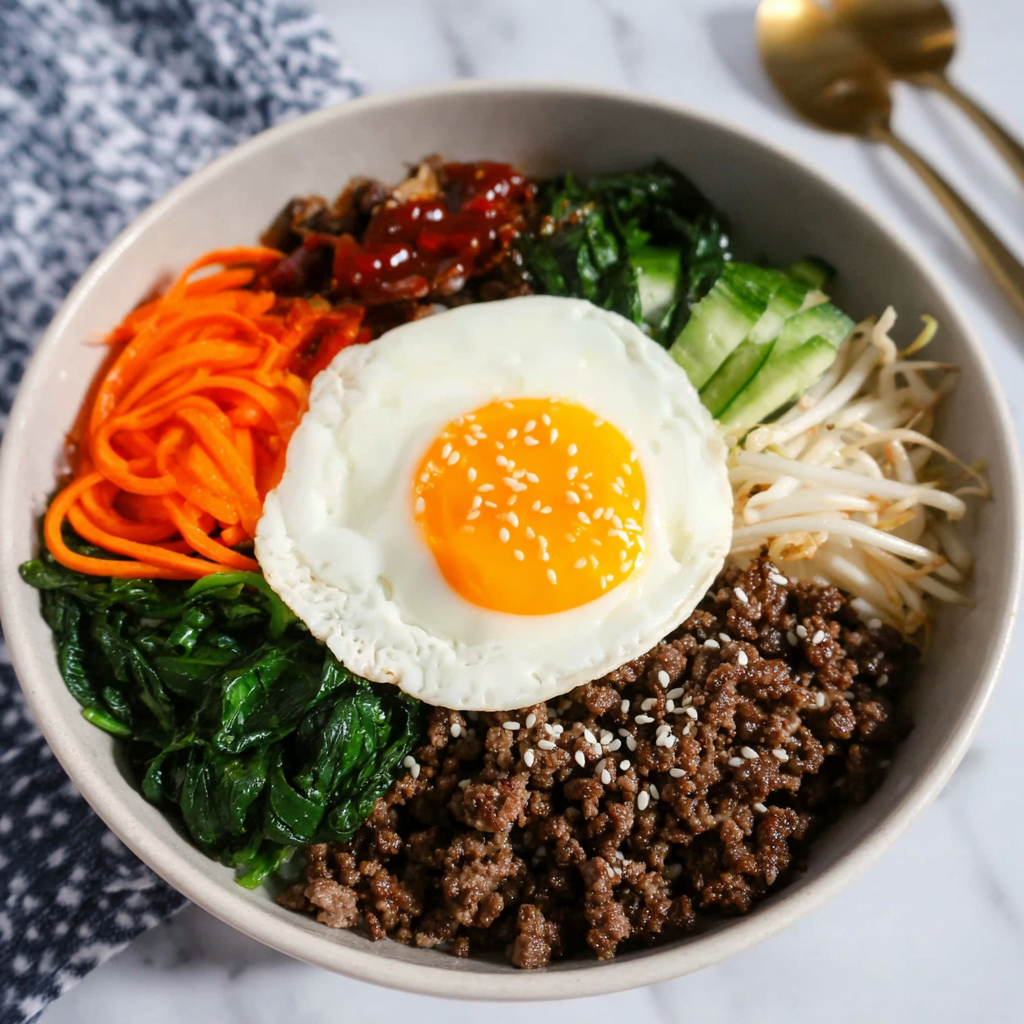
Place the rice in the center of the bowl. Arrange the vegetables and beef in distinct “spokes” around the edge. Place the egg in the center and a dollop of the Gochujang sauce on the side.
Nutritional Information
| Metric | Amount Per Serving |
| Calories | 545 kcal |
| Total Fat | 22g |
| Carbohydrates | 58g |
| Protein | 32g |
| Fiber | 5g |
Healthier Alternatives for the Recipe
- The Low-Carb Swap: Use cauliflower rice or a bed of shredded cabbage.
- The Leaner Protein: Use ground turkey or textured vegetable protein (TVP) for a vegetarian version. Add 1 tsp of mushroom powder to TVP to mimic the beef’s umami.
- Probiotic Boost: Add a generous scoop of Kimchi. The cold, fermented crunch provides a temperature and texture contrast that is statistically preferred in sensory testing.
Common Mistakes to Avoid
- Overcooking the Spinach: Spinach loses 50% of its volume in seconds. Remove it from the heat the moment it turns bright green to prevent it from becoming slimy.
- Using “Standard” Chili Sauce: Sriracha is not a substitute for Gochujang. Gochujang is fermented with soybeans and glutinous rice, providing a deep, funky umami that vinegar-based sauces lack.
- Not Mixing Enough: The name literally means “mixed rice.” To experience the intended flavor profile, you must break the yolk and stir the entire bowl thoroughly until the sauce is uniform.
Storing and Reheating
- Storage: Store the components in separate containers to maintain their individual textures.
- Reheating: The beef and rice can be microwaved, but the vegetables are best served at room temperature or lightly chilled to maintain the traditional “hot-and-cold” contrast.
Conclusion
Easy Bibimbap with Ground Beef is a masterclass in nutritional balance and thermal contrast. By simplifying the prep but keeping the Obangsaek color philosophy, you create a 30-minute meal that is both a visual and biological powerhouse.
Leave a Reply