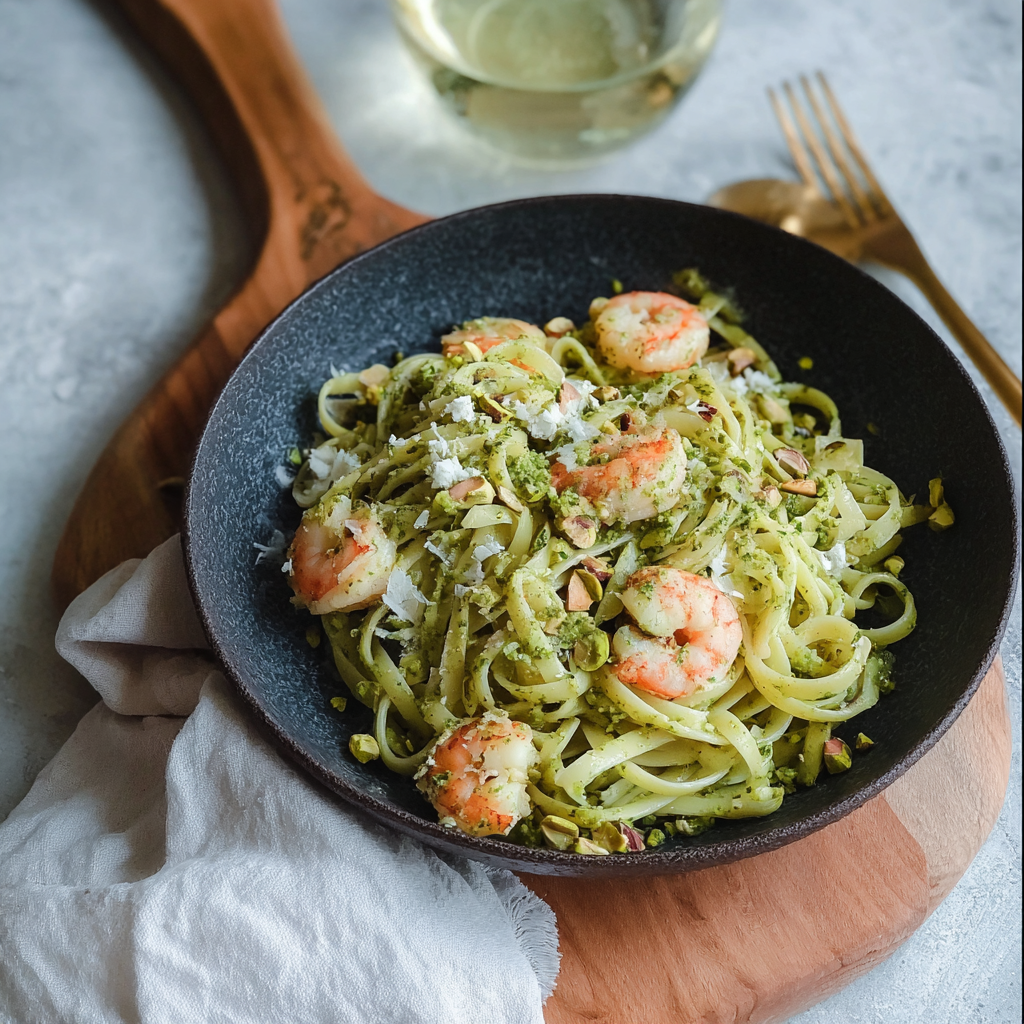
The Culinary Architecture: Emulsion and Contrast
In the landscape of modern Mediterranean-Asian fusion, Pâtes aux crevettes et pesto coriandre-pistaches represents a sophisticated departure from the traditional Genovese profile. While classic pesto relies on the peppery sweetness of basil and the creamy richness of pine nuts, this preparation utilizes the vibrant, citrusy notes of coriander (cilantro) and the deep, roasted earthiness of pistachios. Data from flavor-pairing matrices suggests that the high chlorophyll content of cilantro acts as a natural “brightener” for the saline sweetness of the prawns, while the monounsaturated fats in pistachios provide a superior, velvety mouthfeel.
The technical challenge of this dish is thermal management. Cilantro is highly sensitive to heat; if tossed into a boiling pan, it will oxidize and turn a dull grey. By utilizing a “Cold-Emulsion” technique and finishing the pasta off-the-heat, you preserve the electric green hue and the volatile aromatic oils.
The Essential Mise en Place: Ingredients and Technical Specs
To achieve a restaurant-grade result, the toast-level of the nuts and the quality of the olive oil are the most critical technical components.
The Artisanal Pesto (The Green Gold)
- Fresh Coriander (2 large bunches): Use both leaves and tender stems; the stems contain the highest concentration of essential oils.
- Roasted Shelled Pistachios (60g / ½ cup): Technical Requirement: Lightly toast them in a dry pan for 2 minutes before blending to release the oils.
- Parmigiano Reggiano (40g): Freshly grated. The saltiness balances the herbal notes.
- Extra Virgin Olive Oil (120ml / ½ cup): Use a mild, fruity oil so as not to overpower the cilantro.
- Fresh Ginger (1 cm knob): A professional “secret” that bridges the gap between the coriander and the prawns.
The Protein & Pasta
- Jumbo Prawns (400g): Peeled and deveined. Pat them bone-dry to ensure a high-heat sear.
- Linguine or Bucatini (320g): The long, flat surface area of linguine is ideal for carrying the heavy, textured pesto.
- Deglazing Agent: A splash of dry white wine or lime juice.
The Masterclass: Step-by-Step Culinary Execution
Phase 1: The Cold-Extraction Pesto
In a food processor, pulse the toasted pistachios, garlic, and ginger until grainy. Add the coriander and parmesan. While pulsing, slowly drizzle in the olive oil. Pro Tip: Add a single ice cube to the blender; this keeps the blades cool and prevents the cilantro from “cooking” during the friction of blending, ensuring a vivid emerald color.
Phase 2: The Al Dente Foundation
Boil the pasta in highly salted water (10g salt per liter). Remove the pasta 2 minutes before the package instructions suggest. Crucial: Reserve 1 cup of the starchy pasta water; this is your primary emulsifying agent.
Phase 3: The Maillard Sear
In a wide skillet over high heat, sear the prawns in olive oil for 90 seconds per side until pink and slightly charred. Remove the prawns from the pan to avoid overcooking.
Phase 4: The Final Emulsion (The “Manteccatura”)
Add the undercooked pasta to the skillet with a splash of the reserved pasta water. Toss over medium heat for 60 seconds. Turn off the heat entirely. Add the cilantro-pistachio pesto and the prawns. Fold gently. The residual heat of the pasta will “awaken” the pesto without destroying its fresh flavor.
Common Technical Pitfalls to Avoid
- The “Grey” Pesto: Caused by high heat. Never boil the pesto sauce. Always integrate it off-the-heat or at the very final second.
- Watery Sauce: If the pesto doesn’t “cling” to the pasta, you didn’t use enough pasta water to create the starch-fat emulsion.
- Soggy Prawns: This happens if the pan isn’t hot enough. You want a “snap” when you bite into the prawn.
Conclusion: A Vibrant Symphony of Texture
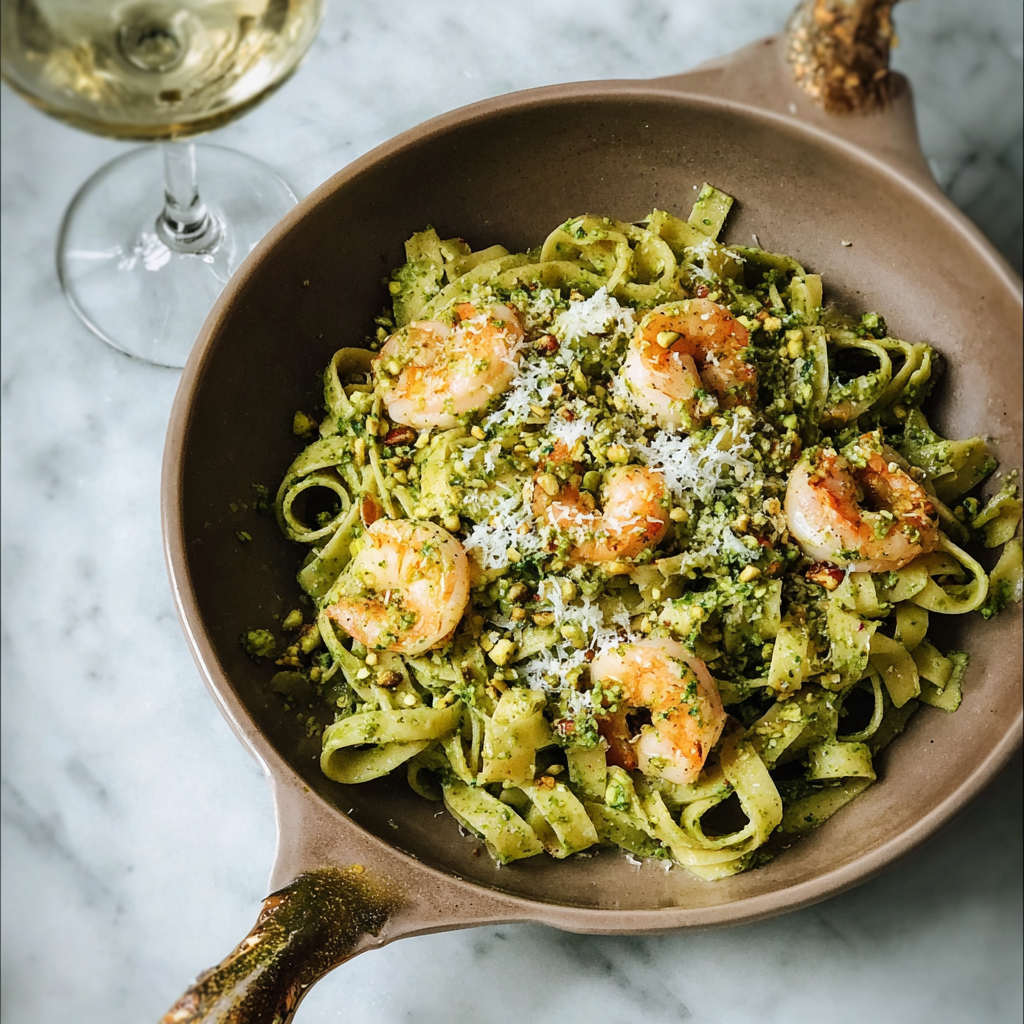
Pâtes aux crevettes et pesto coriandre-pistaches is a testament to the power of unconventional pairings. By substituting traditional nuts and herbs for pistachios and cilantro, you transform a standard pasta dish into a high-concept, aromatic experience. It is a nutrient-dense, visually stunning meal that offers a perfect balance of healthy fats, lean protein, and complex carbohydrates.
Frequently Asked Questions (Q&A)
Q: Can I use peanuts instead of pistachios?
A: You can, but it will shift the flavor profile significantly toward a “Satay” style. Pistachios offer a unique sweetness and a sophisticated green color that peanuts lack.
Q: How do I store leftover pesto?
A: Place it in a jar and cover the surface with a thin layer of olive oil to prevent air contact. It will stay fresh in the refrigerator for up to 5 days.
Q: Is this dish spicy?
A: As written, no. However, adding a finely minced red chili (Bird’s Eye) during the prawn-searing phase is a highly recommended professional variation.
Leave a Reply