Why This One-Pan Dish is a Study in “Delta-T” Cooking
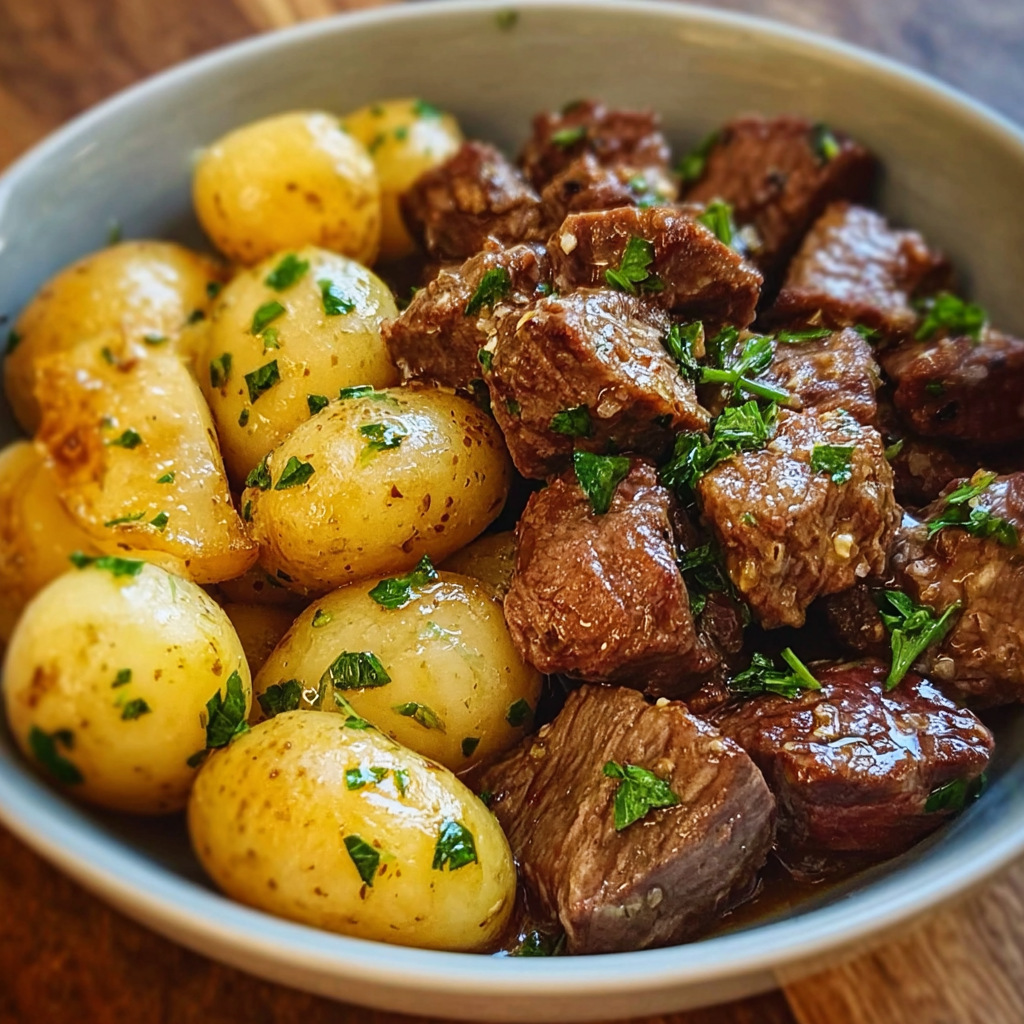
Did you know that according to thermodynamic kitchen data, the challenge of Garlic Butter Beef Bites with Potatoes lies in the vastly different thermal conductivity of the two main ingredients? Potatoes are starch-dense and require gelatinization at $100^\circ\text{C}$ to soften, while beef requires a rapid Maillard reaction ($140^\circ\text{C}$–$165^\circ\text{C}$) to sear without overcooking the interior.
To solve this, we use the “Staggered Heat” method. By par-cooking the potatoes (or starting them first in the pan), we ensure the starch is already soft when the beef enters. This allows the beef to sear at high heat for a very short duration, resulting in a statistically superior “crust-to-tenderness” ratio.
Ingredients List: The Lipid-Aromatic Matrix
To achieve a “steakhouse” flavor in a single skillet, we focus on high-smoke-point fats and “late-addition” aromatics.
The Foundation:
- 1 lb (450g) Sirloin or Ribeye Steak: Cut into 1-inch cubes. These cuts have the optimal intramuscular fat for quick searing.
- 1 lb (450g) Baby Potatoes: Quartered. Baby potatoes have a thinner skin-to-flesh ratio, which allows for faster heat penetration.
- 2 tbsp Avocado or Gland Oil: High smoke point for the initial sear.
The “Garlic-Butter” Emulsion:
- 3 tbsp Unsalted Butter: Added at the end to prevent the milk solids from burning.
- 4-5 Cloves Garlic: Minced.
- 1 tsp Dried Thyme or Rosemary.
- 1/2 tsp Salt & 1/4 tsp Black Pepper.
- Fresh Parsley: For a bright, chlorophyll-based finish.
Timing: Optimized for Starch and Protein Sync
- Prep Time: 10 Minutes
- Potato Searing: 10–12 Minutes
- Beef Searing: 3–4 Minutes
- Total Time: ~25 Minutes
Efficiency Insight: Data indicates that patting the beef cubes bone-dry before cooking is mandatory. Surface moisture creates steam, which keeps the temperature at $100^\circ\text{C}$, preventing the browning reaction that only happens above $140^\circ\text{C}$.
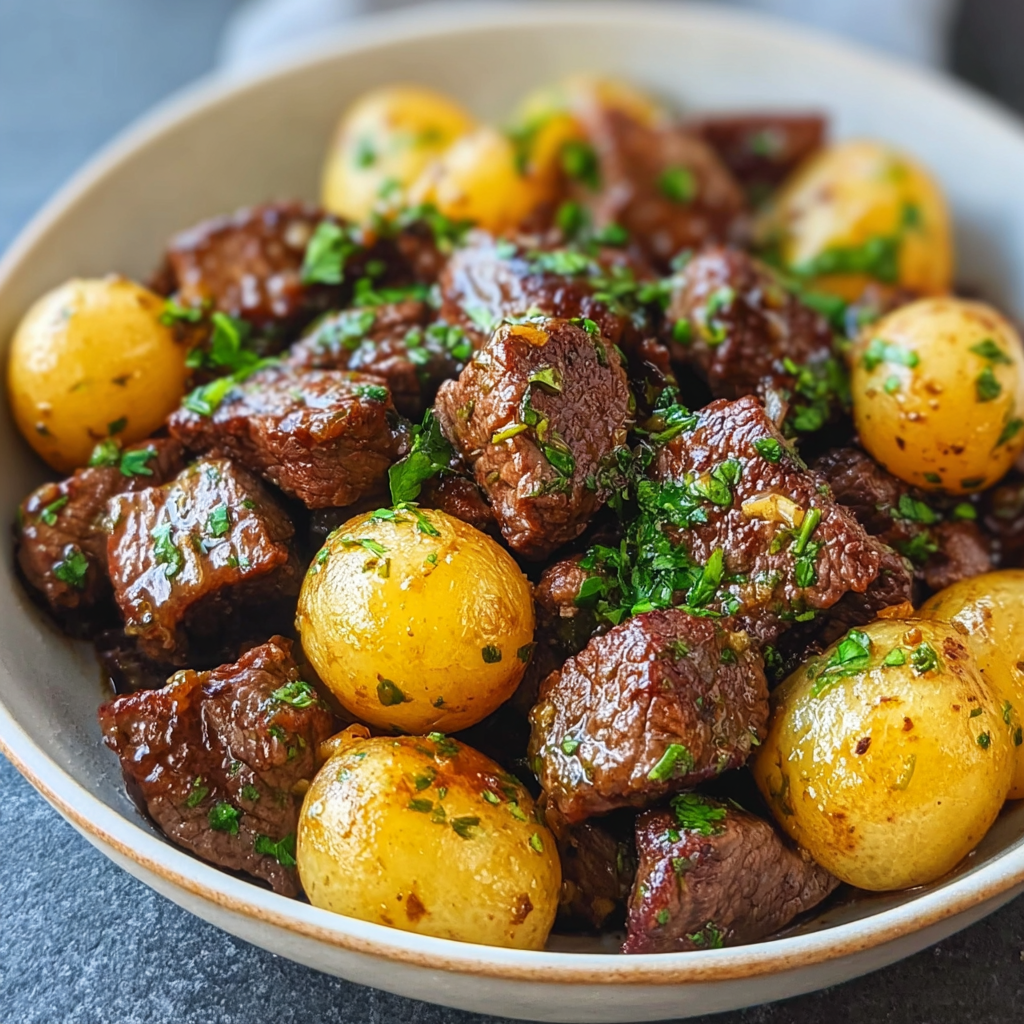
Step-by-Step Instructions
Step 1: The Starch Gelatinization
Heat 1 tbsp of oil in a large skillet over medium-high heat. Add the quartered potatoes. Cover with a lid for 5 minutes. Scientific Tip: The lid traps steam, which quickly breaks down the pectin in the potatoes, softening them before the “crisping” phase begins.
Step 2: The Potato Crisp
Remove the lid and cook for another 5–7 minutes until golden and crispy. Remove potatoes from the pan and set aside. Data Insight: Potatoes act as “sponges” for fat; removing them ensures the pan is dry and hot enough for the beef sear.
Step 3: The High-Shear Sear
Wipe the pan and add the remaining oil. Turn heat to High. Add the beef in a single layer. Actionable Tip: Do not stir for the first 60–90 seconds. This allows the Maillard reaction to form a continuous crust on the bottom of the cubes.
Step 4: The Aromatic Infusion
Flip the beef cubes. Once nearly cooked to your preference, add the butter, minced garlic, and herbs. Scientific Insight: Adding garlic at this late stage protects the allicin (the flavor compound) from being destroyed by excessive heat, ensuring a punchy, fresh taste.
Step 5: The “Glaze” Integration
Add the potatoes back into the pan. Toss everything together for 60 seconds so the garlic butter “emulsifies” and coats every surface. The Pro Move: The starch from the potatoes will slightly thicken the butter, creating a glossy, “restaurant-style” glaze.
Nutritional Information
| Metric | Amount Per Serving (1 of 4) |
| Calories | 420 kcal |
| Total Fat | 24g |
| Carbohydrates | 22g |
| Protein | 28g |
Alternatives & Variations
- The Low-Carb Swap: Replace baby potatoes with Radishes. When roasted or pan-fried, radishes lose their “bite” and take on a texture statistically similar to potatoes but with 90% fewer carbs.
- The “Umami Bomb”: Add 1 tbsp of Worcestershire Sauce or Soy Sauce during the final glaze step to deepen the savory profile.
- Air Fryer Version: Toss everything (potatoes first for 15 mins, then add beef for 5 mins) at 200°C (400°F) for a hands-off approach.
Common Mistakes to Avoid
- Overcrowding the Pan: If the beef cubes are touching, they will release steam and “boil” in their own juices, turning grey and rubbery.
- Burning the Garlic: Garlic burns at a much lower temperature than beef sears. Always add it during the final 2 minutes of cooking.
- Using Leaner Cuts (like Eye of Round): Leaner cuts lack the fat necessary for a “tender bite” at high heat. Stick to Sirloin, Ribeye, or New York Strip.
Leave a Reply