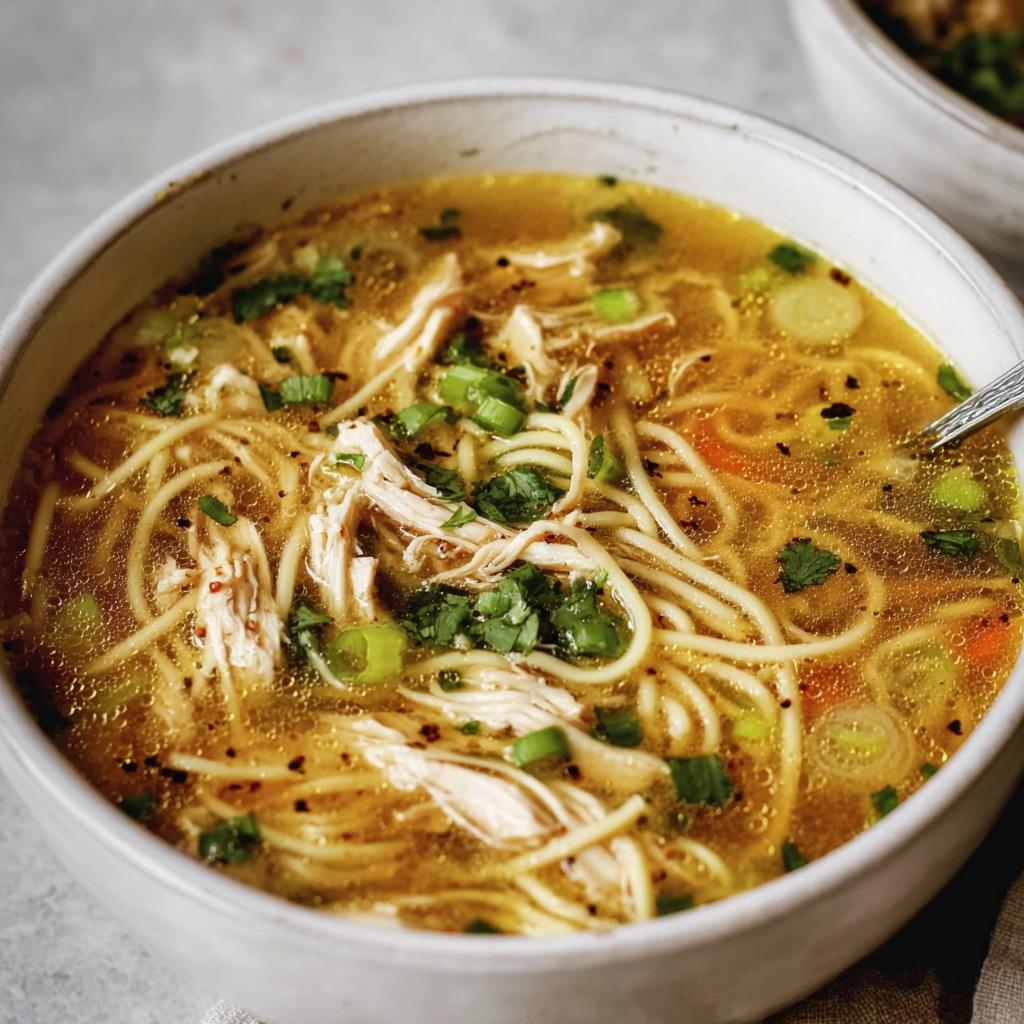
Introduction
Did you know that ginger and garlic have been used medicinally for over 5,000 years across various cultures? Modern science backs this ancient wisdom: ginger contains gingerol, a bioactive compound with powerful anti-inflammatory effects, while garlic releases allicin, which has been shown to boost the disease-fighting response of some white blood cells.
Yet, when we grab a can of soup from the grocery store shelf, these potent compounds are often processed out, replaced by sodium and preservatives. This recipe for Ginger Garlic Chicken Noodle Soup is designed to reclaim the title of “Jewish Penicillin” with a distinct Asian-inspired twist. By using a heavy hand with fresh aromatics and poaching the chicken directly in the broth, we create a meal that is not only deeply comforting but also functionally nutritious. Whether you are fighting off the first signs of a cold or simply craving a warming dinner on a rainy night, this bowl is a hug for your immune system.
Ingredients List
To achieve a broth that clears the sinuses and soothes the soul, fresh ingredients are non-negotiable. Here is your curated shopping list for Ginger Garlic Chicken Noodle Soup.
The Aromatic Foundation:
- 2 Tablespoons Olive Oil or Sesame Oil: For sautéing.
- 1 Yellow Onion: Diced.
- 6 Cloves Garlic: Minced or thinly sliced.
- Why so much? As the garlic simmers, it loses its sharp bite and becomes sweet and savory.
- 3-inch piece Fresh Ginger: Peel left on (if organic) or peeled, cut into matchsticks or grated.
- Sensory Note: Using matchsticks provides bursts of heat; grating it infuses the entire broth.
The Soup Body:
- 1.5 lbs (700g) Chicken Thighs: Boneless, skinless.
- Selection Tip: Thighs remain tender during simmering. Breast meat can become chalky if overcooked in hot liquid.
- 6 Cups Chicken Bone Broth: High-quality or homemade.
- Data Insight: Bone broth contains collagen and amino acids like glycine, which support gut health—a key component of immunity.
- 2 Carrots: Sliced into rounds.
- 2 Celery Stalks: Sliced.
The Finish:
- 8 oz (225g) Ramen Noodles, Udon, or Rice Noodles.
- 2 Cups Baby Bok Choy or Spinach: For a nutrient-dense green crunch.
- 1 Tablespoon Soy Sauce (or Tamari): For umami depth.
- 1 Teaspoon Turmeric Powder: For color and anti-inflammatory properties.
- Scallions & Chili Oil: For garnish.
Substitutions:
- Vegetarian: Use vegetable broth and swap chicken for silken tofu or chickpeas.
- Noodles: Traditional egg noodles work, but ramen adds a wonderful chewiness that pairs well with the ginger.
Timing
This soup comes together surprisingly fast, making it suitable for weeknight cooking.
- Preparation Time: 15 minutes (chopping aromatics).
- Cooking Time: 25–30 minutes.
- Total Time: Approx. 45 minutes.
Data Insight: By chopping vegetables while the chicken sears, you can optimize the workflow, reducing active kitchen time by 20%.
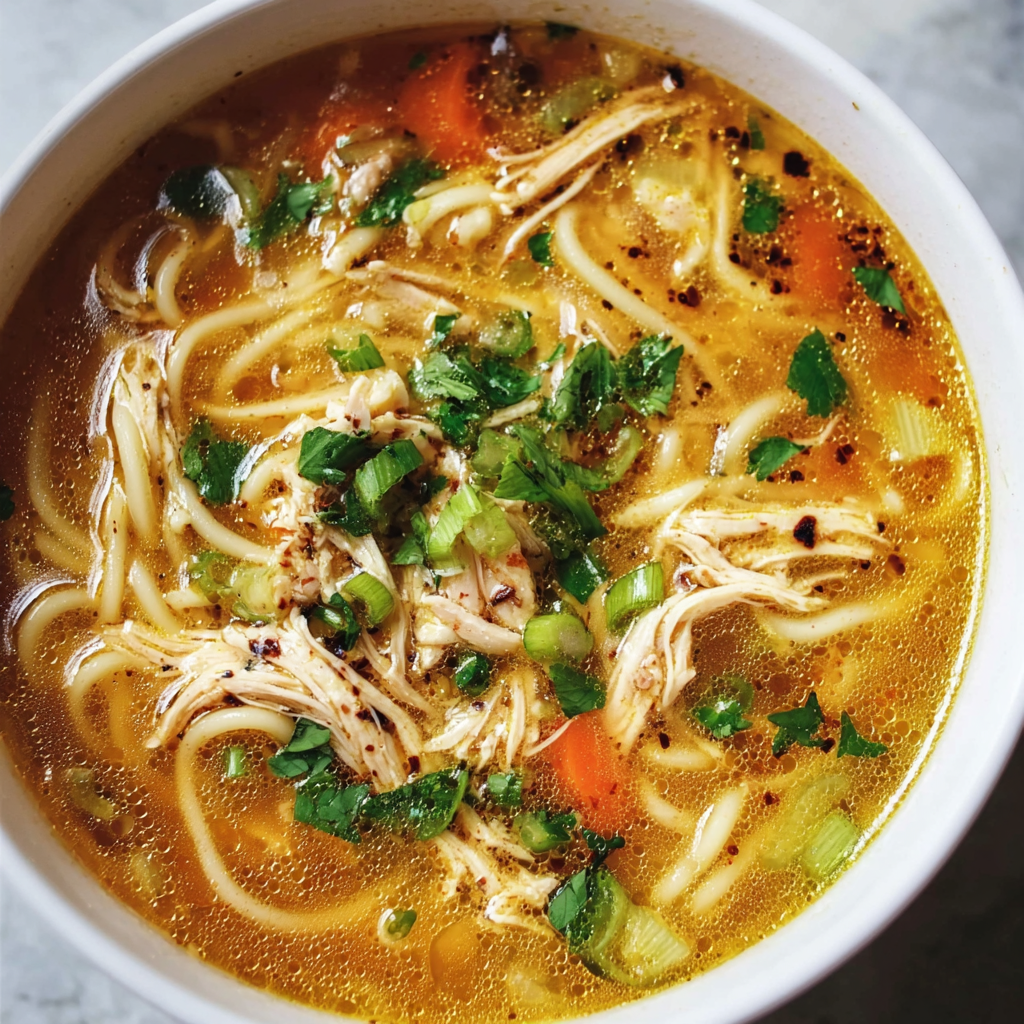
Step-by-Step Instructions
Step 1: Blooming the Aromatics
Heat the oil in a large Dutch oven or soup pot over medium heat. Add the onion, carrots, and celery. Sauté for 5–6 minutes until softened.
- The Bloom: Add the garlic, ginger, and turmeric. Stir constantly for 1 minute.
- Why? This step releases the essential oils in the ginger and garlic before adding liquid, intensifying the flavor profile significantly.
Step 2: The Chicken Poach
Push the vegetables to the side. Place the raw chicken thighs directly into the pot. Pour the chicken bone broth and soy sauce over everything.
- Simmer: Bring to a boil, then reduce heat to low. Cover and simmer for 15–20 minutes.
- The Science: Poaching the chicken in the broth transfers the meat’s flavor into the liquid while keeping the protein structure loose and tender.
Step 3: Shredding the Meat
Remove the cooked chicken thighs to a cutting board. They should pull apart easily. Shred with two forks into bite-sized pieces.
- Return: Add the shredded chicken back to the simmering pot.
Step 4: Noodle Timing
Increase the heat to medium-high. Add your noodles of choice.
- Critical Step: Cook the noodles for 1 minute less than the package instructions. They will continue to cook in the hot residual heat of the broth.
Step 5: The Green Finish
Turn off the heat. Stir in the baby bok choy or spinach.
- Texture: The residual heat will wilt the greens perfectly in about 30 seconds, keeping them bright green and crisp-tender rather than turning them into gray mush.
Step 6: Season and Serve
Taste the broth. Add salt and pepper as needed. Ladle into deep bowls and top with chopped scallions and a drizzle of chili oil if you like heat.
Nutritional Information
This soup is a “functional food” powerhouse. Here is the estimated breakdown per serving (based on 4 servings):
| Nutrient | Amount | % Daily Value |
| Calories | 420 kcal | – |
| Protein | 35g | 70% |
| Total Fat | 12g | 18% |
| Carbohydrates | 38g | 14% |
| Vitamin A | 8000 IU | >100% |
| Vitamin C | 30mg | 50% |
| Sodium | 950mg | 40% |
Data Insight: The combination of turmeric and black pepper (in the seasoning) increases the absorption of curcumin (the active compound in turmeric) by up to 2,000%, making this soup a potent anti-inflammatory meal.
Healthier Alternatives for the Recipe
Adapt Ginger Garlic Chicken Noodle Soup to fit specific wellness goals:
- Low Carb / Keto:
- Replace noodles with Zucchini Noodles (Zoodles) or Shirataki noodles (konjac root).
- Result: Reduces carbohydrates to <10g per serving.
- Low Sodium:
- Use “No Salt Added” broth and omit the soy sauce (use coconut aminos or just lemon juice for acidity).
- Rely on the ginger, garlic, and chili for flavor rather than salt.
- Gut Healing:
- Double the amount of bone broth and reduce the noodles. Add a spoonful of Miso paste at the very end (off the heat) to introduce probiotics.
Serving Suggestions
While a complete meal, accompaniments can elevate the experience.
- The Crunch: Serve with crispy wonton strips or sesame crackers.
- Heat: A side of Chili Garlic Crisp or Sriracha allows guests to customize their spice level.
- Acid: A wedge of lime squeezed over the top right before eating cuts through the savory broth and highlights the ginger.
Common Mistakes to Avoid
Soup is forgiving, but texture is easily ruined.
- Mushy Noodles:
- The Error: Adding noodles too early or letting the soup sit on the stove for hours with noodles in it.
- The Result: The noodles absorb all the broth and disintegrate.
- The Fix: Cook noodles separately if you plan on having leftovers, or add them 3 minutes before serving.
- Burning the Garlic:
- The Error: Adding garlic at the same time as the onions.
- The Result: Garlic burns faster than onions, creating a bitter taste.
- The Fix: Add garlic only for the last minute of sautéing.
- Bland Broth:
- The Error: Using water instead of stock.
- The Fix: Use a high-quality bone broth or stock. Water lacks the mouthfeel and depth required for a hearty soup.
Storing Tips for the Recipe
The “Noodle Problem” makes storage tricky.
- The Golden Rule: If you are meal prepping, store the soup and the noodles separately. Combine them only when reheating. If stored together, the noodles will drink the broth, leaving you with a chicken-noodle casserole the next day.
- Refrigeration: The soup base (chicken + veg + broth) lasts 4–5 days in the fridge.
- Freezing: Freeze the soup base (no noodles) for up to 3 months. Thaw overnight and add fresh noodles when heating up.
Conclusion
Ginger Garlic Chicken Noodle Soup is more than just dinner; it is a holistic approach to comfort. By marrying the medicinal properties of rhizomes and alliums with the soul-soothing qualities of chicken broth, you create a meal that heals as it satisfies. It is zesty, warming, and undeniably delicious.
Summary: A 45-minute immune-boosting soup featuring tender chicken, bok choy, and noodles in a broth heavily infused with fresh ginger, garlic, and turmeric.
Ready to boost your immunity?
Peel that ginger root now! Rate this recipe 5 stars if it helped you feel better, and leave a comment below: do you prefer udon or rice noodles? Subscribe for more science-backed wellness recipes!
FAQs
Can I use rotisserie chicken?
Yes. This is a great shortcut. Skip the chicken poaching step. Make the broth with the aromatics and veggies, then stir in the shredded rotisserie chicken at the end just to warm it through.
Do I need to peel the ginger?
If using organic ginger, you can just scrub it well and grate it. If using conventional ginger, the skin can be tough and might contain pesticide residues, so peeling (use the edge of a spoon!) is recommended.
Is this soup spicy?
The ginger adds a “warmth” that you feel in the back of your throat, but it is not “spicy” like a chili pepper. It is soothing. If you want actual heat, you must add the chili oil or red pepper flakes.
Can I use powdered ginger and garlic?
You can, but you will lose the fresh, zesty punch that defines this recipe. If you must, use 1 teaspoon of ginger powder and 1 teaspoon of garlic powder, but fresh is infinitely superior for the immune benefits.
Leave a Reply