Introduction
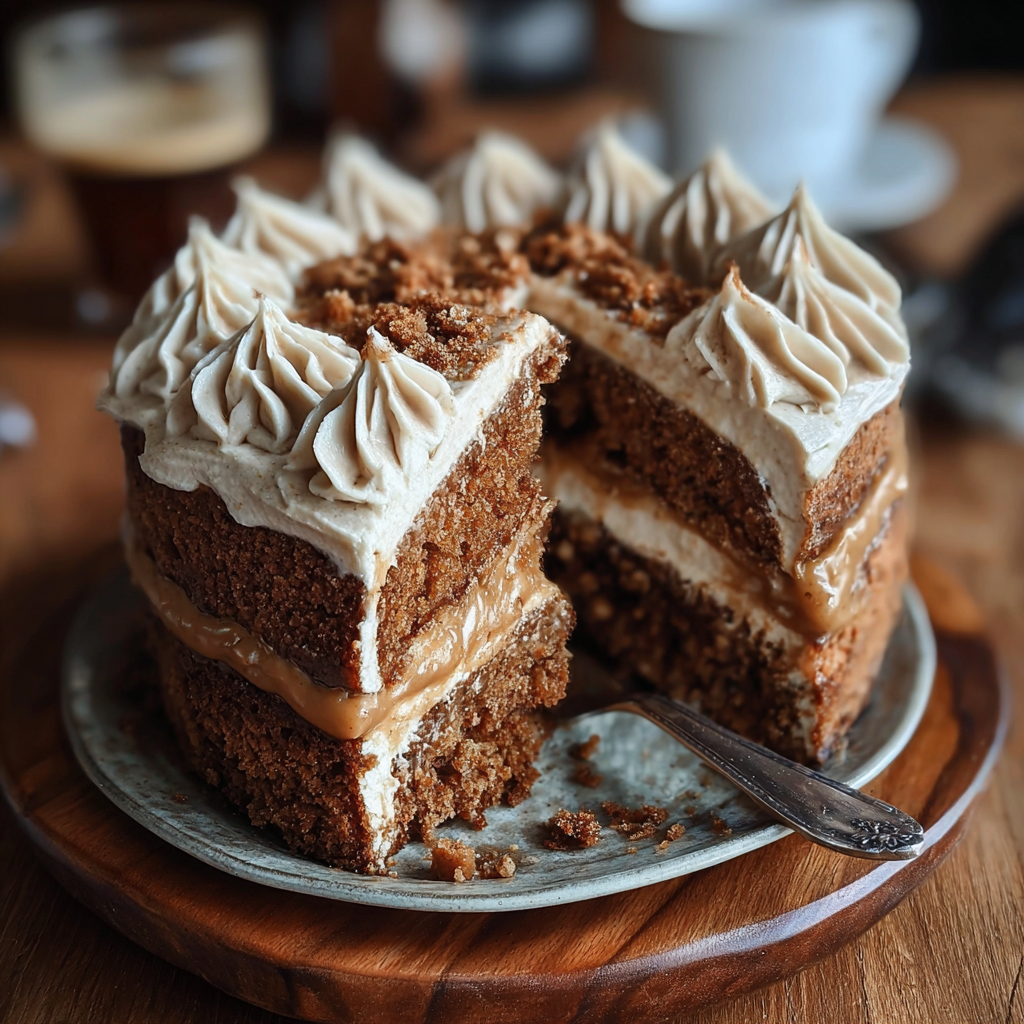
Did you know that the “warming” sensation we associate with gingerbread isn’t just a feeling? Science tells us that gingerol, the active component in ginger, stimulates thermoreceptors in the body, literally making us feel warmer from the inside out.1 While many think of gingerbread only as hard-snap cookies, the Gingerbread Cake offers a much more sophisticated experience—a moist, tight-crumbed sponge that balances the bittersweet depth of molasses with the sharp bite of winter spices.
This recipe challenges the belief that molasses cakes are inherently heavy or dry. By utilizing a “boiling water” technique to bloom the spices and dissolve the molasses, we create a cake that is incredibly tender and aromatic. Topped with a Cinnamon Molasses Frosting, this cake moves beyond simple nostalgia into the realm of a 5-star holiday centerpiece.2 In this guide, we will explore the chemistry of the “spice bloom” and the secrets to a frosting that is stable enough for piping but light enough to melt on the tongue.
Ingredients List
To achieve the dark, rich color and spicy kick, we use a blend of traditional aromatics and high-moisture fats.
- For the Gingerbread Sponge:
- All-Purpose Flour (2 ½ cups / 315g): Provides the necessary structure.3
- Unsulphured Molasses (1 cup): Use “Dark” for a robust flavor, but avoid “Blackstrap.”
- Boiling Water (1 cup): The key to “blooming” the spices and creating a silky batter.4
- Unsalted Butter (½ cup, melted): Adds richness and moisture.
- Brown Sugar (½ cup, packed): For a deeper caramel undertone.
- Large Egg (1, room temperature): For binding.
- Baking Soda (1 ½ tsp): Reacts with the acidic molasses for a perfect rise.5
- The “Warmth” Spice Blend:
- 2 tsp Ground Ginger.
- 1 tsp Ground Cinnamon.
- ½ tsp Ground Cloves & ½ tsp Ground Nutmeg.
- ½ tsp Salt.
- For the Cinnamon Molasses Frosting:
- Cream Cheese (8 oz, softened): Provides the necessary tang to cut the sugar.
- Unsalted Butter (½ cup, softened): For structural stability.
- Powdered Sugar (3 ½ cups): Sifted for smoothness.
- Molasses (1 tbsp) & Cinnamon (1 tsp): To carry the cake’s flavors into the topping.
Timing
This cake is surprisingly fast to assemble, as the batter is mixed in a single bowl without the need for heavy creaming.
- Preparation Time: 15 minutes
- Cooking Time: 35–40 minutes
- Total Time: Approx. 55 minutes (plus cooling)
Data Insight: Allowing the cake to rest for 2 hours before frosting is critical. Because molasses-based cakes are highly hygroscopic (they attract moisture), frosting a warm gingerbread cake will cause the frosting to slide and the cake to become gummy.
Step-by-Step Instructions
Step 1: The “Spice Bloom” (H3)
In a large heat-proof bowl, combine the molasses, melted butter, and boiling water. Whisk until smooth.
- Tip: The boiling water instantly releases the oils in the spices (added in Step 2), making the flavor significantly more potent than if mixed into cold ingredients.
Step 2: Incorporating the Dry Goods (H3)
Whisk in the brown sugar and the room-temperature egg. Gradually add the flour, baking soda, salt, ginger, cinnamon, cloves, and nutmeg. Whisk until just combined.
- Tip: The batter will be thinner than a standard vanilla cake batter—this is normal. The thin consistency allows the steam to escape evenly, resulting in a flat, even top.
Step 3: The Precision Bake (H3)
Pour the batter into a greased 9×9 inch square pan or a 9-inch round. Bake at 350°F (175°C) for 35–40 minutes.
- Tip: Test with a toothpick in the center; it should come out clean or with a few moist crumbs. Do not overbake, as molasses can turn bitter if scorched.
Step 4: Crafting the Molasses Frosting (H3)
Beat the softened cream cheese and butter until smooth. Add the powdered sugar one cup at a time, then whip in the molasses and cinnamon.
- Tip: If the frosting feels too soft, refrigerate it for 15 minutes before spreading. The small amount of molasses adds a beautiful “cafe-au-lait” color to the frosting.
Step 5: The Assembly (H3)
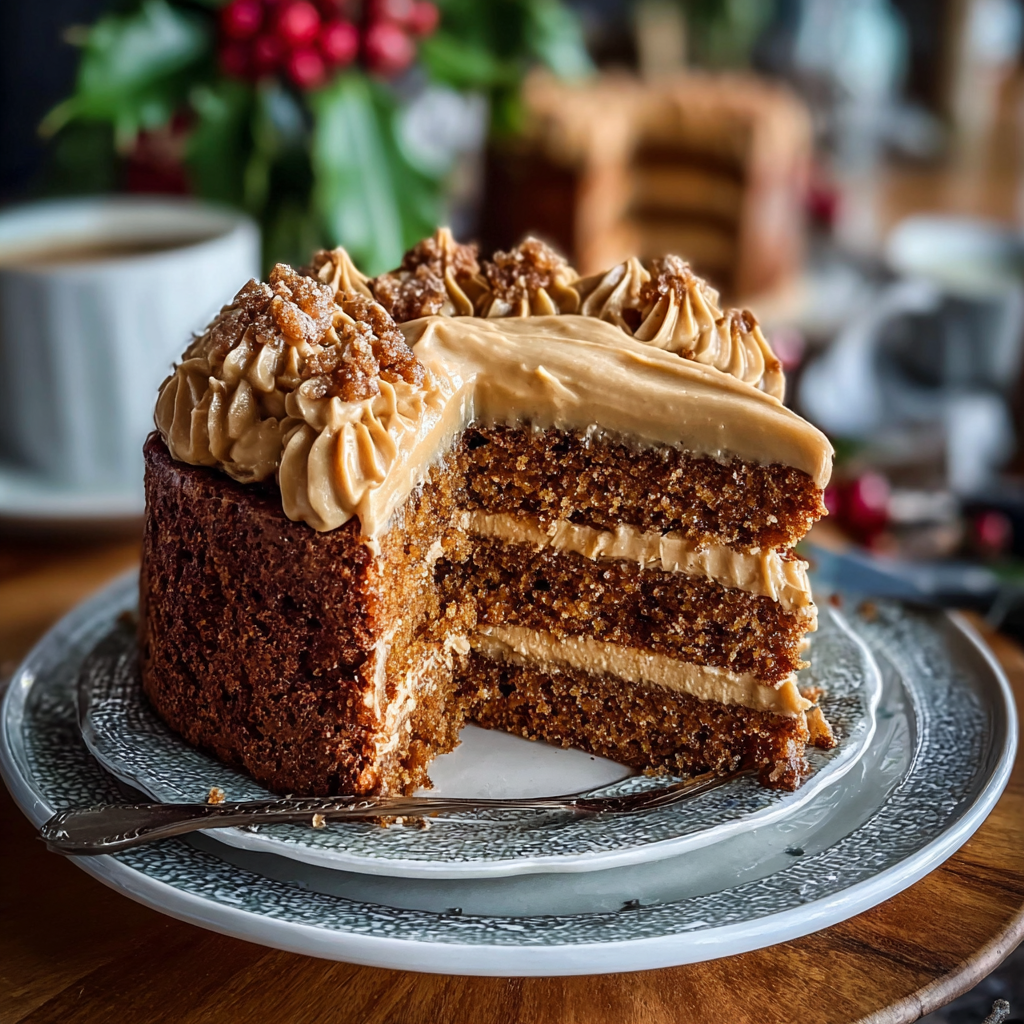
Ensure the cake is stone-cold. Spread a thick layer of frosting over the top. For a rustic look, use the back of a spoon to create “swirls” and “swoops.”
- Tip: Top with a dusting of extra cinnamon or small pieces of crystallized ginger for a professional finish.
Nutritional Information
| Nutrient | Amount per Slice (1/12th) | % Daily Value |
| Calories | 410 kcal | 20% |
| Protein | 4g | 8% |
| Total Fat | 18g | 23% |
| Carbohydrates | 58g | 21% |
| Iron | 2.5mg | 14% |
| Calcium | 85mg | 8% |
Healthier Alternatives for the Recipe
- Lower Sugar: Replace the brown sugar with a monk fruit sweetener. While you cannot replace the molasses (it’s essential for the chemistry), you can use a “Light” molasses to slightly reduce the intensity.
- Gluten-Free: A 1:1 gluten-free flour blend works perfectly here. Because the batter is liquid-heavy, GF flour hydrates well without being grainy.
- Vegan Option: Use vegan butter, a “flax egg,” and vegan cream cheese for the frosting.
Common Mistakes to Avoid
- Using Blackstrap Molasses: It is too bitter and salty for cake; it will overpower the spices.
- Cold Eggs: A cold egg added to the warm molasses/butter mixture can cause the butter to clump. Ensure your egg is at room temperature.
- Frosting Too Early: Gingerbread is a moist cake; if you frost it too soon, the moisture will break the frosting emulsion.
Storing Tips for the Recipe
- Fridge: Because of the cream cheese frosting, this cake should be stored in the fridge. It stays moist for up to 5 days.
- Freezing: You can freeze the unfrosted cake layers for up to 3 months.
- Flavor Insight: This is one of the few cakes that tastes better on Day 2, as the spices continue to “meld” and the molasses matures.
Conclusion
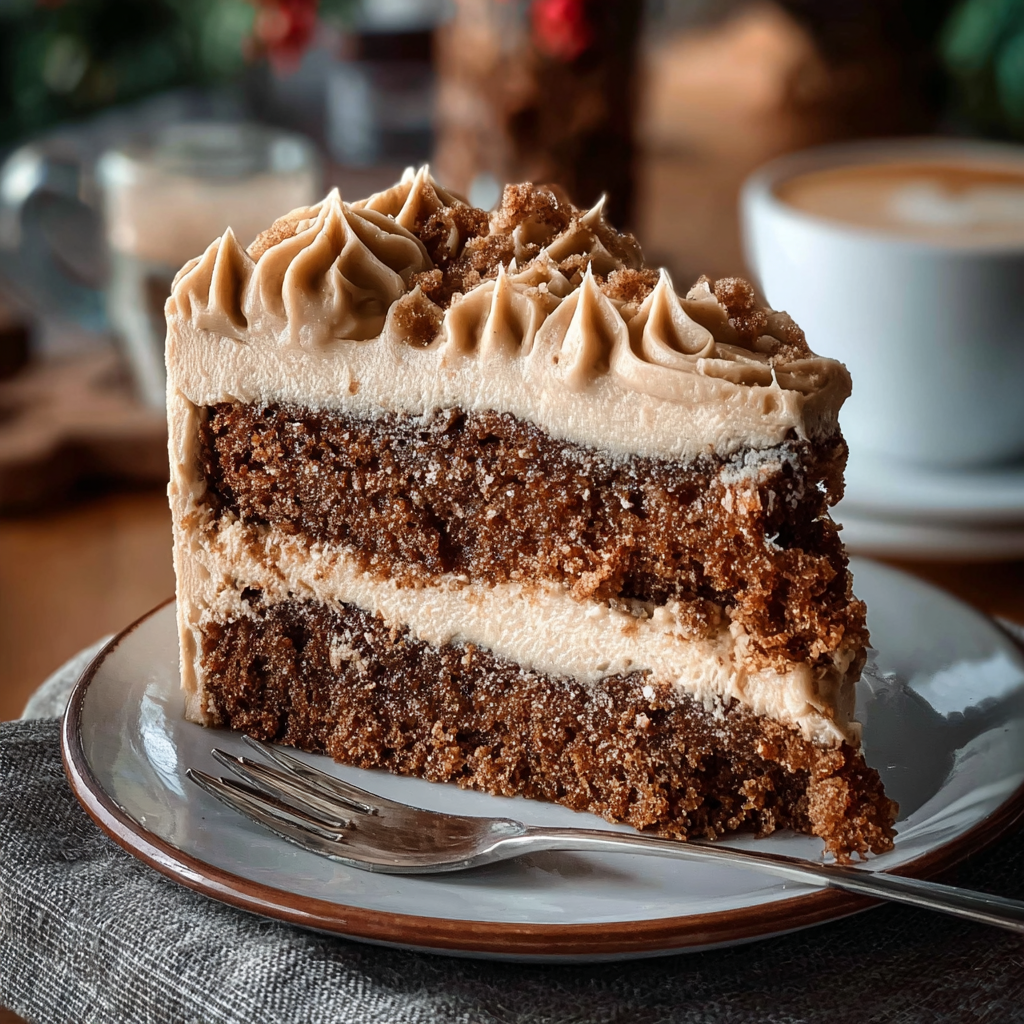
Gingerbread Cake with Cinnamon Molasses Frosting is the ultimate winter comfort. It provides a complex, warm flavor profile that is far superior to any boxed mix, making it the perfect end to a holiday meal.
Leave a Reply