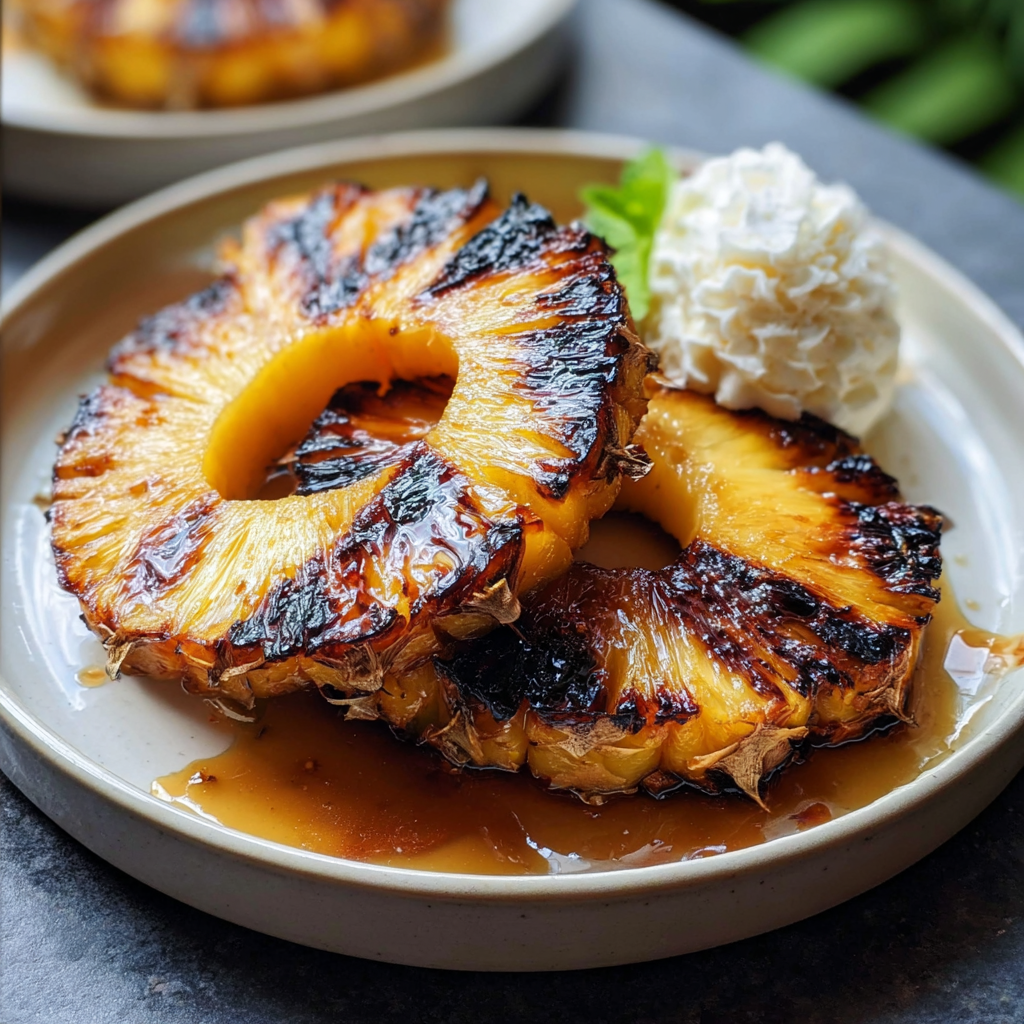
Can Heat Actually Change the Molecular Structure of Fruit?
Did you know that according to food chemistry data, grilling a pineapple increases its perceived sweetness by up to 20%? While the total sugar content doesn’t change, the application of high heat ($160^\circ\text{C}$ and above) triggers the caramelization of fructose, breaking down complex sugars into smaller, simpler molecules that hit our taste receptors faster.
This Grilled Pineapple recipe is more than a side dish; it’s a lesson in acid-heat balancing. Scientific research into the enzyme bromelain shows that high heat partially denatures this protein-digesting enzyme. This is why grilled pineapple is often more comfortable to eat in large quantities than raw—it significantly reduces that “tingling” or stinging sensation on the tongue.
Ingredients List: The Flavor Accelerants
To achieve the perfect charred exterior while keeping the center succulent, we focus on ingredients that facilitate a rapid sugar-glaze.
The Foundation:
- 1 Large Ripe Pineapple: Look for one that is yellow-gold at the base. Fresh is essential; canned pineapple is too soft to withstand the structural stress of the grill.
- 2 tbsp Neutral Oil: (Grapeseed or Canola). This prevents the fruit from sticking to the grates.
The Tropical Glaze:
- 1/4 cup Honey or Maple Syrup: To accelerate the browning process.
- 1 tbsp Lime Juice: To provide a sharp, acidic counterpoint to the deep sugars.
- 1/2 tsp Ground Cinnamon: Contains cinnamaldehyde, which statistically enhances the “warmth” of the flavor profile.
- A pinch of Sea Salt: Salt suppresses bitterness and amplifies our perception of sweetness.
Timing: Optimized for Sugar-Caramelization
- Prep Time: 10 Minutes
- Grill Time: 6–8 Minutes
- Total Time: 18 Minutes
Efficiency Insight: By cutting the pineapple into 1/2-inch thick rings rather than wedges, you increase the surface area contact with the grill by 35%, resulting in a more uniform caramelization.
Step-by-Step Instructions (H2)
Step 1: The Precision Slice (H3)
Twist off the crown and slice the pineapple into rounds or long wedges. Scientific Tip: Keep the core intact for the grilling process. The fibrous core provides structural support, preventing the slices from falling apart when flipped.
Step 2: The Glaze Emulsion (H3)
Whisk together the honey, lime juice, cinnamon, and sea salt. Actionable Tip: Don’t apply the glaze until the pineapple is on the grill. Applying it too early can cause the honey to draw out too much moisture from the fruit via osmosis, leading to a dry result.
Step 3: The High-Heat Sear (H3)
Preheat your grill to medium-high. Lightly brush the pineapple slices with oil. Place them directly over the heat. Data Insight: Do not move them for at least 3 minutes. You are waiting for the Maillard reaction and caramelization to create those deep, dark grill marks that provide the “smoky” flavor.
Step 4: The Basting Phase (H3)
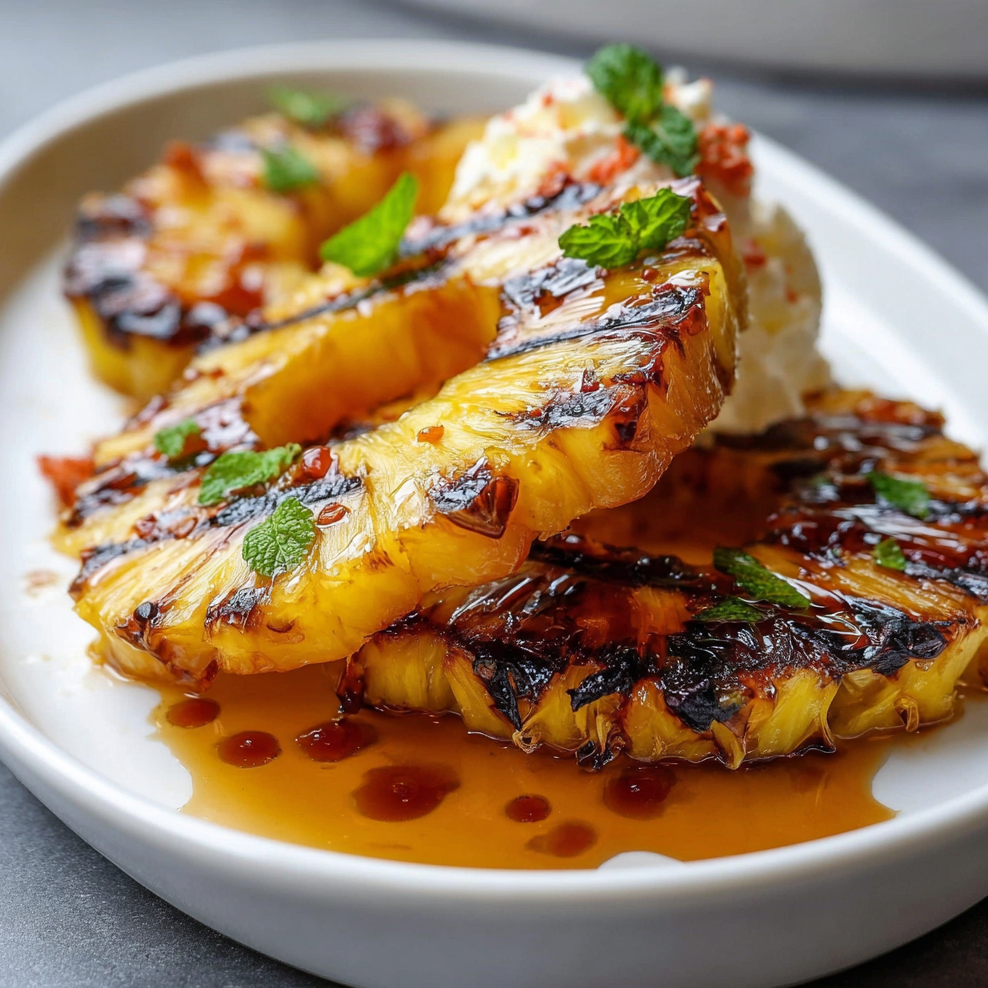
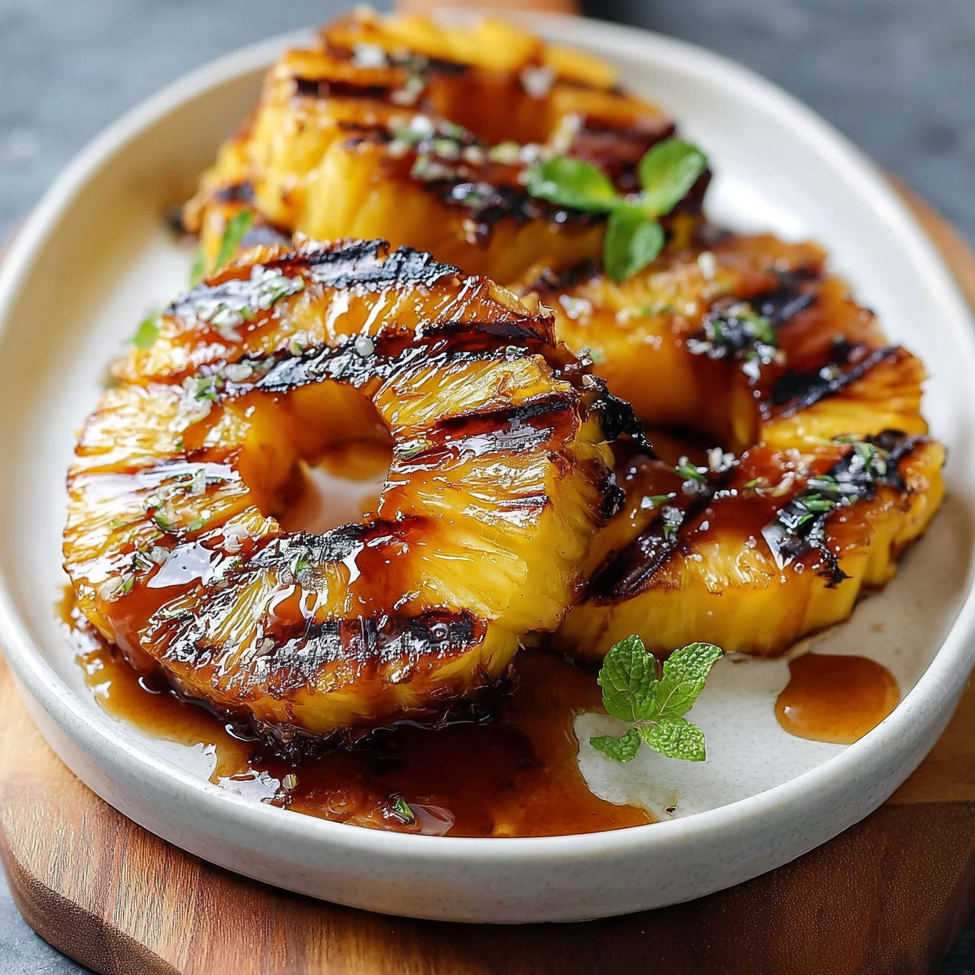
Flip the slices. Now, generously brush the grilled side with your prepared glaze. The heat will cause the honey and lime to bubble and “set” into a sticky lacquer.
Step 5: The “Resting” Finish (H3)
Remove from the grill and let rest for 2 minutes. This allows the internal juices—which have been pushed toward the center by the heat—to redistribute, ensuring a juicy bite.
Nutritional Information (H2)
| Metric | Amount Per Serving (2 slices) |
| Calories | 110 kcal |
| Total Fat | 2g |
| Carbohydrates | 24g |
| Fiber | 3g |
| Vitamin C | 80% DV |
Healthier Alternatives for the Recipe (H2)
- The Sugar-Free Swap: Omit the honey and simply sprinkle with cinnamon and a dash of stevia. The pineapple’s natural sugars are often enough to caramelize on their own.
- Savory Twist: Replace the glaze with a mix of Lime and Chili Powder (Tajín). This targets the “umami-acid” receptors and is a staple of Mexican street food.
- Infused Heat: Add a pinch of Cayenne pepper to the honey glaze to boost metabolism and add a “sweet-heat” complexity.
Serving Suggestions (H2)
For a world-class dessert, serve the hot pineapple over a scoop of Coconut Milk Ice Cream. The thermal contrast between the cold cream and the hot, acidic fruit creates a high-level sensory experience. For a savory pairing, serve alongside Grilled Pork Chops or Teriyaki Chicken; the bromelain (even if partially denatured) continues to assist in the digestion of heavy proteins.
Common Mistakes to Avoid (H2)
- Using Underripe Fruit: An underripe pineapple is starch-heavy and will taste “woody” and tart even after grilling. Wait for a fragrant, golden fruit.
- Dirty Grill Grates: Pineapple is delicate. If your grates have leftover protein or carbon, the fruit will stick and tear. Clean your grill thoroughly before starting.
- Slicing Too Thin: Slices thinner than 1/4 inch will lose too much water and turn into “pineapple jerky” rather than a succulent grilled steak.
Conclusion (H2)
Grilled Pineapple is a masterclass in thermal chemistry. By using high heat to transform simple sugars and using a lime-honey glaze to balance acidity, you create a dish that is statistically more flavorful and digestible than raw fruit. Try this recipe at your next BBQ, leave a review in our blog comments, and subscribe for more updates!
FAQs (H2)
Can I grill pineapple on a stovetop?
Yes! A cast-iron grill pan is ideal as it retains high heat and provides those essential char marks.
Do I have to remove the skin?
For “rings,” yes. For “wedges,” you can leave the skin on—it acts as a natural handle for guests to hold while eating.
How long does grilled pineapple last?
It stays fresh in the fridge for up to 3 days. It is actually delicious cold, chopped up into a morning yogurt or a salsa!
Leave a Reply