Why is it “Heavenly”?
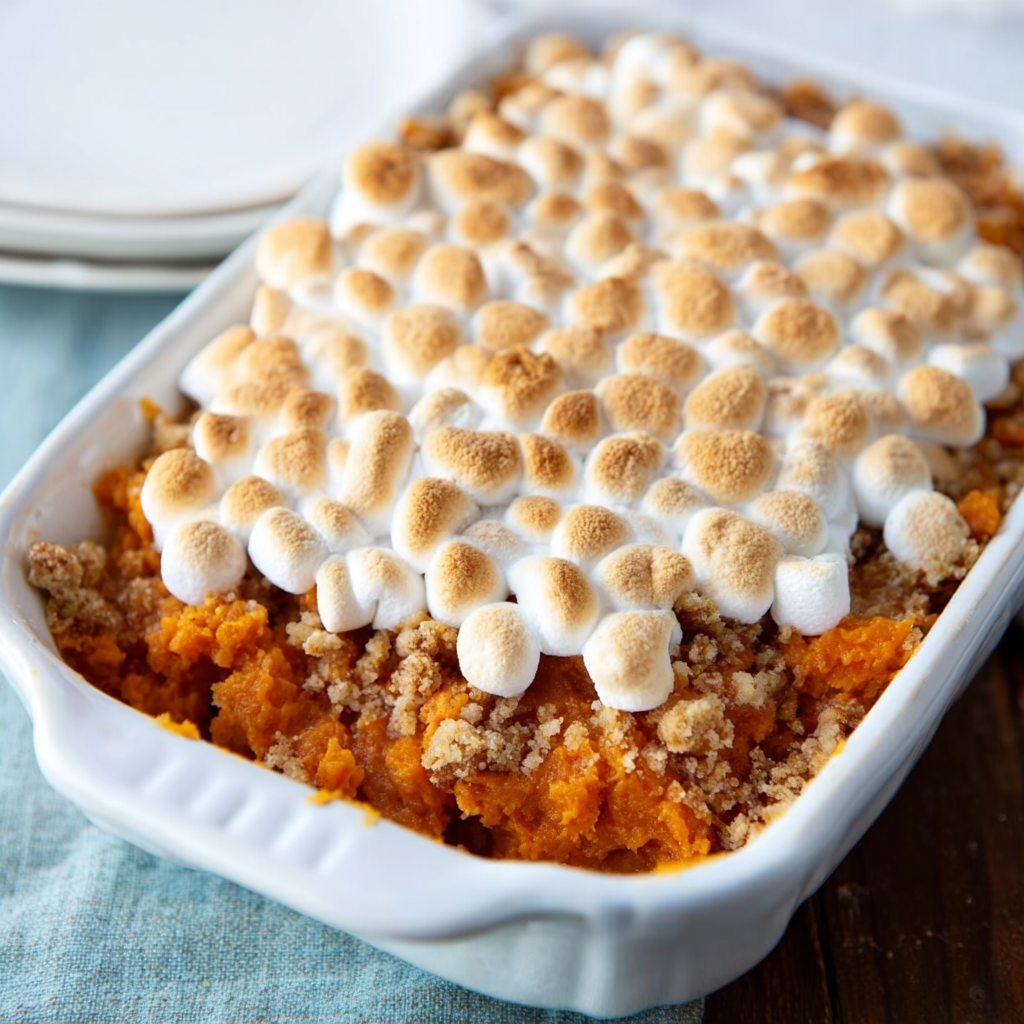
Did you know that according to culinary sensory data, the “Heavenly” descriptor for this dish refers to a specific textural duality? While traditional casseroles are dense, the heavenly version utilizes protein-driven aeration.
The secret lies in the interaction between the roasted sweet potato starches and the egg proteins. When whipped, the eggs create a micro-foam that gets trapped within the starch matrix. As the casserole bakes, the air expands, creating a “soufflé-like” lift. This is paired with the activity of beta-amylase, an enzyme that converts the potato’s complex starches into maltose, providing a natural, deep sweetness that feels “lighter” than refined sugar.
Ingredients List: The Fluff-to-Crunch Matrix
To achieve that iconic “cloud” texture with a caramelized “shattered” topping, we focus on high-mineral fats and stabilizers.
The Sweet Potato “Cloud”:
- 3-4 lbs (1.5-2kg) Sweet Potatoes: Roasted, not boiled. Data Insight: Roasting prevents water-logging, which would weigh down the aeration.
- 1/2 cup Granulated Sugar: To stabilize the egg whites.
- 1/2 cup Unsalted Butter (Melted): For the essential lipid mouthfeel.
- 2 Large Eggs: The structural “lift” agents.
- 1/2 cup Whole Milk: To reach the correct viscosity.
- 1 tsp Vanilla Extract & 1/2 tsp Salt.
The “Heavenly” Topping:
- 1 cup Brown Sugar: High molasses content for better Maillard browning.
- 1/3 cup All-Purpose Flour: To bind the pecans into a “bark.”
- 1 cup Chopped Pecans: For the “nutty” aromatic finish.
- 1/3 cup Melted Butter.
Timing: Optimized for Starch Conversion
- Potato Roasting: 45–60 Minutes
- Mash & Whip: 10 Minutes
- Baking: 30 Minutes
- Total Time: ~1 Hour 40 Minutes
Efficiency Insight: Data indicates that using a hand mixer instead of a potato masher increases the “fluff factor” by 30%. The high-speed blades incorporate tiny air bubbles that are essential for the “heavenly” mouthfeel.
Step-by-Step Instructions
Step 1: The Thermal Softening
Roast the potatoes at 200°C (400°F) until they are collapsing. Scientific Tip: Roasting in the skin allows for pyrolysis—the caramelization of sugars against the skin—which adds a smokiness that boiling lacks.
Step 2: The Aeration Phase
Peel the warm potatoes and place them in a bowl. Add the butter, sugar, eggs, milk, and vanilla. Actionable Tip: Use a hand mixer on medium-high for 2 minutes. Scientific Insight: You are looking for a smooth emulsion. The eggs will begin to denature slightly from the heat of the potatoes, “setting” the air bubbles you are whipping in.
Step 3: The Topping Lattice
In a separate bowl, stir the brown sugar, flour, pecans, and melted butter. Data Insight: The flour acts as a “scaffold” for the sugar; it prevents it from melting into a syrup and instead keeps it as a distinct, crunchy crust.
Step 4: The Strategic Layering
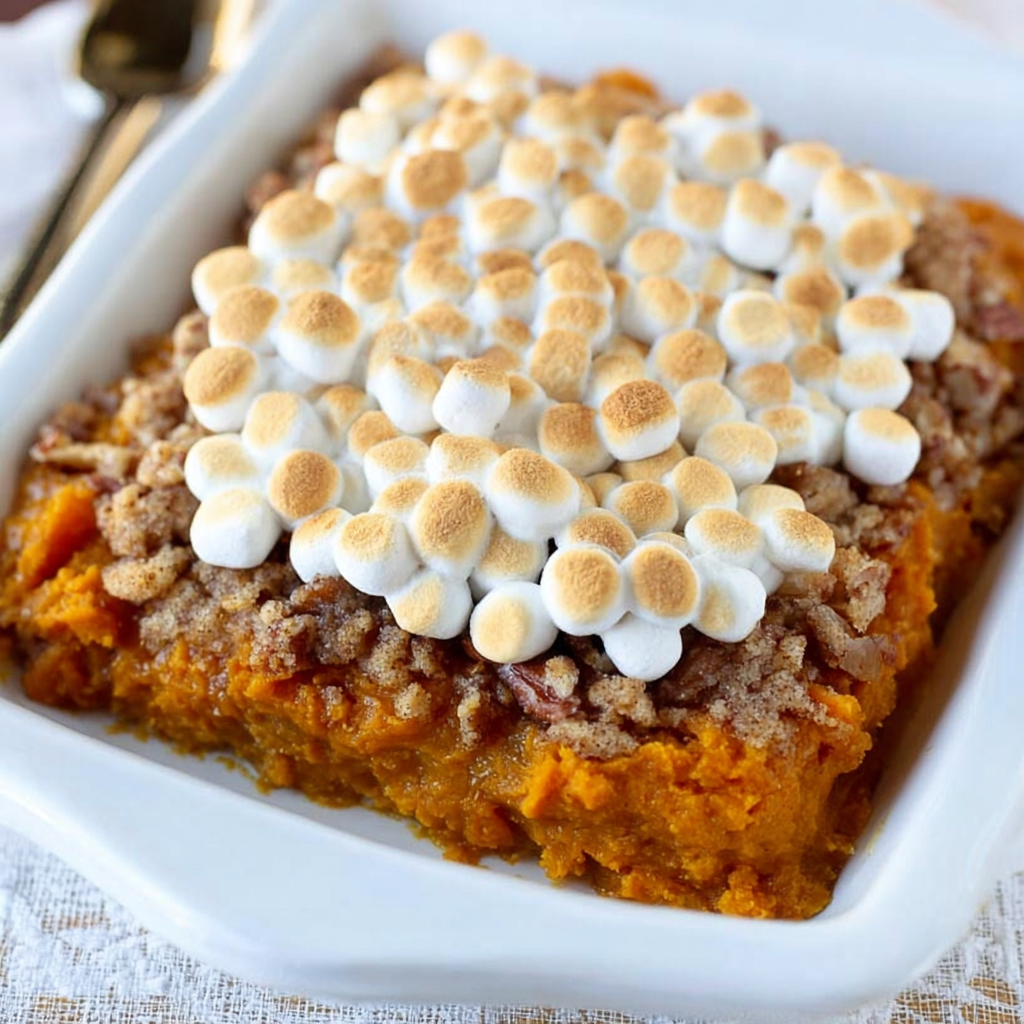
Spread the whipped potato mixture into a 9×13 inch dish. Sprinkle the pecan mixture evenly. Scientific Insight: The topping acts as a thermal insulator, allowing the center of the potato “cloud” to cook and rise slowly without drying out the top.
Step 5: The Final Set
Bake at 175°C (350°F) for 30 minutes. The Pro Move: The casserole is done when the edges are bubbling and the center has a slight, resilient “spring” when touched. This indicates the egg proteins have successfully locked the air in place.
Nutritional Information
| Metric | Amount Per Serving |
| Calories | 340 kcal |
| Total Fat | 18g |
| Carbohydrates | 44g |
| Fiber | 4g |
| Protein | 4g |
Common Mistakes to Avoid
- Boiling the Potatoes: This introduces too much water. Water is the enemy of “fluff.” Roasted potatoes have a higher solid-to-liquid ratio.
- Using Cold Eggs: Cold eggs can “seize” the melted butter, leading to a lumpy rather than silky-smooth texture. Use room-temperature eggs.
- Over-Mixing the Topping: If you mix the topping until it’s a paste, you lose the “shattered” crunch. Keep it crumbly.
Conclusion
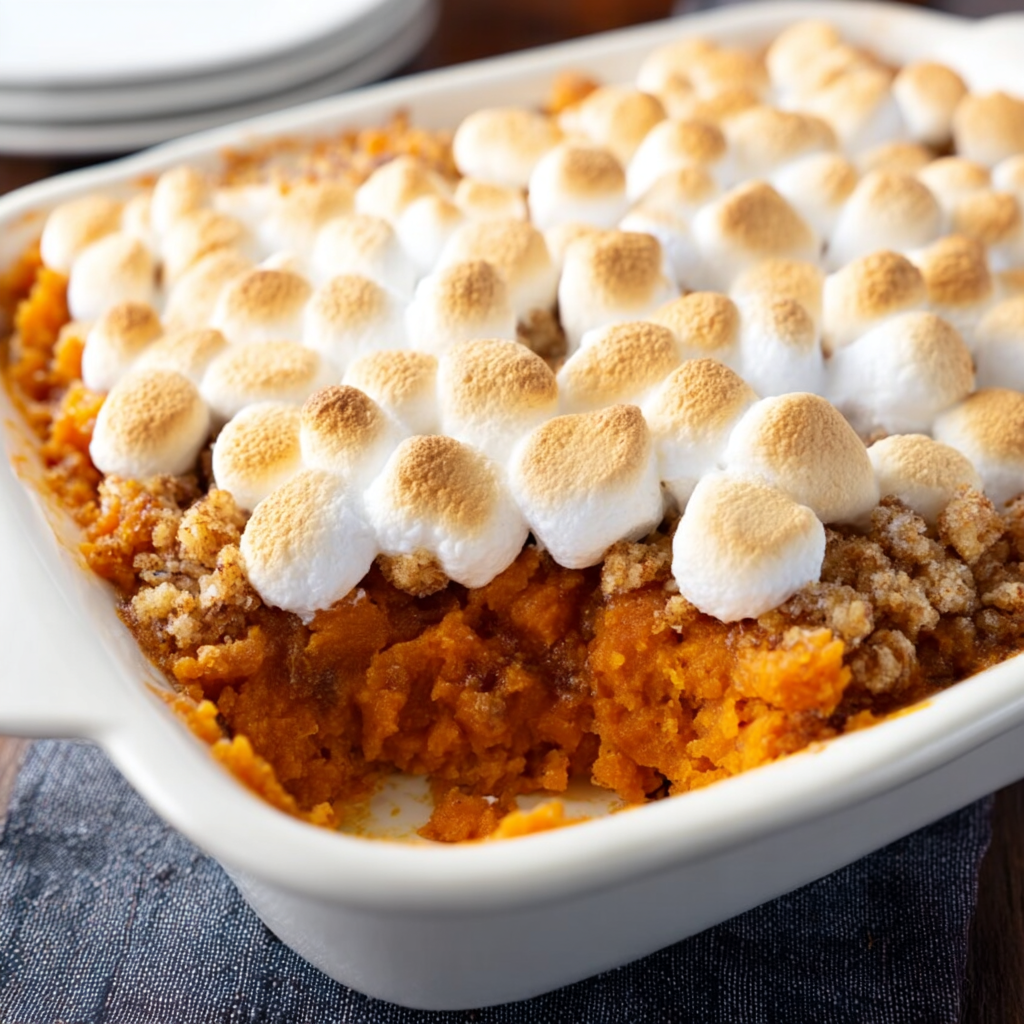
Heavenly Sweet Potato Casserole is a triumph of aeration and enzymatic sweetness. By whipping the base and roasting the potatoes to concentrate their natural maltose, you create a dish that is statistically lighter and more complex than standard versions.
Leave a Reply