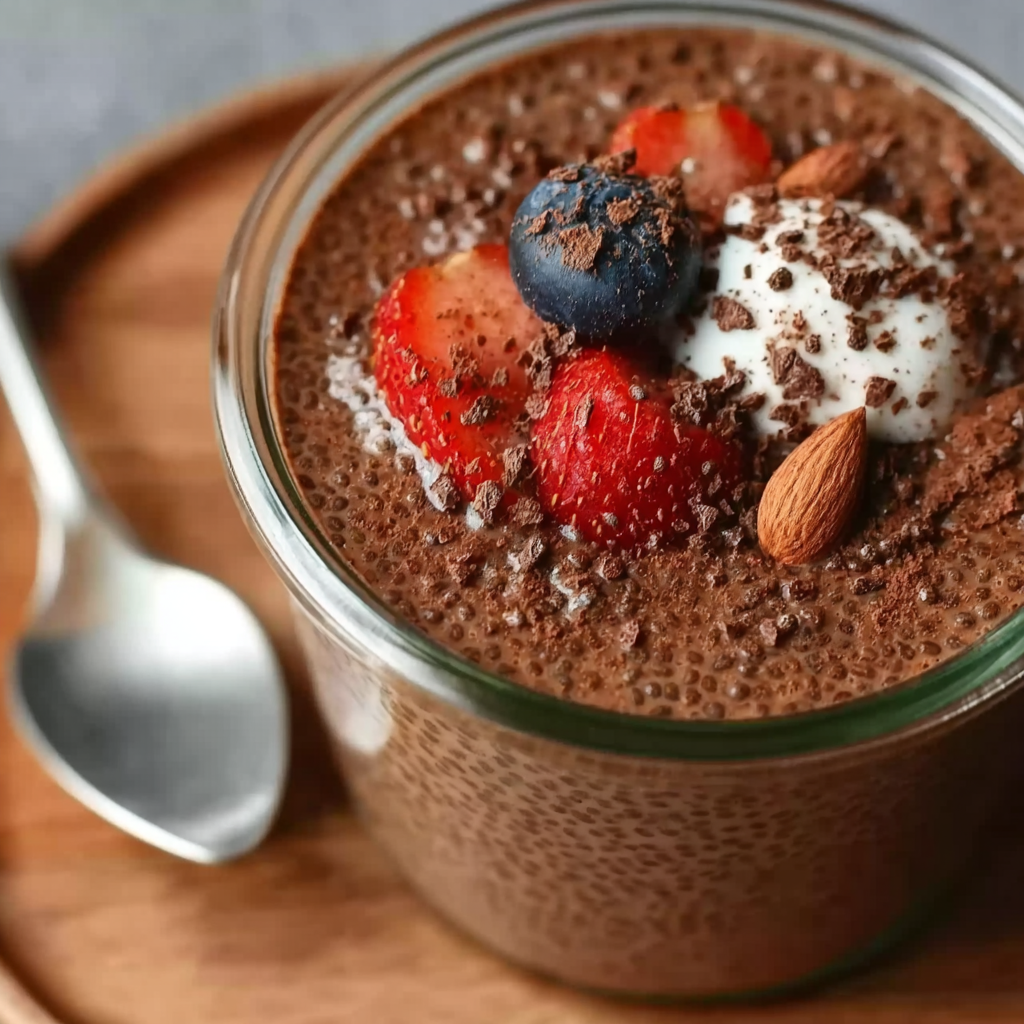
Why is Chia Pudding the Ultimate Protein Delivery System?
Did you know that according to food rheology data, Chia Pudding is a natural hydrocolloid gel? When chia seeds are submerged in liquid, their outer layer of soluble fiber (mucilage) hydrates, expanding up to 12 times their original weight.
Scientific research into satiety indexing shows that by fortifying this gel with whey or plant-based protein, you create a “slow-release” nutrient matrix. The fiber in the seeds slows down the digestion of the protein, leading to a statistically significant increase in fullness compared to a standard protein shake. Additionally, chia seeds are a rich source of alpha-linolenic acid (Omega-3), which supports heart health.
Ingredients List: The Bioavailable Matrix
To achieve a “mousse-like” texture rather than a “seedy” one, we focus on high-solubility proteins and proper hydration ratios.
The Foundation:
- 3 tbsp Chia Seeds: The structural “gelling” agent.
- 1 cup Unsweetened Almond or Soy Milk: Soy milk provides an extra 7g of protein naturally.
- 1 scoop (approx. 30g) Chocolate Protein Powder: Whey isolate for smoothness or Pea protein for a thicker, “fudgy” set.
The Flavor Intensifiers:
- 1 tbsp Unsweetened Cocoa Powder: To deepen the antioxidants and “dark chocolate” notes.
- 1 tsp Maple Syrup or Stevia: Depending on the sweetness of your protein powder.
- A pinch of Sea Salt: To enhance the cacao profile.
Optional Texture Boosters:
- 1/4 cup Greek Yogurt: Folded in after the set for a “probiotic” creaminess.
- Fresh Berries or Cacao Nibs: For a textural “snap.”
Timing: Optimized for Mucilage Expansion
- Prep Time: 5 Minutes
- Hydration Phase: 30 Minutes (Room Temp)
- Setting Phase: 4+ Hours (Refrigerated)
- Total Time: ~4.5 Hours
Efficiency Insight: Data indicates that whisking the pudding twice—once immediately and once 15 minutes later—prevents “clumping.” This ensures that every seed has maximum surface area contact with the liquid, leading to a more uniform gel.
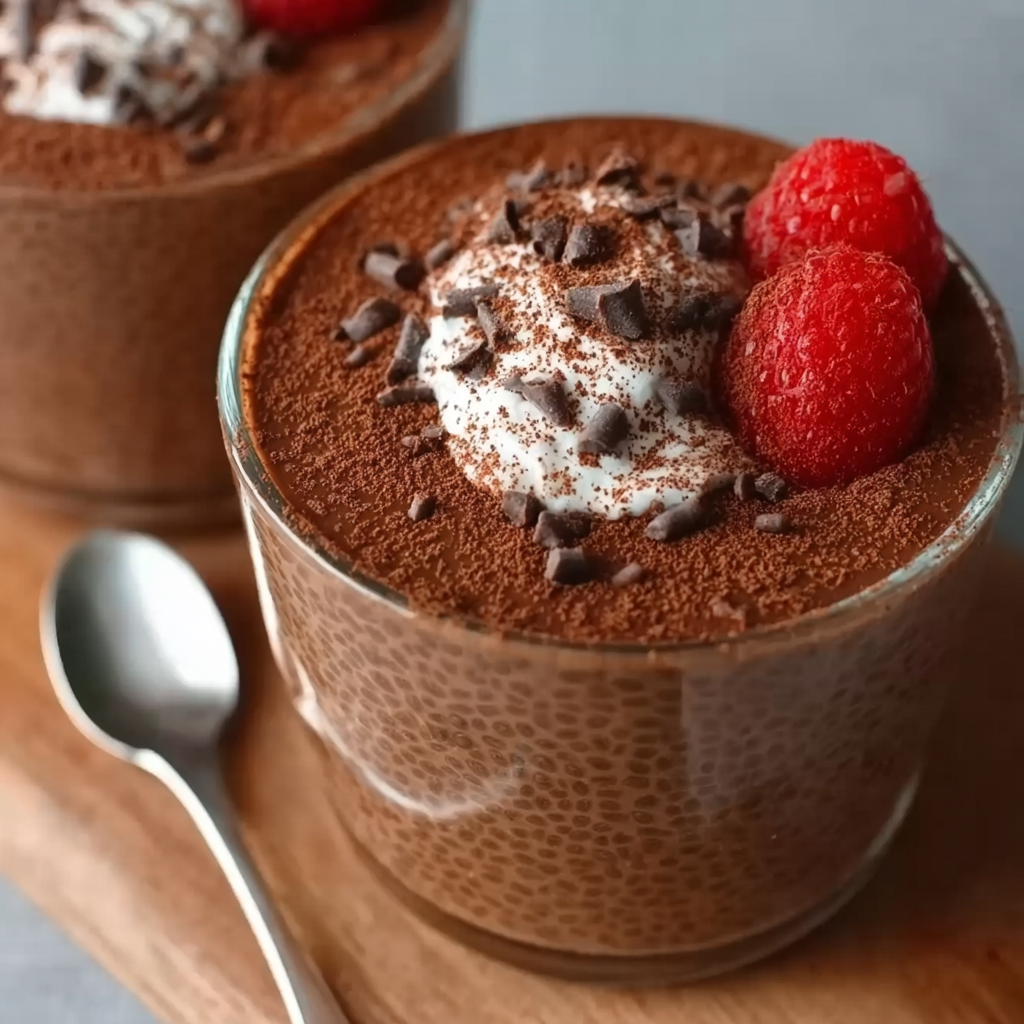
Step-by-Step Instructions
Step 1: The Dry-Liquid Fusion
Whisk the protein powder and cocoa powder into the milk first. Scientific Tip: Use a small handheld frother or a blender to ensure the protein is fully dissolved. If the protein remains in “clumps,” the chia seeds will not be able to bond with the liquid effectively.
Step 2: The Seed Activation
Stir in the chia seeds. Actionable Tip: Let the mixture sit on the counter for 10 minutes, then stir again. This second stir breaks up any “islands” of seeds that have started to gel together, ensuring a smooth consistency.
Step 3: The Cold-Set Stabilization
Cover and refrigerate for at least 4 hours. Scientific Insight: Low temperatures slow down the molecular movement, allowing the polysaccharide chains in the chia mucilage to lock into a stable, spoonable structure.
Step 4: The Aeration (Optional)
For those who dislike the “tapioca” texture of whole seeds, pour the set pudding into a high-speed blender for 30 seconds. Data Insight: Blending breaks the seed hulls, releasing even more fiber and creating a texture indistinguishable from traditional chocolate mousse.
Step 5: The Finishing Toppings
Top with berries or nuts right before serving. Pro Move: Add a dollop of almond butter. The healthy fats in the butter work synergistically with the protein to further stabilize blood sugar levels.
Nutritional Information
| Metric | Amount Per Serving |
| Calories | 320 kcal |
| Total Fat | 12g |
| Carbohydrates | 18g |
| Fiber | 11g |
| Protein | 32g |
Healthier Alternatives & Variations
- The Keto Move: Use Coconut Milk and a stevia-sweetened protein powder to increase healthy medium-chain triglycerides (MCTs).
- Nut-Free Version: Use Hemp Milk or Oat Milk. Hemp milk is statistically higher in Omega-6 fats, providing a great nutrient balance.
- The “Zest” Factor: Add a pinch of Cayenne Pepper or orange zest to create a “Mexican Chocolate” or “Orange Cacao” profile.
Common Mistakes to Avoid
- Old Chia Seeds: Chia seeds can lose their gelling power over time. If your pudding hasn’t thickened after 2 hours, your seeds may be past their shelf life.
- Too Much Liquid: If you prefer a very thick pudding, reduce the milk to 3/4 cup. Remember, different protein powders absorb liquid at different rates.
- Incomplete Mixing: Protein powder can be hydrophobic. If not blended properly, you’ll end up with “chalky” pockets in your pudding.
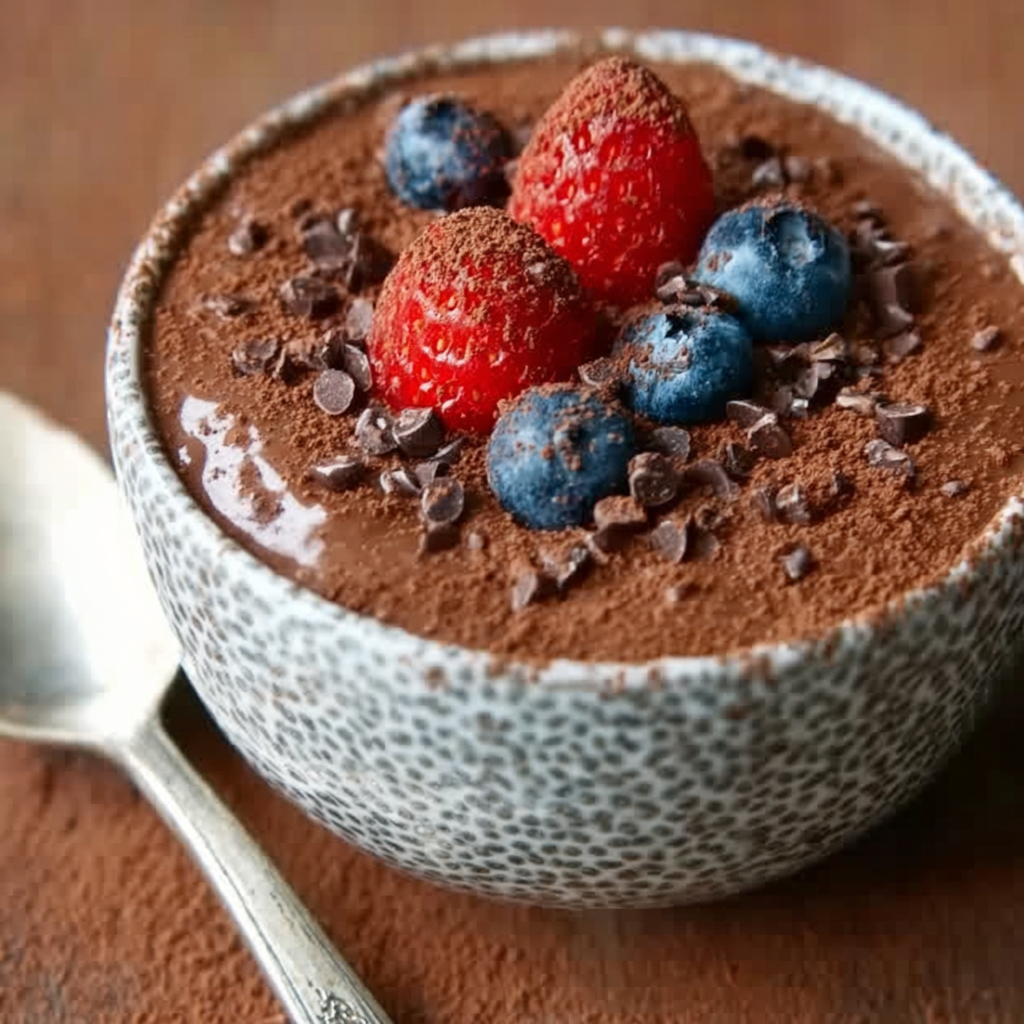
Conclusion
High Protein Chocolate Chia Pudding is a masterclass in functional nutrition and hydrocolloid physics. By utilizing the gelling power of chia and the structural support of protein, you create a snack that is statistically superior in satiety and nutrient density.
Leave a Reply