Introduction
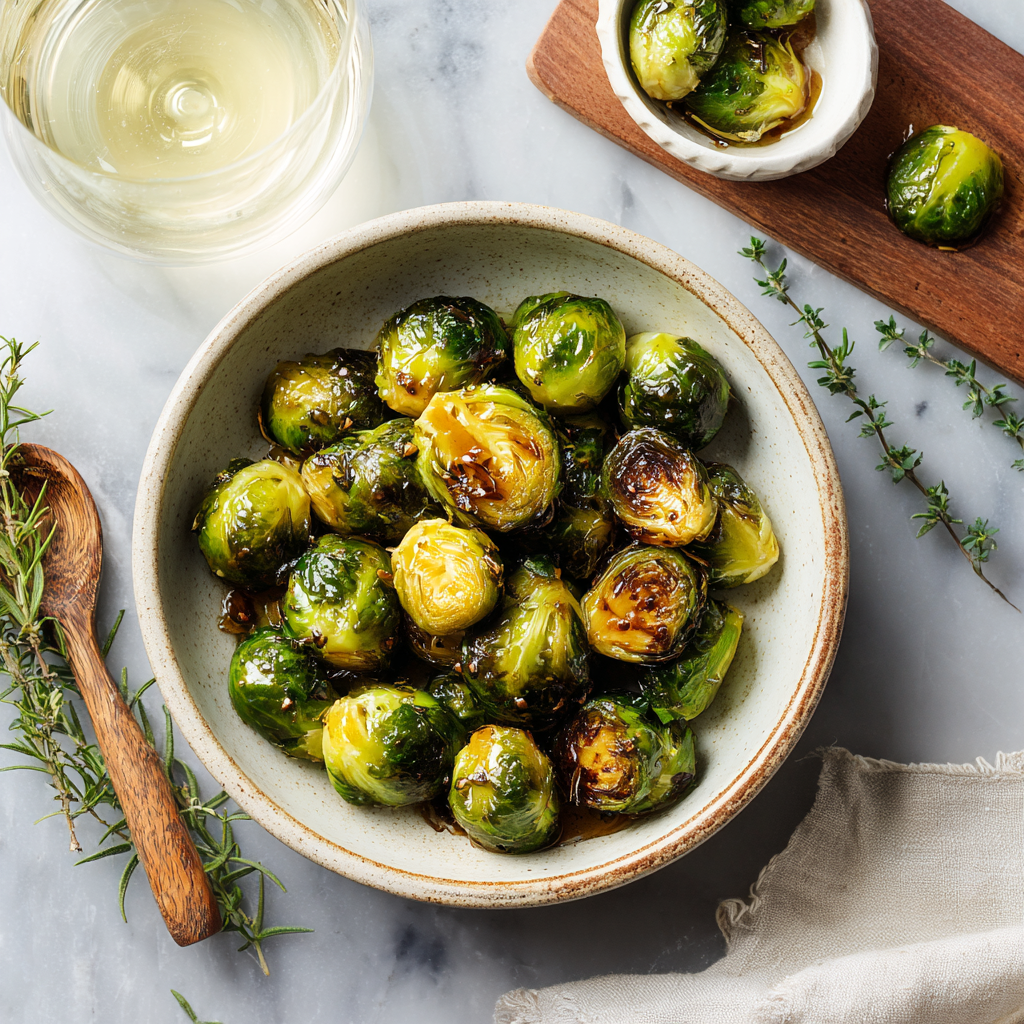
Did you know that Brussels sprouts have undergone one of the most dramatic rebranding efforts in culinary history? In the 1990s, they were statistically the most disliked vegetable in the United States. Today, thanks to a shift in agricultural breeding to reduce bitterness and the widespread adoption of roasting over boiling, they are a top-tier menu item at high-end gastropubs.
However, the difference between a sad, sulfuric cabbage ball and a crispy, caramelized gem lies in one specific reaction: Maillard browning. This recipe for Honey Balsamic Brussels Sprouts leverages high heat to create that signature char, while balancing the vegetable’s natural earthiness with a glaze that is both acidic and sweet. By understanding the smoke point of honey and the reduction capabilities of balsamic vinegar, we can create a side dish that is sticky, savory, and addictive enough to convert even the most staunch vegetable skeptic. Whether you are prepping for a Thanksgiving feast or a healthy weeknight dinner, this recipe delivers gourmet flavor with minimal effort.
Ingredients List
To achieve the perfect balance of “crisp-tender” texture and “sticky-sweet” coating, ingredient selection is vital. Here is your curated shopping list for Honey Balsamic Brussels Sprouts.
The Vegetable Base:
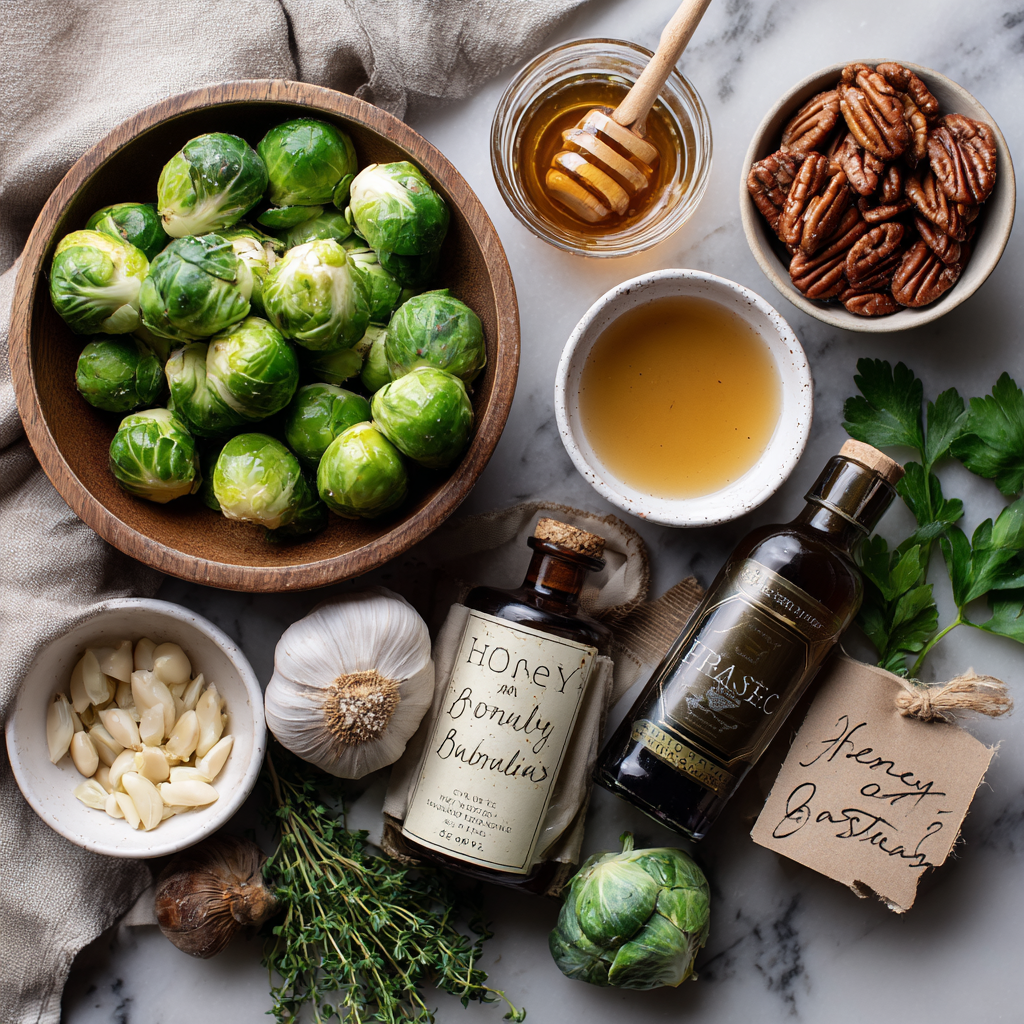
- 1.5 lbs (700g) Fresh Brussels Sprouts:
- Selection Tip: Look for tight, compact heads with bright green leaves. Smaller sprouts tend to be sweeter and more tender than giant, golf-ball-sized ones.
- 2 Tablespoons Extra Virgin Olive Oil: Or Avocado Oil for a higher smoke point.
- ½ Teaspoon Kosher Salt & ¼ Teaspoon Black Pepper.
The Honey Balsamic Glaze:
- 3 Tablespoons Balsamic Vinegar:
- The Science: Use a standard balsamic (Modena) rather than an expensive aged one, as we are cooking it. The heat concentrates the sugars naturally.
- 2 Tablespoons Honey: Local raw honey adds floral notes, but clover honey works perfectly.
- 1 Clove Garlic: Minced finely (optional, for a savory kick).
Optional Garnishes (Texture & Flavor):
- ⅓ Cup Chopped Pecans or Walnuts: Toasted.
- ¼ Cup Dried Cranberries: For a chewy, tart contrast.
- Feta or Goat Cheese Crumbles: For a creamy, salty finish.
Substitutions:
- Vegan: Swap honey for Maple Syrup or Agave Nectar. Maple syrup adds a woodsy flavor that pairs beautifully with autumn meals.
- Vinegar: If you lack balsamic, Apple Cider Vinegar creates a lighter, fruitier profile, though it lacks the dark, rich color.
Timing
This recipe is efficient, utilizing the roasting time to prep the glaze.
- Preparation Time: 10 minutes (trimming and halving).
- Cooking Time: 20–25 minutes.
- Total Time: Approx. 35 minutes.
Data Insight: Roasting Brussels sprouts at high heat (400°F+) is 3x more effective at reducing bitter compounds (glucosinolates) than steaming or boiling, making this the scientifically superior cooking method for flavor.
Step-by-Step Instructions
Step 1: The Structural Prep
Preheat your oven to 425°F (220°C). Line a large baking sheet with parchment paper or foil for easy cleanup.
- Trim: Slice off the tough woody stem at the bottom of each sprout. Remove any yellow or damaged outer leaves.
- The Cut: Slice each sprout vertically in half through the core.
- Why? Creating a flat surface increases the area available for contact with the hot pan, maximizing caramelization.
Step 2: The Initial Roast
Place the halved sprouts directly on the baking sheet. Drizzle with the olive oil, salt, and pepper. Toss with your hands until evenly coated.
- Placement: Arrange the sprouts cut-side down.
- The Science: This contact with the hot metal ensures the face of the sprout turns golden brown and crispy. Roast for 15–20 minutes until tender and deeply charred on the bottom.
Step 3: The Glaze Emulsion
While the sprouts roast, whisk together the balsamic vinegar, honey, and minced garlic in a small bowl.
- Note: We add the glaze later. If you add honey at the beginning of a 425°F roast, it will burn and turn bitter before the sprouts are cooked through.
Step 4: The Caramelization Toss
Remove the pan from the oven. The sprouts should be crispy. Pour the honey-balsamic mixture over the hot sprouts on the pan.
- Action: Toss gently with a spatula to coat. Spread them back out.
Step 5: The Glaze Set
Return the pan to the oven for another 3–5 minutes.
- The Result: The heat will reduce the vinegar and caramelize the honey, turning the liquid into a sticky, glossy glaze that clings to the leaves.
Step 6: Garnish and Serve
Transfer the sprouts to a serving dish immediately.
- Finish: Top with toasted nuts or dried cranberries if using. Serve hot.
Nutritional Information
Brussels sprouts are a nutrient-dense powerhouse. Here is the estimated breakdown per serving (based on 4 servings):
| Nutrient | Amount | % Daily Value |
| Calories | 140 kcal | – |
| Total Fat | 7g | 10% |
| Carbohydrates | 18g | 6% |
| Dietary Fiber | 6g | 24% |
| Sugars | 10g | – |
| Protein | 5g | 10% |
| Vitamin K | 150mcg | >100% |
| Vitamin C | 70mg | >80% |
Data Insight: A single serving delivers over 100% of your daily Vitamin K requirement, essential for bone health and blood clotting, and nearly all your Vitamin C, boosting immunity during the colder months.
Healthier Alternatives for the Recipe
Customize your Honey Balsamic Brussels Sprouts to fit specific dietary protocols:
- Low Sugar / Keto:
- Omit the honey.
- Use a Balsamic Glaze (reduction) sparingly after roasting, or sweeten the vinegar with a few drops of liquid Stevia or Monk Fruit.
- Add crispy bacon bits to replace the sweetness with savory fat richness.
- Lower Fat:
- Reduce olive oil to 2 teaspoons and toss thoroughly.
- Use an Air Fryer (375°F for 12-15 mins) to achieve crispiness with less oil.
- Sodium Conscious:
- Use low-sodium salt or omit it entirely, relying on the acidity of the vinegar and the pungency of the garlic for flavor.
Serving Suggestions
These sprouts are versatile enough to accompany almost any protein.
- The Holiday Table: They are a Thanksgiving essential. The acidity cuts through rich dishes like mashed potatoes, gravy, and stuffing.
- Weeknight Dinner: Serve alongside Roast Chicken or Pan-Seared Salmon. The sweetness of the glaze complements the savory meat.
- Vegetarian Main: Pile them onto a Grain Bowl with quinoa, roasted sweet potatoes, and tahini dressing for a complete meal.
Common Mistakes to Avoid
Roasting vegetables seems simple, but texture is easily ruined.
- Crowding the Pan:
- The Error: Piling sprouts on top of each other.
- The Result: They steam instead of roast, turning mushy and grey.
- The Fix: Use two pans if necessary. They need personal space to crisp.
- Adding Honey Too Early:
- The Error: Tossing with glaze before roasting.
- The Result: Burnt, black sugar char that tastes acrid.
- The Fix: Follow the recipe—glaze in the last 5 minutes.
- Using Wet Sprouts:
- The Error: Washing them and not drying them.
- The Result: Steam prevents browning.
- The Fix: Pat them dry with a kitchen towel after washing.
Storing Tips for the Recipe
These are best eaten fresh for maximum crunch, but leftovers are tasty.
- Refrigeration: Store in an airtight container for up to 3–4 days.
- Reheating:
- Best: Air Fryer or Oven at 350°F for 5 minutes. This re-crisps the leaves.
- Avoid: The microwave. It will make them soggy and soft.
- Freezing: Not recommended. Brussels sprouts become watery and mushy upon thawing.
Conclusion
Honey Balsamic Brussels Sprouts are the ultimate redemption arc for a misunderstood vegetable. By respecting the science of roasting—high heat, space, and timing—you transform a humble brassica into a dish that hits every pleasure point: salty, sweet, sour, and crispy. It is a side dish that steals the show.
Summary: A 35-minute roasted vegetable recipe featuring crispy Brussels sprouts tossed in a sticky, tangy glaze of honey and balsamic vinegar. High in fiber and Vitamin C.
Ready to convert the haters?
Preheat your oven now! Rate this recipe 5 stars if you achieved that perfect char, and leave a comment below: do you add bacon or keep it vegetarian? Subscribe for more science-backed vegetable hacks!
FAQs
Can I use frozen Brussels sprouts?
Technically yes, but the texture will never be as crispy. Frozen sprouts release a lot of water. If using frozen, do not thaw them. Roast them straight from frozen at a higher temp (450°F) to evaporate the moisture quickly, then glaze.
Why do my sprouts taste bitter?
Bitterness usually comes from undercooking or using large, old sprouts. Ensure they are roasted until tender (the heat breaks down the bitter compounds) and balanced with enough salt and sweetness (honey) to mask any residual bitterness.
Can I make this in an Air Fryer?
Absolutely. Toss sprouts with oil/salt. Air fry at 375°F for 12–15 minutes, shaking halfway. Toss with the glaze and air fry for 1–2 more minutes to set.
Is balsamic glaze different from balsamic vinegar?
Yes. Balsamic Vinegar is thin and liquid. Balsamic Glaze is vinegar that has been cooked down with sugar until thick and syrupy. This recipe makes a homemade glaze using vinegar and honey. If you use store-bought glaze, skip the honey step and just drizzle it on at the end.
Leave a Reply