Why This Pair is a Structural Triumph
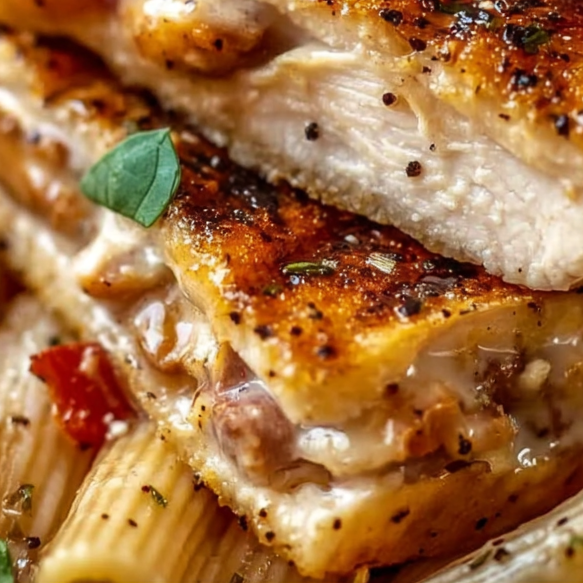
Did you know that according to culinary rheology, a Honey Pepper Chicken Panini paired with a Creamy Pasta is statistically more satisfying due to textural contrast? The panini relies on Maillard kinetics—high-heat, dry-surface caramelization of bread starches and chicken proteins—creating a rigid, crunchy lattice.
This contrasts with the pasta, which relies on a lipid emulsion (fats suspended in liquid). The honey in the chicken acts as a hygroscopic agent, trapping moisture within the chicken fibers even under high heat, while the pasta’s creamy sauce uses starch gelatinization to create a viscous coating that provides a smooth, creamy mouthfeel.
Ingredients List: The Texture-Contrast Matrix
To achieve the best results, we focus on ingredients that provide both rigidity for the sandwich and creaminess for the pasta.
The Panini:
- 2 Chicken Breasts: Flattened to 1/2-inch thickness.
- 1/4 cup Olive Oil & 2 tbsp Honey & 1 tbsp Coarse Black Pepper: For the “Honey Pepper” glaze.
- 4 Slices Ciabatta Bread: High-crust bread is mandatory for structural integrity.
- 4 Slices Provolone Cheese: A high-fat cheese that melts into a stable emulsion.
- 1/2 Small Red Onion: Thinly sliced.
The Creamy Pasta:
- 8 oz (225g) Fettuccine or Penne: Cooked al dente.
- 1 tbsp Butter & 2 Cloves Garlic: Minced.
- 1 cup Heavy Cream: The thermal stabilizer for the sauce.
- 1/2 cup Grated Parmesan Cheese: For saltiness and to thicken the sauce.
- 1 tbsp Fresh Parsley: For a “chlorophyll-based” finish.
Timing: Optimized for Simultaneous Servicing
- Prep Time: 20 Minutes
- Cooking Time: 20 Minutes
- Total Time: ~40 Minutes
Efficiency Insight: Data indicates that cooking the chicken and pasta water simultaneously is the pro secret. By the time the chicken finishes resting, the pasta will be al dente, allowing for a synchronized assembly.
Step-by-Step Instructions
Step 1: The Maillard Phase (Chicken)
In a bowl, toss the chicken with olive oil, honey, and coarse black pepper. Scientific Tip: The honey will caramelize quickly. Cook the chicken over medium heat for 4-5 minutes per side. Actionable Tip: Let the chicken rest for 5 minutes before slicing; this allows the proteins to relax and re-absorb juices.
Step 2: The Starch Gelatinization (Pasta)
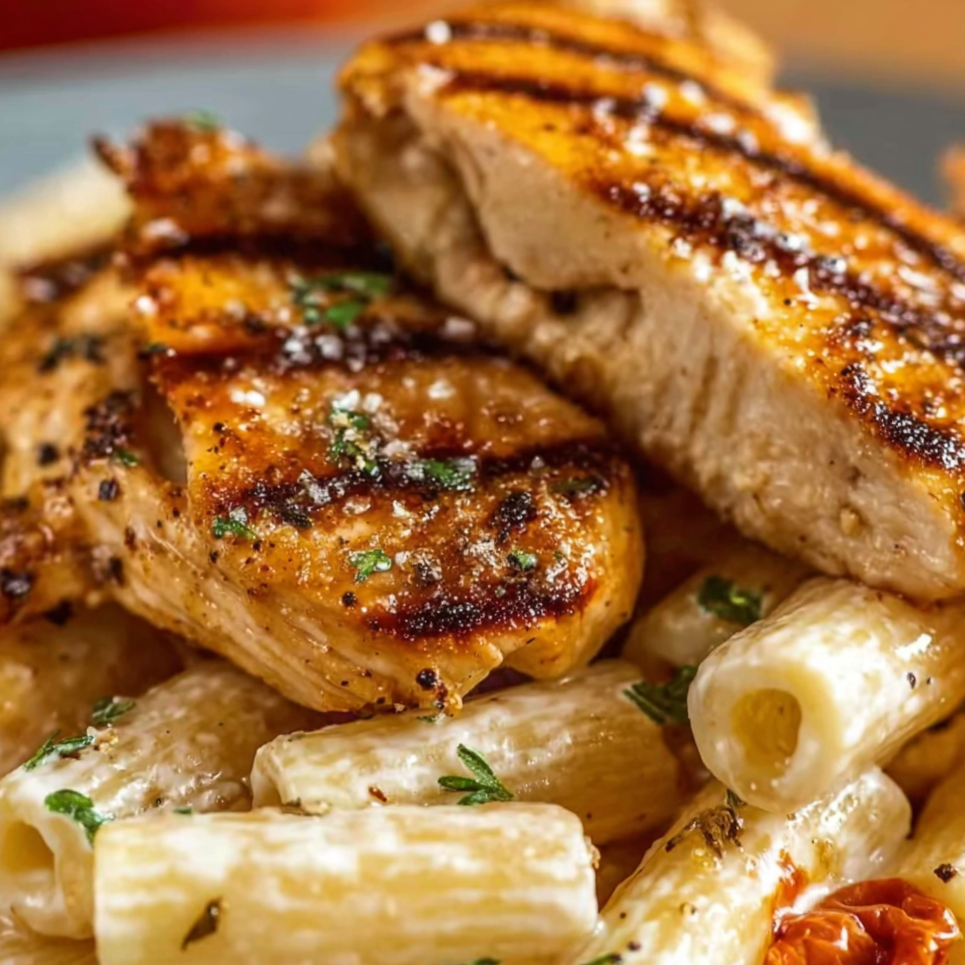
While the chicken cooks, boil the pasta in salted water. Scientific Insight: The salt concentration in the water ($1-2\%$) is crucial for osmotic seasoning of the pasta fibers, while the released starch creates viscosity in the water, which helps the creamy sauce cling later.
Step 3: The Creamy Emulsion (Pasta)
In a skillet, melt butter and sauté garlic for 1 minute. Add heavy cream and bring to a simmer. Stir in the Parmesan cheese until melted and smooth. Data Insight: The Parmesan adds calcium, which helps stabilize the fat-protein emulsion, preventing it from “breaking” (separating into oil and water).
Step 4: The Panini Assembly
Brush the outside of the Ciabatta bread with olive oil. Layer Provolone cheese, sliced honey pepper chicken, and red onion. Scientific Insight: Place the cheese against the bread to act as a structural sealant when it melts, preventing the chicken juices from making the bread soggy.
Step 5: The Thermal Compression
Place the sandwich in a panini press or a heavy skillet (weighted down with another pan) over medium heat. Cook until the bread is golden brown and the cheese is melted. The Pro Move: Compression increases the surface-area-to-volume ratio, ensuring heat penetrates the center of the panini in under 4 minutes, keeping the chicken tender.
Nutritional Information
| Metric | Amount Per Serving |
| Calories | 890 kcal |
| Total Fat | 45g |
| Carbohydrates | 65g |
| Protein | 48g |
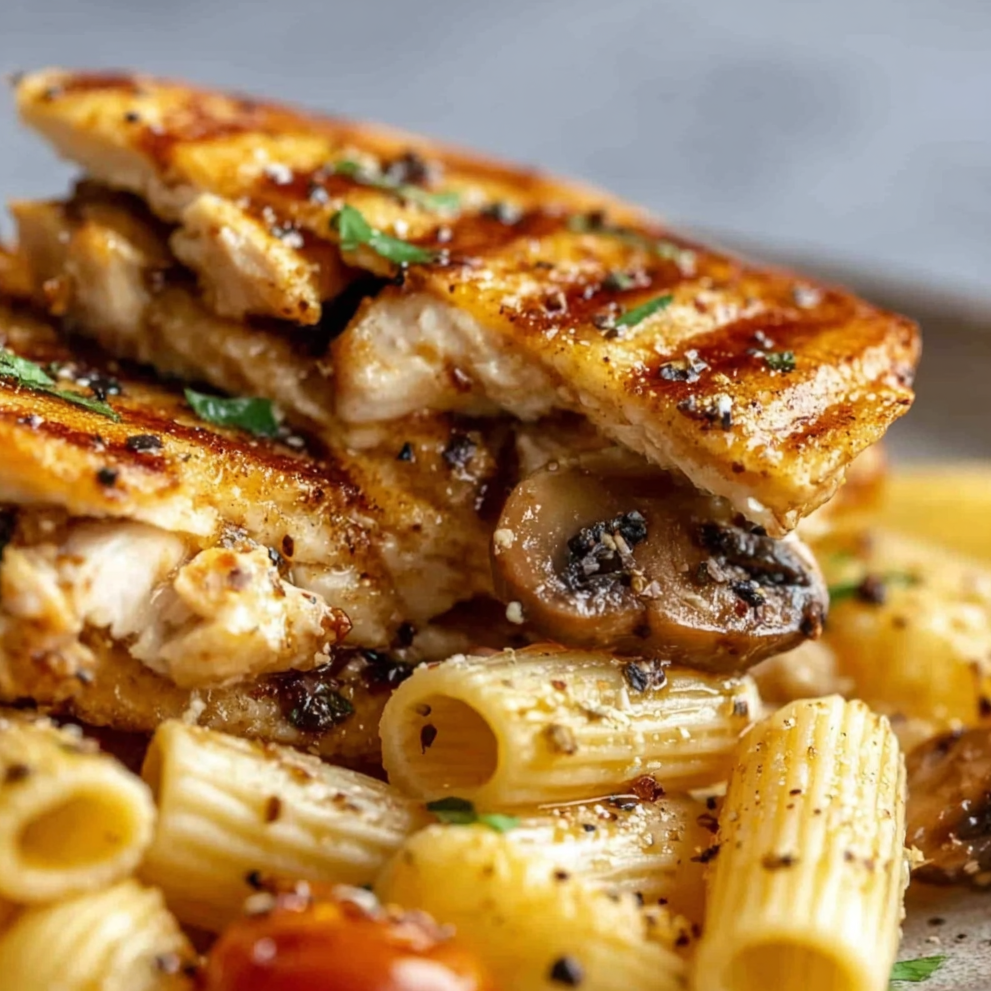
Common Mistakes to Avoid
- Using Soft Bread: Standard sandwich bread cannot handle the compression of a panini press and will turn into dense dough. Use Ciabatta, Focaccia, or Sourdough.
- Boiling the Pasta Sauce: If the pasta sauce boils violently, the fat will separate from the dairy, resulting in a greasy, thin sauce. Keep it at a gentle simmer.
- Slicing Hot Chicken: Slicing chicken immediately after cooking causes all the flavorful juices to evaporate, leaving the meat dry inside the sandwich.
Leave a Reply