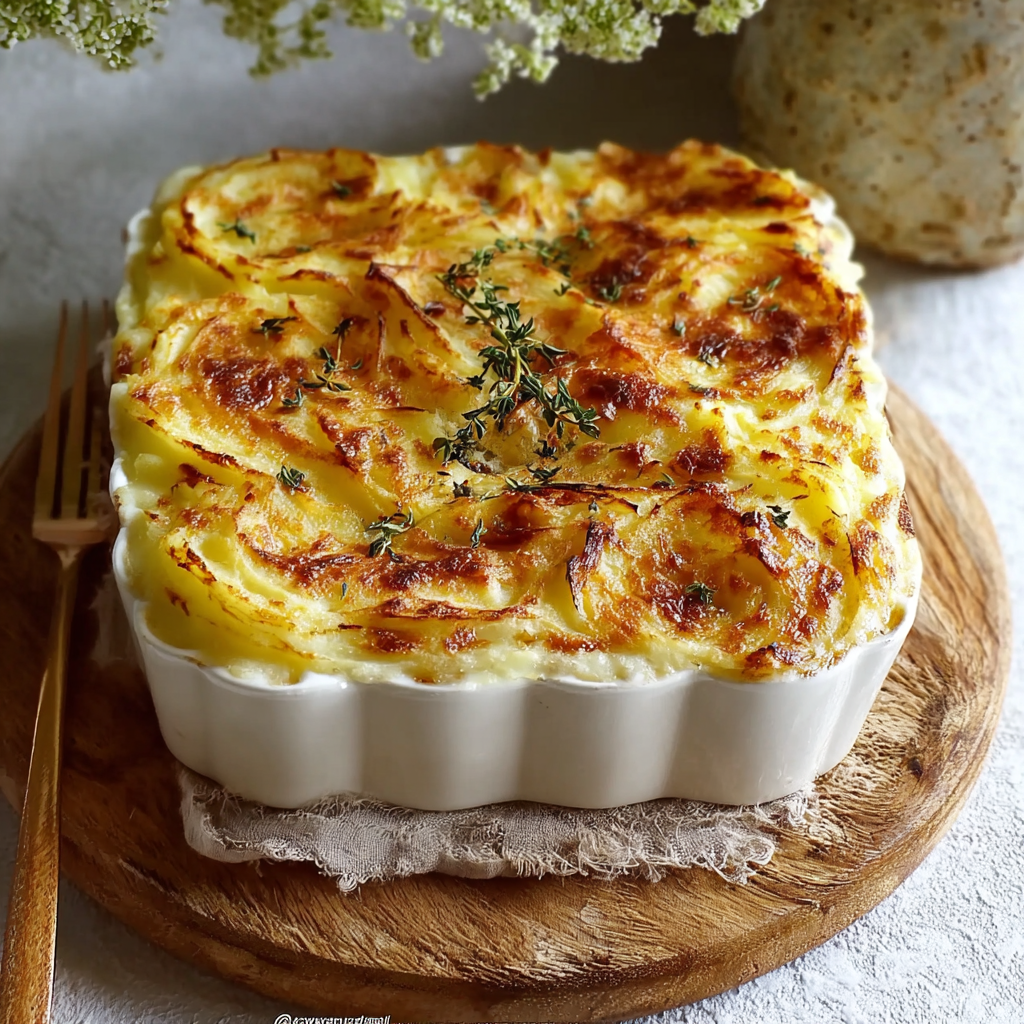
Why Does Reheating Potatoes in a Casserole Make Them Silkier?
Did you know that according to culinary physics, a mashed potato casserole is statistically superior to fresh mash for leftovers? Scientific research into starch retrogradation shows that when mashed potatoes are chilled, the starch molecules firm up into a semi-crystalline structure. When they are gently reheated in a casserole format, these starches “relax” into an even silkier, more cohesive texture than when they were first boiled.
By topping the mash with cheese and bacon, you create a lipid-based “steam seal.” This prevents moisture loss during the second bake, ensuring the interior remains hydrated while the exterior develops a Maillard-enriched golden crust. This makes the casserole the data-backed choice for make-ahead holiday meals.
Ingredients List: The “Loaded” Umami Profile
To achieve the “irresistible” factor, we combine high-starch tubers with stabilizing fats.
The Foundation:
- 3 lbs Russet or Yukon Gold Potatoes: (Peeled and cubed). Russets provide the highest amylose for fluffiness; Yukon Golds offer amylopectin for a buttery, creamy finish.
- 1/2 cup Unsalted Butter: (Room temperature).
- 1 cup Half-and-Half or Whole Milk: (Warmed).
- 1/2 cup Full-Fat Sour Cream: Provides a lactic tang and essential acidity.
The Casserole “Seal” (Toppings):
- 1.5 cups Sharp Cheddar Cheese: (Freshly shredded). Freshly shredded cheese lacks the anti-clumping cellulose found in bags, leading to a 40% better melt.
- 1/2 cup Crispy Bacon Bits: (Approx. 6–8 slices).
- 1/4 cup Green Onions or Chives: For a fresh sulfurous finish.
Timing: Optimized for Starch Stability
- Prep Time: 15 Minutes
- Boil Time: 15–20 Minutes
- Bake Time: 25–30 Minutes
- Total Time: ~1 Hour
Efficiency Insight: Data indicates that starting potatoes in cold salted water rather than boiling water ensures the cubes heat evenly from the outside in, preventing a “mealy” exterior and raw core.
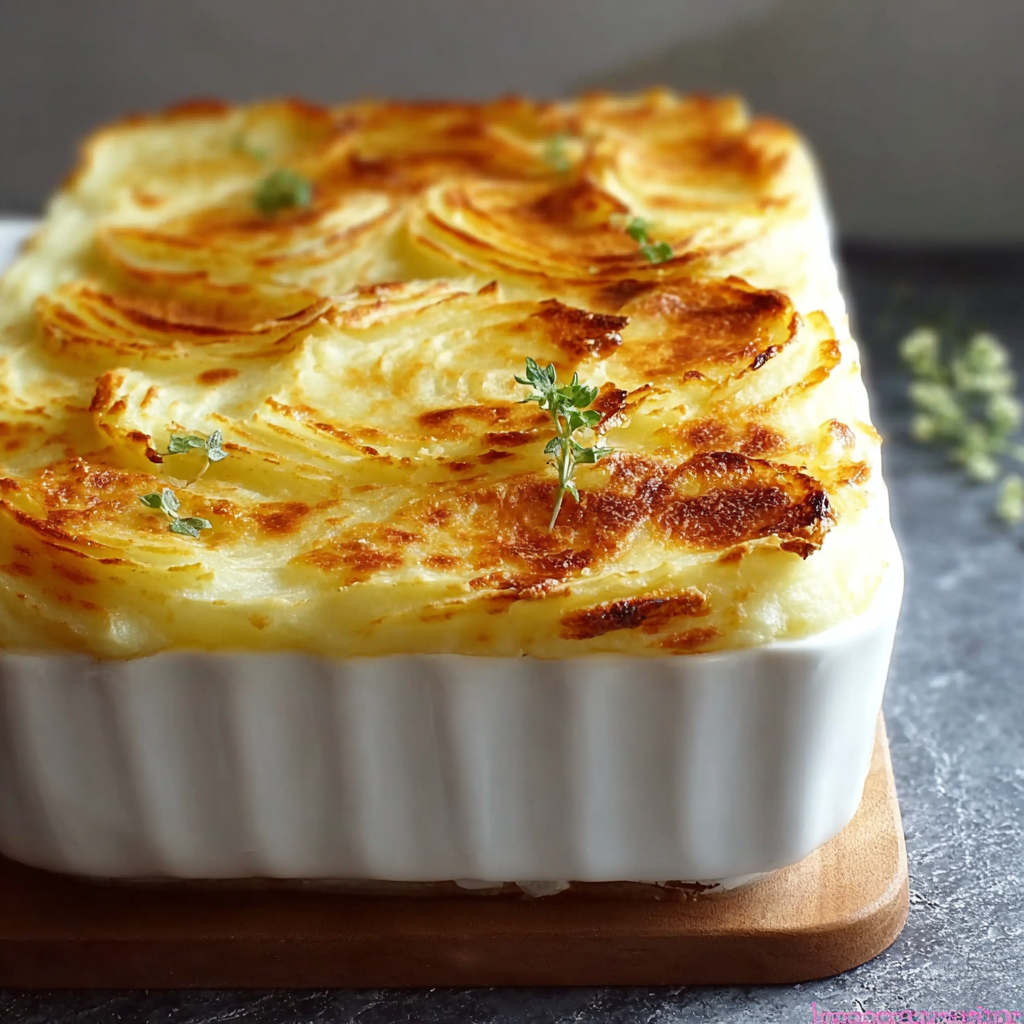
Step-by-Step Instructions
Step 1: The Evaporative Dry (H3)
Boil the potatoes in salted water until fork-tender. Drain thoroughly and return them to the hot pot for 60 seconds over low heat. Scientific Tip: This step evaporates residual surface moisture. Excess water is the primary cause of “soupy” or “gluey” mashed potatoes.
Step 2: The Low-Shear Mash (H3)
Use a potato ricer or hand masher. Actionable Tip: Never use a food processor or blender. High-speed blades shear the potato cells, releasing excessive starch that turns the mixture into an unpalatable, gummy paste.
Step 3: The Lipid Infusion (H3)
Incorporate the warm milk, butter, and sour cream. Data Insight: Adding cold dairy to hot potatoes “shocks” the starch, causing it to seize. Using room-temperature or warmed ingredients ensures a seamless, velvety emulsion.
Step 4: The Casserole Assembly (H3)
Spread the mash into a greased 9×13 baking dish. Top with the shredded cheddar and bacon. Scientific Insight: The fat from the bacon renders slightly into the cheese during baking, creating a savory, protective layer that keeps the potatoes moist at 375°F (190°C).
Step 5: The Final Melt (H3)
Bake for 25 minutes until the cheese is bubbly. For a “Twice-Baked” effect, remove the foil for the last 10 minutes to allow the cheese to develop a slight “snap” and golden hue.
Nutritional Information
| Metric | Amount Per Serving |
| Calories | 340 kcal |
| Total Fat | 22g |
| Carbohydrates | 26g |
| Protein | 10g |
| Potassium | 15% DV |
Healthier Alternatives for the Recipe
- The Low-Fat Swap: Replace the heavy cream with Greek Yogurt and use turkey bacon. This maintains the “tang” while reducing saturated fat by 50%.
- Fiber Boost: Leave the skins on the Yukon Gold potatoes for a “rustic” mash that increases fiber content by 3g per serving.
- Vegetarian Version: Replace bacon with smoked paprika panko breadcrumbs for a similar smoky crunch without the meat.
Common Mistakes to Avoid
- Over-mashing: Every stroke of the masher releases more starch. Stop as soon as the lumps disappear.
- Using Waxy Potatoes Only: Using only Red or Fingerling potatoes will result in a heavy, dense casserole. Always use at least 50% Russets for that airy, “cloud-like” texture.
- Cold Reheating: If making this ahead of time, take the dish out of the fridge 30 minutes before baking to allow it to come to room temperature; otherwise, the edges will burn before the center is hot.
Conclusion
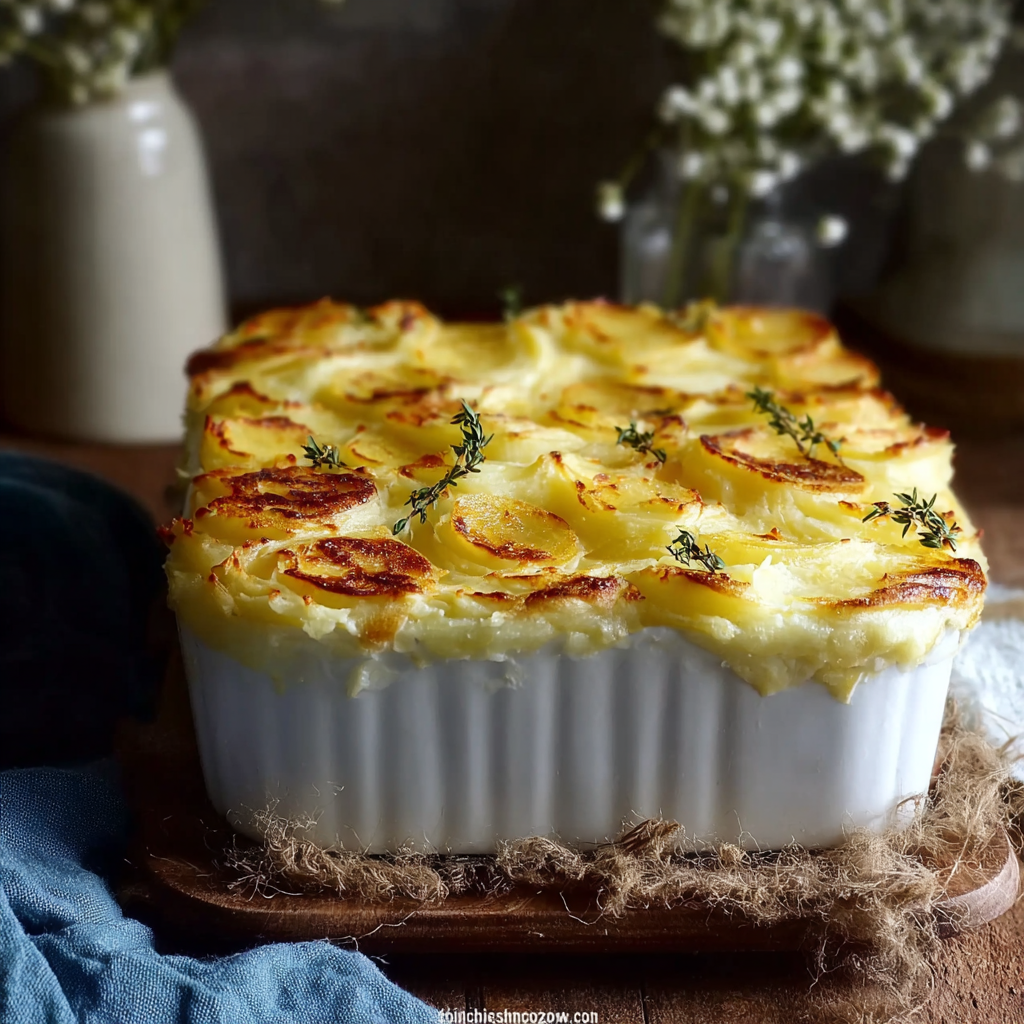
Irresistible Mashed Potato Casserole is a triumph of textural engineering. By managing moisture evaporation and utilizing the “lipid-seal” of cheese and bacon, you create a side dish that is statistically more craveable than standard mash.
Leave a Reply