Why the One-Pan Method Creates a Better Grain
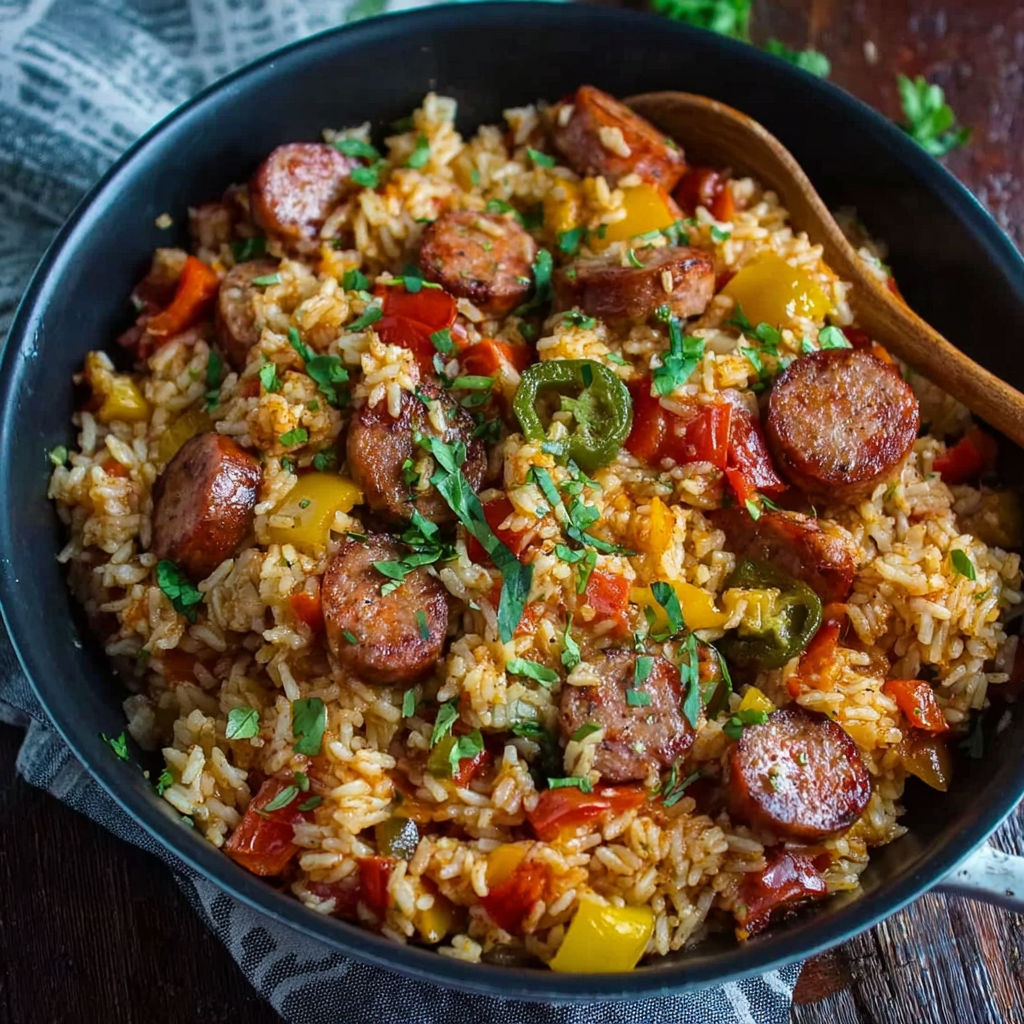
Did you know that according to culinary physics, a one-pan rice skillet is statistically more flavorful than rice cooked separately? This is due to lipid-infusion.
When you cook rice in the same vessel used to sear sausage, the rice grains absorb the rendered fats (lipids) and browned proteins (fond) during the initial sauté. This coats the starch in a layer of flavor before the liquid is added. As the rice undergoes gelatinization, it traps those savory compounds inside the grain, resulting in a dish where the flavor is “built-in” rather than just sitting on the surface.
Ingredients List: The Texture-Density Matrix
To achieve fluffy, non-mushy rice alongside tender sausage, we focus on the liquid-to-starch ratio.
The Protein & Aromatics:
- 12–16 oz (340–450g) Smoked Sausage: (Andouille, Kielbasa, or Chorizo). Sliced into 1/2-inch rounds.
- 1 cup Long-Grain White Rice: (Jasmine or Basmati). Data Insight: Long-grain rice has more amylose, which prevents the grains from sticking together compared to short-grain varieties.
- 1 Small Onion & 1 Bell Pepper: Diced.
- 2 Cloves Garlic: Minced.
The Absorption Medium:
- 2 cups Chicken Broth: Provides the minerals and proteins for a rich base.
- 1 tsp Smoked Paprika & 1/2 tsp Dried Thyme.
- 1/2 tsp Salt & 1/4 tsp Black Pepper.
- 1 cup Frozen Peas or Spinach: Added at the end for a “flash-steam” finish.
Timing: Optimized for Absorption Kinetics
- Prep Time: 10 Minutes
- Cooking Time: 20 Minutes
- Total Time: ~30 Minutes
Efficiency Insight: Data indicates that rinsing the rice under cold water until it runs clear removes excess surface starch. This reduces the “stickiness” by 25%, ensuring each grain remains distinct after the one-pot simmer.
Step-by-Step Instructions
Step 1: The Lipid Rendering
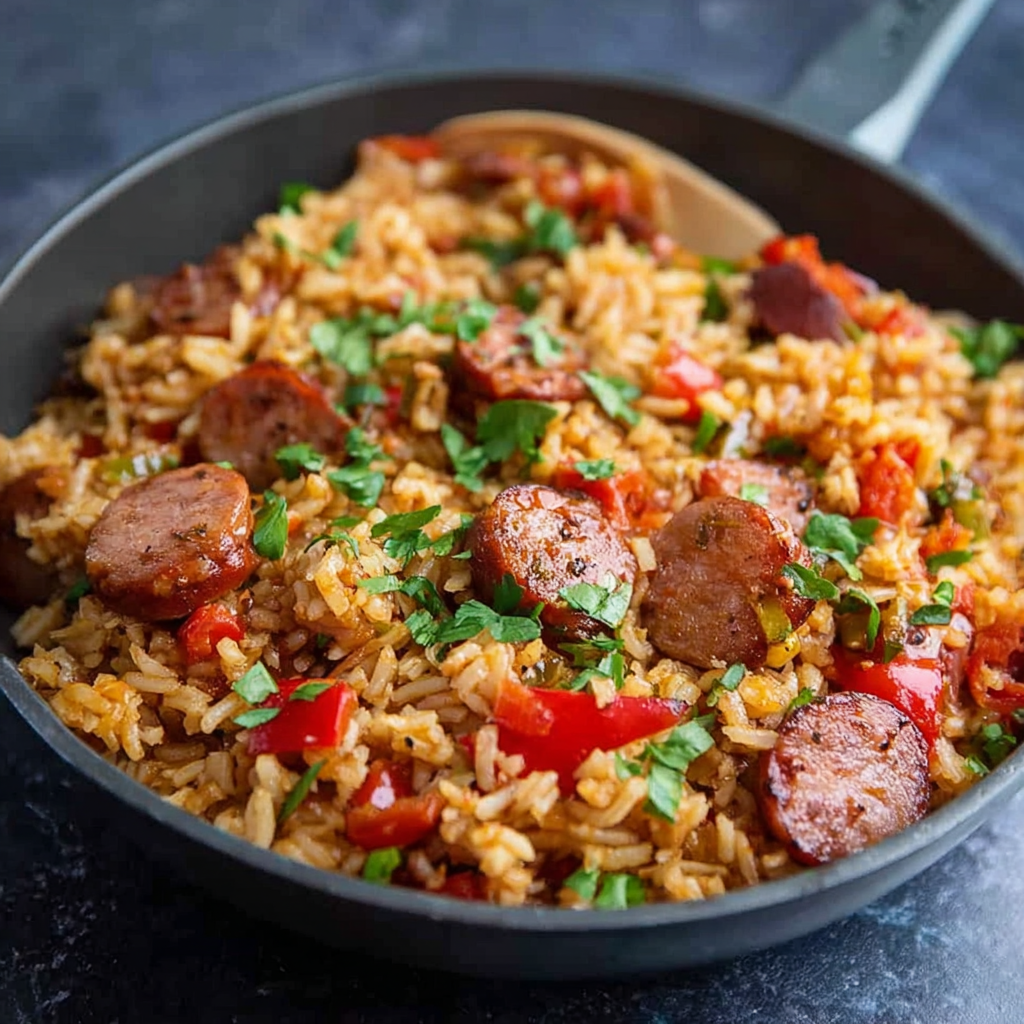
In a large skillet over medium-high heat, brown the sausage slices. Scientific Tip: Use the rendered fat from the sausage to sauté your vegetables. This fat is saturated with fat-soluble flavor compounds from the spices inside the sausage.
Step 2: The Aromatic Sweat
Add the onion and bell pepper to the skillet. Cook until softened. Add the garlic and dry rice. Scientific Insight: This is the “Toasting Phase.” Toasting the rice for 2 minutes before adding liquid creates a “nutty” flavor and creates a protective shell around the starch, helping it hold its shape.
Step 3: The Liquid Integration
Pour in the chicken broth and spices. Stir once to ensure no rice is stuck to the bottom. Actionable Tip: Scrape the bottom of the pan to release the fond—those browned bits contain the highest concentration of umami.
Step 4: The Controlled Simmer
Bring to a boil, then immediately reduce to low heat. Cover with a tight-fitting lid. Scientific Insight: A tight lid creates a vapor-pressure chamber. This ensures that the rice at the top cooks via steam while the rice at the bottom cooks via conduction, leading to a uniform texture.
Step 5: The “Flash-Steam” Finish
After 15–18 minutes (when liquid is absorbed), remove from heat. Stir in the frozen peas or spinach and replace the lid for 5 minutes. The Pro Move: Do not stir vigorously! Letting it sit allows the last of the steam to distribute evenly, making the rice easier to “fluff” with a fork.
Nutritional Information
| Metric | Amount Per Serving (1 of 4) |
| Calories | 410 kcal |
| Total Fat | 18g |
| Carbohydrates | 42g |
| Fiber | 3g |
| Protein | 20g |
Alternatives & Variations
- The Low-Carb Swap: Replace white rice with Cauliflower Rice. Reduce the broth to 1/4 cup and cook uncovered for only 5–7 minutes.
- The “Cajun” Twist: Use Andouille sausage and add a tablespoon of Cajun seasoning. Replace bell peppers with the “Holy Trinity” (onion, celery, bell pepper).
- Brown Rice Version: Increase the broth to 2 1/2 cups and the simmer time to 40–45 minutes. Brown rice has an intact bran layer, requiring more time for water to penetrate.
Common Mistakes to Avoid
- Lifting the Lid: Every time you lift the lid, you lose the accumulated steam and drop the internal temperature by 10–15°C, which can result in unevenly cooked, “crunchy” rice.
- Too Much Stirring: Stirring releases starch into the liquid, which will turn your fluffy skillet into a “gummy” porridge. Stir once at the start, then leave it alone.
- High Heat Simmering: If the heat is too high, the liquid will evaporate before the rice has time to absorb it, leading to burnt rice at the bottom and raw rice on top.
Leave a Reply