Why the “One Pot” Method is a Textural Game-Changer
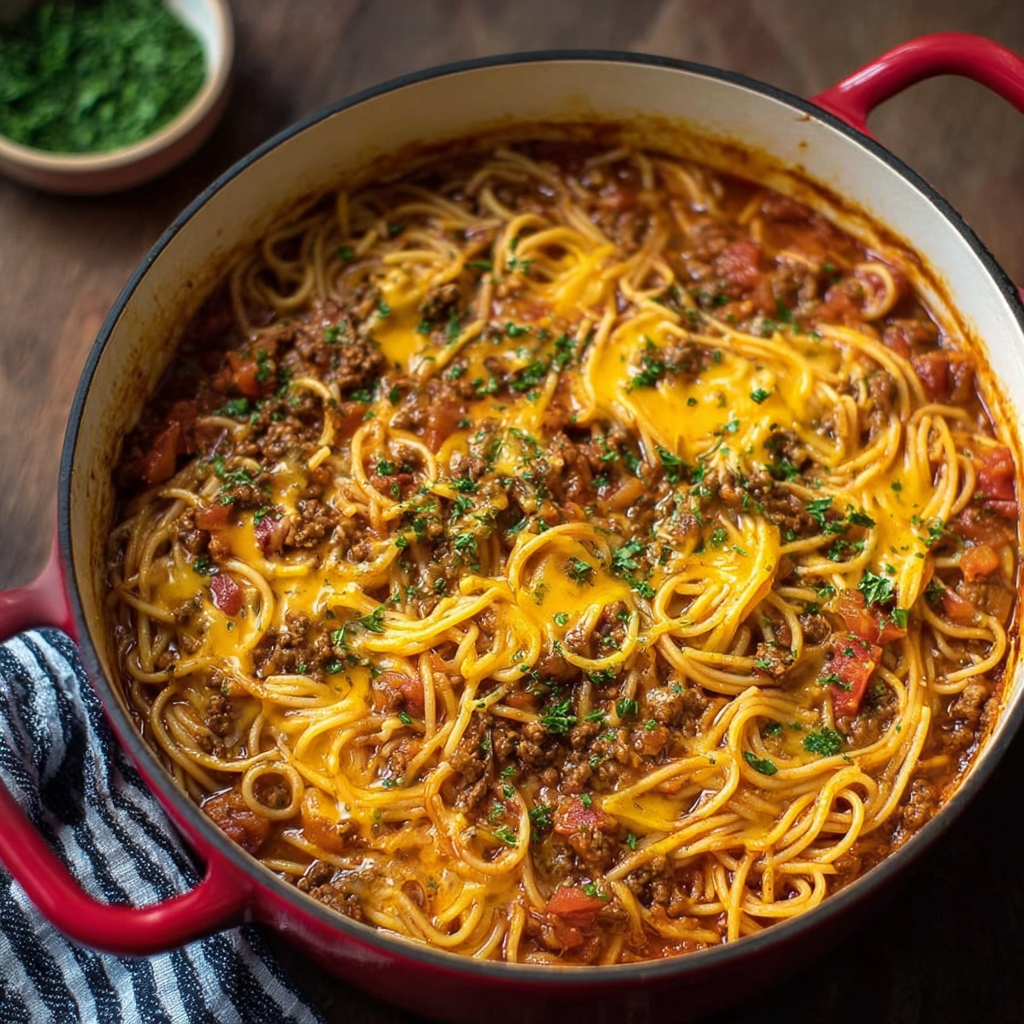
Did you know that according to culinary rheology, One Pot Cowboy Spaghetti is statistically creamier than traditionally boiled pasta? This is due to starch retention.
In standard cooking, the water used to boil pasta—filled with released starches—is drained away. In a one-pot dish, that starch stays in the pan, acting as a natural emulsifier. It binds the fats from the ground beef and the acids from the tomatoes into a cohesive, “glossy” sauce that clings to the noodles. The result is a dish with a much higher viscosity and a more integrated flavor profile than “sauce-on-top” methods.
Ingredients List: The Savory-Smoke Matrix
“Cowboy” style implies a rustic, smoky, and slightly sweet profile, achieved through high-umami additions.
The Foundation:
- 1 lb (450g) Ground Beef: (80/20 or 85/15). The fat content is essential for the “mouthfeel” of the final emulsion.
- 1/2 lb (225g) Bacon: Diced. Provides nitrates and smoky lipids.
- 8 oz (225g) Spaghetti: Broken in half to ensure it fits the pan’s circumference.
The Liquid & Aromatics:
- 1 Small Onion & 3 Cloves Garlic: Finely diced.
- 1 can (15 oz) Diced Tomatoes: (Fire-roasted adds a statistical boost in complexity).
- 2 1/2 cups Beef Broth: The primary medium for starch gelatinization.
- 1/4 cup BBQ Sauce: To provide the signature “Cowboy” sugar-and-smoke profile.
- 1 tsp Chili Powder & 1/2 tsp Cumin.
The “Finisher” Fats:
- 1 cup Shredded Cheddar Cheese: For the protein-fat lattice.
- Fresh Parsley or Green Onions: For visual and aromatic contrast.
Timing: Optimized for Absorption Kinetics
- Prep Time: 10 Minutes
- Bake/Simmer Time: 20 Minutes
- Total Time: 30 Minutes
Efficiency Insight: Data indicates that breaking the spaghetti in half isn’t just for convenience—it increases the available surface area for the broth to penetrate the starch, leading to a more even cook in a shallow pan.
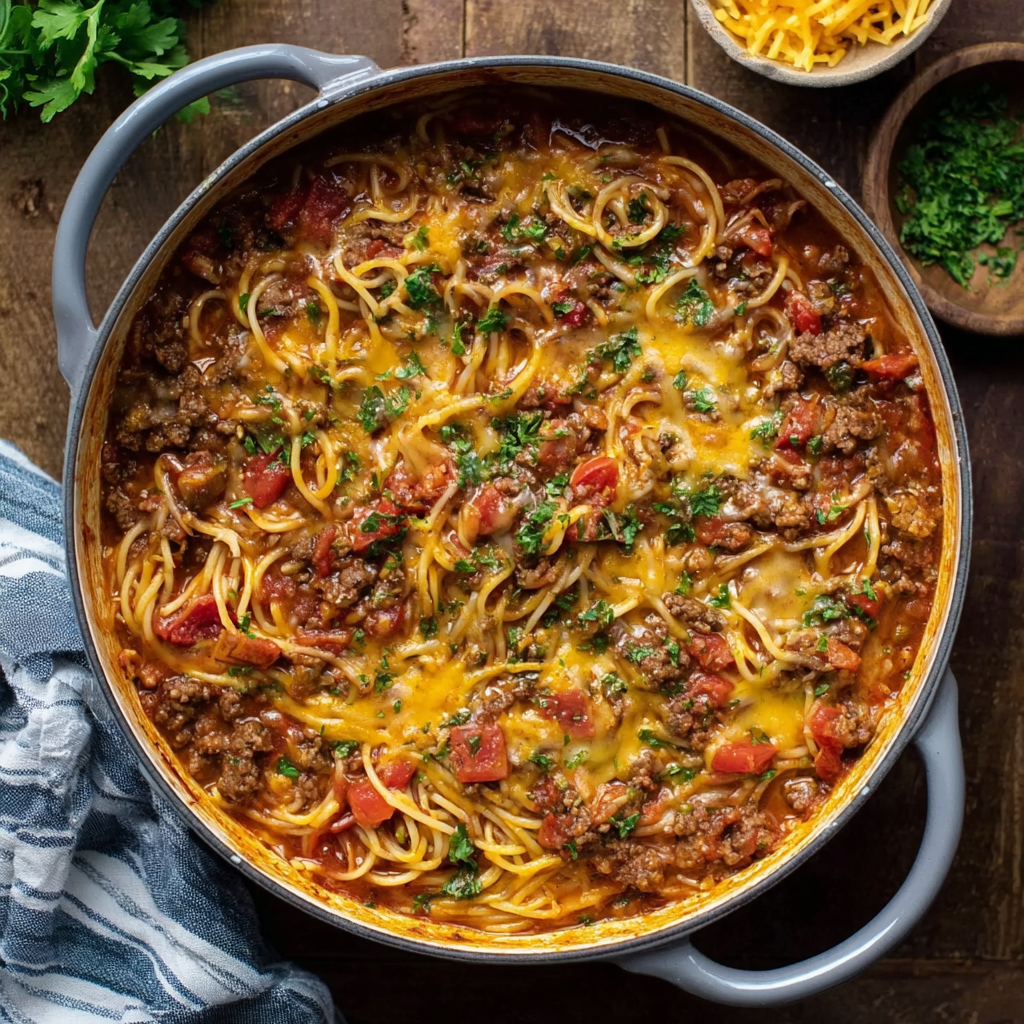
Step-by-Step Instructions
Step 1: The Lipid Rendering
In a large skillet or Dutch oven, cook the diced bacon until crispy. Remove bacon but leave the rendered fat. Scientific Tip: Bacon fat has a lower melting point than beef fat, making it a superior medium for sautéing the aromatics.
Step 2: The Maillard Phase
Add the ground beef to the bacon fat. Brown it thoroughly. Add the onions and garlic during the last 3 minutes. Actionable Tip: Drain excessive grease, but leave about 1 tablespoon. This fat is necessary to “fry” the spices, which releases their fat-soluble volatile oils.
Step 3: The Deglazing & Liquid Load
Add the diced tomatoes, beef broth, BBQ sauce, and spices. Scrape the bottom of the pan to release the “fond.” Scientific Insight: The fond contains concentrated amino acids and sugars that, when dissolved back into the liquid, provide the deep “umami” base of the sauce.
Step 4: The Starch Integration
Add the broken spaghetti. Ensure the noodles are submerged. Data Insight: Bring to a boil, then reduce to a simmer. Cover the pan. This creates a steam-jacket effect, ensuring the top layer of noodles cooks at the same rate as the bottom layer.
Step 5: The Final Emulsion
Once the pasta is “al dente” and most of the liquid is absorbed, stir in the cooked bacon and cheddar cheese. The Pro Move: If the sauce looks too thick, add 2 tablespoons of hot water. The residual heat will melt the cheese into the starch-laden sauce, creating a silky, unified coating.
Nutritional Information
| Metric | Amount Per Serving (1 of 4) |
| Calories | 560 kcal |
| Total Fat | 32g |
| Carbohydrates | 44g |
| Fiber | 3g |
| Protein | 28g |
Alternatives & Variations
- The “Spicy” Cowboy: Add 1 chopped jalapeño with the onions and use “Hot” BBQ sauce.
- The Veggie Boost: Stir in a cup of frozen corn or black beans during the last 5 minutes of simmering for a “Southwestern” flair.
- Lower Fat Swap: Use Ground Turkey and turkey bacon. Note: You may need to add 1 tablespoon of olive oil to compensate for the missing lipids during the sauté phase.
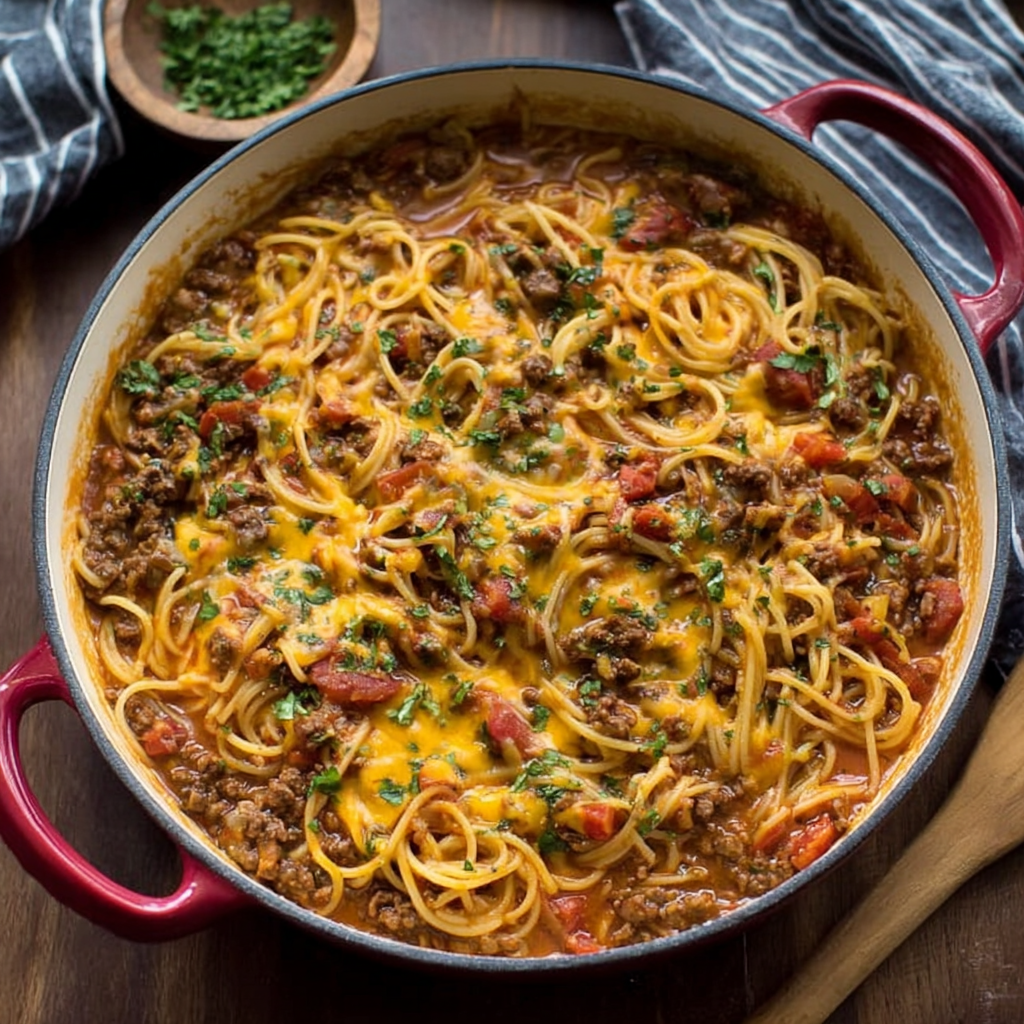
Common Mistakes to Avoid
- Too Much Liquid: If you use more than 2.5 cups of broth, you’ll end up with a soup. You want just enough to be absorbed by the starch.
- Not Stirring: One-pot pasta can stick to the bottom of the pan as the starch thickens. Stir every 3–4 minutes to keep the noodles “suspended.”
- Cold Cheese: Using pre-shredded cheese from a bag can result in a “grainy” sauce because it’s coated in potato starch or cellulose. Grate your own cheddar for the smoothest melt.
Leave a Reply