Introduction
Did you know that “Christmas Breakfast Casserole” is one of the most searched holiday terms on Google, with queries spiking by over 3,000% in late December? But this phenomenon isn’t limited to the holidays. In a post-pandemic world, the concept of “Sunday Brunch at Home” has retained its popularity, with home cooks seeking restaurant-quality results without the active labor of standing over a griddle flipping individual slices.
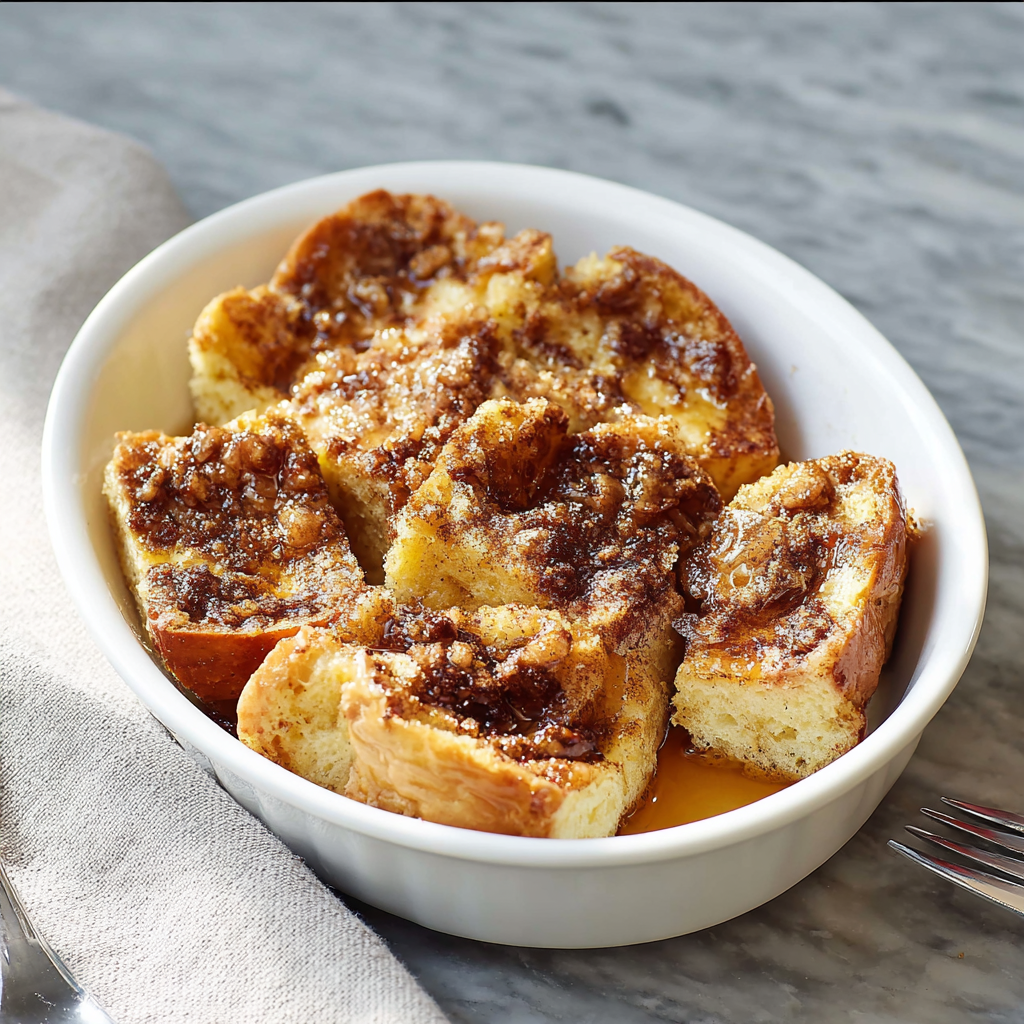
This recipe for Overnight French Toast Casserole (often called French Toast Bake) solves the logistical nightmare of feeding a crowd. It challenges the belief that French toast must be cooked à la minute to be delicious. By leveraging the science of retrogradation (staling bread) and long-form absorption, we create a dish that is actually superior to the traditional version. The overnight soak allows the vanilla-spiced custard to permeate the very center of the bread, resulting in a texture that is souffle-like on the inside and caramelized-crisp on the outside. Whether you are hosting a holiday morning or simply want a lazy weekend treat, this recipe delivers maximum payoff for minimum morning effort.
Ingredients List
To achieve the structural integrity required to hold the custard without turning into mush, the choice of bread is the single most important variable. Here is your curated shopping list for the perfect Overnight French Toast Casserole.
The Bread Base:
- 1 Loaf (1 lb / 450g) Challah or Brioche:
- Critical Spec: These are egg-enriched breads. Their high fat content and tight crumb structure allow them to absorb liquid like a sponge without disintegrating.
- Preparation: Ideally, buy the bread 2 days early and let it sit out. Stale bread absorbs 20-30% more custard than fresh bread.
- 1 Tablespoon Unsalted Butter: For greasing the dish.
The Spiced Custard:
- 8 Large Eggs: Room temperature.
- 1 Cup Heavy Cream: Provides the richness.
- 1 ½ Cups Whole Milk: Balances the cream.
- ½ Cup Granulated Sugar.
- 1 Tablespoon Vanilla Extract: Use real vanilla for that bakery aroma.
- 1 ½ Teaspoons Ground Cinnamon: Essential for the flavor profile.
- ¼ Teaspoon Freshly Grated Nutmeg.
- ¼ Teaspoon Salt: To balance the sweetness.
The Praline Crumble Topping:
- ½ Cup All-Purpose Flour.
- ½ Cup Light Brown Sugar: Packed.
- 1 Teaspoon Cinnamon.
- ¼ Teaspoon Salt.
- ½ Cup (1 stick) Cold Unsalted Butter: Cubed.
- 1 Cup Chopped Pecans or Walnuts: Optional, but recommended for texture.
Substitutions:
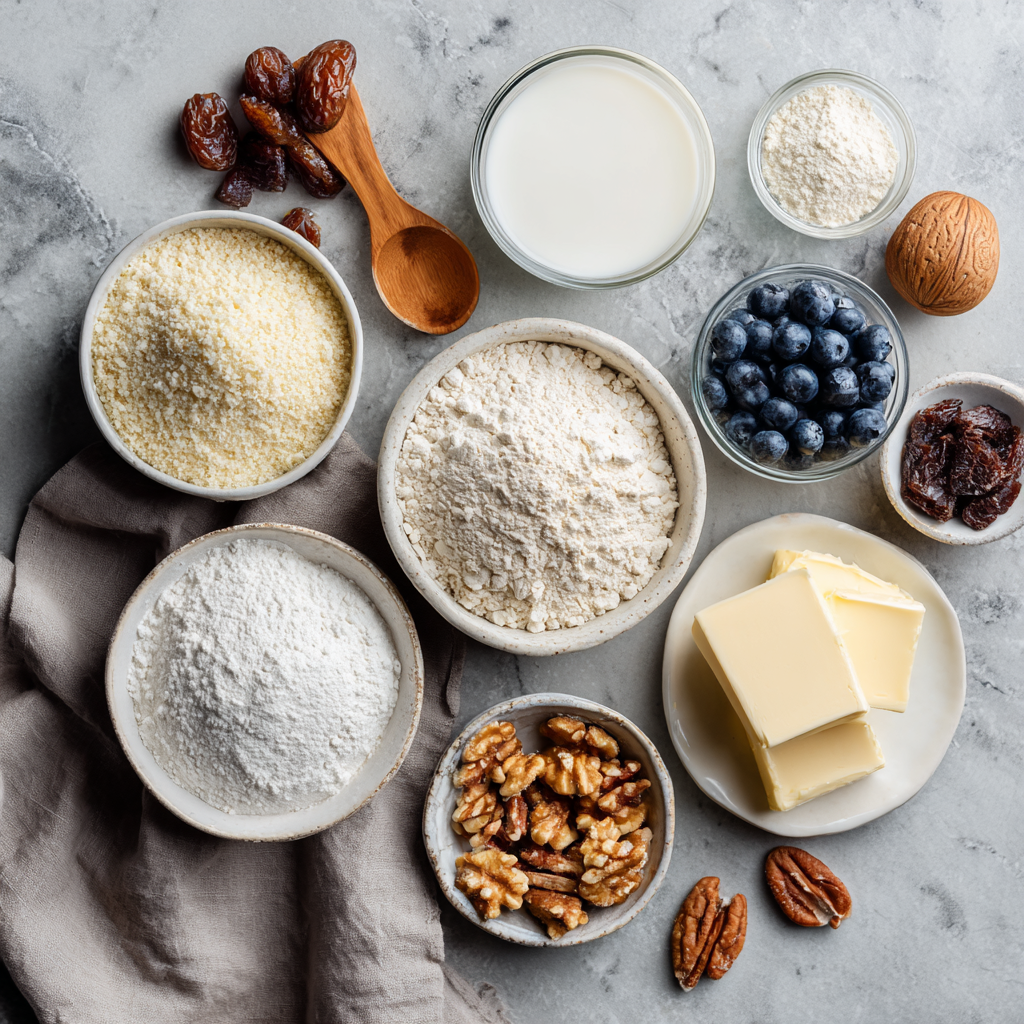
- Bread: If you cannot find Challah, use a sturdy Sourdough or French Loaf. Avoid standard white sandwich bread, which will dissolve.
- Dairy-Free: Full-fat canned coconut milk and oat milk can replace the dairy, though the flavor profile will shift slightly.
Timing
This recipe is split into two phases: the active prep (night before) and the passive bake (morning of).
- Prep Time: 20 minutes.
- Soaking Time: 8 hours (Overnight is best, 4 hours minimum).
- Baking Time: 45–55 minutes.
- Total Time: Approx. 9 hours 15 minutes.
Data Insight: Allowing the casserole to rest overnight not only improves texture but also deepens the flavor profile. The proteins in the egg and milk have time to interact with the starches in the bread, creating a cohesive, pudding-like internal structure that is impossible to achieve with a quick soak.
Step-by-Step Instructions
Step 1: The Bread Prep (The Staling Hack)
Cut the loaf of Challah or Brioche into 1-inch cubes.
- The Oven Trick: If your bread is fresh, spread the cubes on a baking sheet and bake at 200°F (95°C) for 15-20 minutes. This dries them out rapidly without toasting them, preparing them to drink up the custard.
- Action: Place the dried cubes into a generously buttered 9×13 inch baking dish.
Step 2: The Custard Emulsion
In a large bowl, whisk the eggs until the yolks and whites are fully homogenized.
- Combine: Whisk in the heavy cream, milk, granulated sugar, vanilla, cinnamon, nutmeg, and salt. Ensure the sugar is dissolved.
Step 3: The Soak
Pour the custard evenly over the bread cubes.
- Technique: Use a spatula to gently press the bread down, ensuring every single cube gets submerged or coated.
- Chill: Cover the dish tightly with plastic wrap or foil. Refrigerate for at least 4 hours, but ideally overnight (8-12 hours).
Step 4: The Topping Synthesis
You can make this the night before or the morning of. In a small bowl, mix the flour, brown sugar, cinnamon, and salt.
- Cut in Butter: Using a pastry blender or your fingers, work the cold butter into the dry mix until it resembles coarse, wet sand with pea-sized clumps. Stir in the chopped pecans. Cover and refrigerate.
Step 5: The Morning Bake
Preheat your oven to 350°F (175°C). Remove the casserole from the fridge 30 minutes before baking to take the chill off (this prevents the ceramic dish from cracking and ensures even cooking).
- Top: Uncover the casserole. Sprinkle the Praline Crumble topping evenly over the surface.
- Bake: Bake for 45–55 minutes.
- Visual Cue: The casserole should be puffed, deep golden brown, and the center should be set (not liquid jiggle).
Step 6: The Cool Down
Let the casserole stand for 10–15 minutes before serving.
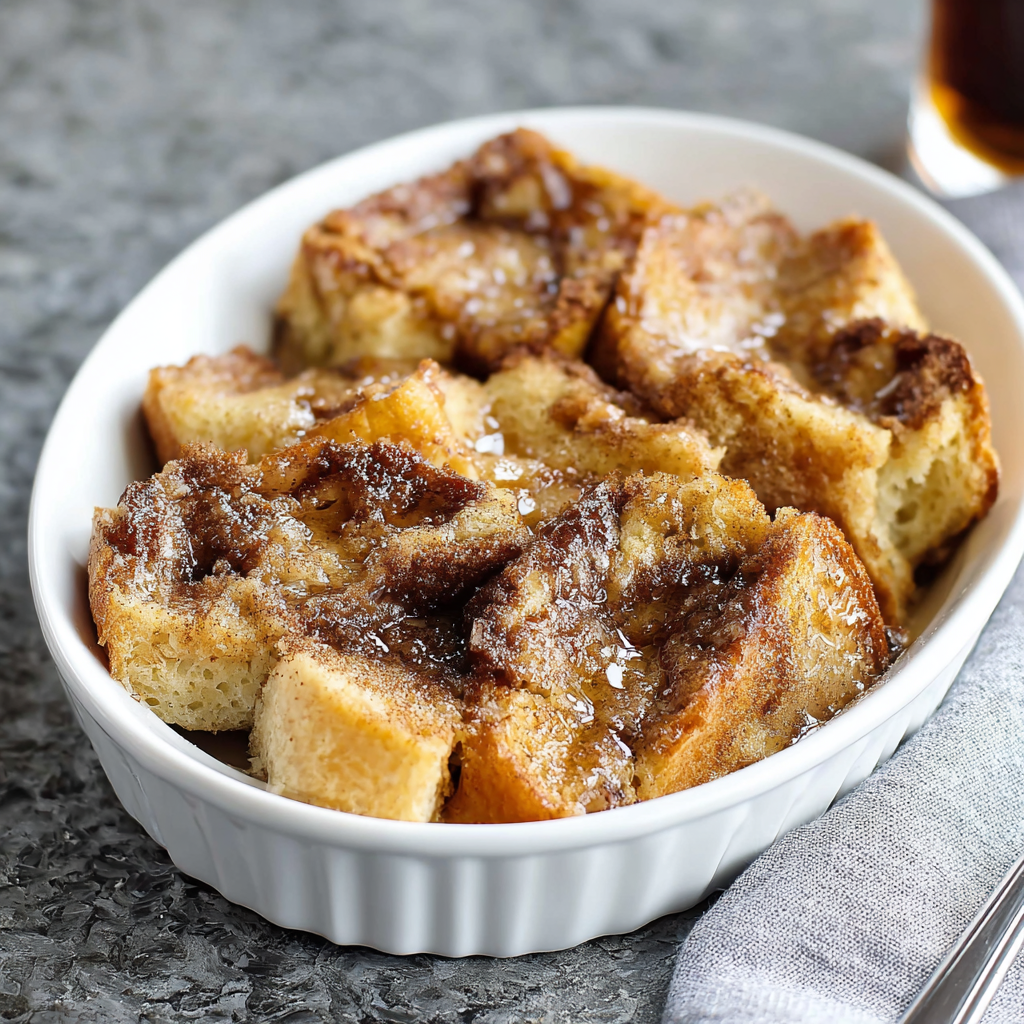
- Why? It will be puffed up like a soufflé when it comes out, then deflate slightly. This resting period allows the custard to set so you can cut clean squares.
Nutritional Information
This is a celebratory, high-calorie breakfast. Here is the estimated breakdown per serving (based on 12 servings):
| Nutrient | Amount | % Daily Value |
| Calories | 420 kcal | – |
| Total Fat | 24g | 36% |
| Saturated Fat | 12g | 60% |
| Carbohydrates | 42g | 15% |
| Sugars | 22g | – |
| Protein | 10g | 20% |
Data Insight: While high in sugar, the egg content provides a decent protein boost (approx. 10g per slice). To mitigate the glycemic spike, serve this with a side of fiber-rich berries or savory protein like turkey bacon.
Healthier Alternatives for the Recipe
Customize this Overnight French Toast Casserole to fit dietary needs:
- Lower Sugar:
- Swap the brown sugar and granulated sugar for Monk Fruit Sweetener or Swerve.
- Use sugar-free maple syrup for serving.
- Whole Grain:
- Use a hearty Whole Wheat Loaf or Sprouted Grain bread.
- Note: Whole grain bread has a stronger flavor and denser texture, so you may want to increase the cinnamon and vanilla to mask the earthiness.
- Reduced Fat:
- Replace heavy cream with Half-and-Half or whole milk.
- Use turkey bacon on the side instead of pork sausage.
Serving Suggestions
This casserole is rich, so balance is key.
- The Acid: Serve with a bowl of Fresh Berries (strawberries, blueberries, raspberries). The acidity cuts through the heavy custard and butter topping.
- The Syrup: Warm Pure Maple Syrup is the gold standard. Avoid “pancake syrup” (corn syrup), which is too cloying for this already sweet dish.
- Savory Side: Crispy bacon or sausage links provide the “salt” to the casserole’s “sweet.”
Common Mistakes to Avoid
Don’t ruin the holiday morning. Avoid these errors:
- Using Fresh Bread:
- The Error: Using soft, fresh white bread.
- The Result: A soggy, disintegrated mush at the bottom of the pan.
- The Fix: Dry the bread out! (See Step 1).
- Rushing the Soak:
- The Error: Baking after only 30 minutes.
- The Result: Dry bread cubes in the center and scrambled eggs on the bottom.
- The Fix: Plan ahead. It needs time to absorb.
- Covering During Baking:
- The Error: Keeping foil on the whole time.
- The Result: A steamed, pale top.
- The Fix: Bake uncovered to let the praline topping crisp up.
Storing Tips for the Recipe
Leftovers reheat surprisingly well.
- Refrigeration: Store covered in the fridge for up to 4 days.
- Reheating:
- Microwave: Heat individual squares for 45-60 seconds.
- Oven: Cover with foil and heat at 350°F for 15 minutes to retain moisture.
- Freezing:
- Baked: Cut into squares, wrap individually in plastic wrap, and freeze for up to 3 months.
- Unbaked: You can freeze the soaked casserole (without topping) for up to 2 months. Thaw in the fridge overnight, add topping, and bake.
Conclusion
Overnight French Toast Casserole is the ultimate hack for the morning host. It delivers the decadence of a brioche French toast with the convenience of a make-ahead casserole. By understanding the importance of bread texture and soaking time, you can wake up to a kitchen smelling of cinnamon and butter, ready to serve a crowd with zero stress.
Summary: A sweet, custardy breakfast bake made with cubed brioche bread soaked overnight in an egg-milk mixture, topped with a crunchy pecan praline crumble.
Ready to win brunch?
Buy your brioche today and let it stale! Rate this recipe 5 stars if it made your Christmas morning easier, and leave a comment below: pecans or walnuts? Subscribe for more make-ahead morning miracles!
FAQs
Can I bake this immediately without soaking overnight?
You can, but the texture will be different. If you must bake immediately, let it sit on the counter for at least 30-40 minutes while the oven preheats, and press the bread down frequently to force absorption.
Is the alcohol in vanilla extract safe?
Yes. The small amount of alcohol in vanilla extract evaporates during the baking process. However, if you are strictly alcohol-free, you can use vanilla bean paste or imitation vanilla.
Can I add fruit inside the casserole?
Yes! Scattering blueberries or diced apples between the layers of bread cubes before pouring the custard is a delicious variation. Just be aware that frozen fruit may release water and increase the baking time slightly.
Why is my casserole soggy?
Sogginess usually comes from using bread that was too fresh, or using too much milk relative to the amount of bread. Stick to the ratio of 1 loaf (1 lb) to 2.5 cups of liquid.
Leave a Reply