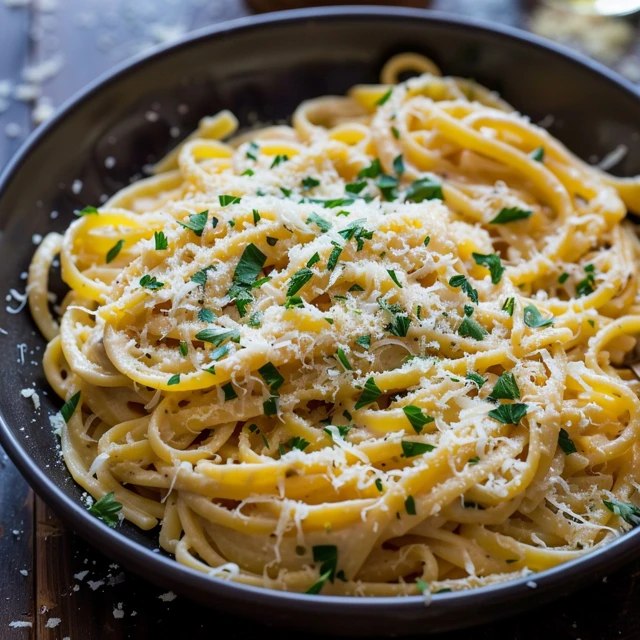
This is the pasta I make at midnight when the fridge is empty, the wine is open, and I want something that tastes like an Italian grandmother cooked it. Linguine aglio e olio is the legendary 5-ingredient Roman pasta proving that simple is genius: al dente linguine tossed in extra-virgin olive oil bloomed with paper-thin garlic slices and red pepper flakes, emulsified with starchy pasta water into a silky sauce, finished with fresh parsley and a snowstorm of parmesan.
Fun fact: aglio e olio (literally “garlic and oil”) is one of the oldest pasta dishes in Italy, dating back to Naples in the 1800s when it was peasant food for families who couldn’t afford meat or expensive sauces. It became the national midnight snack — Italian movies are filled with characters cooking it after long nights out, including the famous scene in the Adam Sandler film “Spanglish” where a chef makes it for a midnight craving. The hardest part isn’t the ingredients (you have all 5 in your kitchen right now) — it’s the technique of slowly toasting garlic without burning it, which takes seconds to ruin and minutes to master.
Why this recipe works
- Slice garlic paper-thin, don’t mince. Thin slices toast evenly into golden chips that flavor the oil; minced garlic burns to bitter dust in 30 seconds.
- Reserve a full mug of pasta water. The starchy water is the secret to a silky emulsified sauce that clings to every strand instead of pooling at the bottom.
- Cook the pasta in heavily salted water. Pasta is the only seasoning vehicle here. Water should taste like the sea — 1 tbsp salt per 4 quarts.
Nutrition information
- Calories: 580 kcal per serving
- Protein: 14 g (28% DV)
- Carbohydrates: 82 g
- Fat: 22 g (mostly heart-healthy monounsaturated)
- Vitamin K: 28% DV (from parsley)
- Iron: 18% DV
Pro tips for the best aglio e olio
- Start garlic in COLD oil. Adding garlic to hot oil burns the slices instantly. Start cold, heat slowly — it’s the difference between sweet and bitter.
- Use the BEST olive oil you have. With only 5 ingredients, every one matters. A fruity, peppery EVOO transforms this dish — save the bland stuff for frying.
- Tongs, not a colander. Transferring pasta directly with tongs keeps the perfect amount of starchy water clinging to each strand for sauce emulsion.
- Serve in WARMED bowls. Aglio e olio cools fast because there’s no thick sauce holding heat. Run bowls under hot water 30 sec before plating.
Frequently asked questions
Is parmesan really not traditional?
Roman purists say no cheese — it’s a Naples dish from poor families who couldn’t afford it. But modern Italian-Americans add it routinely. Skip it if you want the original; add it if you love cheese. Both are right.
How long does it keep?
This is best eaten immediately — oil congeals when cold and pasta loses its silky texture. If you have leftovers, reheat in a skillet with a splash of water + olive oil. Refrigerator 2 days max.
Why did my garlic burn?
You used heat that was too high, sliced garlic too thinly without watching, or walked away. Garlic goes from golden to burnt in seconds. Stay at the stove, keep heat LOW, swirl constantly.
Can I make it less spicy?
Yes — reduce red pepper flakes to 1/4 tsp or skip entirely. Add a pinch of fresh chopped chili at the table for anyone who wants heat. Traditional Italian children eat it pepperless.
What proteins go with this?
Grilled shrimp, seared scallops, pan-roasted chicken thighs, or Italian sausage. Most often served alone with a crisp green salad and crusty bread. A glass of Pinot Grigio is non-negotiable.
Can I double the recipe?
Yes but use TWO skillets — tossing 2 lb of pasta in one pan loses the proper emulsion. Or cook in batches. The pot of water and pasta water amounts double linearly.