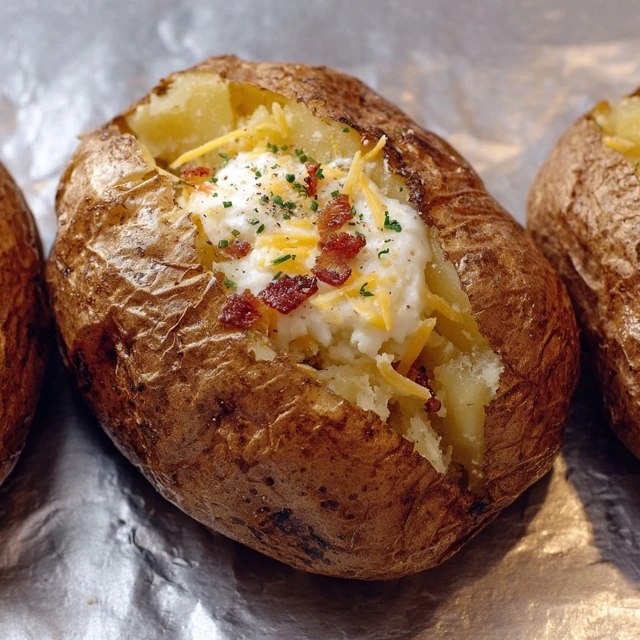
This is the side dish that doesn’t know it’s actually the main event. Loaded baked potatoes are the steakhouse classic so satisfying they deserve the spotlight, not the side seat: russet potatoes pricked, rubbed with olive oil and coarse salt, baked at high heat until the skins are crackle-crisp and the insides explode into fluffy clouds of starch, then loaded with melted sharp cheddar, crispy bacon crumbles, cool sour cream, fresh chives, and a melting pat of butter.
Fun fact: the loaded baked potato as we know it was invented in Texas steakhouses in the 1970s as a way to make budget russet potatoes feel like a luxury entrée — and they succeeded so wildly that today the average American eats 30 pounds of baked potatoes per year. Russet potatoes are 80% water and contain a starch called amylose that bursts into fluff when baked at high heat, making them the only potato variety worth using for a true baked potato. The “stab and salt” trick (pricking with a fork, oil + salt rub) was perfected by the Texas Beef Council and is still the gold standard.
Why this recipe works
- Russets only, not Yukon or red. Russets have the high starch + low moisture combo that produces fluffy interior and crisp skin. Waxy potatoes go gummy.
- Oil + coarse salt rub on the skin. Oil helps the skin crisp; coarse salt creates flavor crust and pulls out moisture. Do NOT wrap in foil — that steams the potato.
- High heat (425°F) directly on rack. Direct heat from all sides creates the iconic crispy skin. Sheet pan = soft bottom; foil = steamed mush.
Nutrition information
- Calories: 580 kcal per loaded potato
- Protein: 22 g (44% DV)
- Carbohydrates: 52 g
- Fat: 32 g
- Potassium: 38% DV (potatoes have more than bananas!)
- Vitamin C: 28% DV
Pro tips for the best baked potato
- NEVER wrap in foil. Foil traps steam and gives you a soggy, soft-skinned potato. Bare skin in dry oven heat = crackle-crisp glory.
- Cut a + (cross), not a single slit. Cross-cuts let you push all 4 sides open and load more toppings in. Single slit collapses under cheese weight.
- Grate cheese yourself. Pre-shredded cheese is coated in cellulose and doesn’t melt as well. Block cheese on a box grater melts into proper gooey strings.
- Cold sour cream on hot potato is the magic. Temperature contrast (cold-creamy hitting hot-fluffy) is half the joy. Don’t let sour cream come to room temp.
Frequently asked questions
How long does it take?
55 minutes for medium potatoes (8-10 oz), 65-70 min for large (12 oz+), 80 min for jumbo. Test with a knife — should slide in with zero resistance.
Can I microwave them instead?
Yes for fast cooking (10-12 min, flipping halfway), but the skin won’t crisp. For a hybrid: microwave 10 min, then transfer to 425°F oven for 15 min to crisp the skin. Compromise version.
Can I make ahead?
Bake potatoes earlier in day; reheat 10 min at 400°F to re-crisp skin. Load with toppings just before serving. Loaded leftovers in fridge 3 days.
Why is the skin not crispy?
You wrapped them in foil, didn’t dry them before oiling, or used too-low heat. Bare potatoes + oil + salt + 425°F = crispy skin every time.
What sides go with this as a meal?
As a main dish: side salad, steamed broccoli, or roasted asparagus. As a side dish: pair with steak, BBQ ribs, grilled chicken, or chili. The loaded baked potato is universally compatible.
Can I make twice-baked potatoes instead?
Yes — bake as instructed, scoop out flesh leaving shells intact, mash with butter/cheese/sour cream/bacon, refill shells, top with more cheese, bake 15 min at 400°F to brown. Same flavors, fancier presentation.